

Remove difficulties and obstacles immediately.
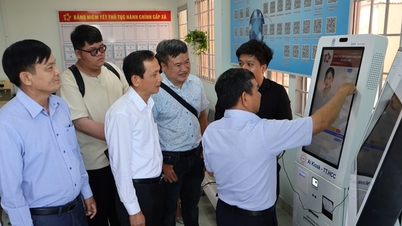
Ms. Nguyen Thi An, a business owner in Hoang Mai ward (Hanoi), reported that she was delighted to hear about the simplification and elimination of construction procedures for residents and businesses. However, when renovating her shop, even though she didn't expand it but only repaired the tiles, plastered the walls, and fixed the old, damaged corrugated iron roof, construction officials still stopped her work to check her permit.
Ms. Nguyen Thi Hoa, a pork vendor for many years, shared that she has to "follow" procedures periodically, such as renewing her food safety certificate every year. "Once, when I went to submit the application, I was missing a training certificate, so I had to go back and get it, wasting 2-3 days. Each time that happened, it was both time-consuming and meant I had to stop selling, essentially losing income."
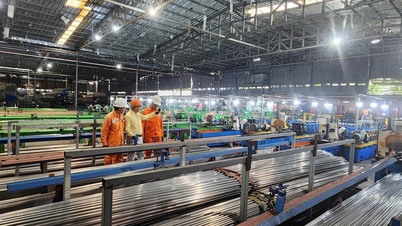
Mr. Nguyen Thanh Hung, the owner of a mechanical engineering business, shared that to complete procedures related to fire safety, environmental protection, and construction permits, even though some requirements are similar, one still has to go to each agency separately. The unofficial costs are one thing, but the time cost alone is significant.
To Hoai Nam, Vice President and General Secretary of the Vietnam Association of Small and Medium Enterprises, shared that the cost of complying with current business regulations still accounts for a significant proportion of the total operating costs of household businesses and small enterprises. What the business community needs most is a transparent and stable business environment, fast processing times, low compliance costs, and clear guidelines for implementation to avoid the situation of "old wine in new bottles."
In less than a month (since April 29, 2026), the Government has issued 11 resolutions (including a series of 8 resolutions issued on April 29, 2026); at the same time, ministries have issued documents within their authority to synchronize with the resolutions. To date, 56 sectors and professions have been abolished; and 14 conditional investment and business sectors and professions have been amended compared to the provisions of the 2025 Investment Law.
In addition, the Prime Minister has also decisively directed ministries and ministerial-level agencies to continue decentralizing, reducing, and simplifying administrative procedures and business conditions through amendments to decrees and circulars, and the number of decentralized, reduced, and simplified administrative procedures and business conditions will continue to increase in the coming time.
The Prime Minister also strictly prohibits ministries, departments, and localities from imposing additional administrative procedures, business conditions, or issuing other management measures that increase compliance costs for citizens and businesses after procedures have been abolished or simplified.
The Prime Minister emphasized that while quantity is important, the substance and underlying meaning of the conditions are even more crucial; the time and cost of compliance must be genuinely reduced.
Establish a strict mechanism for controlling power.
Looking closely at the content of the 11 resolutions that have been issued, Dr. Nguyen Si Dung, former Deputy Head of the National Assembly Office, believes that there are three major strategic shifts in the Government's operational methods: from pre-audit to post-audit, from centralization to decentralization, and from control to creation.
Dr. Nguyen Si Dung pointed out that shifting to post-auditing requires a modern data system and monitoring capabilities. Without appropriate tools, reducing pre-auditing could lead to management risks. Furthermore, decentralization requires establishing new mechanisms for controlling power. Otherwise, lax oversight or "passing the buck" between levels of authority may occur.
Deputy Secretary General and Head of the Legal Department of the Vietnam Chamber of Commerce and Industry (VCCI), Dau Anh Tuan, stated that the shift from "pre-inspection" to "post-inspection" requires a strict monitoring mechanism to prevent business conditions from being "distorted" in the form of more complex technical standards.
The recent strong steps demonstrate the government's determination in this new phase. However, the ultimate effectiveness will not lie in the number of procedures or conditions reduced, but in the extent of substantive change in the experience of citizens and businesses. When reforms are implemented synchronously and consistently, they will truly become the driving force to unlock resources and promote sustainable growth.
In the spirit of Resolutions No. 68-NQ/TW and No. 66/NQ-CP, institutions should not be a "bottleneck" but must become a "strength," a competitive advantage, and a foundation for growth alongside factors such as capital and labor. According to Government Resolution No. 89/NQ-CP dated April 5, 2026, in 2026, the time for processing administrative procedures will be reduced by 50%; the cost of complying with administrative procedures will be reduced by 50%; and efforts will be made to reduce at least 30% of conditional investment and business sectors; and 100% of unnecessary business conditions will be eliminated.
Besides requesting ministries and agencies to reduce administrative procedures, the Prime Minister also requested the Ministry of Justice to urgently finalize and submit to the Prime Minister for promulgation in June 2026 a pilot project to evaluate and score the administrative procedure reform work of ministries, agencies, and localities, to be implemented from July 2026.
The content of the Project must clearly define the criteria for evaluating the effectiveness of the reduction and simplification, and establish a strict control mechanism to absolutely prevent the emergence of unnecessary administrative procedures, business conditions, and conditional investment and business sectors from the time the 11 resolutions are issued; ensuring the participation of citizens, the business community, and localities in the evaluation process.
Source: https://hanoimoi.vn/cat-giam-54-6-chi-phi-thu-tuc-hanh-chinh-tao-ket-qua-thuc-chat-971959.html

![[Photo] General Secretary and President To Lam presides over the meeting to approve the draft report on the results of the second inspection by the Politburo of the Standing Committee of the Hanoi City Party Committee.](https://vphoto.vietnam.vn/thumb/1200x675/vietnam/resource/IMAGE/2026/05/26/1779789811432_a2-bnd-4430-9620-jpg.webp)



















































































Comment (0)