

 |
| MSc. Dinh Van Mai stated that, in reality, many children have not been adequately educated about dangerous signs, refusal skills, and how to respond when being lured or deceived. (Photo provided by the interviewee) |
Recently, information about online scams targeting children, and children being lured away from home, has caused widespread concern. In your opinion, what are the most common and worrying tactics that criminals are using to approach and deceive children, both in real life and online? Are there any loopholes that need to be addressed?
In the digital age, many child scams are increasingly prevalent online. However, children lack the necessary self-defense skills. Some common and worrying tactics used by criminals to approach and deceive children online include impersonating acquaintances, idols, or classmates to reach children through fake accounts, using the guise of "close friends" or "people in similar situations" to lure children into meeting them or running away from home.
At the same time, some individuals exploit children's playful nature and desire for gifts to entice them into playing video games, promising rewards and even requesting personal information from them.
In real life, perpetrators impersonate relatives asking to pick up children, or pose as school staff to gain access. Additionally, they lure children with candy, money, or toys. Some perpetrators approach children through seemingly normal activities to get acquainted, then manipulate them.
Recent incidents reveal that children have not been adequately educated about danger signs, refusal skills, and how to respond to being lured. Many parents do not fully understand the workings of social media, TikTok, YouTube, online games, etc., and therefore cannot supervise effectively. Children or parents do not know where to report suspicious situations.
So, regarding the risk of kidnapping in real-world situations, what basic self-protection knowledge and skills should parents equip their children with so that they can recognize and escape dangerous situations?
As child abduction and trafficking become increasingly sophisticated, parents need to equip their children with self-defense knowledge and skills so that they can recognize, refuse, and seek help when faced with dangerous situations.
First, parents should guide their children to memorize basic family information, including their parents' full names, their parents' or trusted contact phone numbers, and the address of their home and merged school. Next, parents and children should establish a rule of "no accepting - no eating - no following" without parental permission; if they have any doubts, they must immediately inform their parents.
In addition, parents should train children in the skills of shouting for help and seeking assistance in situations of fraud, coercion, or kidnapping. Parents should role-play with their children, demonstrating how to shout loudly, clearly, and decisively when in danger, and simultaneously run towards a crowd to find a trustworthy adult for help.
 |
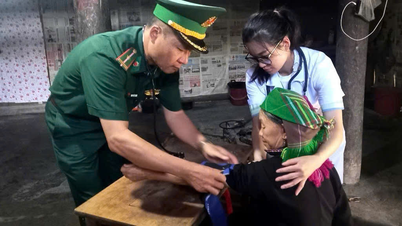
| Teacher Dinh Van Mai and his students during a skills lesson. (Photo courtesy of the interviewee) |
Enhancing "digital resilience" online.
Online scams are becoming increasingly common, with increasingly sophisticated tactics. What can parents do to strengthen their children's resilience in the online world? What principles of safe internet use should children be taught to avoid becoming victims of online scams?
In an era where children access the internet at a very young age via phones, tablets, and computers, equipping them with "digital resilience" is the most proactive form of protection. Parents should discuss rules for using electronic devices with their children, such as usage time and space; they can also use control tools like YouTube Kids, Google Family Link, etc.
| "Recent incidents show that children have not been adequately educated about dangerous signs, refusal skills, and how to respond to being lured. Many parents do not fully understand the workings of social media, TikTok, YouTube, online games, etc., so they cannot supervise effectively. Children or parents do not know where to report suspicious situations." |
Parents and children should learn about current scam tactics together to help children be more vigilant. At the same time, parents should monitor their children's usage by observing which apps they are using, thereby guiding them on how to use them effectively.
In addition, parents can apply the ABC principle to help children use the internet safely and avoid becoming victims of online scams. The ABC principle is as follows:
A is safe. Do not disclose personal information such as address, phone number, school, or family information on social media; Do not add strangers as friends, only add people you know in real life or with your parents' consent; Do not text or send personal information or pictures to others unless the purpose is clear; Do not provide your password to anyone, including friends; Use strong passwords and change them periodically, every 3 or 6 months.
B is calmness. Stay calm when reading information on social media, don't rush to believe or share because there are rumors and inaccurate information; Don't share or comment when you're not sure if the information is true; Don't use bad or offensive language on social media. When someone attacks you, calmly handle it with a polite and gentle attitude; If you encounter uncomfortable content or strangers, tell your parents or teachers so they can help.
C is caution. Carefully check information before sharing it on social media, ensuring it is useful and does not negatively affect anyone; Do not click on strange links or advertisements from unknown sources; Do not post too much information or images on social media with addresses or tags of others without their consent; Thoroughly research groups and communities before deciding to join.
Beyond providing knowledge, how do parents communicate with and understand their children in protecting them? How can we build a relationship that is trustworthy enough for children to readily share their problems or threats, instead of hiding them out of fear?
Protecting children in the digital age is not just about teaching them lessons, but also about creating a trustworthy relationship so that children feel comfortable sharing when needed. When parents communicate with and understand their children, it helps them feel safe. From there, children will not hesitate to share or seek help when threatened, deceived, or encountering problems online or in real life.
To build a truly trusting relationship, parents should communicate with their children daily through open-ended questions and conversational engagements; confide in them so they always feel their parents are there for them; especially listen to what they say and the stories they tell without criticism or judgment; and discuss difficult situations and how to handle them together. When children are listened to without judgment, it is the starting point for building a trusting relationship with their parents.
Protecting children is not just the responsibility of the family. In your opinion, how should the community, schools, and authorities cooperate to create a safer environment for children, while also raising awareness and crime prevention skills for both children and parents?
Protecting children is not just the responsibility of the family, but a shared responsibility of the entire social system, including families, schools, communities, and relevant authorities. To create a safe environment for children, a coordinated approach involving multiple solutions is needed, including:
The family is the first and most crucial foundation. Parents need to dedicate quality time to accompanying, listening to, and guiding their children; teaching them essential life skills from an early age, and not leaving everything entirely to the school.
Schools are where children develop good habits and behaviors. Therefore, schools need to integrate life skills, education on preventing abuse and fraud, and digital safety into their main curriculum or extracurricular activities.
Simultaneously, schools should implement social work services and train teachers to identify signs of psychological trauma, violence, or coercion in children. Furthermore, schools need to cooperate closely with parents to promptly address students' problems and train parents in skills to protect their children.
Neighborhoods, residential groups, and local organizations need to be trained in identifying and addressing risks to children; build information pages to share or introduce services that support children; and establish life skills clubs, martial arts clubs, etc., in the locality to help children participate in activities and learn self-defense skills.
Authorities need to publicly and strictly handle cases of child seduction, fraud, and abuse to create a social deterrent; coordinate with schools and local authorities to educate children about cybersecurity and online scams; and establish a rapid response or assistance channel to provide timely support to children.
Close coordination between families, schools, the community, and relevant authorities to protect children will be effective when each party is proactive, clearly defines its role, and takes concrete action.
Source: https://baoquocte.vn/day-tre-tu-nhan-biet-tu-choi-khi-bi-du-do-bat-coc-online-lua-dao-truc-tuyen-322986.html
![[Photo] Prime Minister Pham Minh Chinh presides over a meeting on private sector economic development.](/_next/image?url=https%3A%2F%2Fvphoto.vietnam.vn%2Fthumb%2F1200x675%2Fvietnam%2Fresource%2FIMAGE%2F2025%2F12%2F20%2F1766237501876_thiet-ke-chua-co-ten-40-png.webp&w=3840&q=75)




































































































Comment (0)