

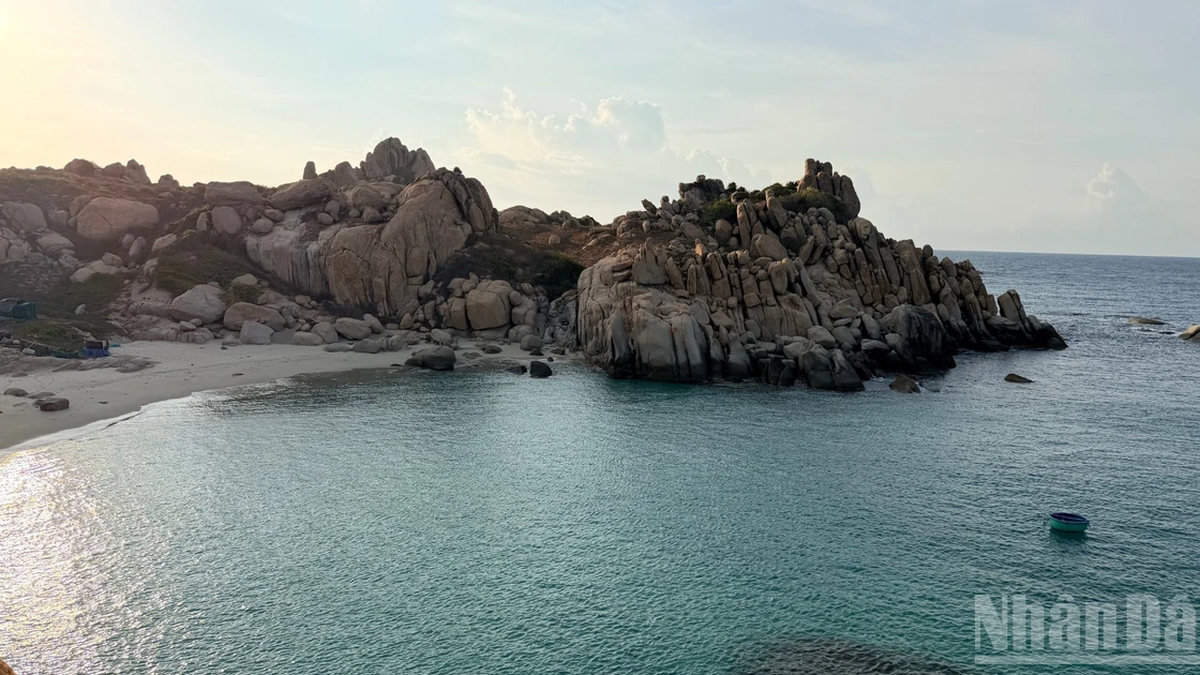
In recent years, the demand for using coastal areas for aquaculture, tourism development, coastal construction, seaports, and fisheries logistics services has been increasing in the province. According to the national marine spatial plan, An Giang plays a crucial role in the development of a system of seaports, fisheries logistics services, marine tourism, and large-scale aquaculture, while simultaneously preserving the mangrove ecosystem.

Offshore aquaculture in Phu Quoc Special Economic Zone. Photo: THUY TRANG
Despite its potential, the misuse of marine areas continues; people are arbitrarily expanding aquaculture areas, exceeding allocated boundaries, or exploiting resources without completing legal procedures. This necessitates that relevant authorities strengthen management and allocate marine areas in accordance with planning and legal regulations.
According to Ta Minh Tai, Secretary of the Party Committee of Hon Nghe Commune, in recent times, in some coastal areas, groups of individuals have been occupying the sea surface for fishing and aquaculture, showing signs of collecting protection fees when other fishermen's boats enter to fish, posing a risk to security and order at sea and causing resentment among the people. The commune requests the Provincial People's Committee to soon issue regulations on the fee for using sea areas that are appropriate to the current reality. At the same time, it requests the decentralization and delegation of authority for managing the sea areas adjacent to the commune so that the Commune People's Committee can lease the water surface to meet the needs of exploiting resources in these areas.
According to the Provincial Department of Marine and Islands Affairs, the allocation of sea areas is carried out in accordance with Government Decree No. 11/2021/ND-CP and new amending and supplementing regulations in the field of marine and island affairs. The determination of the sea area's scope has a full legal basis after the Ministry of Agriculture and Environment announced the average low sea level over many years. This is an important basis for localities to effectively manage marine resources, limit disputes, and prevent misuse.
According to Nguyen Hong Phong, Head of the Provincial Department of Marine and Islands Affairs, current regulations stipulate that the allocation of sea areas must conform to the national marine spatial plan, the overall plan for sustainable exploitation and use of coastal resources, provincial plans, and relevant sectoral plans. The sea areas considered for allocation must clearly define their location, boundaries, area, coordinates, and intended use. The allocation of sea areas applies to various activities such as aquaculture; exploitation and use of marine resources; construction of coastal structures; marine tourism and service activities; and other activities exploiting and using marine resources as prescribed by law.
Implementing decentralization and delegation of management authority, the province has assigned the People's Committees of coastal communes the power to decide on the allocation, recognition, permission to return, extension, or revocation of sea areas for individuals engaged in aquaculture within 3 nautical miles from the average low sea level over many years, with a limit of no more than 5 hectares. The People's Committees of communes are responsible for determining the location, boundaries, and area of the sea areas under their jurisdiction; and managing the use of these sea areas for aquaculture in their localities. Current management is more rigorously implemented through coordinate data, marine spatial maps, and coastal zone planning to limit overlapping, disputes, or misuse of land.
Alongside facilitating the efficient exploitation of marine resources by organizations and individuals, current regulations also significantly increase penalties for violations to enhance the effectiveness of state management. According to regulations on administrative penalties in the field of sea and islands, the act of using a sea area for purposes other than those intended can be fined from 50 to 100 million VND. In cases of exceeding the allocated area or exploiting resources without authorization from the competent authority, penalties can reach billions of VND depending on the severity of the violation. In addition to fines, violating organizations and individuals are also required to restore the original state, remedy environmental pollution, return any illegal profits, and may have their right to use the allocated sea area revoked.
Strict management and proper allocation of marine areas according to planning and target groups will contribute to the efficient use of marine resources, protect ecosystems, ensure livelihoods for coastal people, and promote sustainable marine economic development in the new era.
THUY TRANG
Source: https://baoangiang.com.vn/de-bien-duoc-khai-thac-ben-vung-a485939.html

![[Photo] National Assembly Chairman Tran Thanh Man working with the Standing Committee of the Law and Justice Committee](https://vphoto.vietnam.vn/thumb/1200x675/vietnam/resource/IMAGE/2026/05/21/1779378929214_ndo_br_1-4610-jpg.webp)

![[Photo] General Secretary and President To Lam presides over a working session with the Central Policy and Strategy Committee on the development of the materials industry.](https://vphoto.vietnam.vn/thumb/1200x675/vietnam/resource/IMAGE/2026/05/21/1779359935432_a3-bnd-3129-1412-jpg.webp)







































































Comment (0)