

However, in the wave of integration and industrialization, silk – a refined symbol of Vietnamese culture – is facing many major challenges, being competed against by low-quality synthetic silk products (fake silk).
A mix of real and fake silk
Genuine silk, made from natural silkworm threads, is soft, smooth, breathable, and becomes shinier with wear thanks to the protein in the silk fibers. In contrast, fake silk, often blended with polyester, has an artificially glossy surface, wrinkles easily, feels stuffy, and can cause itching after prolonged wear. According to consumer feedback and discussions among travel groups on social media, many tourists have encountered synthetic silk falsely labeled as "silkworm silk," leading to disappointment with this traditional Vietnamese product.
Ms. Truong Oanh, founder of the Van Nha silk brand (Nha Xa silk village, Ha Nam province), shared: "Many types of low-quality blended fabrics exist on the market, labeled as silk, causing confusion and damaging the image of Vietnamese silk - a proud traditional product."
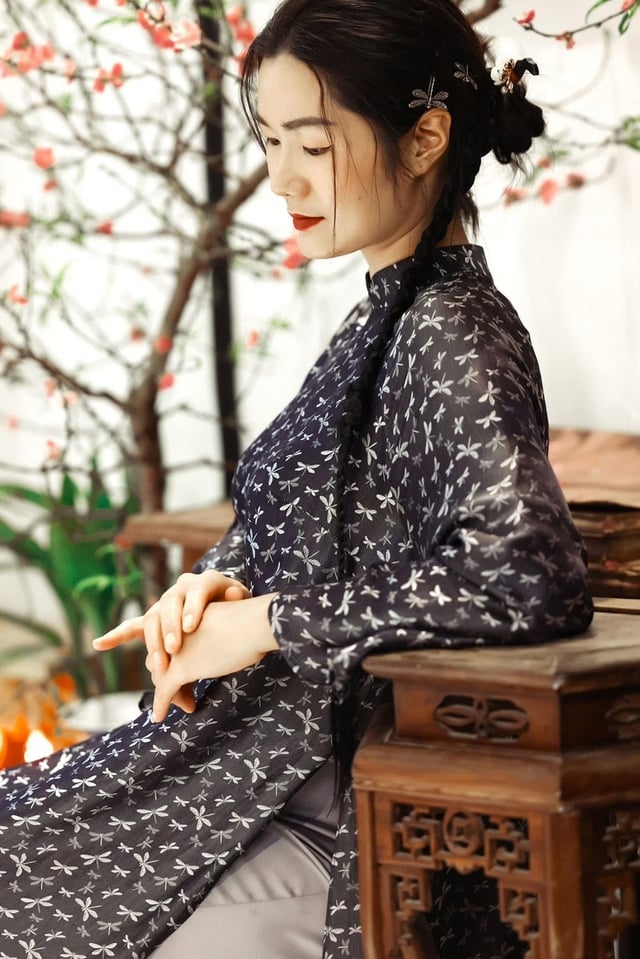
A silk product with printed patterns from the Van Nha brand is very popular with tourists.
PHOTO: VAN NHA
Ms. Tran Yen, CEO of Ma Chau Silk (Duy Xuyen, Quang Nam), said: "Fake silk does not contain silkworm threads. Consumers often understand 'silk' to mean 'silkworm thread,' leading to many misunderstandings and creating loopholes for businesses to exploit, turning ordinary goods into high-end products."
"Silk production requires high technical skills, solid craftsmanship, experience, and meticulous attention to detail in every step. However, there aren't many skilled artisans, and this difficulty leads many businesses to choose the easier path: using synthetic blends, which are cheaper and easily deceive the eye," Ms. Truong Oanh analyzed.
Furthermore, brand representatives emphasized that the lack of widespread certification, inspection, and traceability systems, including certification of natural silk, makes it very difficult for buyers, especially tourists, to verify the origin of the fabric. This is a crucial issue that authorities should pay attention to in order to protect Vietnamese silk.
Cultural perspectives in brand storytelling.
Ms. Truong Oanh proudly stated, "Anyone who has ever touched silk finds it hard to resist its charm. Once you've worn it and felt its beauty, coolness, and softness, it's difficult to switch to another fabric." To ensure brand quality, she built her own supply chain. She also invested in natural dyes, wrinkle-resistant and mildew-resistant technologies, bringing her products closer to modern life. "Making a large chain is easy to make quick profits, but developing handcrafted products and preserving their unique identity will ensure long-term success," Ms. Truong Oanh said.
Ms. Tran Yen shared: "Ma Chau silk had been in decline for many years. Now, with young people and tourists showing interest in natural, environmentally friendly materials, it's a real opportunity for Vietnamese silk to regain its place."

Ma Chau silk is used in modern fashion products.
PHOTO: MA CHAU SILK
"The domestic market still prioritizes low prices, and many people are not yet aware of the value of handcrafted silk. We have to tell the cultural story – from the loom and silk threads to the hands of the artisans – so that customers understand and appreciate the product more," added Ms. Tran Yen.
Ma Chau silk has a distinct advantage due to its proximity to Hoi An Ancient Town, a key tourist destination where visitors seek authentic handcrafted experiences. However, transforming this advantage into success requires sustained effort to preserve the craft and anticipate new tastes. Ms. Yen stated, "Each piece of silk sold represents an extension of cultural heritage – through silk, dedication, and the unwavering perseverance of those who preserve the craft."
Mr. Huynh Tan Phuoc, Chairman of Viet Nam Silk House and Director of Nhat Minh Silk Company Limited, advises specifically: "If you love silk, consumers can equip themselves with knowledge to distinguish between real and fake. Real silk feels cool, soft, and smooth to the touch; when burned, the fabric does not ignite, the ash dissolves when squeezed, and the smoke smells like burning hair. Fake silk burns quickly, leaves behind resin residue, and has a burnt chemical smell…"

A silk reeling demonstration and hands-on experience at Ma Chau silk village.
PHOTO: MA CHAU SILK
"For traditional craft villages and silk brands, the best way to protect the true value of silk is to build reputation based on quality and trust," Mr. Phuoc emphasized.
According to Mr. Huynh Tan Phuoc, for Vietnamese silk to reach further, it needs to develop based on traditional culture combined with technological innovation and quality improvement. Brand representatives also agreed that building a sustainable Vietnamese silk brand requires transparent traceability, a clear certification system, telling the story of the craft village's culture through design, promoting digital transformation, and having a presence on e-commerce and social media – where young consumers and tourists are dominant.
According to research by Maximize Market Research and Mordor Intelligence, the global silk market is expanding rapidly, with a projected value of nearly $19-$38 billion by the end of this decade. Consumer trends are increasingly leaning towards sustainable, natural, and exquisitely handcrafted products. This is driving up the value of genuine silk. Vietnam currently ranks fourth in the world in overall silk production (after China, India, and Uzbekistan). According to data from projects and reports of the Ministry of Agriculture and Environment and related associations and sectors, Vietnam is striving to double its silk production in the next 10 years. At the same time, Vietnamese lotus silk – a high-quality and extremely environmentally friendly type of silk – has risen to the top globally, opening up significant opportunities in the ultra-luxury segment.
Source: https://thanhnien.vn/de-to-lua-viet-di-xa-185250625192600061.htm

![[Photo] National Assembly Chairman Tran Thanh Man attends the groundbreaking ceremony for the National Highway 1A spatial axis project.](https://vphoto.vietnam.vn/thumb/1200x675/vietnam/resource/IMAGE/2026/05/19/1779161360398_ndo_br_bnd-1412-jpg.webp)
![[Photo] Capturing the moment the tide recedes at Yen Binh Son rapids - a million-year-old scenic spot in Quang Ngai.](https://vphoto.vietnam.vn/thumb/1200x675/vietnam/resource/IMAGE/2026/05/19/1779175463885_yen9-1199-jpg.webp)








































![[Photo] General Secretary and President To Lam receives Indian Defense Minister Rajnath Singh](https://vphoto.vietnam.vn/thumb/402x226/vietnam/resource/IMAGE/2026/05/19/1779184046302_anh-man-hinh-2026-05-19-luc-16-46-58.png)














Comment (0)