African swine fever in Ha Tinh province is developing in a complex manner, with the risk of a widespread outbreak. The relevant authorities are focusing on directing local areas to take timely action to control the situation.
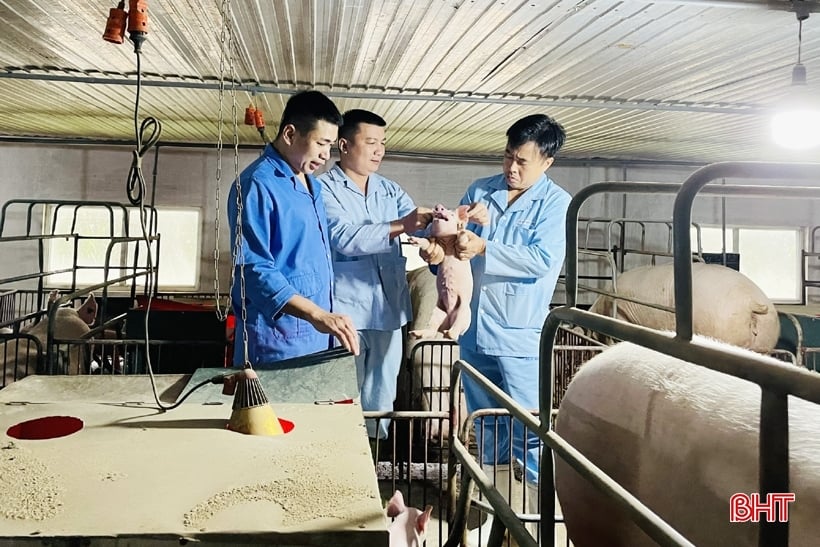
The relevant authorities recommend that all localities review and assess the disease situation in their areas, the total number of at-risk herds, and control the introduction of new herds in outbreak areas.
According to the Provincial Department of Animal Husbandry and Veterinary Medicine, from November 10th to November 16th, African Swine Fever (ASF) outbreaks occurred in 4 communes across 3 districts of Cam Xuyen, Nghi Xuan, and Duc Tho, resulting in the death and forced culling of 38 infected pigs.
Given the complex nature of the disease and the long persistence of African Swine Fever (ASF) pathogens in livestock environments, there is a risk of widespread outbreaks. In response to this situation, relevant authorities are directing localities to focus intensely on disease prevention and control measures.
Mr. Nguyen Huu Tho, Chairman of the People's Committee of Lam Trung Thuy commune, Duc Tho district, said: From November 13 to 16, African Swine Fever (ASF) appeared in 3 livestock households in Trung Bac, Trung Khanh, and Trung Dong villages, resulting in the death and forced culling of 13 infected pigs.
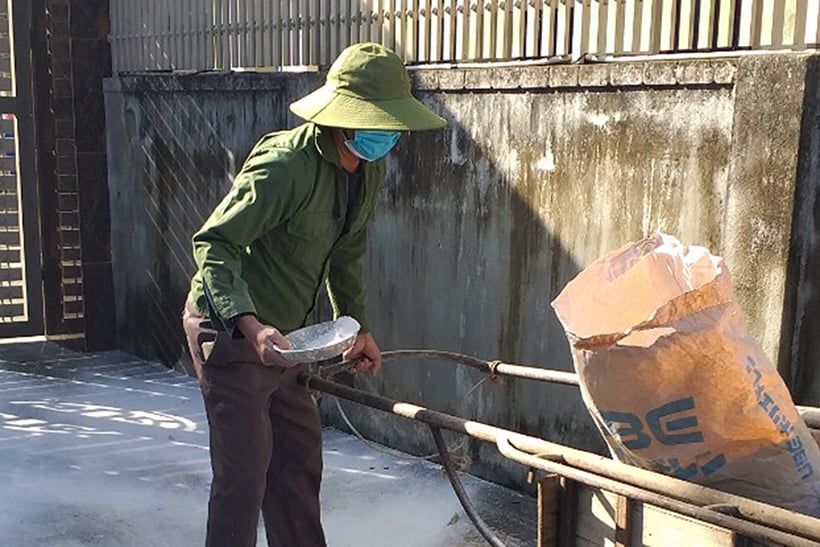
Livestock farmers in Lam Trung Thuy commune are sprinkling lime powder to disinfect their barns.
After the outbreak was detected, the local authorities and relevant agencies established four checkpoints; provided 300 liters of disinfectant and 2 tons of lime powder to carry out disinfection in 12 villages in the commune to control the spread of the disease.



Following the outbreak of African Swine Fever (ASF) in Thong Nhat village, Xuan Pho commune (requiring the culling of 8 pigs belonging to Mr. Nguyen Van The), Nghi Xuan district declared an outbreak in the area and issued Official Dispatch No. 5026/CD-UBND, dated November 16, 2023, on strengthening the prevention and control of livestock and poultry diseases.
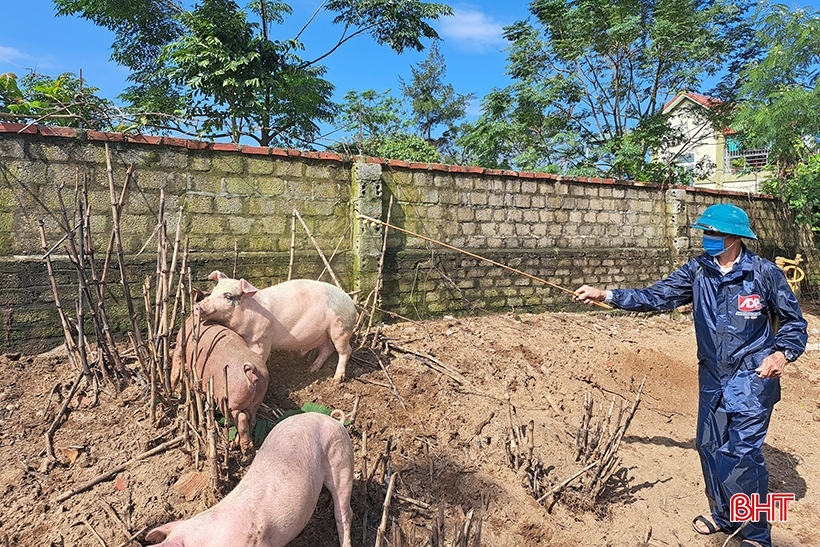
Chemical spraying for disinfection and sterilization of livestock farming areas in Xuan Pho commune.
“Although the outbreak occurred at a livestock farm located in an isolated area far from the fields, we cannot be complacent. The District Center for Applied Science and Technology and Plant and Animal Protection has assigned staff to closely monitor the situation at the grassroots level to guide, inspect, and supervise the implementation of proactive disease prevention and control measures in the localities. In particular, we have identified high-risk areas for outbreaks, including Xuan Hai and Dan Truong communes, to detect outbreaks early and contain them while they are still confined to a small area,” said Mr. Pham Anh Tuan, Director of the Center.
Currently, localities in Nghi Xuan district are intensifying their efforts to disseminate information about the disease situation and developments; raising awareness and responsibility among each household, livestock farm, and person involved in trading and slaughtering to proactively implement disease prevention and control measures; and guiding and advising livestock farmers not to increase or restock herds without ensuring disease safety conditions to avoid losses.
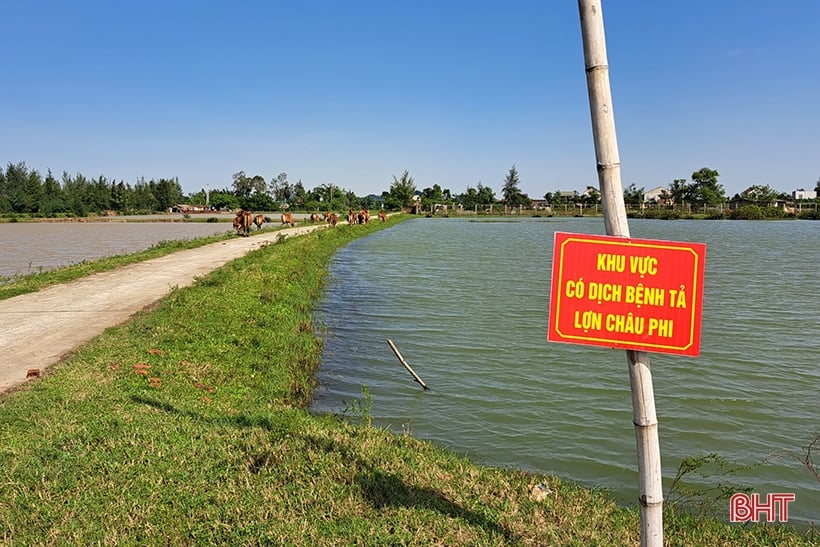
Put up notice boards indicating the locations where African swine fever outbreaks have occurred so that people are aware.
To protect the nearly 60,000 pigs in the district, Cam Xuyen district has widely publicized the African Swine Fever (ASF) situation occurring in 5 pig farms in Cam Duong and Cam Quan communes, urging people to proactively implement prevention and control measures at the household level. When pigs become sick or die, people must report it to the veterinary agency or the commune People's Committee, and should not sell or dispose of dead pigs in the environment. When introducing pigs to the herd, people should choose pigs with clear origins and that are healthy.
Ms. Hoang Thi Ngoc Diep, Deputy Head of the Provincial Department of Livestock and Veterinary Medicine, stated that: Inspections of African Swine Fever (ASF) outbreaks in the province revealed that they mainly occurred in small-scale livestock farms that did not ensure biosecurity and disease control. Meanwhile, due to the impact of prolonged heavy rains, many localities experienced flooding; the livestock environment became polluted; the changing seasons allowed dangerous pathogens stored in the environment to spread; and the animals' resistance decreased, resulting in a very high risk of disease outbreaks and spread.
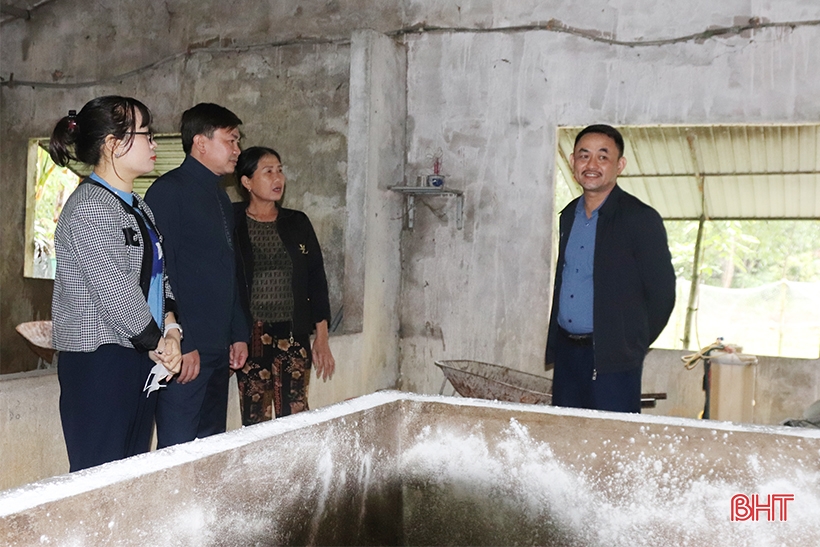



Leaders of the Regional Veterinary Sub-Department III and the Provincial Livestock and Veterinary Sub-Department inspected the work of preventing and controlling African Swine Fever (ASF) in Cam Xuyen district.
To proactively prevent and limit the spread of disease, the relevant authorities recommend that all localities review and assess the disease situation in their areas, the total number of high-risk herds, and control the introduction of new herds in outbreak areas.
In particular, closely following the directives in Official Dispatch No. 1097/CĐ-TTg dated November 16, 2023, from the Prime Minister on the decisive and comprehensive implementation of solutions to prevent and control African Swine Fever, we are determined to prevent the disease from spreading in the area, especially at the end of the year.
Huu Trung
Source



![[Photo] Prime Minister Le Minh Hung presides over the thematic session on promoting science and technology development and innovation.](https://vphoto.vietnam.vn/thumb/1200x675/vietnam/resource/IMAGE/2026/06/23/1782207872934_ndo_br_dsc-1724-jpg.webp)