

The Copyright Office has issued a document requesting organizations, businesses, and individuals to review and ensure strict compliance with legal regulations on copyright and related rights in their professional activities, refrain from using unlicensed computer programs, and avoid illegally exploiting or using copyright and related rights related to works, performances, sound recordings, video recordings, and broadcast programs.
Vietnamese artists are increasingly concerned about the category of "not exploiting or using copyright and related rights to works, performances, and sound recordings without authorization." With the professional development of the music market, copyright infringement of music recordings is generally under control. However, loopholes remain, with some individuals/entities attempting to circumvent the law to avoid copyright. This is especially true in the TikTok music ecosystem, where countless remixes exist, and the unauthorized use of copyrights is at a serious level.
The picture of music copyright control.
In the context of music copyright, it can be simply understood that each song released to the market carries within it two completely independent "assets" that need to be protected: publishing rights and master rights.
Copyright is the "soul" of a song, where the original melody and lyrics, created by the songwriter, are distilled. Nowadays, instead of single-handedly knocking on the doors of every tea house or event to collect royalties, professional songwriters often choose to delegate the entire exploitation process to a third party, such as VCPMC.
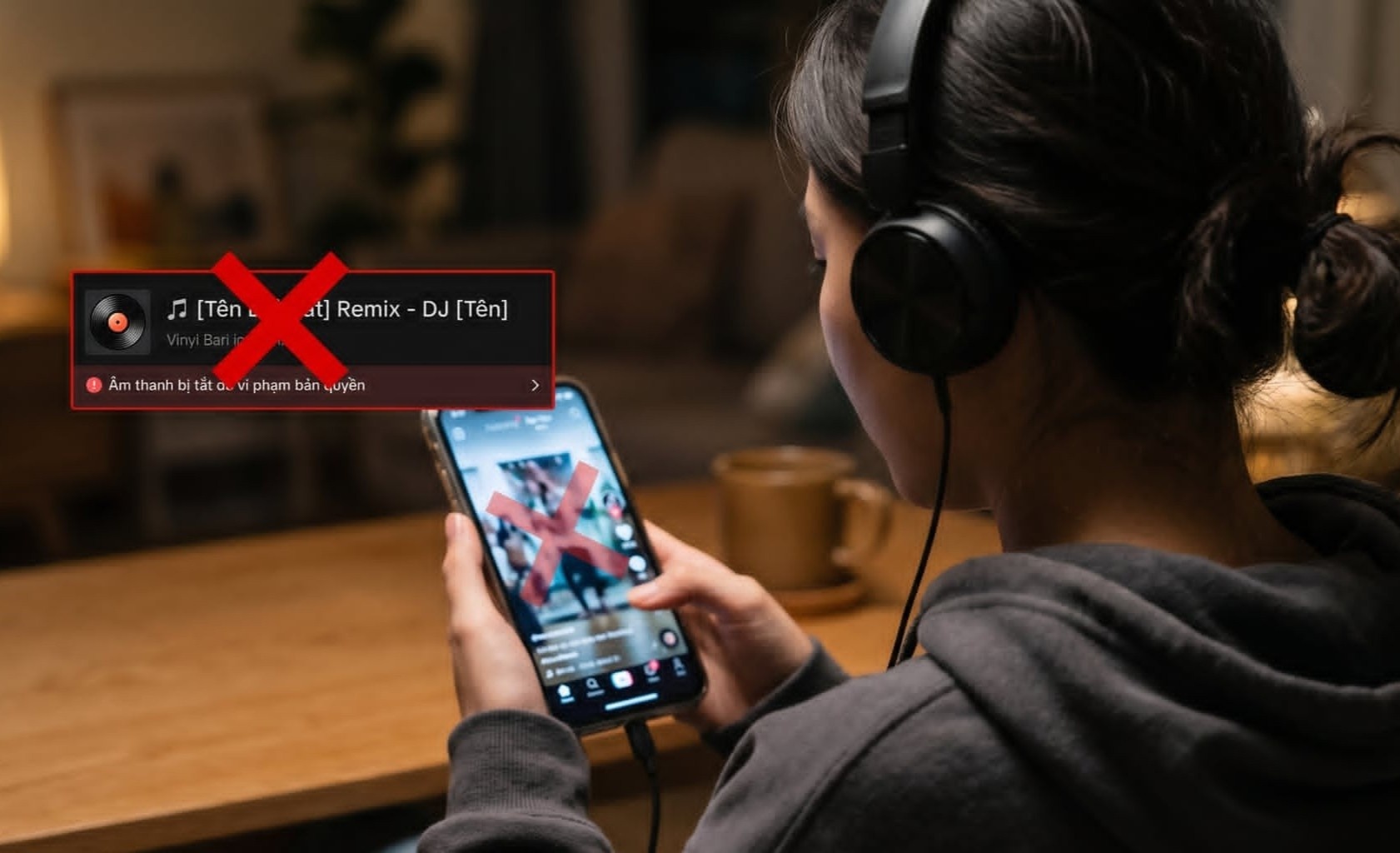 |
The proliferation of remix music on TikTok is causing a copyright issue. |
Acting as authorized copyright holders, these organizations will license, monitor, and collect royalties on behalf of the "creator" of the work across all platforms – from live performances and television broadcasts to film music projects and derivative covers.
Meanwhile, recording rights represent the final, polished audio recording delivered to the audience. At this stage, recording rights are protected and revenue is optimized through the powerful distribution networks of the labels. By deploying an advanced technological "net" like the Content ID system, record labels can tightly control their assets in cyberspace.
Any attempt to copy, extract audio for use as background music in short videos , or remix without the owner's permission will be immediately flagged by the system – blocking the upload or automatically redirecting all revenue back to the rightful owner.
Music copyright infringement hotspots occur when individuals/organizations intentionally circumvent the law by "reworking" and tweaking details. For example, remixing the same song might distort the vocals, increase/decrease the pitch, or add details to evade Content ID's detection system. More sophisticatedly, copyright violators will change the song's structure, add or remove notes to alter the melody, or even mix multiple songs together to create a "new bottle, old wine" product.
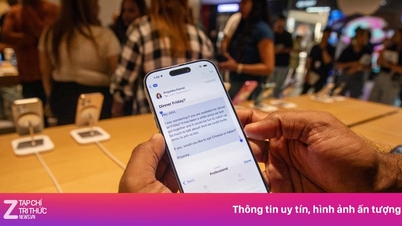
Copyright infringement can be tightly controlled on YouTube and other digital music platforms. However, on social media platforms, especially TikTok, it's much harder to control the proliferation of remixed music. Unlike YouTube, which prioritizes long, original videos, TikTok's algorithm encourages users to create short videos based on trending audio clips. This inadvertently fuels the proliferation of pirated music, leaving labels and copyright protection organizations constantly "chasing after the consequences" instead of stopping it from the start like YouTube does.
Expectations of Vietnamese artists
Document No. 314/BQTG-QL&HTQT from the Copyright Office raises hopes among Vietnamese artists for a comprehensive cleansing process. One of these is to end the illegal use of music copyrights and the circumvention of music copyright laws for illicit gain. This includes the rampant remixing of music on TikTok, and even the release of new versions on YouTube and other digital music platforms.
However, until now, there haven't been many specific cases of copyright infringement being prosecuted. Document No. 314/BQTG-QL&HTQT also serves as a reminder to individuals/organizations about respecting the intellectual property and music copyrights of their colleagues. Otherwise, given the current situation, violations will have serious consequences, not just the back-and-forth "accusations" between copyright holders and those whose rights have been violated.
 |
Producers still have many loopholes to avoid copyright issues. |
Speaking with Tri Thức - Znews , lawyer Huỳnh Thanh Tâm from CNC Vietnam Law Firm, Ho Chi Minh City Bar Association, stated that under the current legal framework, infringement of copyright (for works) and related rights (for performances, sound recordings, video recordings, broadcasts) can be handled under three forms of sanctions: civil, criminal, technological, and administrative. Of these, administrative sanctions are the most common.
Depending on the severity, individuals and organizations will be subject to the primary penalty of a fine, in addition to which they may be subject to supplementary penalties such as confiscation of evidence and means used in the violation, revocation of the Copyright and Related Rights Expert Card or Certificate of Copyright and Related Rights Expert Organization for a period of 1 to 3 months, as stipulated in Decree 341/2025/ND-CP dated December 26, 2025, regulating administrative penalties for violations of copyright and related rights.
In particular, Official Letter 314/BQTG-QL&HTQT dated May 6, 2026, from the Copyright Office emphasizes the thorough review and handling of intellectual property infringement, the use of pirated software, and the illegal exploitation of digital content. The Copyright Office requests that organizations, businesses, and individuals review and ensure strict compliance with copyright and related rights laws in their professional activities, refrain from using unlicensed computer programs, and avoid the illegal exploitation and use of copyright and related rights related to works, performances, sound recordings, video recordings, and broadcast programs.
For serious infringements, those on a commercial scale, or those causing exceptionally large consequences, violators will be prosecuted under the Penal Code. Article 225 of the 2015 Penal Code, as amended in 2017, stipulates the crime of infringing copyright and related rights. Specifically, the perpetrators of this crime can be individuals or legal entities who infringe copyright and related rights. Individuals may face imprisonment for up to 3 years. Legal entities that infringe may be fined or have their operations suspended for up to 3 years.
"Objectively speaking, the deterrent effect was not high in the past because there weren't many specific and strict cases being handled, leading many parties to maintain a mindset of circumventing the law for illicit gain. However, the situation in 2026 is changing dramatically thanks to the synchronized coordination between law and technology. We are moving towards an era where the combination of law, the Management Organization (VCPMC), and technology (Fingerprinting/Blockchain) will create a sufficiently strong barrier to force violators to think carefully before infringing on artists' intellectual property," according to the lawyer.
Source: https://znews.vn/diem-den-nhac-viet-post1651778.html




![[Photo] General Secretary and President To Lam receives Amazon's Senior Vice President David Zapolsky](https://vphoto.vietnam.vn/thumb/1200x675/vietnam/resource/IMAGE/2026/05/22/1779466547770_a1-bnd-3513-6601-jpg.webp)














































































Comment (0)