

Online public services are experiencing significant growth.
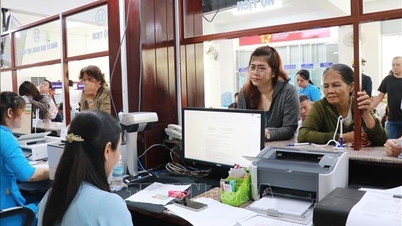
According to the monitoring system as of April 20, 2026, the percentage of online applications processed across the entire administrative procedure process in April 2026 reached 45.6%, an increase of 6% compared to the same period in 2025. Of this, ministries and agencies achieved a rate of 67.9%, while local authorities achieved 18.43%.

Many localities continue to be bright spots in administrative procedure reform and online public service provision. Bac Ninh province continues to lead the country in the set of indicators for serving citizens and businesses on the National Public Service Portal; 100% of administrative procedures related to businesses are provided online; and it is also the first locality to implement the issuance of criminal record certificates on VNeID with a rate of over 97%.
Quang Ninh province maintained outstanding results by providing 100% online public services with a total of 2,270 procedures, including 1,739 full-process procedures; the rate of online application processing reached 96.89%; and all administrative procedures are implemented regardless of administrative boundaries.
Thai Nguyen province currently provides 2,090 online administrative procedures, including 995 full-process procedures, maintaining its position among the top 10 localities nationwide. Meanwhile, Ca Mau province has implemented 100% of administrative procedures regardless of administrative boundaries within the province; 100% of procedures related to eligible businesses are provided online.
Meanwhile, in Can Tho City, the rate of digitizing documents and issuing electronic results reached 95.74%; the rate of exploiting and reusing digitized data reached 96.94%. Notably, Gia Lai province proactively reduced the processing time for 1,713 administrative procedures, reaching 55.15%; and implemented the "Public Service Support Point at Armed Forces Units" model, contributing to bringing digital services closer to people in remote areas...
Digital infrastructure has developed remarkably.
According to the Ministry of Science and Technology, along with administrative reforms, the national digital infrastructure continues to receive strong investment and has made remarkable progress. Currently, 3G and 4G networks cover over 99% of the population, with 4G reaching 99.8%. The 5G coverage rate has reached 91.9% and is expected to increase to 97% by the end of 2026.
The fiber optic cable system has connected 100% of communes and wards nationwide, with a total length of over 1.3 million km, bringing the percentage of households using fiber optic cables to 85%.

Vietnam's mobile internet speed reached 200.54 Mbps, ranking 11th out of 104 countries; fixed-line internet speed reached 281.72 Mbps, ranking 12th out of 154 countries. Broadband coverage has now reached 99.56% of villages and hamlets; approximately 84.15% of the population is using the internet.
In terms of international connectivity infrastructure, Vietnam is currently operating 6 international submarine cables along with the 3,900 km long VSTN terrestrial cable, with Vietnam having complete technological control. The country currently has 42 data centers with a total designed capacity of approximately 372.75 MW, more than four times higher than in 2021.
In particular, the pilot licensing of low orbit (LEO) satellite services with Starlink, along with procedural reforms, has expanded access to broadband internet to remote, border, and island areas.
The national digital ecosystem continues to expand.
According to the Ministry of Science and Technology, the number of active digital technology businesses nationwide is estimated at around 80,000.
In addition, 12 concentrated digital technology zones have been established, expanded, and recognized according to legal regulations, including many exemplary models such as Quang Trung Software Park, Da Nang Software Park, Cau Giay Concentrated IT Zone, TMA Innovation Park, etc.
In the first quarter of 2026, the Ministry of Science and Technology issued two important plans to promote the digital transformation of small and medium-sized enterprises (SMEs) in the 2026-2030 period; and to support technology companies in participating more deeply in global supply chains. Simultaneously, progress was also made in promoting electronic contracts and reliable service infrastructure.
On March 30, 2026, the National Electronic Authentication Center issued guidelines for implementing the electronic contract authentication model in high-transaction-frequency sectors such as finance, industry and trade, education, healthcare, internal affairs, and banking. This is considered an important step towards standardizing electronic transactions, ensuring legality, transparency, and security in the digital environment.
By the end of the first quarter of 2026, approximately 29.12 million public digital signature certificates had been issued nationwide, raising the digital signature普及 rate among the adult population to 42.09%. Simultaneously, cashless payments continued to grow strongly. The electronic financial switching and clearing system processed over 3.37 billion transactions in the first quarter of 2026, with a value of nearly 16.05 trillion VND.
Notably, in the first three months of 2026 compared to the same period of the previous year: Non-cash payment transactions increased by 37.98% in volume; via the Internet increased by 65.68%; via mobile phones increased by 33.22%; and via QR Code increased by 16.43% in volume and 52.4% in value.
By the end of February 2026, Vietnam will have 20,772 ATMs, over 761,000 POS devices, and a nationwide QR Code network. Vietnam has also completed cross-border QR Code payment connections with Thailand, Cambodia, and Laos, and is continuing to expand to China, South Korea, India, and other countries.
There are still "bottlenecks" at the grassroots level.
Despite achieving many positive results, the digital transformation process still faces numerous challenges. According to the Ministry of Science and Technology, digital infrastructure and capabilities at the grassroots level, especially at the commune level, remain weak and inconsistent. Many localities still lack stable internet connections, terminal equipment, shared data centers, as well as a team of specialized personnel in information technology and digital transformation.
In addition, the comprehensive review of digital infrastructure and platforms within the political system, as requested by the Central Committee, is also facing difficulties due to the late submission of reports by many ministries, sectors, and localities, affecting the progress of compilation and evaluation.
In the coming period, the Ministry of Science and Technology will focus on finalizing the National Strategy on Digital Transformation until 2035, with a vision to 2045; developing criteria and a list of national common digital platforms; and promoting the deployment of cloud computing infrastructure with technology owned by Vietnam.
With an increasingly完善 infrastructure, a continuously expanding digital ecosystem, and strong political will from the central to local levels, digital transformation is entering an accelerated phase, aiming to make the digital economy a new growth engine for the country.
Source: https://baotintuc.vn/thuc-hien-nghi-quyet-57/diem-nghen-chuyen-doi-so-o-co-so-van-hien-huu-20260512102057626.htm


![[Image] Hanoi's urban life under the challenge of a "scorching hot" environment](https://vphoto.vietnam.vn/thumb/1200x675/vietnam/resource/IMAGE/2026/05/25/1779706979265_nang-nong-t5-2026-minh-duy-7-4636-jpg.webp)
![[Image] Close-up view of the interchange connecting the two expressways and Long Thanh Airport.](https://vphoto.vietnam.vn/thumb/1200x675/vietnam/resource/IMAGE/2026/05/25/1779703378210_ndo_br_z7863716673926-224453a31600126cce10622af6290afd-4549-jpg.webp)

































































































Comment (0)