

Unlocking capital flows for science and technology.
Vietnam aims to achieve a minimum revenue of $300 billion in the digital technology industry by 2030 and become a leading digital technology hub in the region by 2045.
Ten strategic technology groups have been established, ranging from digital technology, biotechnology, and new materials to aerospace, deep-sea, and quantum technology. In addition, the Government has also issued a list of 70 high-tech technologies prioritized for investment and development, and 100 high-tech products encouraged for development.
Professor Tran Hong Thai, President of the Vietnam Academy of Science and Technology, stated: "Now is the opportune moment for us to shift our focus. We should not only conduct basic research but also integrate it to master Vietnamese technologies and products, so that we can immediately contribute to double-digit growth."
Associate Professor Dr. Dinh Van Trung - Director of the Institute of Physics, Vietnam Academy of Science and Technology, shared: "Setting big problems will be a great motivation for us to focus resources and concentrate scientists to solve specific problems with practical significance."
However, this is also a field that requires large capital investments, long periods of time, and a high level of risk. Unlocking capital for science and technology is a crucial factor in bringing products from the laboratory to the market.
Science and technology, innovation, and digital transformation are identified as key drivers, the "golden key," and vital factors in realizing development aspirations. Therefore, it is urgent to review and remove bottlenecks related to the financial mechanisms for this sector. This was the requirement of Prime Minister Le Minh Hung at the ceremony celebrating Vietnam's Science, Technology, and Innovation Day.
In 2025, a 500 trillion VND credit package was established, aiming to provide long-term funding for strategic infrastructure, transportation, and technology investment projects. By the end of February, commercial banks had signed credit agreements for 8 projects, with committed disbursement capital exceeding 70 trillion VND. However, none of the science and technology projects have yet accessed this funding, primarily due to the lack of a clear and specific project portfolio. Furthermore, the requirement for collateral is a major obstacle to accessing bank loans.
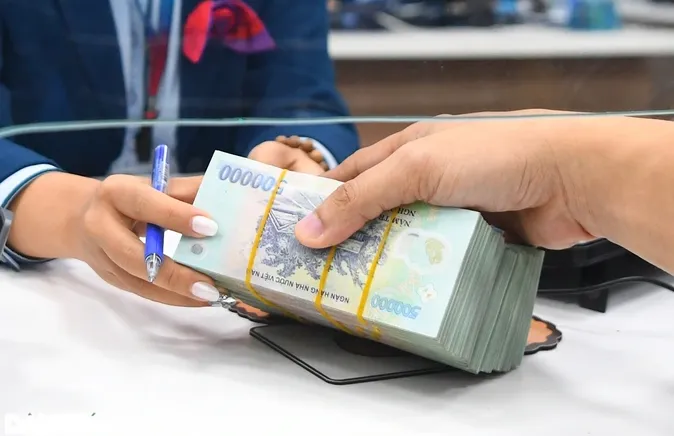
Unlocking capital flows for science and technology.
Capital bottlenecks for science and technology
Specializing in research on emerging technologies, such as artificial intelligence, the company estimates it needs at least 5 billion VND per month to maintain operations. This figure could double with new research projects. However, they are unable to obtain bank loans due to a lack of collateral.
Ms. Mai Thuy Vinh, Deputy Director of ADT Global VN, stated: "Banks will assess based on tangible collateral and the stability of the company's finances. The biggest asset of a technology company is not tangible assets, but rather intellectual property, technological platforms, and human resources, making them intangible. This mismatch is what leads to difficulties in accessing funding."
Without real estate collateral, businesses have to find various ways to raise capital: from venture capital funds to shareholder equity. With the goal of developing smart logistics and modernizing the supply chain in line with government policy, this company has innovated its digital platform, making order tracking and import/export procedures more convenient. However, when they need capital, they can't go to banks and have to consider other options.
Ms. Chu Thi Kieu Lien, Branch Manager of T&M Forwarding Hanoi, stated: "Our company's main product is transportation services, so when borrowing capital from banks, if they require collateral, we don't have any. Therefore, when we need to raise capital, we seek funding from other sources, such as attracting shareholders to increase our charter capital."
The technology and innovation sector has unique characteristics; its products and services are newly researched and therefore carry significant risks. Experts suggest that banks need a separate lending mechanism, reducing credit conditions and offering a more open approach similar to investment funds to better suit this group of businesses.
Mr. Pham Xuan Hoe, Secretary General of the Vietnam Leasing Association, commented: "Innovation and startups have a high risk rate. Out of 100 businesses, perhaps only 1-2 will succeed. For the banking system to be able to design support packages for startups or innovation, the banks themselves must have their own venture capital funds, operating under a mechanism that does not impact the safety of the banking system."
To narrow the capital gap between businesses and banks, experts also suggest promoting lending based on output contracts and the actual cash flow of each business. At the same time, they recommend evaluating intellectual property assets to consider appropriate loan limits.

Science and technology businesses and innovation companies often seek funding from venture capital funds and private equity funds.
Capital solutions for innovation
The nature of bank credit prioritizes safety, while investment in technology and innovation carries high risks and long payback periods. Therefore, science and technology and innovation businesses often seek funding from venture capital funds and private equity funds.
Following the 2022 pandemic, investment in Vietnam's technology sector has tended to decrease, reaching $398 million in 2024. This is also a general trend globally. In this context, the role of state capital is becoming increasingly important, not only in providing direct funding but also as "seed capital," guiding private capital to participate in high-risk sectors that have long-term strategic significance for the economy.
Hanoi has just launched the Hanoi Venture Capital Fund (HVCF) with an initial charter capital of 230 billion VND. The fund makes direct investments or co-invests with other funds through the purchase of shares or equity stakes in businesses. Each investment is limited to a maximum of 5% of the fund's total capital.
Meanwhile, in Ho Chi Minh City, the city's venture capital fund has also recently been established, aiming to concretize the mechanism of "public investment, private management" with the goal of making state capital truly become "seed capital" to create momentum for the growth of startups.
The venture capital fund has a size of VND 500 billion, with 40% from the City Budget and 60% from private capital. A unique feature of the fund is its unprecedented controlled risk acceptance mechanism, which sets the risk tolerance threshold for the state-owned capital at 50%.
The 50% risk threshold is considered on the overall portfolio over an investment cycle, not on an individual project. Furthermore, the fund's operating team, including government officials, will be exempt from liability if the investment incurs losses if they fulfill their responsibilities and regulations. These mechanisms are expected to help state venture capital reach startups more quickly and effectively.
Mr. Le Hong Minh, Chairman of the Board of Directors of VNG Group Joint Stock Company, stated: "Changing mindset means persistently investing, accepting a certain failure rate, accumulating those failures, and hoping that a small but manageable percentage will yield good results. In the long run, this will build achievements for the entire science and technology industry."
According to the City's Department of Science and Technology, the fund management model will also separate state capital ownership and enterprise management rights... approaching international standards, thereby helping to attract investors.
Mr. Lam Dinh Thang, Director of the Ho Chi Minh City Department of Science and Technology, stated: "The management authority will be operated by a professional business force and a team of experts. Investment will be guided by market principles and prioritized efficiency above all else."
The city government has also determined that the venture fund will not be a bank, but rather a provider of seed capital. The goal is to expand its scale to 5 trillion VND within 10 years, with the majority coming from private capital.
Investment models that foster innovation around the world.
Globally, a prime example of a state-funded investment fund is the "Big Fund"—China's large fund, officially known as the Integrated Circuit Industry Investment Fund (CICF), established in 2014 to develop the domestic semiconductor industry. Its current size is approximately $47.5 billion.
State capital plays a leading role, attracting additional funding from banks, private funds, and local governments. By last year, six major banks, including names like the Industrial and Commercial Bank of China and Bank of China, had invested, holding 33.14% of the shares. Many large Chinese chip companies have received funding from this fund, including DeepSeek. This "Big Fund" is currently negotiating to lead the startup's first funding round, with a potential valuation of around $45 billion.
Chinese officials are also beginning to launch new funds to promote various strategic technologies, such as the $8.8 billion National AI Industry Investment Fund. Many other countries are also adopting a model of using state resources as "seed capital" for innovation investment. Israel's Yozma fund acts as a "parent fund," providing funding through the establishment of venture capital funds, attracting private and foreign investors as partners, and allowing them to buy back shares when the fund performs well. Meanwhile, Singapore's SG Innovate fund focuses on funding deep technology, from the initial development stage to market launch.
According to the recently published Global Startup Ecosystem Index 2026 report by StartupBlink, Vietnam has entered the top 50 globally for the first time in terms of startup ecosystems, a 5-place increase compared to last year. And with stronger capital flows, not only will young businesses have more opportunities to thrive, but Vietnam's innovation ecosystem will also gain momentum to reach greater heights on the global technology and economic map.
Source: https://vtv.vn/khoi-thong-dong-von-cho-khoa-hoc-cong-nghe-100260523105742278.htm



![[Photo] General Secretary and President To Lam presides over the meeting to approve the draft report on the results of the second inspection by the Politburo of the Standing Committee of the Hanoi City Party Committee.](https://vphoto.vietnam.vn/thumb/1200x675/vietnam/resource/IMAGE/2026/05/26/1779789811432_a2-bnd-4430-9620-jpg.webp)






















































































Comment (0)