

Recently, a series of Vietnamese films exploring settings and stories connected to local culture have been released, creating a notable trend in the market, receiving great support from audiences and achieving box office success. From "Heavenly Treasure," "The Scent of Pho," "Possessed by the Corpse 2," to "Phi Phong: The Blood Demon of the Sacred Forest ," "Five-Toed Pig," "The Shell King ," etc., each work chooses a unique cultural slice to tell its story – sometimes folk beliefs, sometimes regional life, or legends passed down through generations. In the near future, projects such as "Guardian Spirit: The Mystery of King Dinh's Tomb , " "Detective Kien: The Golden Curse," "The Fire God's Tower," etc., are expected to continue the journey of bringing Vietnamese culture to the big screen, targeting both young domestic audiences and the international market.
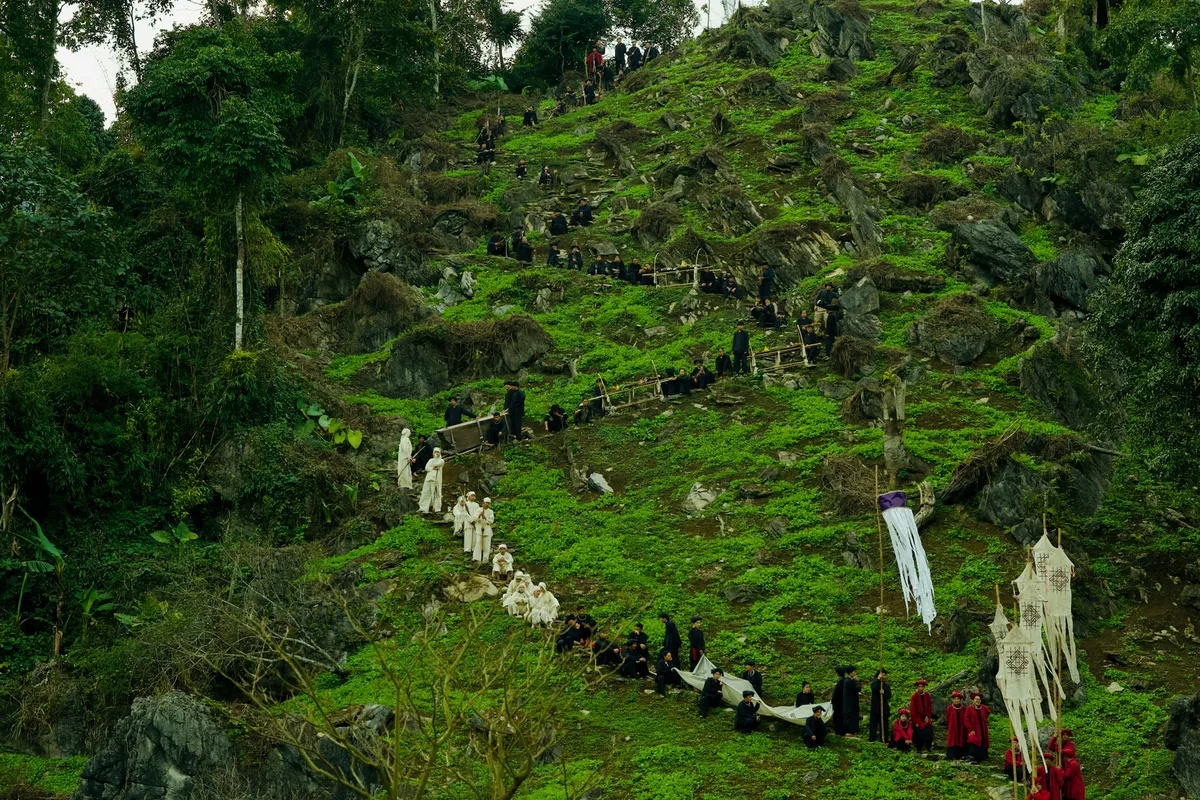
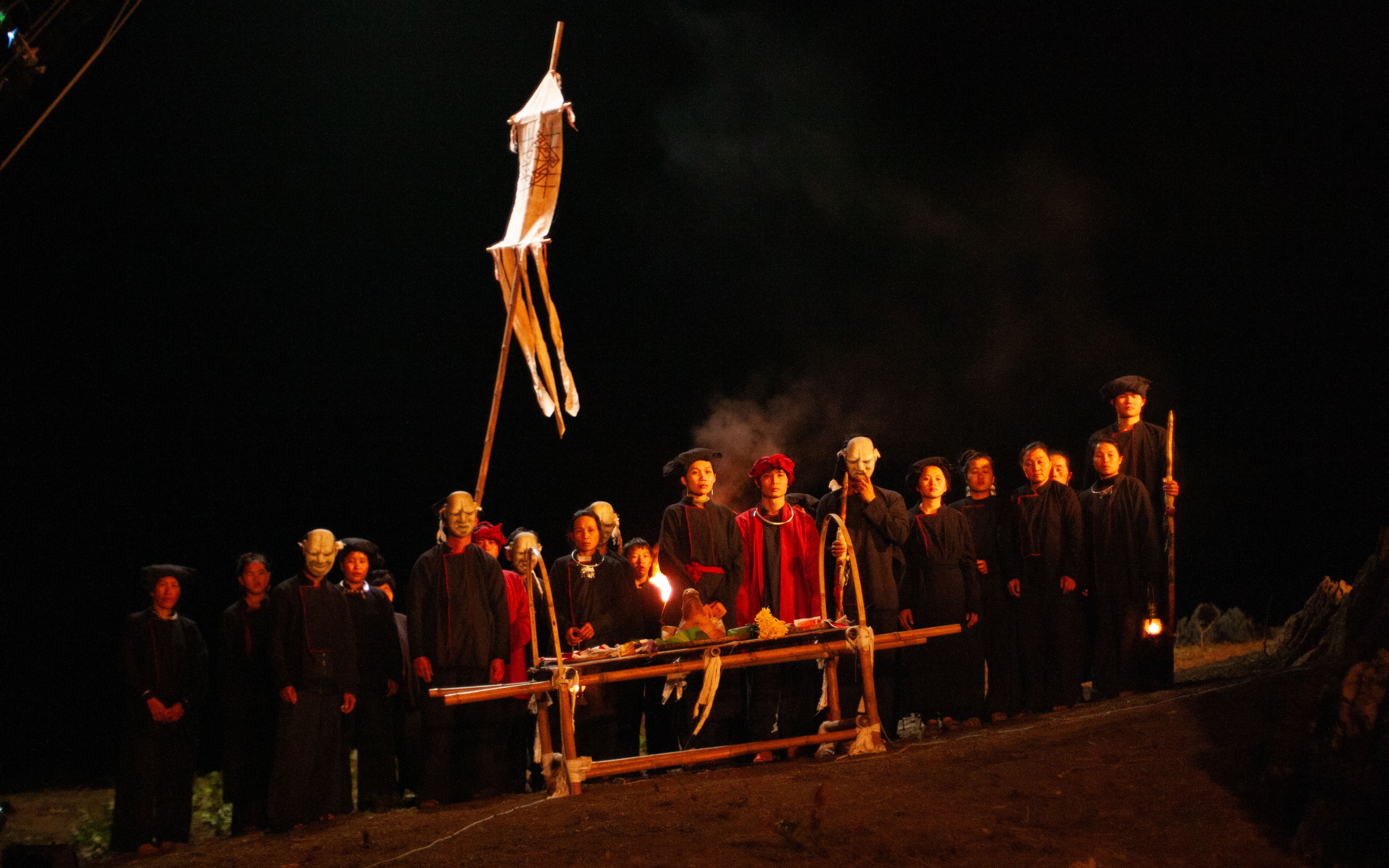
The funeral scenes of the mountain people create a visual impact in the film "Phi Phong".
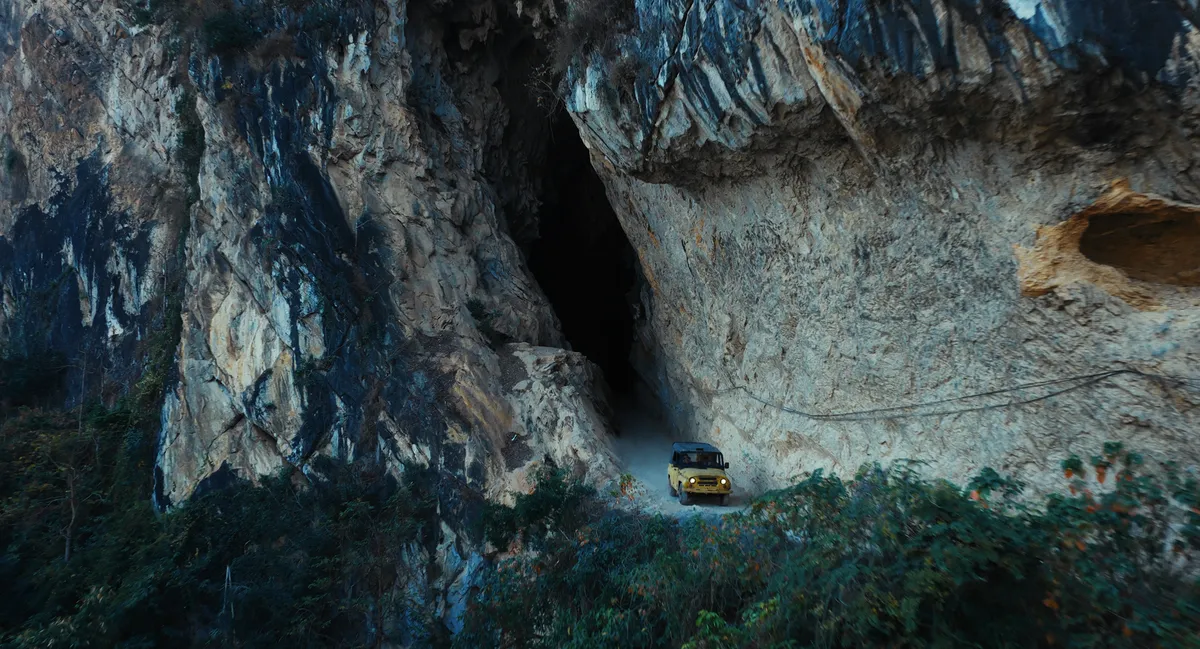
Tham Cave - A unique mountain trail in Northwest Vietnam.
The common thread in these films is that local culture becomes the core element that gives them their uniqueness and depth. According to director Phi Phong, director of "Blood Demon of the Sacred Forest ," without cultural elements, a film would only be pure entertainment. "Culture is the backbone. It gives the story depth and the ability to go further," director Do Quoc Trung stated.
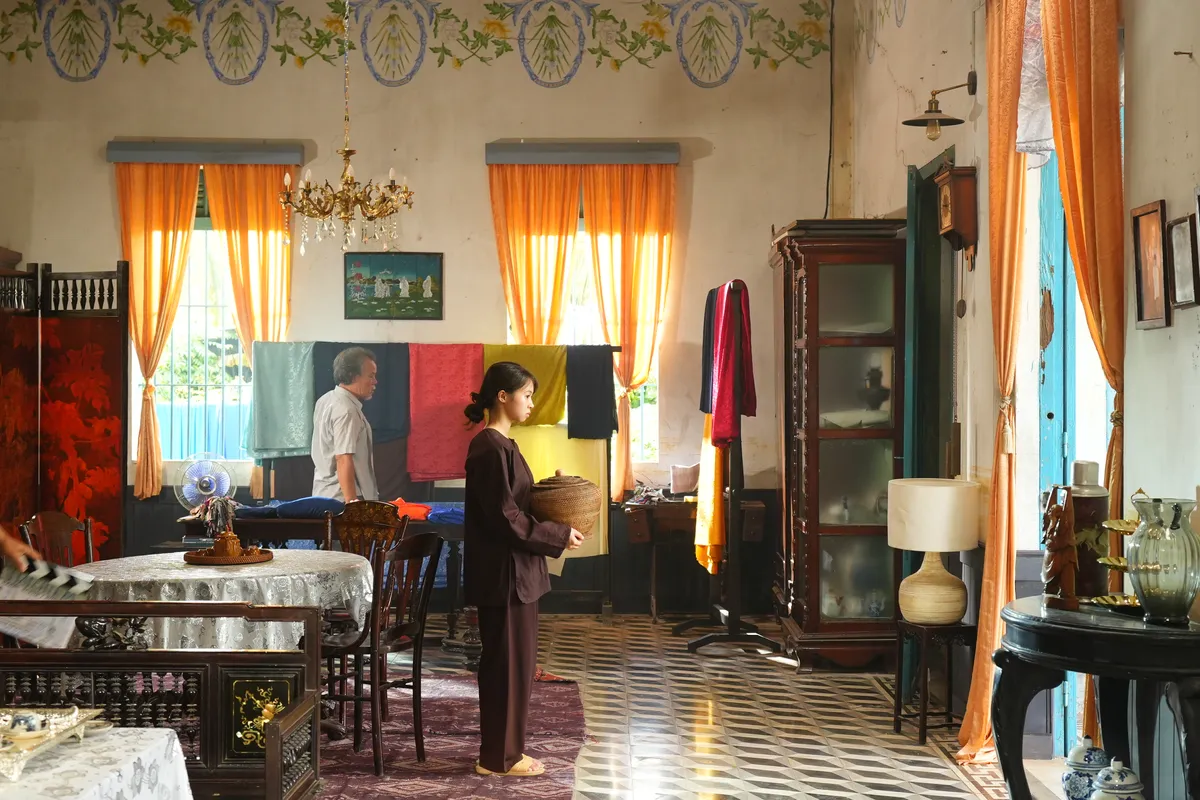
The house in the movie "Possessed by a Corpse 2" is set in a style typical of the Southwestern region of Vietnam.
Director Luu Thanh Luan, with the success of his series exploring supernatural stories such as "Ghost Dog," "Spirit Cat," and "Five-Toed Pig," also believes that culture plays a solid foundational role in making a story more convincing. When audiences recognize familiar elements, they are more likely to believe the story, and thus their emotions become stronger.

Director Duc Thinh and the cast of the film "Trum So".
Director Duc Thinh believes that cinema will become impoverished if filmmakers only chase after popular tastes. "If audiences like just a few formulas, and dozens of directors follow suit, the market will lose its diversity. Never ridicule any creative path. Cinema needs variety, and the audience is the one who benefits the most," he said. According to him, local culture cannot be reduced to mere decorative elements. More importantly, each director must maintain their own unique style. When filmmakers lose themselves in pursuit of trends, cinema not only loses its individual identity but also its richness in genre.
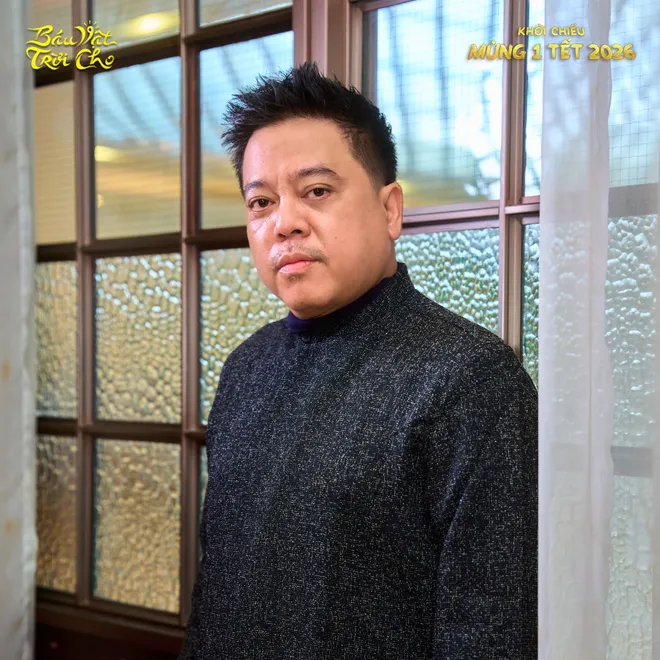

Director Le Thanh Son incorporates coastal culture into his film "Heaven-Sent Treasure".
Sharing the same viewpoint, director Le Thanh Son of the film "Heaven-Given Treasure " believes that culture only truly has value when it becomes an integral part of the script's structure. "Culture must be involved in the conflict, in the characters' psychology. Only then will it truly come alive, not just be a decorative element," he emphasized. From this perspective, identity is no longer an added factor, but becomes the foundation that determines the depth of the work.
Exploiting local culture is clearly becoming a prominent advantage for Vietnamese cinema, helping to create distinctiveness and depth in its works. However, this comes with very strict limitations that filmmakers must face. In reality, the most difficult aspect is not whether or not to include cultural elements, but rather how to use them appropriately. If overused, culture can easily become a heavy layer of information, slowing down the narrative and overwhelming the audience. Conversely, if exploited superficially, the work will quickly lose its unique identity and become bland in the market. Therefore, the biggest challenge for directors today is not finding material, but maintaining restraint – a delicate but crucial line that determines the film's vitality.
Film director Do Quoc Trung, known for his film "Phi Phong: The Blood Demon of the Sacred Forest ," said that his filmmaking process began with long trips to the northern mountainous region. There, he realized a reality: folk culture doesn't exist in a single standard version, but always has many variations and different ways of telling the story. Therefore, the team decided to create a fictional village, but one that is distilled from many real elements – from clothing and customs to beliefs. This approach helps maintain a sense of authenticity while avoiding controversy regarding cultural representation. This is seen as a way to reconcile artistic creativity with the responsibility of preserving and promoting culture.
In a different approach, director Luu Thanh Luan chooses to delve deeply into specific regions. For him, each film is like learning from scratch. "I don't borrow. I travel, I experience, and then I tell my story. Everything in Vietnam is beautiful, but not everything is suitable for film," he says. This process doesn't just stop at observation; it involves direct participation in life, from customs and rituals to how people behave. These experiences help create a cinematic space with depth, rather than just a superficial recreation.
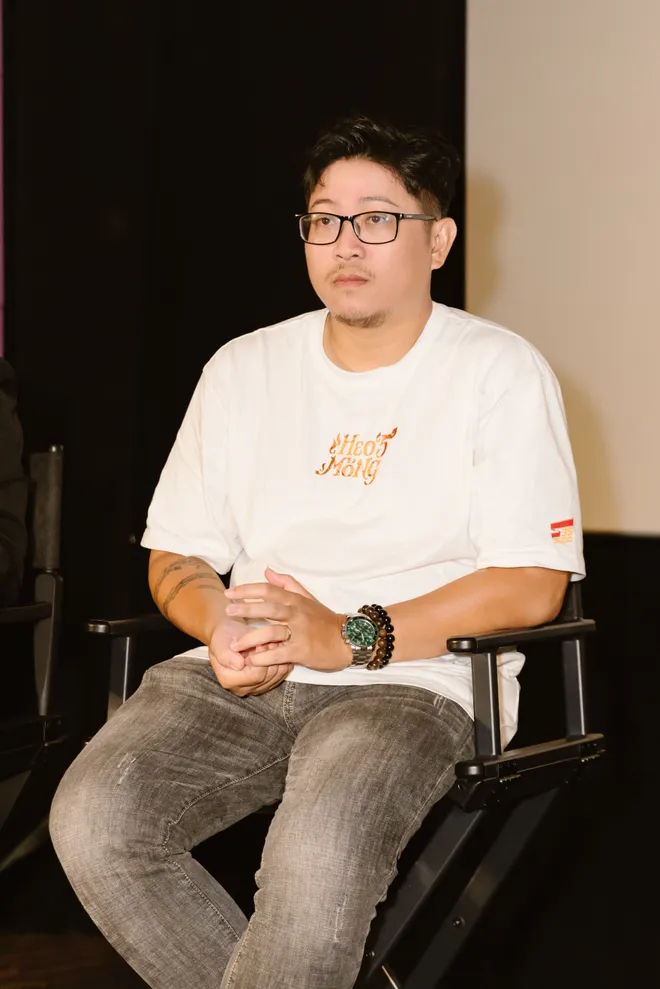
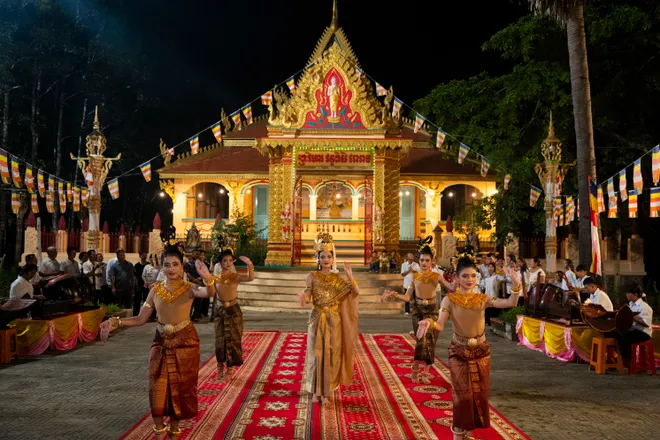
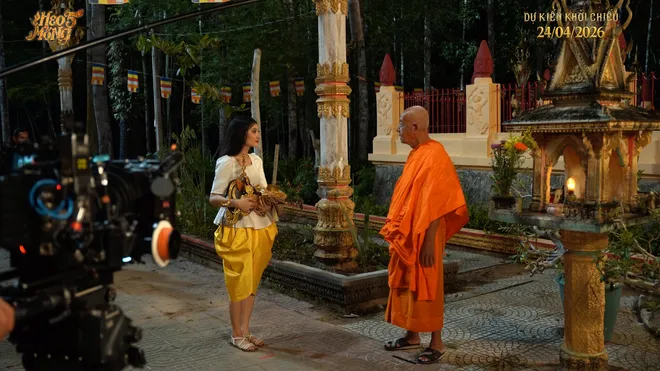
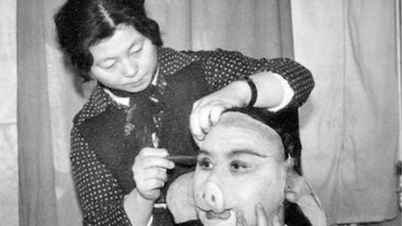
Director Luu Thanh Luan spent time with his team researching Khmer culture when incorporating it into the story of "The Five-Toed Pig".
From a practical perspective, leveraging local culture is not a fleeting trend, but a strategic direction. In the context of Vietnamese cinema seeking to expand into the international market, culture is a crucial "passport." However, to utilize it effectively, each filmmaker must embark on a long journey: from research and experience to refinement and creation. There is no single formula, no shortcut, only one common point: honesty with culture and with oneself. Because ultimately, cinema is not just about images or technique. It is also about how a nation tells its own story through the language of emotion, memory, and identity.
Source: https://vtv.vn/dien-anh-viet-khai-thac-van-hoa-ban-dia-100260521091922891.htm






















































































Comment (0)