

In the survey on happiness in Thu Duc ward, three aspects—material, spiritual, and cognitive—along with 10 criteria reflecting essential areas of life and 50 specific indicators measured from the daily experiences of residents, were selected as the main set of criteria.
The survey results revealed many interesting surprises. It wasn't material possessions, good jobs, or high income that brought happiness, but rather the spiritual and cognitive aspects that were the key factors contributing to the happiness of the residents of Thu Duc ward.
Proud to be from Thu Duc
In the three aspects—material, mental, and cognitive—the survey results show that cognition scored the highest, followed by mental; and the material aspect scored the lowest.
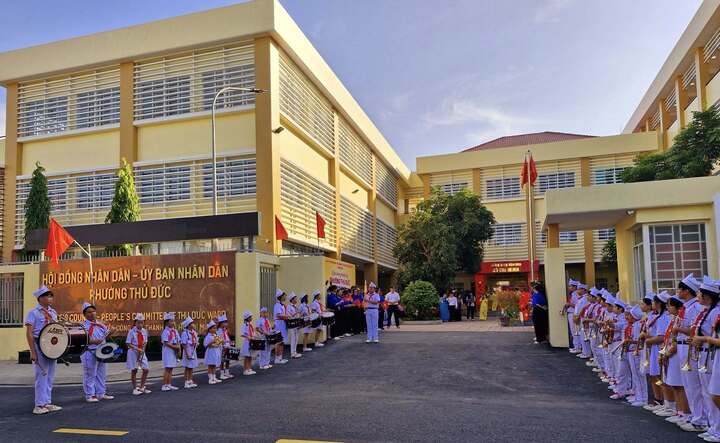
Thu Duc Ward, located at the eastern gateway of Ho Chi Minh City, will merge the entirety of Linh Chieu, Binh Tho, and Truong Tho wards, along with parts of Linh Tay and Linh Dong wards, effective July 1, 2025.
Specifically, the average score for the awareness aspect is approximately 7.4 points. This is a very noteworthy finding. People in Thu Duc not only "live" in the area, but also feel proud to be from Thu Duc; they want to stay there long-term and believe the area will continue to develop. In particular, many shared opinions expressing a willingness to spread positive information about their ward to others.
In terms of mental well-being, the average score was around 7.2 points. Residents reported feeling supported, having good and close relationships with neighbors; kindness in interactions; and a positive mental state contributing to their satisfaction with their current lives.
Meanwhile, the physical aspect only scored 7 points. The general consensus was that the local authorities should focus on investing in and improving transportation, flood control, noise reduction, and increasing green spaces.
People also face many pressures in life, including pressure from the cost of living, work pressure, and lack of rest time.
Similarly, across the 10 criteria reflecting essential aspects of life, the spiritual aspect group also received the highest score.
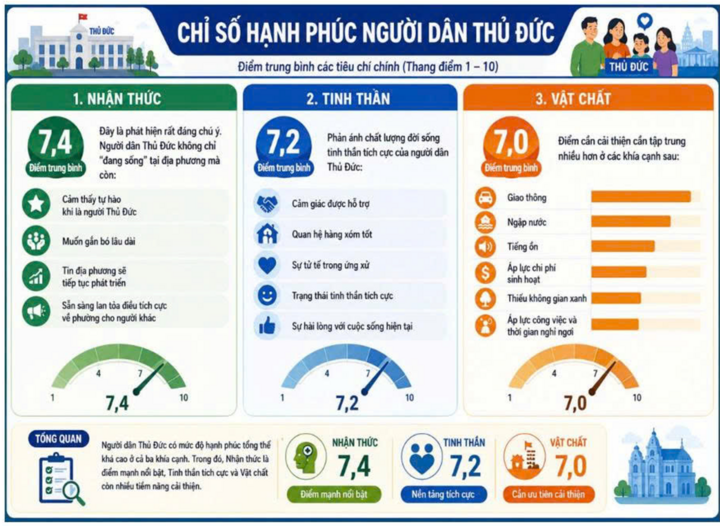
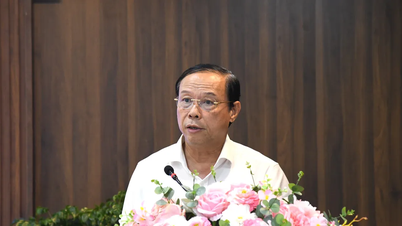
The happiness index of Thu Duc residents recorded the highest scores in terms of awareness and mental well-being. (Source: BC)
Specifically, the expectation criterion scored an average of 7.4 points; trust and connection scored 7.3 points; community relations and spiritual life both scored 7.2 points; and education and training scored 7.1 points.
According to representatives of the survey unit, people place their trust in society and have high expectations for the future. This reflects the fact that the people of Thu Duc highly value community bonds, faith in their locality, and opportunities for future development.
This is a crucial foundation for Thu Duc to continue building a people-centered governance model, strengthening community connections, investing in education and spiritual life, and consolidating social trust, as a "soft power" of sustainable urban development.
With 50 happiness indicators, the survey results recorded an average self-perceived happiness score of 8.1, reflecting the optimistic attitude and relatively high level of satisfaction of people with their current lives.
Of the 6,000 people surveyed, 71.9% rated themselves as happy or very happy. Of those, 26% gave themselves a perfect score of 10.
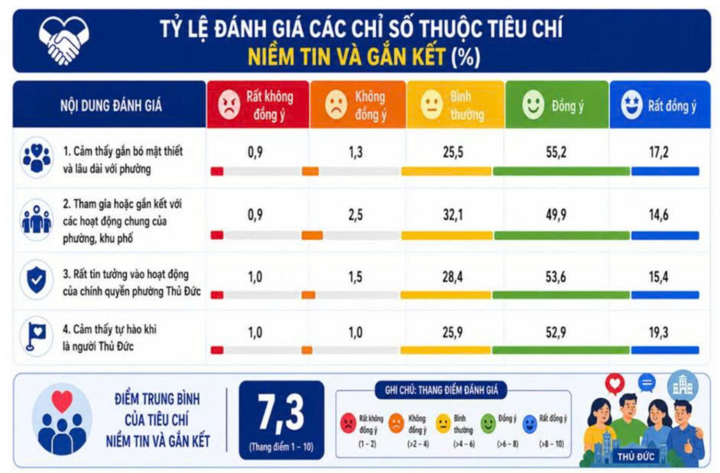
Belief, hope for the future, and community cohesion are the criteria that make people in Thu Duc happy. (Source: BC)
Conversely, the group that felt "normally happy" accounted for 26.3%.
Approximately 2% of people reported feeling "little happy" or "very little happy".
The most outstanding indicator was building a happy life, achieving a record high approval rate of 78.6%.
This was the most widely agreed-upon content in the entire survey, reflecting people's deep belief in the importance of personal and family happiness.
The group of indicators related to community relations also showed a very high percentage of positive agreement, exceeding 63%. Specifically, 70.3% of people expressed a desire to expand their relationships and connections with their neighbors.
In particular, 65.6% of people gave high marks to the mutual care and support within their villages and communities, and said they easily received support from their neighbors when they faced difficulties.
Almost no residents feel that the community environment in Thu Duc ward is negative.
75.6% of residents expressed a desire to live there long-term and contribute to building a more civilized ward. Notably, 72.2% stated that choosing to live in Thu Duc ward was a positive and correct decision.
High-income earners experience a lot of pressure.
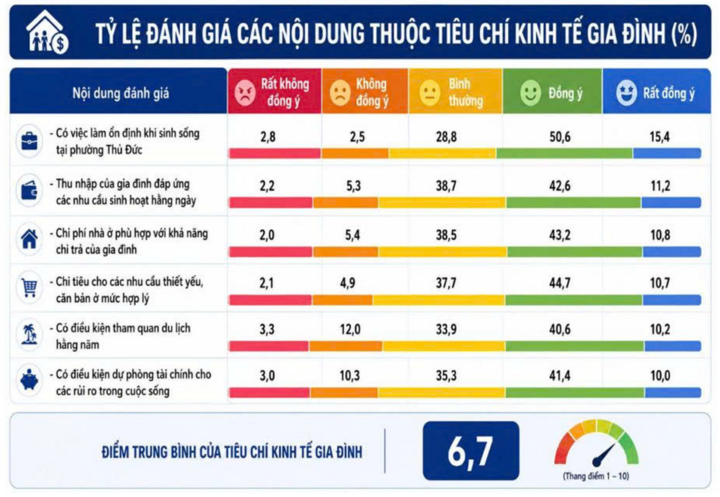
Family economic status received low scores and was not the primary criterion for people to assess happiness. (Source: BC)
Regarding the family economic criterion, the survey results show that the stable employment indicator received the highest positive consensus, at 66%.
Indicators such as family income meeting living needs, affordable housing costs, and reasonable essential spending were also given positive ratings by residents of Thu Duc.
Two indicators that drew attention due to low scores, and were shared by many residents, were their inability to afford annual travel and their lack of financial reserves for unforeseen circumstances.
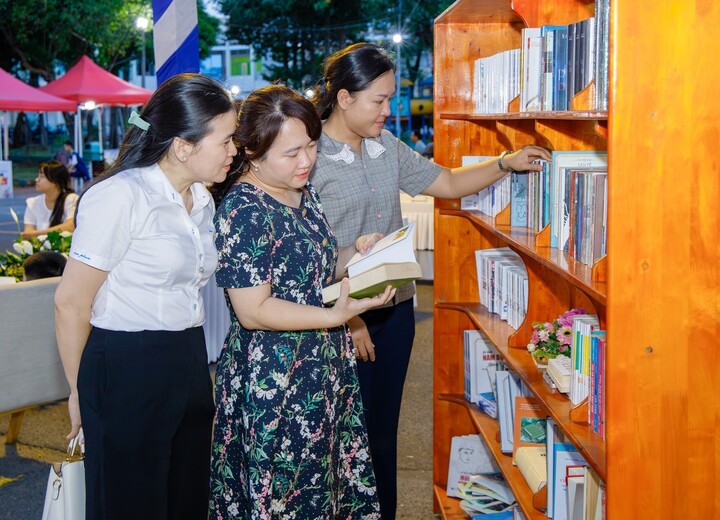
Residents participate in Vietnam's Book and Reading Culture Day 2026, launching the "Community-based Bookcase" model in Thu Duc ward. (Photo: Thu Duc Ward Public Service Center)
In addition, 65.4% scored highly on their positive and cheerful attitude. Notably, 65.7% shared that they have enough time for family and loved ones, and nearly 63% achieved a good work-life balance.
However, compared to other criteria, the work-life balance index still received the highest disapproval rating at 3.4%. The neutral rating was also the highest, at 33.7%.
This is a weakness and reflects the significant work pressure faced by a segment of the population in urban environments.
Interestingly, the survey group shared that when specifically assessing work-life balance, another finding was that the group earning over 25 million VND/month had the lowest happiness score in the mental well-being criterion.
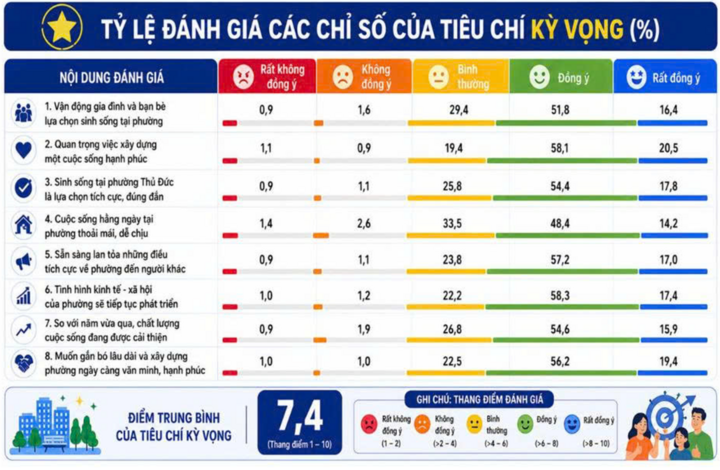
The majority of residents say that living in Thu Duc ward is a positive and correct choice. (Source: BC)
Therefore, policies aimed at promoting mental well-being are recommended to pay special attention to middle-aged and high-income groups. These two groups seem to be making significant sacrifices for economic and career success.
Two indicators that received the lowest scores and had the highest disapproval rates in the survey of residents in Thu Duc ward were traffic, environment, and transportation.
This is understandable given the reality of localized flooding during the rainy season and inadequate drainage, which affects the daily lives of some areas. In addition, traffic congestion during peak hours remains a major challenge.
The survey revealed many residents' aspirations towards developing Thu Duc ward from a transit area into a smart, sustainable, and modern urban model.
With its advantageous geographical location, the locality is expected to optimize resources to definitively address existing infrastructure limitations, thereby establishing a high-quality living environment and strengthening the level of security and sustainable happiness of its residents.
"Surveys show that urban happiness today no longer depends solely on material conditions or income, but is increasingly linked to a sense of security, kindness, trust in the government, and a feeling of belonging to a specific locality," shared Mr. Pham Binh An, Deputy Director of the Ho Chi Minh City Institute for Development Research.
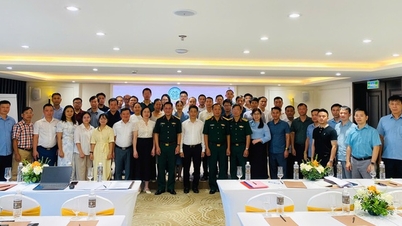
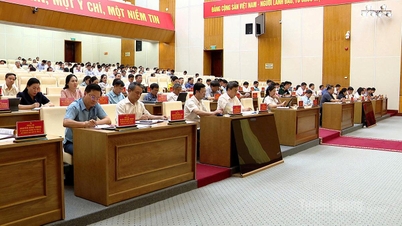
The People's Committee of Thu Duc Ward, in collaboration with the Ho Chi Minh City Institute for Development Research, recently held a conference to announce the "Criteria for a Happy Thu Duc Ward" and the results of the first survey.
The measurement system is meticulously designed with three dimensions: material, spiritual, and cognitive; 10 criteria reflecting essential aspects of life, along with 50 specific indicators closely aligned with people's daily experiences.
Thu Duc Ward will operate from July 1, 2025, based on the merger of the entire Linh Chieu, Binh Tho, and Truong Tho wards, a part of Linh Tay ward, and a part of Linh Dong ward.
The total natural area after the merger is approximately 11.2 km², with a population of over 160,000 people and an average density of about 14,200 people/km².
This area is strategically located, serving as the eastern gateway to Ho Chi Minh City. It is home to numerous government agencies and universities, attracts technology investment, and is traversed by major transportation arteries such as Hanoi Highway, Kha Van Can Street, and Metro Line 1 (Ben Thanh – Suoi Tien) running through the center of the ward.
Source: https://vtcnews.vn/dieu-gi-giup-thu-duc-tro-thanh-phuong-hanh-phuc-cua-tp-hcm-ar1019015.html

![[Image] Hanoi's urban life under the challenge of a "scorching hot" environment](https://vphoto.vietnam.vn/thumb/1200x675/vietnam/resource/IMAGE/2026/05/25/1779706979265_nang-nong-t5-2026-minh-duy-7-4636-jpg.webp)

![[Image] Close-up view of the interchange connecting the two expressways and Long Thanh Airport.](https://vphoto.vietnam.vn/thumb/1200x675/vietnam/resource/IMAGE/2026/05/25/1779703378210_ndo_br_z7863716673926-224453a31600126cce10622af6290afd-4549-jpg.webp)















































































Comment (0)