

The Forest Festival, also known as the Forest Worship Ceremony, embodies the Mong people's belief in worshipping the Forest God, a tradition passed down through generations. In every village of Na Hau commune, there is a sacred forest – a forbidden forest located in the most beautiful spot of the village, a place imbued with the spiritual energy of heaven and earth – where the Forest God is worshipped with strict, "inviolable" rules.
According to the Hmong people's beliefs, the lush green forests, sacred forests, and forbidden forests near the villages protect the villagers from strong winds, flash floods, and landslides, providing them with food, drinking water, and irrigation for their fields. Keeping the forests healthy and thriving is also about ensuring the peace and prosperity of the villagers. Every year on the last day of January, the villages in Na Hau commune gather at the "forbidden forest, sacred forest" to hold the "Forest God Worship Ceremony." This ceremony is the most important traditional ritual of the Hmong people, a prayer for the Forest God to bring prosperity to the villagers, and also an opportunity for the villagers to plan for forest protection throughout the year.
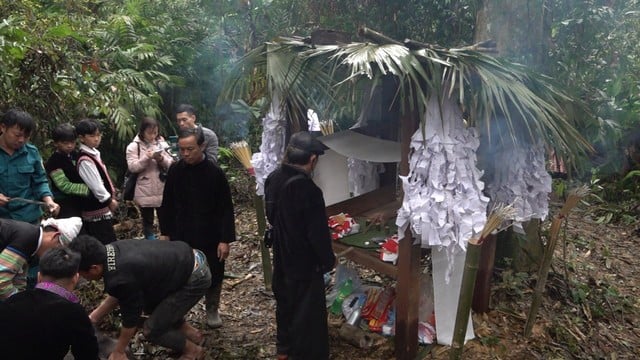
The shaman performs the ritual at the base of a large tree in the sacred forest.
According to the customs of the Hmong people, after the forest worship ceremony, all villages in Na Hau commune observe a three-day forest ban to thank the forest god. During these three days, everyone strictly adheres to the taboos stipulated by custom: not entering the forest to cut trees, not bringing green leaves from the forest home, not digging up roots or bamboo shoots, not digging up the soil, not letting livestock roam freely, not drying clothes outdoors, not grinding corn or pounding rice, etc.
A unique aspect of the Hmong forest worship ceremony in Na Hau is that families, along with other households in the village, will cook food together right in the sacred forest of the village. After the ceremony, the families will eat together on homemade bamboo tables at the edge of the forest.
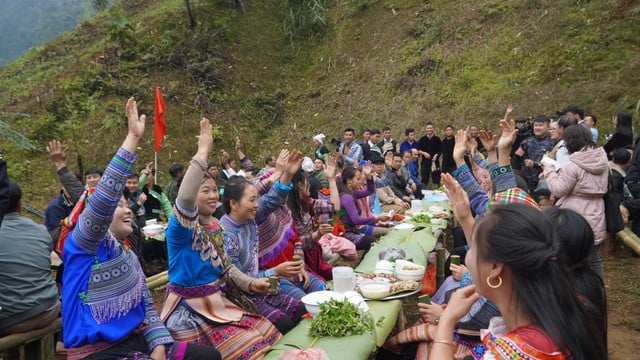
Families in the village cook together and celebrate the Forest New Year right at the edge of the sacred forest.
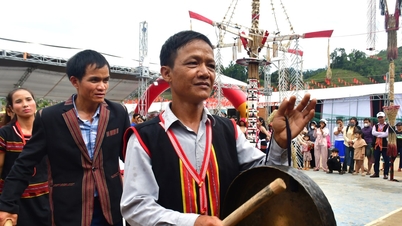
Within the framework of the festival, Na Hau commune organized competitions and performances of folk games and cultural and artistic performances of the Mong people such as: spinning tops, stick pushing, tug-of-war, crossbow shooting. Other games included pao jumping, spinning tops, stick pushing, crossbow shooting, shuttlecock kicking, tug-of-war, fishing with baskets in the rice fields… and performances of mouth organs, leaf organs, khene dance, sen tien stick dance, and call-and-response singing of the Mong people; photo exhibitions with the theme of land and people of Van Yen; sightseeing and tourism activities; experiencing traditional Mong metalworking models; embroidery of Mong costumes; cloud hunting at Ba Khuy peak; Ban Tat waterfall, Tien waterfall, Bat Cave, Golden Cave, primeval forest…; and enjoying local cuisine : men men (corn porridge), sturgeon, black chicken, local pork, snails, mustard greens, bitter greens…
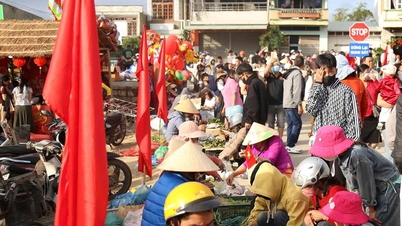
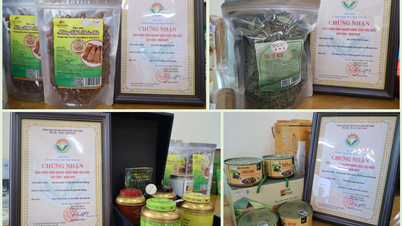
At the same time, Na Hau organized a Mong ethnic minority fair with 20 stalls showcasing typical Mong products such as agricultural products including Shan tea, cinnamon products, purple rice, upland sticky rice, cardamom, cardamom, various vegetables and fruits... Handicrafts: knives, hoes, shovels, spades, hammers... Clothing: various types of shirts, skirts, necklaces, aprons of the Mong people... Props: flutes, pipes, coin-shaped sticks, cauldrons of the Mong people...
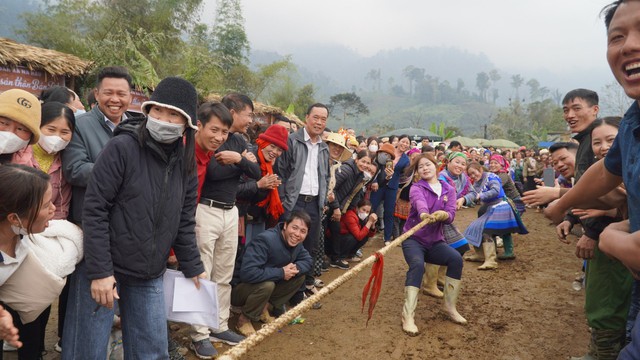
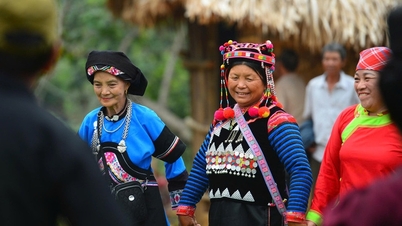
The Hmong people of Na Hau participate in folk games.
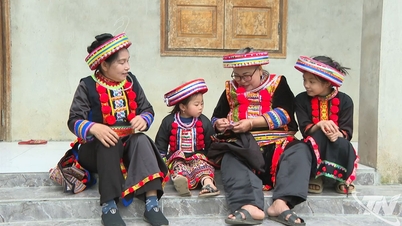
Forest Festival is a tradition passed down from generation to generation by the Hmong people of Na Hau commune. It has become a long-standing custom for the Hmong people here to remember their roots, remind each other to work together to build a prosperous and safe life amidst the vast green forest. The Forest Festival is also an opportunity for everyone, both locals and tourists, to further appreciate every tree and every forest, and to educate people about environmental protection, building a green, harmonious, and happy life with their unique identity.
.
Source


![[Image] Shipbuilders exposed to steel and record-breaking heat.](https://vphoto.vietnam.vn/thumb/1200x675/vietnam/resource/IMAGE/2026/06/04/1780545781745_ndo_br_img-5402-4683-jpg.webp)







































![[Video] Sunset at Lap An Lagoon – Where the sun sets over the fishing nets](https://vphoto.vietnam.vn/thumb/1200x675/vietnam/resource/IMAGE/2026/05/31/1780192137701_beach-landscape-sea-water-nature-grass-745871-pxhere-com.jpeg)



















Comment (0)