

Hoi An currently boasts over 200 pairs of door eyes, in 20 different types. They can be round, hexagonal, octagonal, or carved into 6 or 8 chrysanthemum petals; a few are square or flattened hemispherical… Most door eyes depict yin-yang or gua (eight trigrams) symbols inside the petals; the gua symbol encircles the yin-yang circle. Additionally, some door eyes feature five bats carved on the outside, symbolizing "five blessings entering the house." The door eye of the Japanese Bridge, in particular, features a yin-yang circle surrounded by four lotus flowers on all four sides.
Mr. Phan Thuy Tram (75 years old, the 6th-generation owner of the Duc An ancient house) said that in the past, Hoi An residents often lived on boats, and they used to make two eyes at the bow of their boats to ward off evil spirits and guide their way. Later, when they moved ashore, people made the eyes in front of their houses to commemorate their ancestors and pray for peace and family harmony. "All things have spirits, and the eyes of the door are the soul of the gate, guarding the flow of vital energy from outside into the house and vice versa. The eyes of the door are a symbol of the spiritual culture of the people of Hoi An," Mr. Tram said.
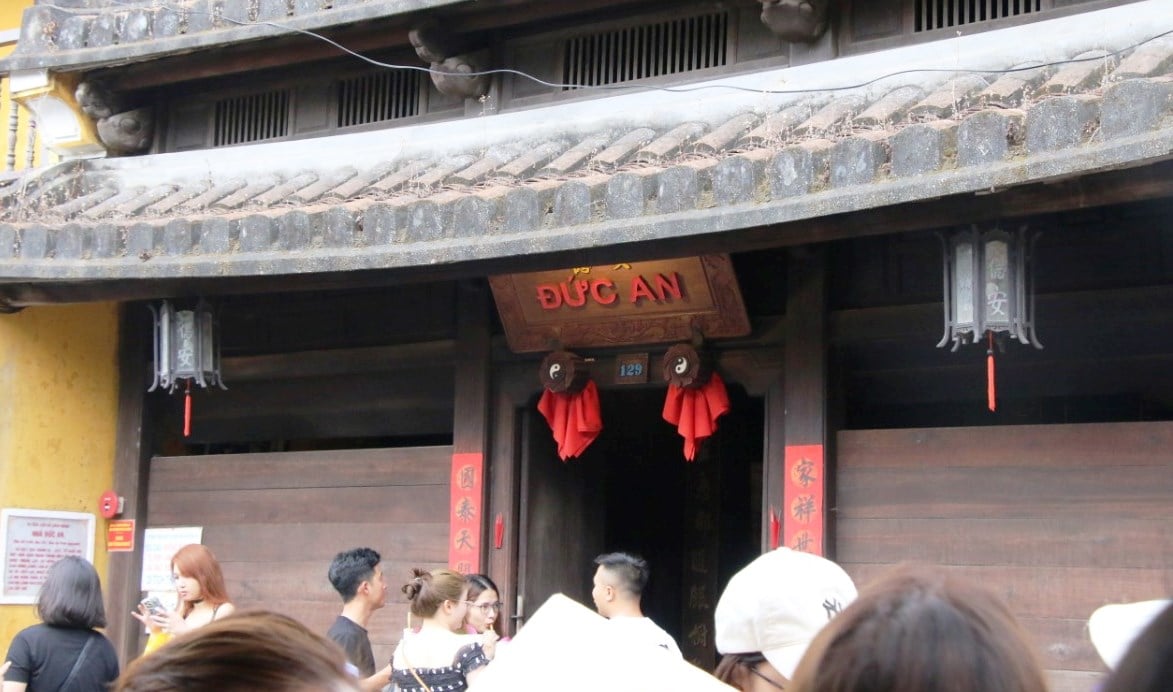
Two window frames on the facade of the old Duc An house. PHOTO: MANH CUONG
Sara (37 years old, a tourist from Spain) said she was very impressed with the cultural features, especially the architecture, of Hoi An. "This is a very interesting cultural aspect that Hoi An can proudly showcase to the world ," she expressed.
The origin cannot be confirmed.
Speaking to a reporter from Thanh Nien newspaper , Mr. Tran Anh, Secretary of the Hoi An City Party Committee, said that the "door eyes" were originally just two wooden pegs with a purely architectural function. Later, homeowners imbued them with spiritual meanings or even religious connotations. The door eyes serve both external and internal functions for the house. Externally, they act as a guard to protect the peace of the house and prevent negative influences from entering. Internally, because they are "eyes," they can see the thoughts, behaviors, and conduct of family members. "These religious beliefs also play a very important role in regulating social morality," Mr. Anh said.
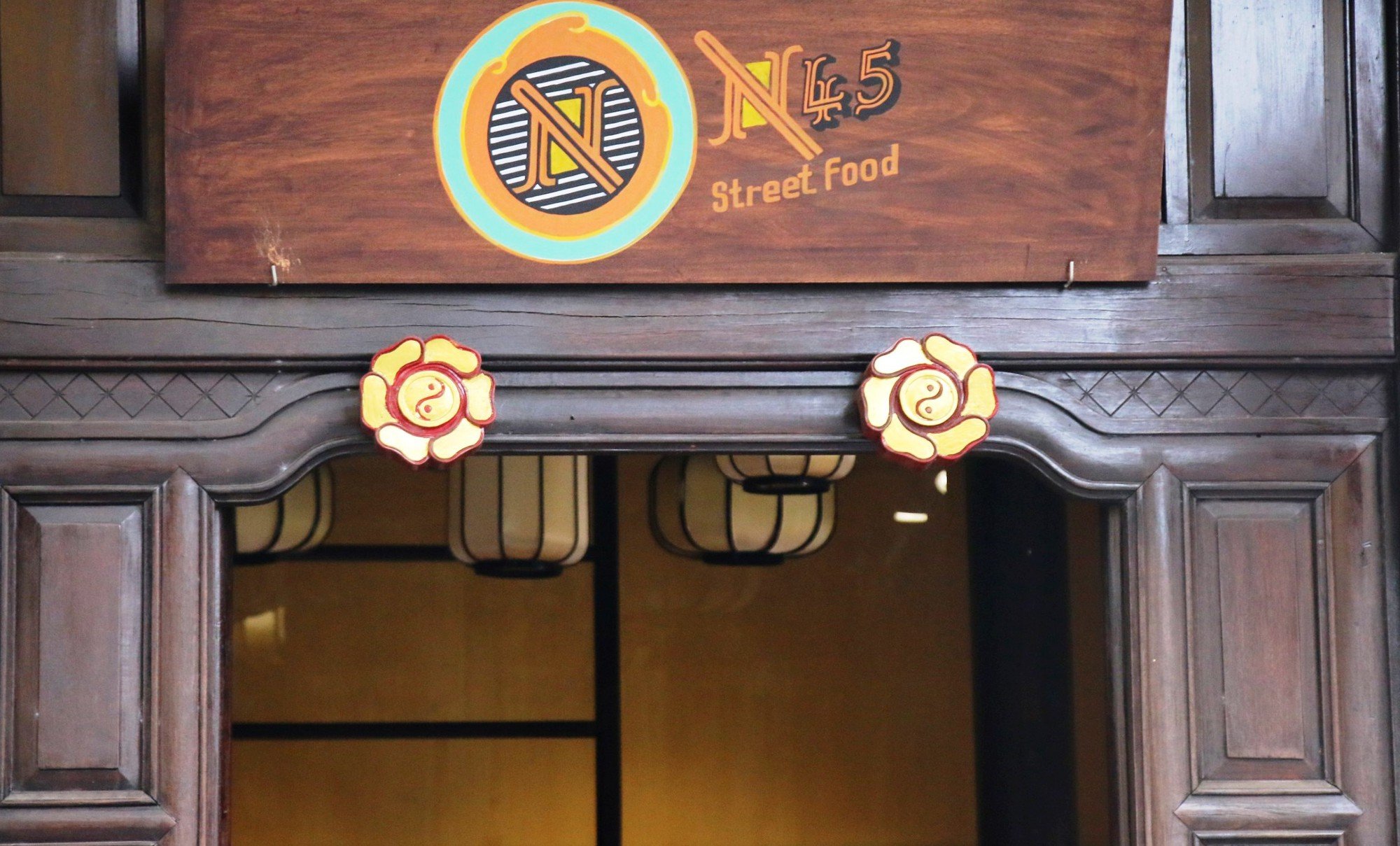
The window frame of an old house in Hoi An city is carved with six chrysanthemum petals surrounding a yin-yang symbol. PHOTO: MANH CUONG
According to Mr. Ánh, the two architectural styles that directly influenced Hội An's architecture were Chinese and Japanese, but the "door eye" motif is absent from their houses. However, ancient Champa towers do feature these eyes, although they differ from the "door eyes" found in Hội An's old houses, they still serve as decorative elements. Currently, the origin of the "door eye" remains inconclusive and unclear.
Folklorist Tran Van An said: "People believe that the 'door eyes' are meant to protect the house, ward off evil, and bring good fortune. The door eyes are like guardian deities. This unique architectural feature gives the houses in Hoi An's old town a special, ancient, and sacred appearance."
Source: https://thanhnien.vn/doc-dao-mat-cua-hoi-an-185250506000022835.htm


![[Photo] Prime Minister Pham Minh Chinh presides over a meeting on private sector economic development.](/_next/image?url=https%3A%2F%2Fvphoto.vietnam.vn%2Fthumb%2F1200x675%2Fvietnam%2Fresource%2FIMAGE%2F2025%2F12%2F20%2F1766237501876_thiet-ke-chua-co-ten-40-png.webp&w=3840&q=75)














































![[Infographic] Controlling rabies in pet dogs and cats](https://vphoto.vietnam.vn/thumb/402x226/vietnam/resource/IMAGE/2025/12/21/1766288809667_infographic-kiem-soat-benh-dai-tren-dan-cho-meo-nuoi20251221091138.webp)




















Comment (0)