

(CLO) Amidst the heavy rain falling on the corrugated iron roof, the sounds of chiseling and the occasional rhythmic tapping of wooden clappers echoed through the quiet space of a small, secluded hamlet nestled on a hill in Hamlet 11, Area 6, Thuy Xuan Ward, Hue City. These peculiar sounds reveal the existence of a unique craft village: the craft of carving wooden clappers.
Hue in the rainy season is truly gloomy. The sky, the roads, the plants—everything is shrouded in a dreary, gray, damp haze. I had initially decided not to go anywhere, but after some thought, I put on my raincoat, rode my motorbike across Truong Tien Bridge, onto Dien Bien Phu Street, then turned right onto Le Ngo Cat Street towards Tu Duc Mausoleum.
After wandering around for a while, crossing several slopes and vast, deserted gardens where the rain was pouring down, I finally arrived at the village of town crier in Thuy Xuan ward.
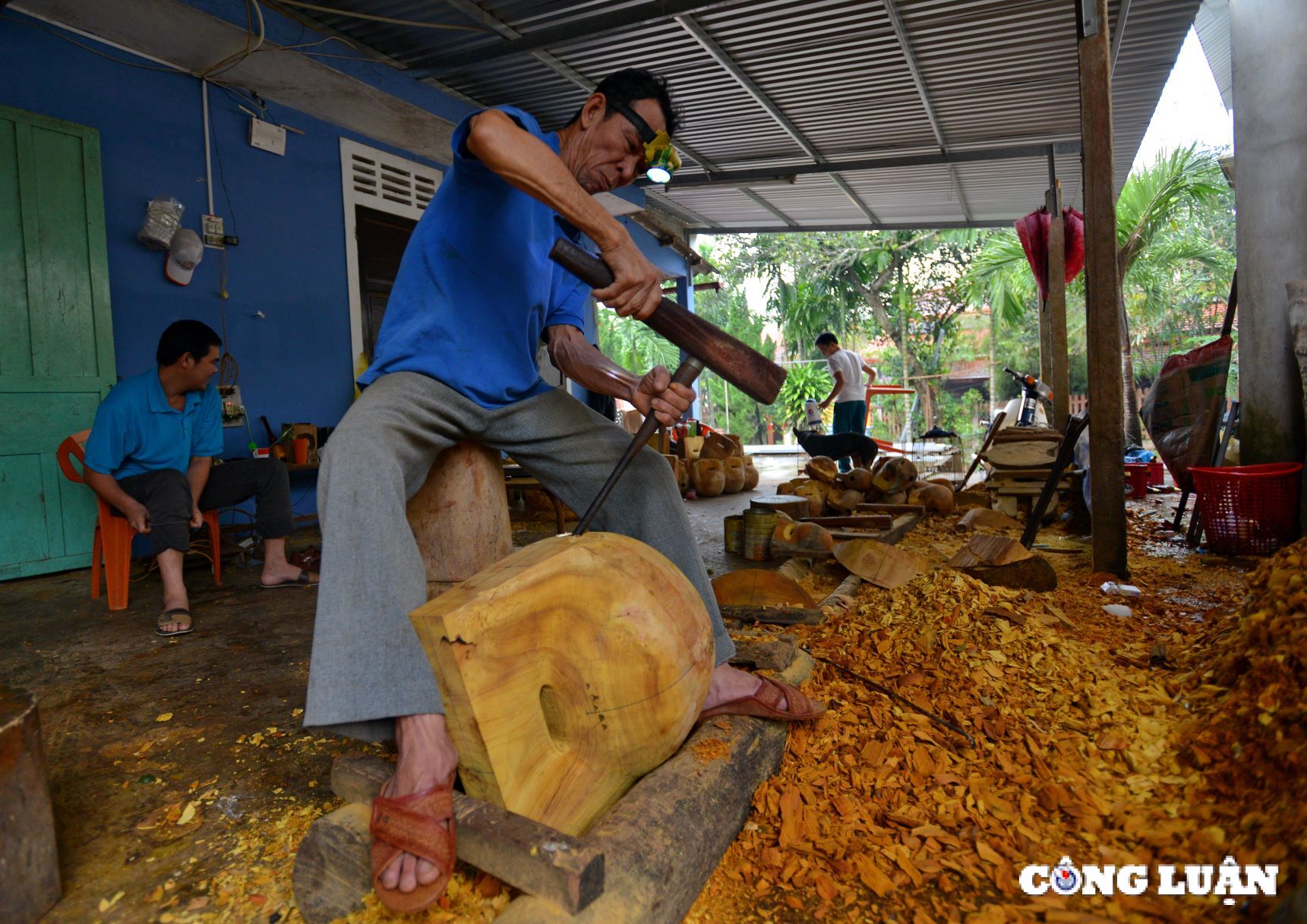
Mr. Truong Van Thao is one of the few outsiders who has pursued and remained dedicated to the traditional craft of carving wooden gongs of the Pham Ngoc family in Thuy Xuan, Hue. Photo: Minh Giang
The village, already deserted, became even more desolate on this rainy day, with not a soul in sight on the streets. While I was wondering who to ask for directions, I suddenly heard the sound of chiseling, followed by the clacking of wooden clappers. I looked around and discovered a small workshop making wooden clappers hidden in a lush green garden. I wheeled my bike into the alley and found a group of four or five workers busily at work. Upon inquiring, I learned it was the home of Mr. Pham Ngoc Du, whose family had been famous for making wooden clappers in Hue for three generations.
Presumably, with the Lunar New Year approaching, there was a lot of work to be done, and everyone was busy. Large and small wooden clappers were scattered everywhere, both inside and outside the house, and sawdust and wood shavings were strewn about. Not wanting to interrupt their work, after greeting and asking permission from the homeowner, I quietly observed and learned. The more I learned, the more interesting things I discovered about this unique craft, which I was seeing for the first time.
Pham Ngoc Phuc, a 30-year-old grandson of Pham Ngoc Du, said that the mining trade in Thuy Xuan has existed for a very long time, its origins unknown. In his family, his grandfather practiced the trade and passed it down to his father, who then passed it on to Phuc and his two brothers. According to Phuc, this trade is very unusual; it's rarely passed on to outsiders, and even when it is, few people learn it. Therefore, it's mostly just the three brothers and a few relatives who help each other with the work.
According to Phuc, historically, not many people have become rich from making wooden bells, but neither have any become poor; generally, they have enough to live on. Hue is a Buddhist land, so there are many temples and almost every house has a Buddhist altar, which has given the profession of making wooden bells a certain degree of prestige.
Today, Thuy Xuan's wooden clappers are known throughout the country. Many temples in both the North and South of Vietnam have heard of them and come to place orders. Occasionally, they are even exported to some Buddhist countries such as Laos, Thailand, Cambodia, China, Japan, and South Korea. Further afield, Buddhist expatriates living in European countries come back to order them.

Because the wooden clappers vary in size, all the decorative patterns on their bodies are hand-painted and then carved directly, rather than following any fixed template. Photo: Minh Giang
Making wooden bells may seem simple at first glance, but it's actually very difficult, as it requires specific secrets and techniques. Even the wood selection is special, because out of hundreds of types of wood, only jackfruit wood seems suitable for making bells. People say that jackfruit wood produces a beautiful sound and its yellow color is very auspicious for Buddhist purposes.
To create a beautifully shaped and melodious wooden gong, the craftsman must go through many stages, from selecting the wood, rough carving to shaping, sculpting, painting, and drying... and most importantly, carving the sound chamber (the sound resonance box), which is considered a unique secret of each artisan and each family.
Pham Ngoc Phuc said that historically, there have been no books teaching the techniques of carving wooden gongs; everything relies on the hands and experience of the craftsman. To carve the sound chamber, the craftsman usually uses a long, trough-shaped chisel, sometimes up to a meter long, and then carefully carves little by little deep into the block of wood.
Because the wood is chiseled in a way that obscures the view inside, everything depends on the skill and experience of the craftsman. The craftsman must estimate the depth, thickness, hardness, and softness of the wood, even relying on the sound and feel of each chisel stroke to make precise calculations. There are no fixed standards or patterns, but it demands extreme precision and perfection. If the chisel is not deep enough, the thick wood will produce no sound when struck; if it is too thin, the sound will be muffled and unpleasant.
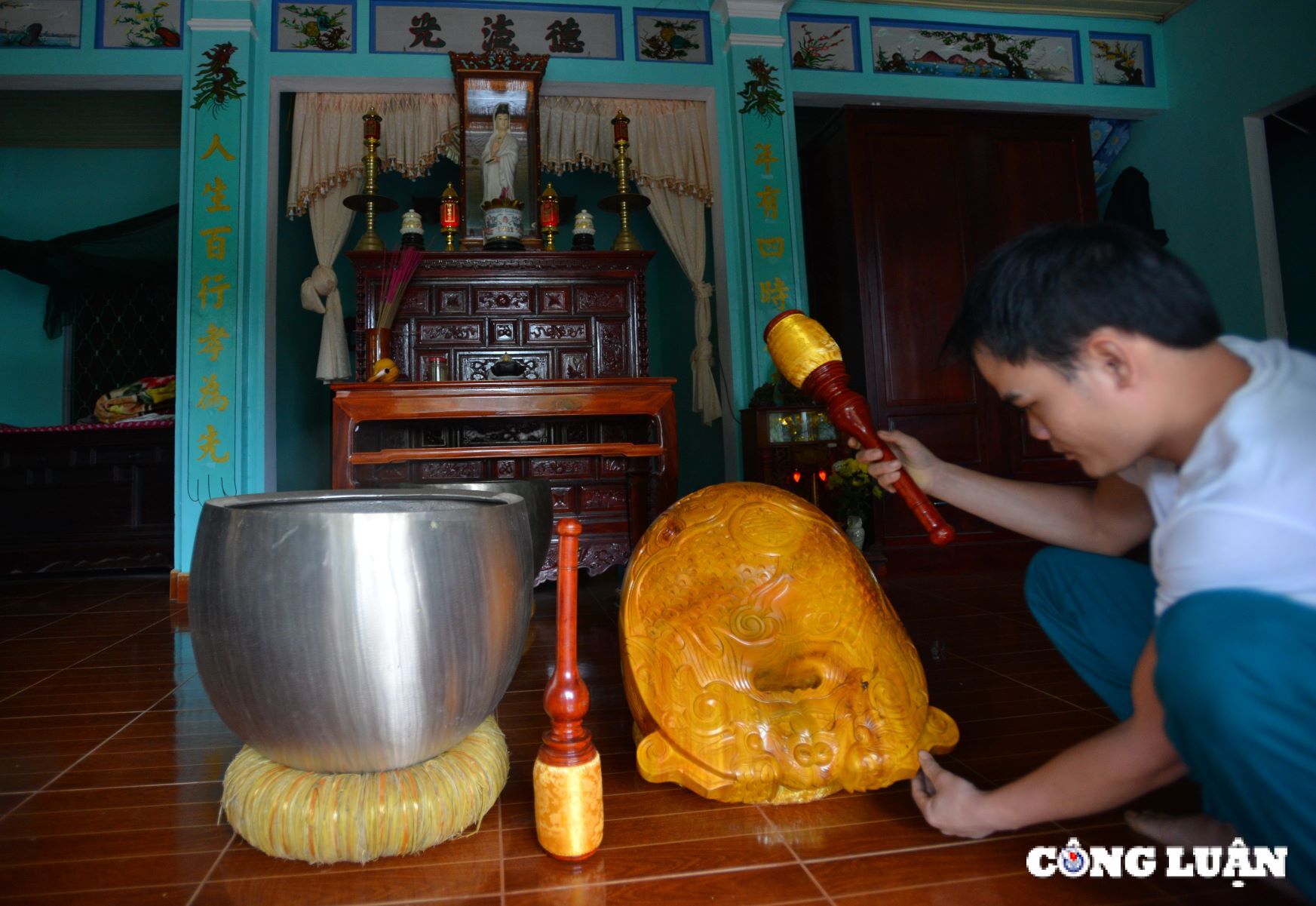
In Buddhist culture, bells and wooden clappers are two important musical instruments used to keep the rhythm for chanting; the clapper rhythm is faster when chanting quickly and slower when chanting slowly. (Photo: Minh Giang)
Because the technique of carving the sound chamber is so complex, it seems that only a handful of people can do it. That's why many workshops producing wooden gongs using CNC cutting machines, even though they can create the gong blanks quickly, evenly, and beautifully, are stuck when it comes to carving the sound chamber. Therefore, they have to entrust the work to the workshops of highly skilled artisans like the Pham Ngoc Du family, because ultimately, no matter how beautiful a gong is, if it doesn't sound good, it's useless.
To show me the meticulous craftsmanship of making wooden clappers, Phuc led me into the Buddhist altar in the center of the house, took out a newly made clapper, and struck it with the mallet. And once again that day, I heard the strange, deep sound of the clapper blending with the sound of falling rain, echoing across the land. That melancholic yet peaceful sound reminded me that Hue still has a quiet craft village, yet one that carries the deep affection of beloved Hue.
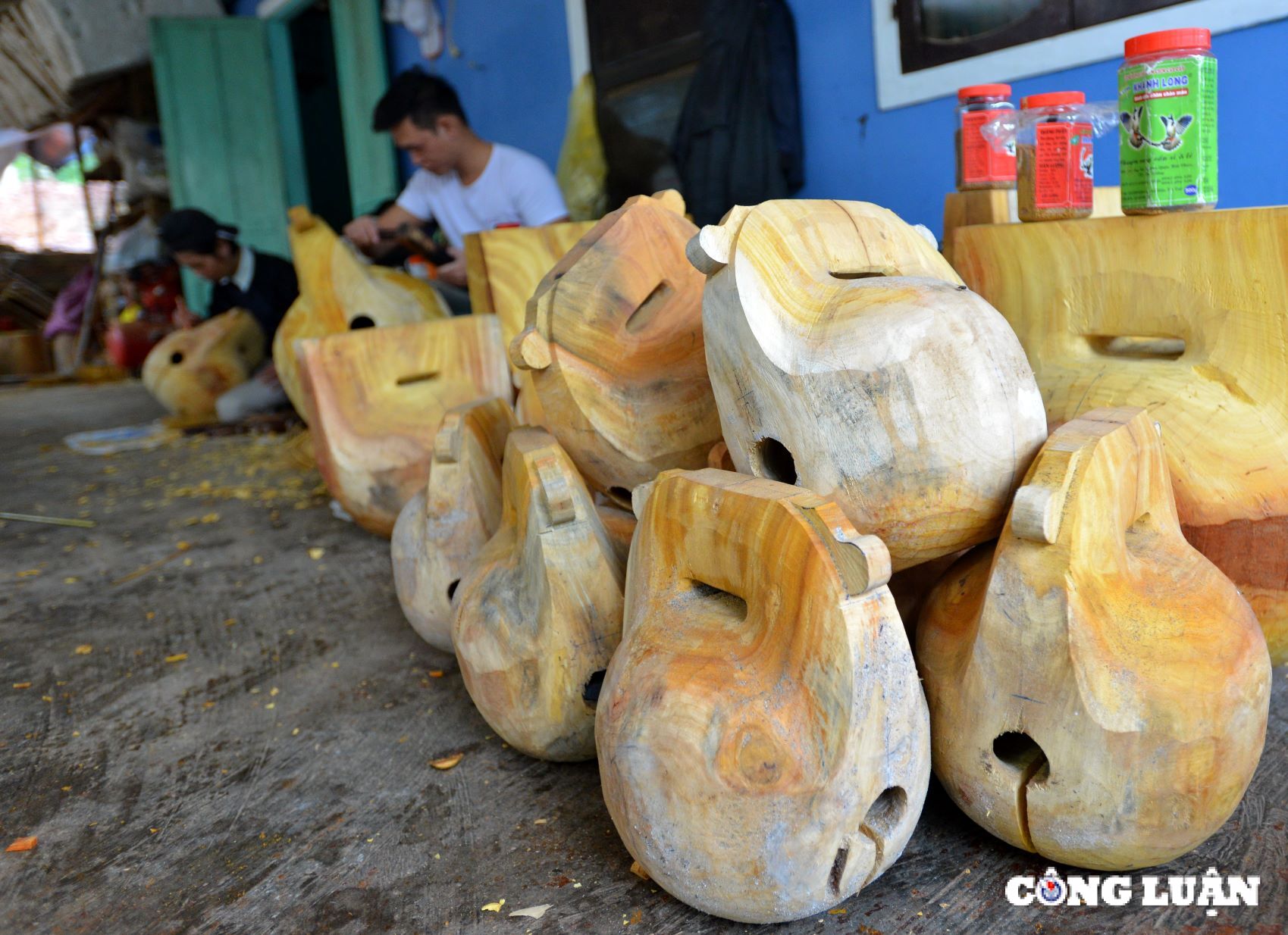
The wooden blocks were hand-carved but are fairly uniform in size and shape, and are rounded. Photo: Minh Giang
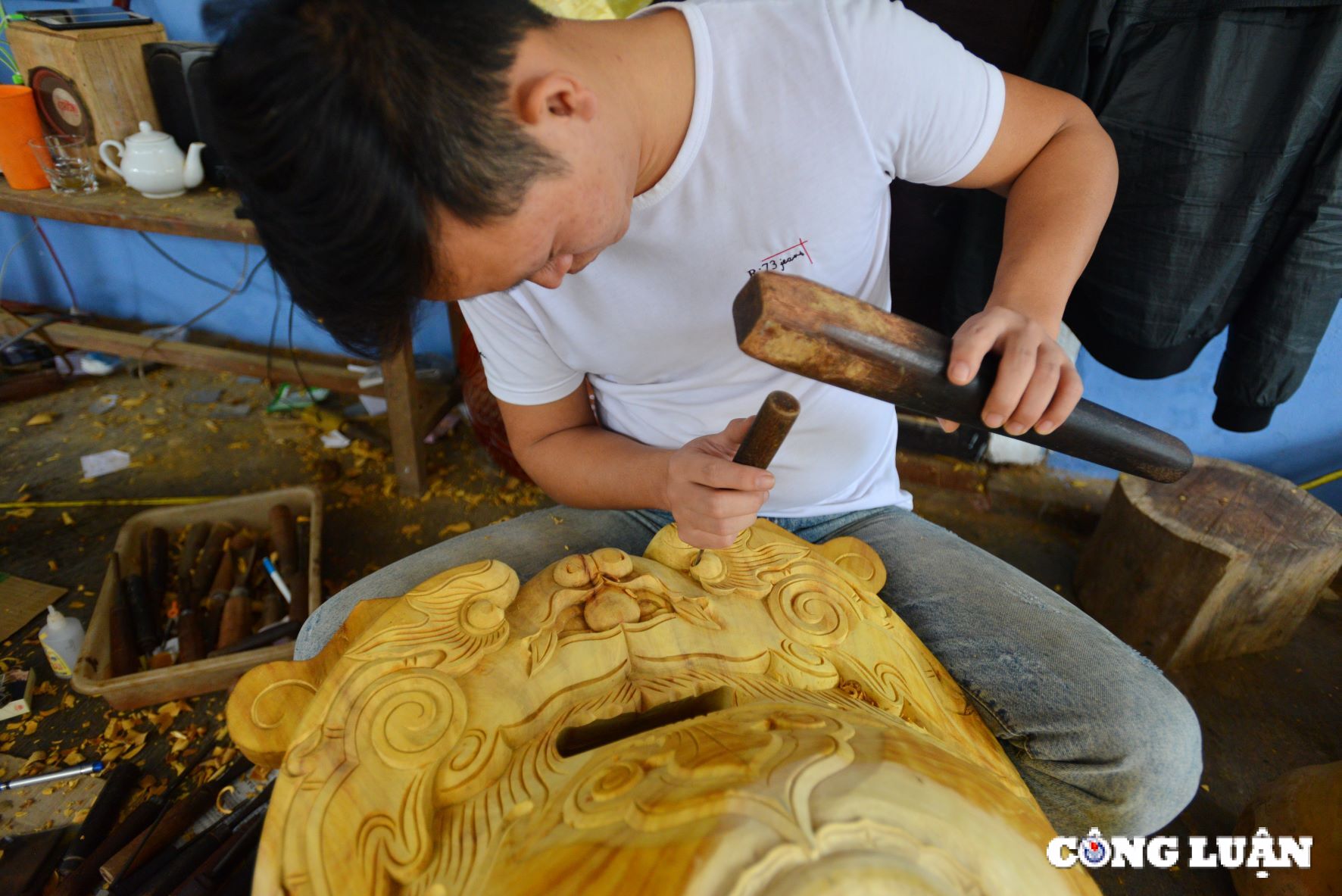
In Buddhist culture, the handles of a wooden bell, also known as the bell's ring, are often carved and decorated with dragon or carp heads. (Photo: Minh Giang)
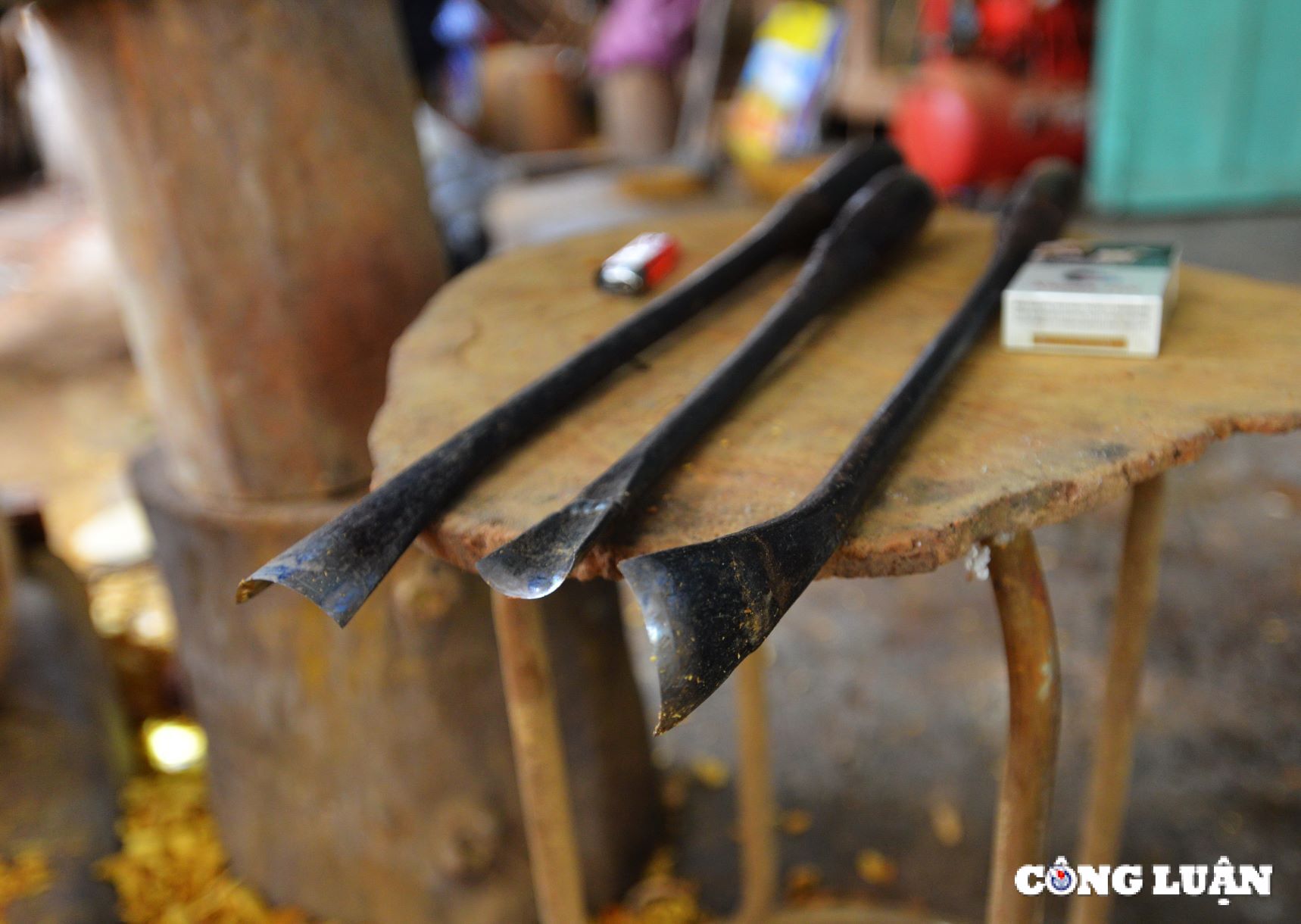
To carve a gourd, a special chisel with a trough-shaped blade is used, which is quite long, sometimes up to a meter depending on the size of the chisel. Photo: Minh Giang
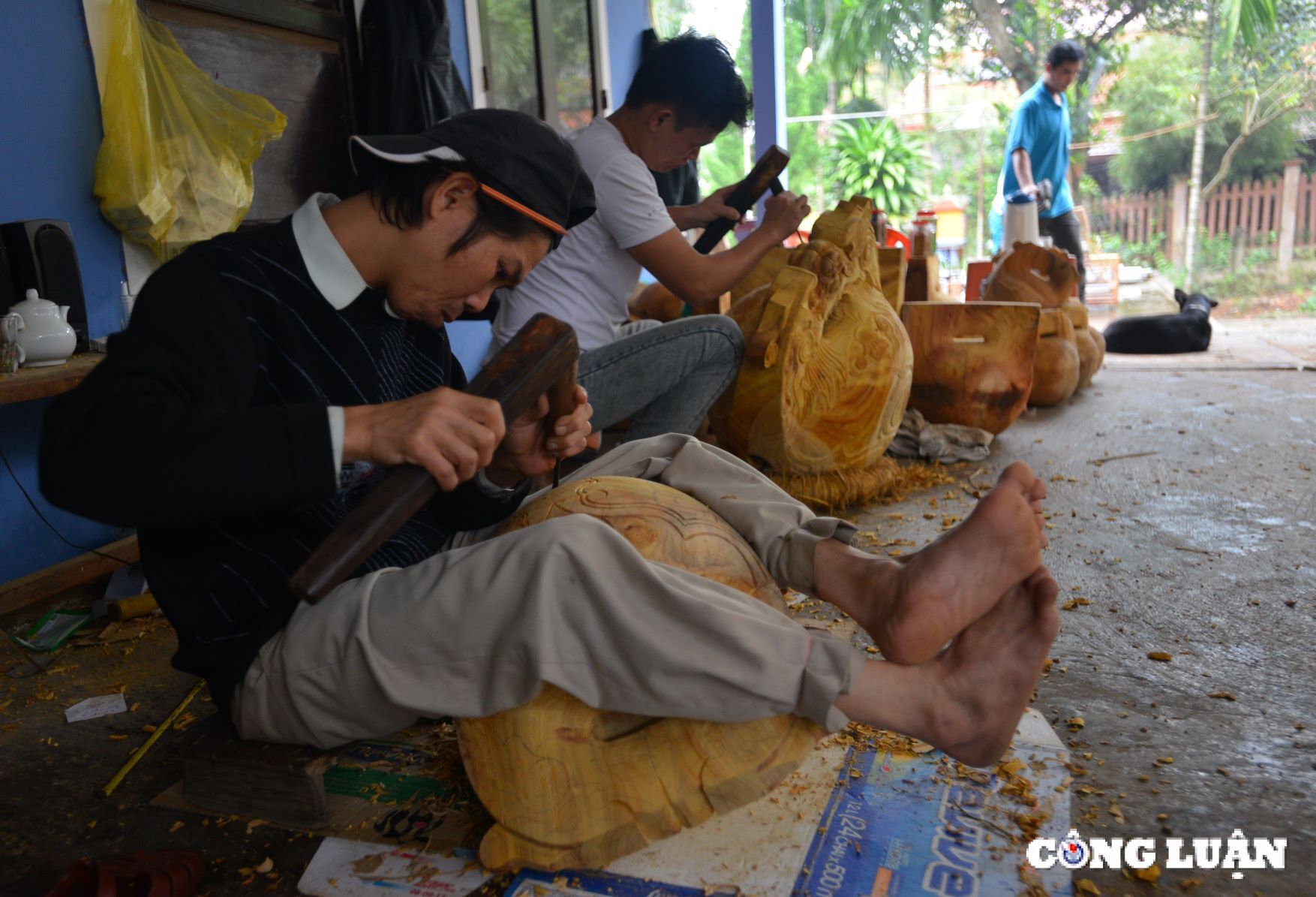
Because the wooden gong is round and easily rolls, the familiar posture of the craftsman carving it is to cross his legs and embrace the gong's body. Photo: Minh Giang
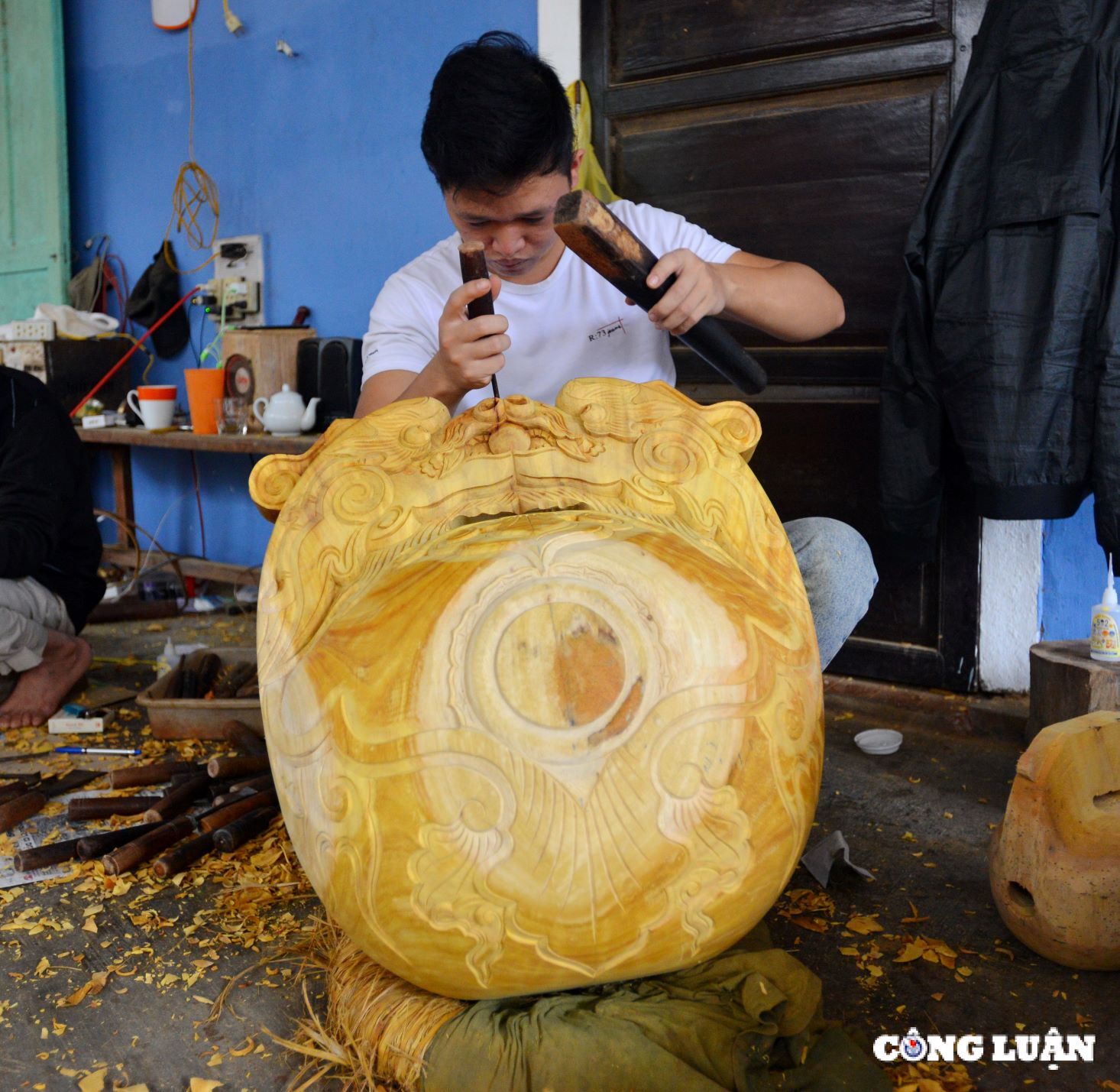
Despite his young age, Pham Ngoc Ro has a very solid skill in the technique of carving decorative wooden bells. Photo: Minh Giang
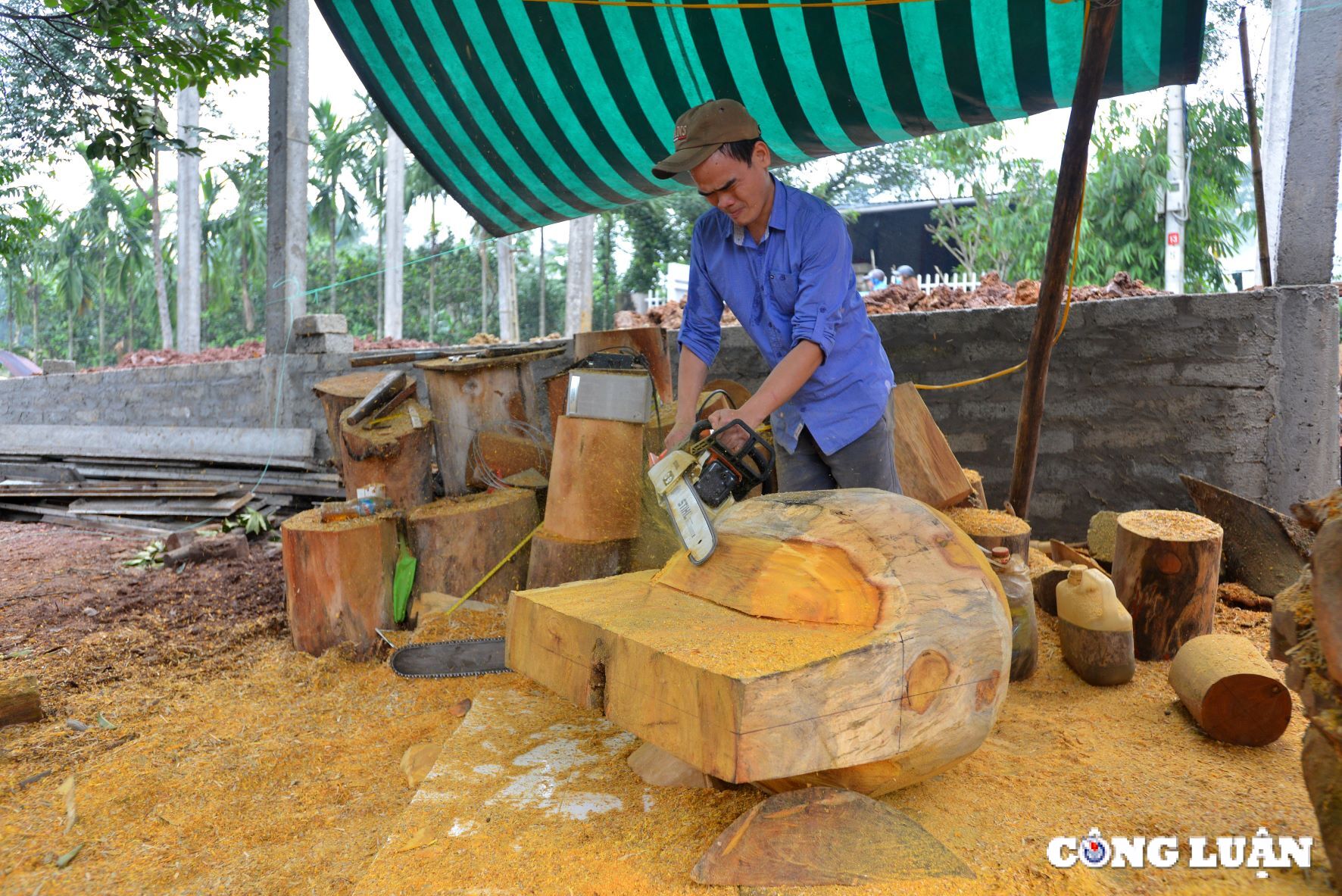
To create the initial shape of the large wooden gong, which has a diameter of over 1 meter, Pham Ngoc Duc had to use a chainsaw, the kind commonly used by lumberjacks to cut down trees. Photo: Minh Giang

These are the charming, endearing, and familiar images often seen at the Phạm Ngọc family's gong-making workshop. Photo: Minh Giang
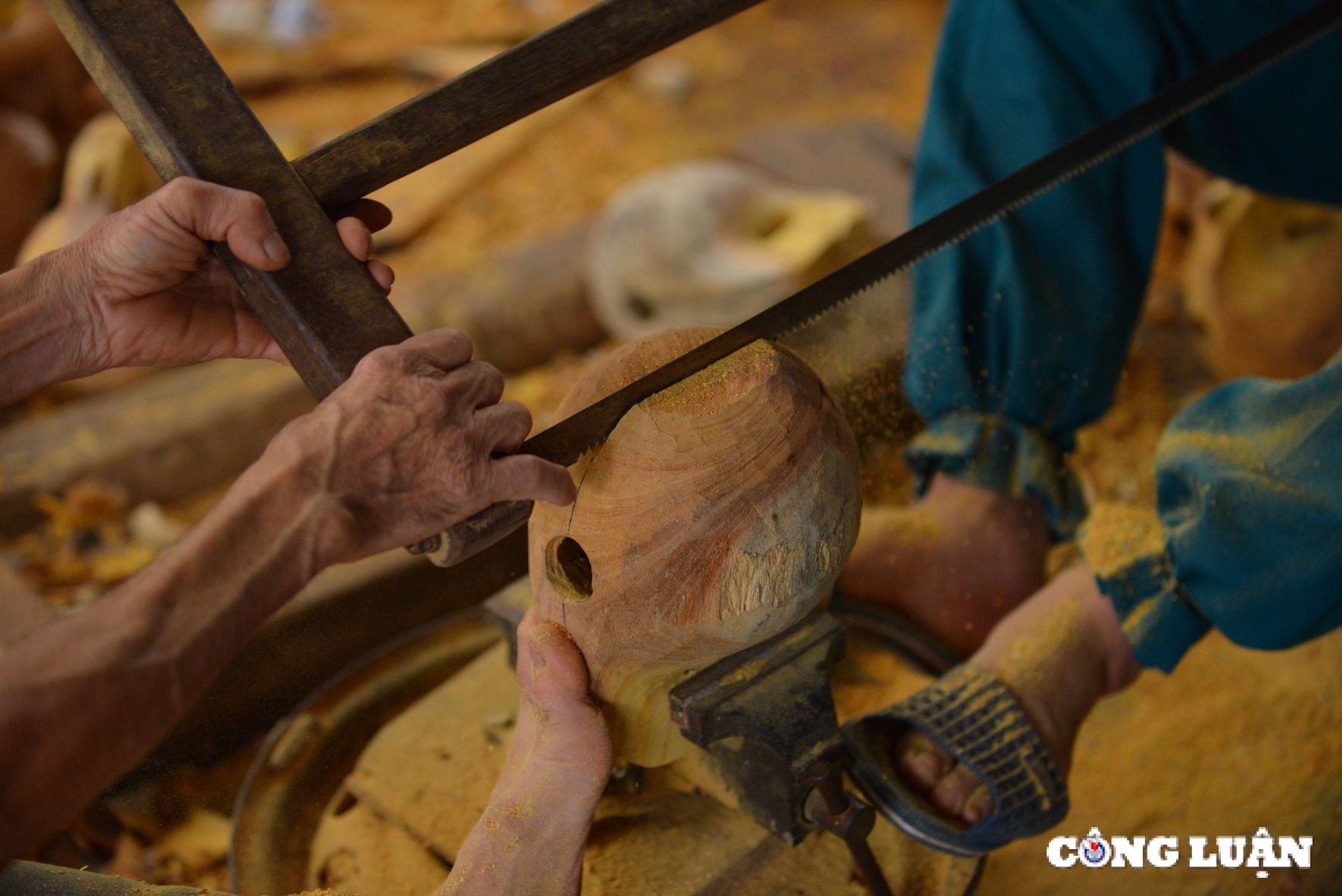
The width and depth of the sound-producing technique in the wooden gourd greatly determine the sound produced by the wooden drum. Photo: Minh Giang
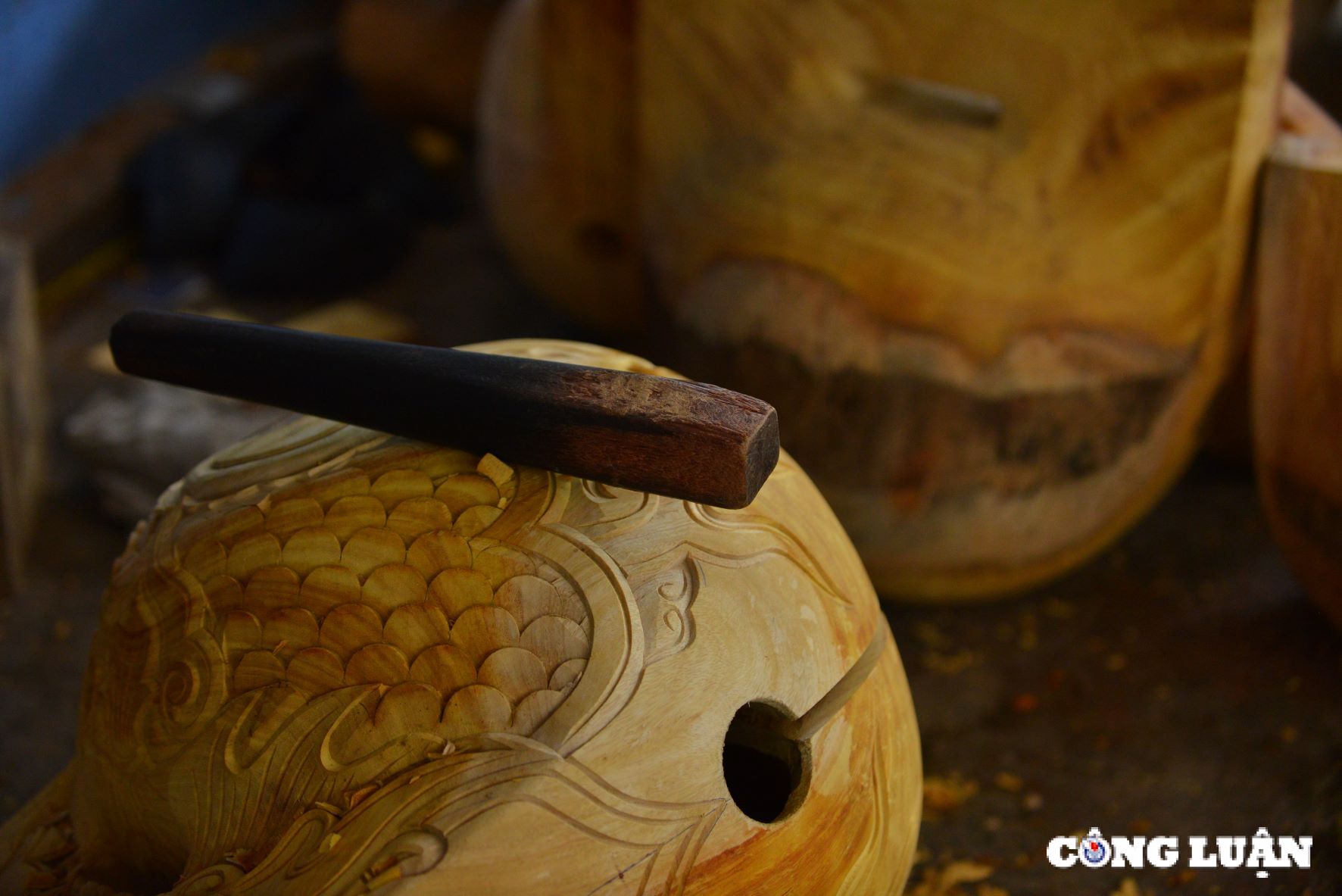
The chisel, called "dụi cui" in Hue, is a simple but indispensable tool for those who play the village crier's drum. Photo: Minh Giang
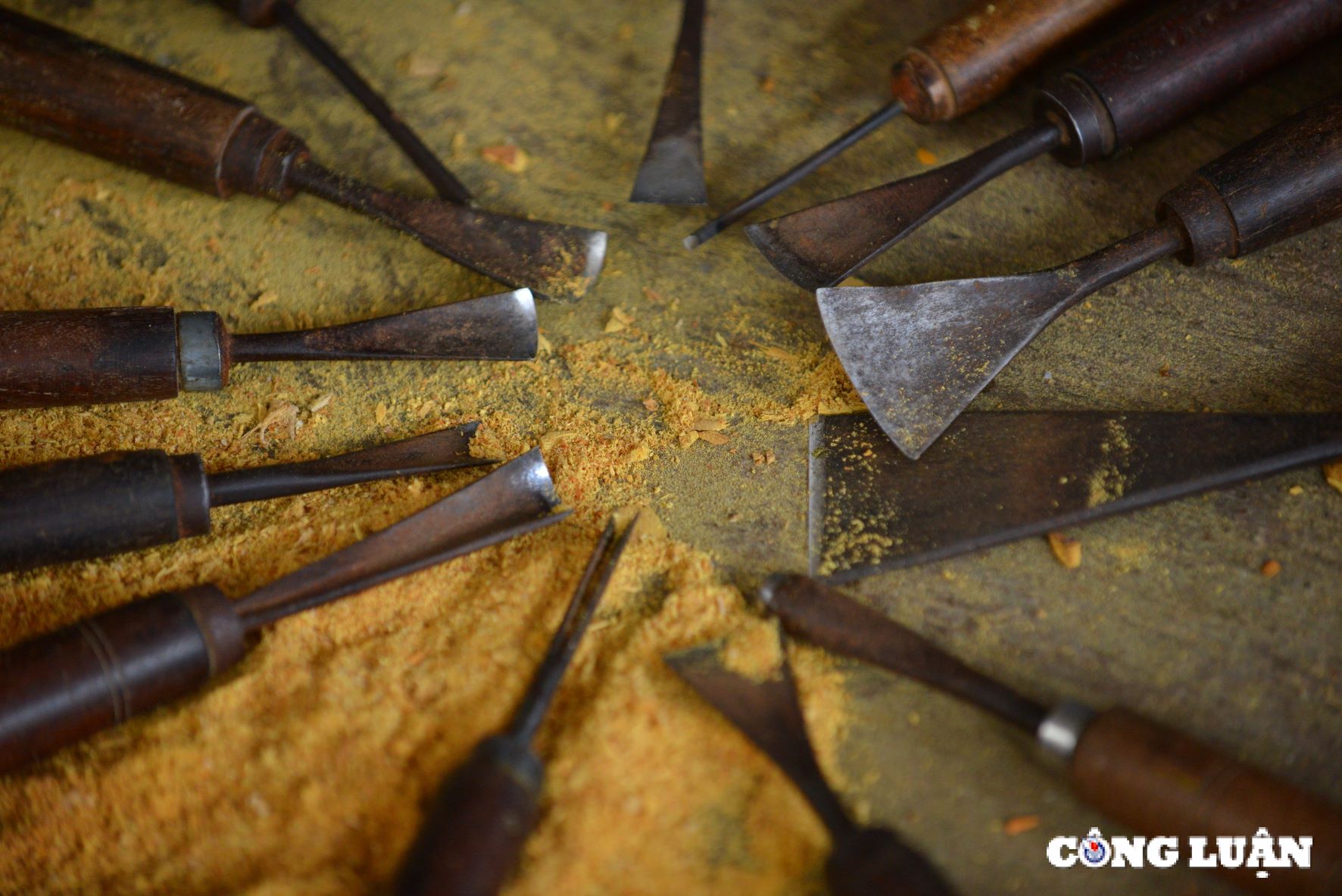
The razor-sharp tools of the gong-making practitioners. Photo: Minh Giang
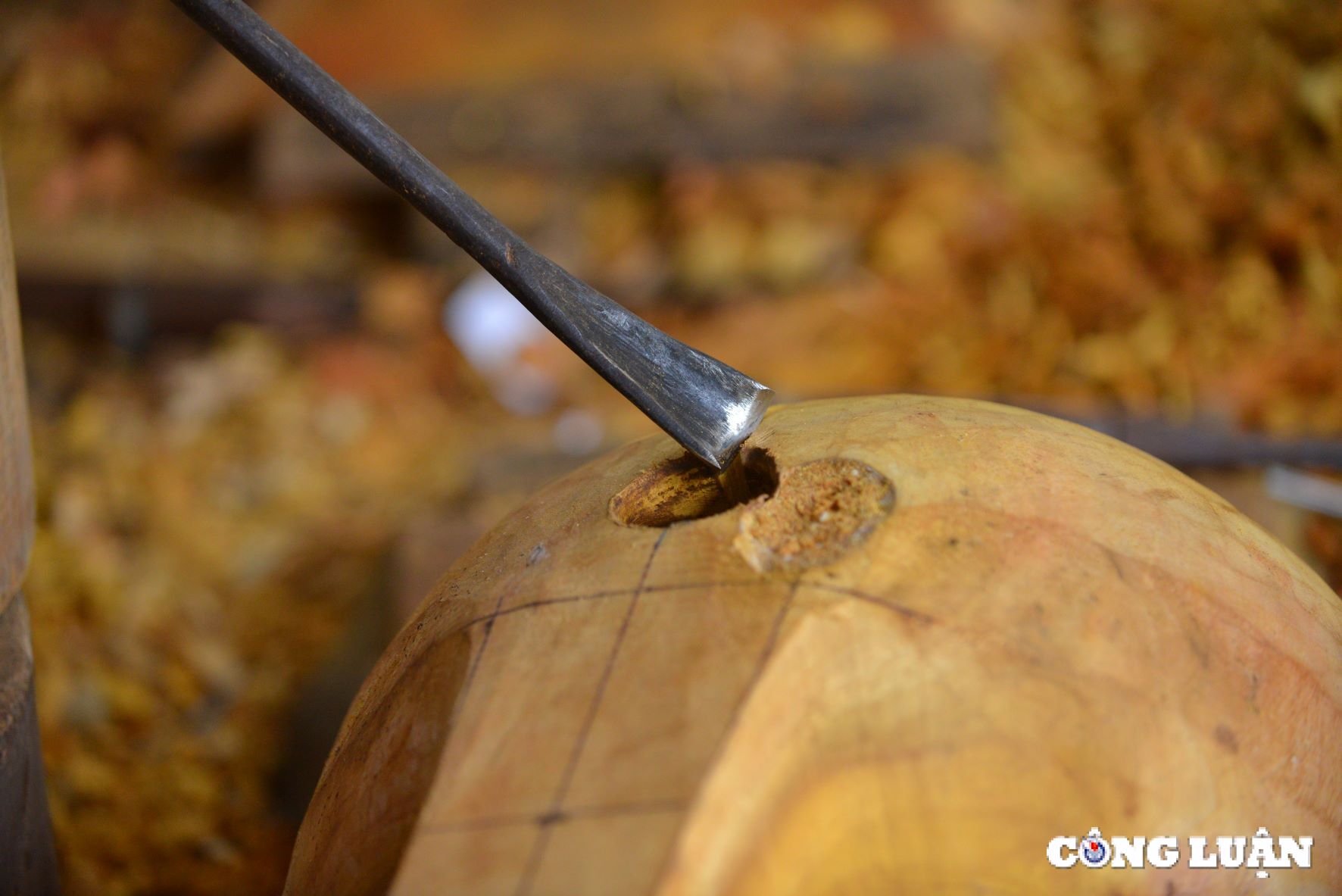
This long, uniquely shaped chisel is the tool that creates the magical sound of each wooden gong. Photo: Minh Giang
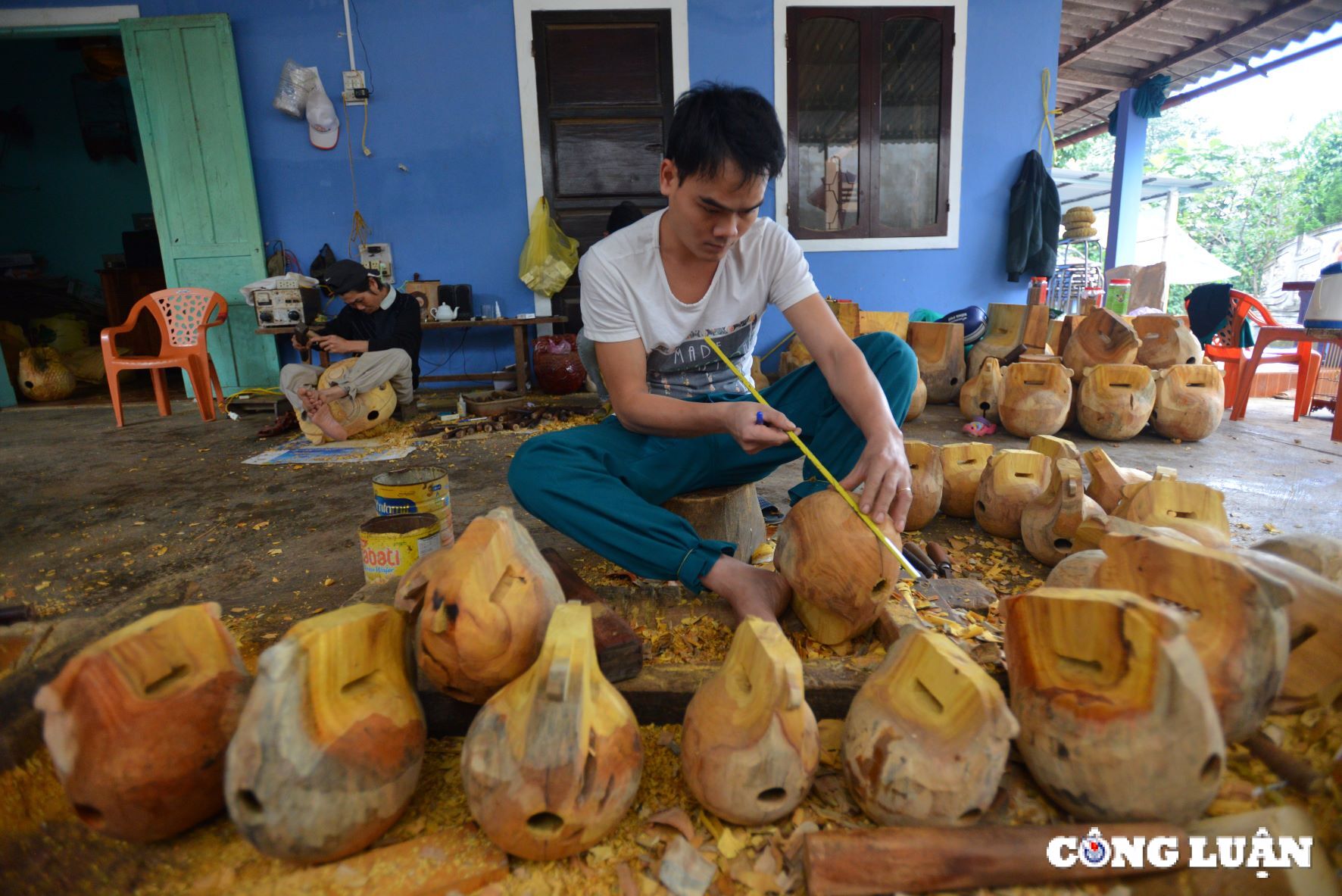
Pham Ngoc Phuc carefully measures and calculates the position of the groove for the sound-producing part of each wooden gong. Photo: Minh Giang
Text and photos: Minh Giang
Source: https://www.congluan.vn/doc-dao-nghe-duc-mo-tai-xu-hue-post332539.html




![[Image] Close-up view of the interchange connecting the two expressways and Long Thanh Airport.](https://vphoto.vietnam.vn/thumb/1200x675/vietnam/resource/IMAGE/2026/05/25/1779703378210_ndo_br_z7863716673926-224453a31600126cce10622af6290afd-4549-jpg.webp)
![[Image] Hanoi's urban life under the challenge of a "scorching hot" environment](https://vphoto.vietnam.vn/thumb/1200x675/vietnam/resource/IMAGE/2026/05/25/1779706979265_nang-nong-t5-2026-minh-duy-7-4636-jpg.webp)






























































































Comment (0)