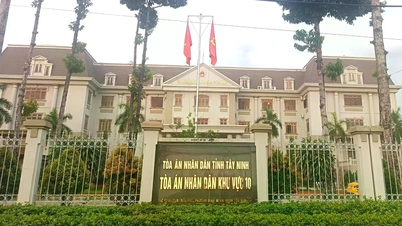
On July 2nd, information from the Tay Ninh Provincial Inspectorate indicated that Mr. Phan Huynh Quoc Vinh, Chief Inspector of the province, had issued a conclusion on the inspection regarding the arrangement and handling of surplus land and buildings following the implementation of the National Assembly's Resolution on the reorganization of provincial-level administrative units.
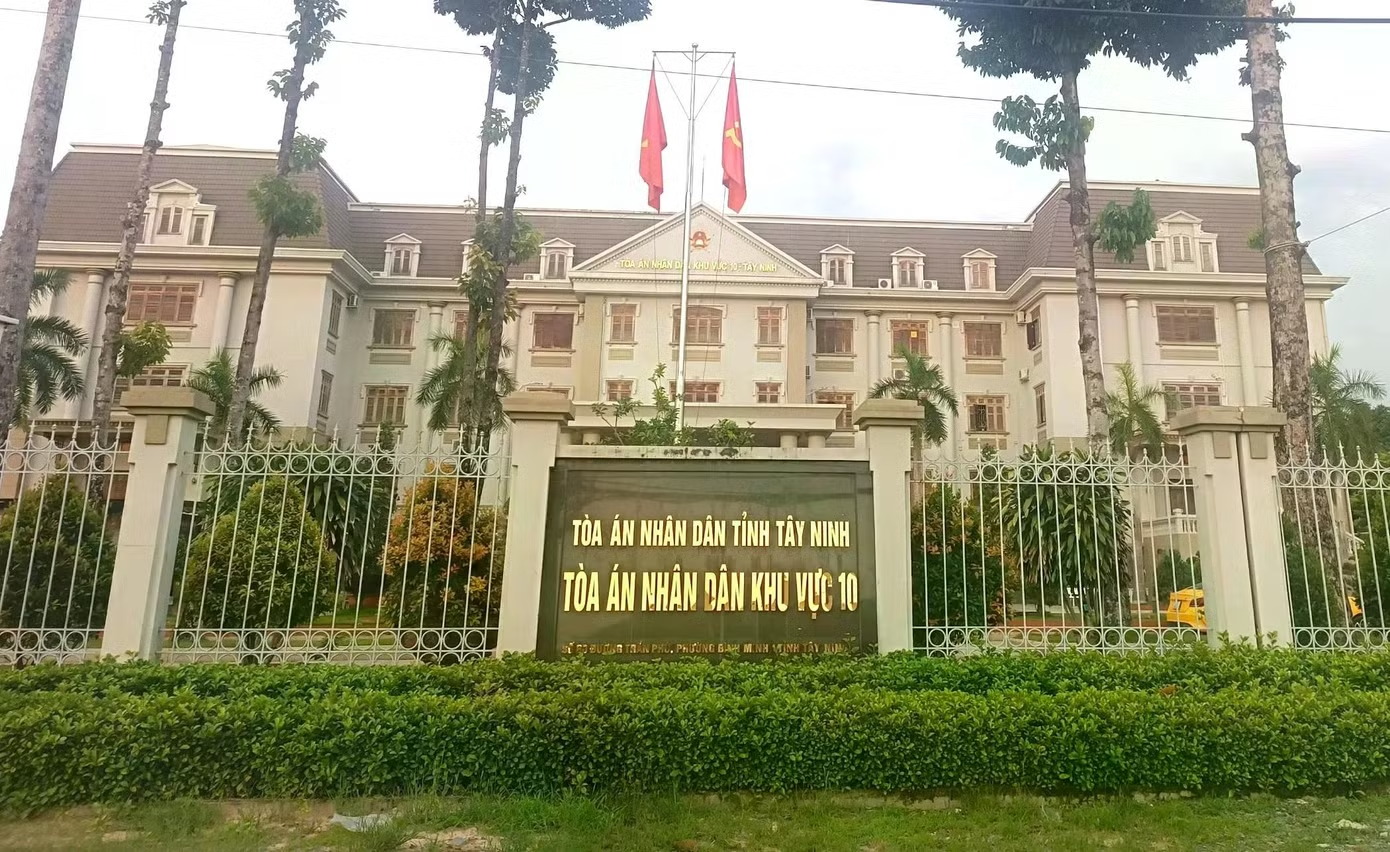
According to the inspection report, Tay Ninh province was recently formed by merging the entire natural area and population of the former Tay Ninh and Long An provinces. Currently, there are 123 agencies and units that need to have their land and buildings reorganized, including 16 departments, 11 public service units under the Provincial People's Committee, and 96 communes and wards.
Through an examination of records of 4,309 properties, authorities identified 74 units managing 420 surplus properties that have not yet been put into operation or use. Notably, among these, 137 properties are located in the inner city and 155 are considered "prime land" with significant commercial advantages.
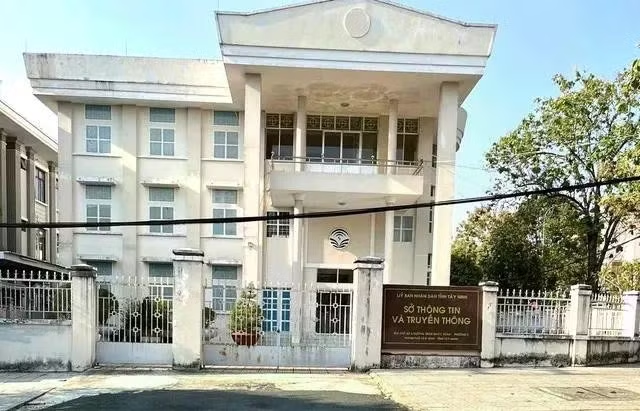
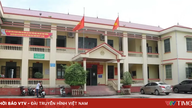


According to the provincial inspectorate, if quantified according to the land price list published by the Tay Ninh Provincial People's Committee, the untapped resources from this surplus land fund are estimated at approximately 2,726 billion VND for residential land and over 2,222 billion VND if calculated according to commercial and service land prices.
Although no instances of misappropriation of public assets or misuse of funds have been detected, the inspection agency believes that the delay in putting these facilities into operation has reduced the efficiency of public asset utilization and caused a large resource intended for socio-economic development to remain "frozen".
The inspection report also pointed out many shortcomings in the management and handling of surplus houses and land. Specifically, 72 out of 74 units had not conducted direct inspections of the implementation of the arrangement plan; 33 units had not updated asset information in their accounting books as required; and 8 units had arbitrarily allocated and used houses and land temporarily without a decision from the People's Committee at the same level.
According to the Tay Ninh Provincial Inspectorate, the main reasons for the aforementioned delays and shortcomings stem from the large scale of the merger, and the fact that the legal documents of many properties, formed over various periods, have been lost or are inconsistent. In addition, the professional capacity of some officials in charge at the local level is limited, affecting the progress of reviewing and handling assets.
In light of the above situation, the Provincial Inspectorate recommends that the Chairman of the People's Committee of Tay Ninh province direct the Department of Finance to coordinate with relevant agencies to urgently build a shared database for managing public assets.



At the same time, heads of units and localities are required to proactively complete legal documents and strictly implement subsequent handling plans to promptly resolve the situation of "frozen" public assets, avoiding the risk of prolonged waste.
Source: https://tienphong.vn/doi-du-hang-tram-tru-so-o-vi-tri-dat-vang-post1856207.tpo