


Linking training to recruitment and employment requirements.
A clear trend today is that many general education institutions, when recruiting teachers, place a strong emphasis on pedagogical practice, and the Ministry of Education and Training is also proposing this regulation in recruitment.
This practice is having a negative impact on teacher training institutions. Training programs are being forced to adjust to better meet the practical needs of secondary schools, strengthen links with employers, and provide students with early exposure to the professional environment.
Years of experience have shown that teacher training still suffers from a significant gap between theory and practice. Many teacher training graduates struggle with organizing lessons, managing classrooms, handling pedagogical situations, or applying active teaching methods. This indicates that while specialized knowledge is necessary, it is insufficient to develop comprehensive professional competence in teachers.
In this context, teacher training innovation is gradually shifting from a content-based approach to a competency-based approach, with pedagogical practice at its center. Many training institutions have increased the time spent on practical training, observation, and internships; organizing earlier and more frequent exposure to the school environment for students, instead of focusing solely on final internships.
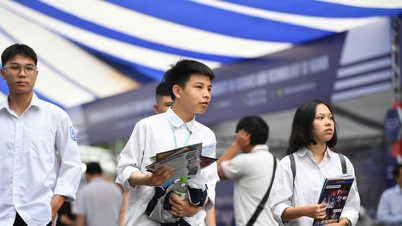
Ms. Le Thi Luong (Faculty of Education, Thai Nguyen University Branch in Lao Cai ) stated that, in parallel with their professional studies, students participate in many extracurricular activities to enhance their professional skills. In particular, students gain practical experience and internships outside of class hours by attending lessons at high schools to learn from real-world situations and from teachers who are directly teaching in classrooms.
Learning through practice
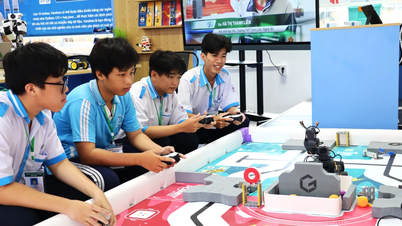
Some teacher training institutions now have their own teacher training high schools. These are considered model schools where students can learn, practice, and grow in a real-world professional environment.
Beyond being a place for internships and practical training, a teacher training school is also a space where students can fully participate in educational activities: teaching, group activities, experiential learning, and innovative teaching method projects. Thanks to this, students have the opportunity to continuously hone core teaching skills such as pedagogical communication, classroom management, lesson design, and student assessment.
However, many teacher training institutions currently lack proper affiliated practice schools, or if they do, their operations are ineffective due to obstacles related to mechanisms, resources, and implementation conditions. This is one of the major barriers to improving the quality of teacher training.
Regular exposure to real classroom settings helps prospective teachers better understand student psychology, anticipate and handle emerging teaching situations. This is also a way for students to develop professional skills and reduce feelings of apprehension and anxiety when they officially start teaching after graduation.
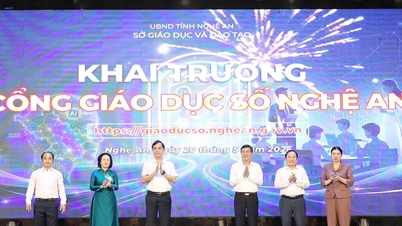
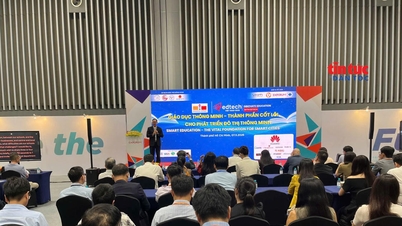
A prominent new development in teacher training today is the requirement to develop digital skills for future teachers. Teachers in the digital age not only need to impart knowledge but also create digital learning environments, design multi-platform learning experiences, and interact effectively with students both in person and online.
However, technology is merely a tool. Modern teacher training goes beyond simply teaching students how to use software or digital devices; more importantly, it aims to help them master technology, integrate it with modern pedagogical methods, uphold humanistic values, and connect emotionally with learners.
This requires teacher training programs to be regularly updated, integrating new content such as the application of information technology in education, STEM/STEAM education, and digital education, while also focusing on developing skills in handling pedagogical situations in a digital environment.
Source: https://daidoanket.vn/doi-moi-dao-tao-su-pham.html
![[Photo] General Secretary and President To Lam presides over a meeting on assessing national development resources.](https://vphoto.vietnam.vn/thumb/1200x675/vietnam/resource/IMAGE/2026/05/20/1779253785852_a1-bnd-2943-8519-jpg.webp)


![[Photo] National Assembly Chairman Tran Thanh Man working with the Standing Committee of the Economic and Financial Committee](https://vphoto.vietnam.vn/thumb/1200x675/vietnam/resource/IMAGE/2026/05/20/1779249584387_ndo_br_1-jpg.webp)

































































Comment (0)