

Minister of Education and Training Nguyen Kim Son discussed with GD&TĐ Newspaper about these major orientations.
Breakthrough solutions for developing teaching staff
- Dear Minister, in implementing Resolution 71-NQ/TW, what priorities will the education sector prioritize to develop the teaching staff?
- Implementing Resolution 71-NQ/TW of the Politburo , the Ministry of Education and Training is focusing on implementing three breakthrough pillars including: Developing a team of high-quality teachers, lecturers and managers; perfecting institutions and policies to promote autonomy with accountability; investing in infrastructure development, digital transformation and innovation in training methods. In which, developing a team of lecturers is identified as a central task.
The Ministry has issued an action plan attached to Decision No. 2811/QD-BGDDT dated October 10, 2025, emphasizing the expansion of lecturer training programs and projects, especially Project 89 on training doctoral lecturers at home and abroad. In the period of 2026 - 2030, it strives to support about 1,000 lecturers to study and train abroad each year, prioritizing the fields of science, technology, engineering and education.
At the same time, the Ministry is proactively coordinating with relevant agencies to perfect the specific financial mechanism in the National Target Program on Modernization and Improvement of Education and Training Quality for the 2026-2035 period to ensure stable resources for training, and develop outstanding incentive policies to attract, use and promote excellent lecturers and experts at home and abroad.
- Resolution No. 71-NQ/TW sets the target of recruiting at least 2,000 excellent lecturers from abroad by 2030. What solutions does the Ministry of Education and Training have to achieve this goal, Minister?
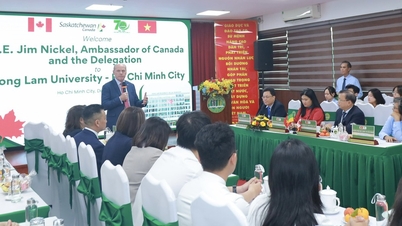
- Attracting at least 2,000 excellent lecturers and experts from abroad is one of the key tasks to implement Resolution 71-NQ/TW and the Government's Action Program. We plan to implement this policy in three main directions:
Firstly, build a specific mechanism on recruitment, treatment and working environment, allowing universities to proactively sign flexible contracts, pay salaries according to capacity, and ensure international competitiveness.
Second, facilitate administrative procedures, visas, residence and diploma recognition, propose financial incentive policies, invest in building equipment, working environment, and create development space so that international experts can come to teach and conduct long-term research in Vietnam.
Third, establish strategic cooperation programs between Vietnamese universities and the world's leading research centers, institutes and universities to attract excellent lecturers and scientists to participate in training, co-supervising graduate students and transferring knowledge.
The goal is not only to attract international experts to Vietnam, but also to build an open and attractive academic environment so that they want to stay and develop Vietnamese universities to meet regional and international standards.
- Resolution No. 71-NQ/TW also clearly states "implementing the joint tenure system for excellent lecturers working at public service units". Can the Minister elaborate on this mechanism?
- In the Draft Law on Higher Education (amended), the Ministry of Education and Training added regulations on the joint tenured lecturer regime as a breakthrough solution to mobilize high-quality human resources for the university system.
This mechanism allows experts, scientists, doctors, engineers, and officials working at research institutes, hospitals, and public service units to participate in teaching, research guidance, and technology transfer at universities while still maintaining their rights, obligations, and basic regimes at their workplace.
This regulation aims at an open lecturer model, connecting training with research and practice, enhancing the sharing of high-quality resources throughout the public system, in line with the spirit of Resolution 71-NQ/TW on developing a highly qualified human resource team.
After the Law is passed, the Government will issue a decree providing specific guidance on standards, benefits, remuneration and recognition of work results of joint lecturers to ensure consistency, transparency and feasibility in practice. This is also a step to concretize the policy of developing a team of elite, flexible and internationally integrated lecturers stated in Resolution 71-NQ/TW.
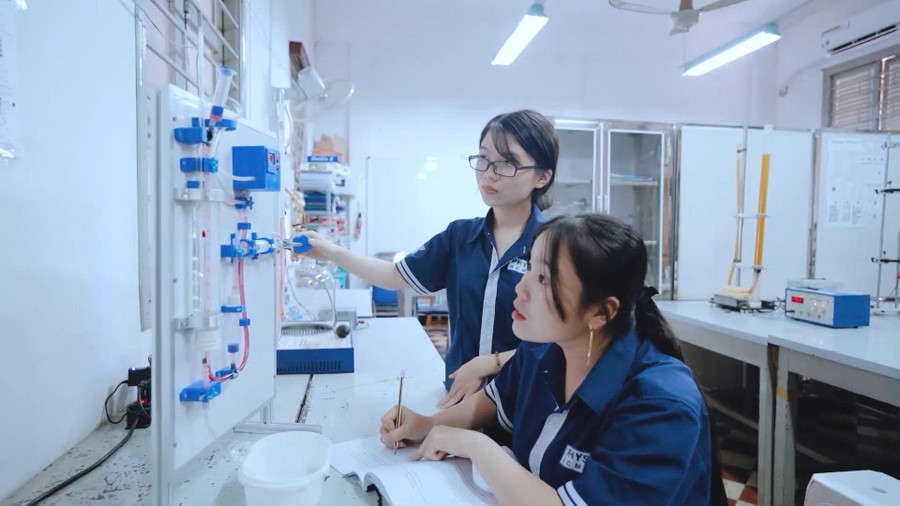
Carrying out the mission of developing highly qualified human resources and nurturing talents
- Along with solutions to improve the quality of the teaching staff, what other orientations does the education sector have to improve the quality and stature of Vietnamese higher education?
- The Education sector is deeply aware that investing in higher education today is investing in the intelligence, strength and position of Vietnam in the future. This is not only a professional task, but also a political responsibility and aspiration for national development. Therefore, the Education sector is focusing on improving the quality and stature of Vietnam's higher education.
Specifically, the Ministry of Education and Training is standardizing the training program according to international standards, comparing it with high-ranking universities in the world. Training is closely linked to the development needs of the digital economy, green economy and strategic technology sectors. Knowledge and innovation must become key drivers for national growth.
The entire higher education system aims to build an innovation ecosystem. Universities are encouraged to form strong research centers, start-up businesses and extensive international cooperation networks. The goal is for higher education to become the country's knowledge center, a place to incubate talents, spread new knowledge and promote sustainable national development.
University education not only trains knowledgeable people, but also nurtures creative, courageous and socially responsible citizens. Each university lecture hall needs to become a space for liberating knowledge, nurturing personality and arousing the desire to contribute, to form a new generation of Vietnamese intellectuals, independent in thinking, confident in integration and steadfast in the ideal of developing a prosperous and happy country.

Innovating teacher training to meet new requirements
- Along with the task of developing a team of lecturers and high-quality human resources for higher education as the Minister shared, another pillar that also has fundamental significance is the team of general teachers, which is directly related to pedagogical schools. Could the Minister tell us, in the face of new requirements, how teacher training needs to change to meet them?
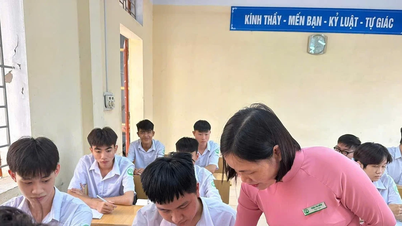
- Teachers are considered the foundation and pillar of education. Therefore, innovation in teacher training is the key to successfully implementing innovation and breakthrough in education and training development. The Ministry of Education and Training has been, is and will be implementing a series of innovations related to teacher training.
The first is innovation in the goals and content of teacher training programs. Teacher training is aimed at developing comprehensive pedagogical professional capacity, helping teachers become organizers, guides, and supporters of student learning; reducing the content of academic theory, increasing the amount of practice time, pedagogical internship, lesson research, and real-life professional experience.
Strengthening courses on active teaching methods, modern teaching methods, student capacity assessment, life skills education, life values, international integration capacity and critical thinking...
The second is to innovate training methods and forms. That is to organize training according to a flexible and open model, creating lifelong learning opportunities for students and teachers currently working. The assessment of pedagogical students should be based on their professional practice capacity, ability to design learning activities, organize teaching, and solve pedagogical situations, instead of just based on the results of theoretical exams.
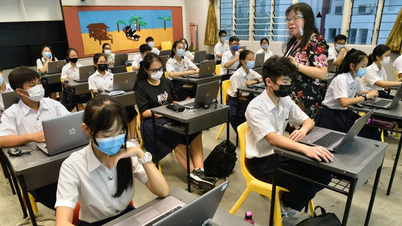
Third is to improve teachers' technological and digital capacity. Pedagogical schools need to integrate the content of "digital transformation in education" into the training program; at the same time, build educational technology laboratories and digital pedagogical practice centers, creating conditions for students to experience and practice technology skills during the learning process.
Fourth, strengthen the connection between teacher training colleges and high schools. Teacher training students need to participate in class observation, teaching assistantship, experiential teaching, and lesson research right from their second and third years at university. Conversely, core teachers and excellent teachers in high schools should participate in teaching or guiding internships at teacher training colleges. This helps to connect theory with practice and improve the quality of training.
Fifth is to innovate the training and assessment of teachers after training. Accordingly, build and deploy a regular training system, online, through a digital learning network, to help teachers regularly update new methods, technologies, and professional skills. The assessment and classification of teachers must be carried out according to the professional standards of teachers in general education institutions, ensuring fairness, transparency, and connection with student education results, professional qualities, and practical capacity.
Sixth is to internationalize teacher training: Expand cooperation with educational institutions and universities with prestigious pedagogical training in the region and the world; implement programs to exchange lecturers and students, cooperate in training, recognize credits, as well as research and approach international professional standards for teachers.
Regarding the teaching staff, the Ministry of Education and Training is developing a Decree detailing a number of articles of the Law on Teachers and detailing the content and methods of teacher recruitment, ensuring that recruitment content is based on professional standards for teachers, and recruitment methods are through examinations or selection, including pedagogical practice.
This is the basis for selecting people with sufficient capacity and qualities, especially pedagogical practice capacity, to immediately meet the teaching and education tasks when recruited into the industry, and is also consistent with the orientation of eliminating the probationary regulations for civil servants when the revised Law on Civil Servants is passed by the National Assembly in the near future.
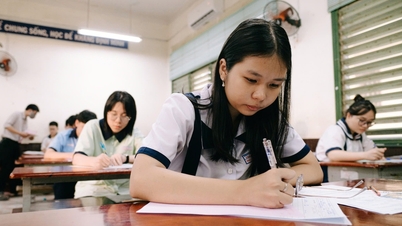
- Input quality is an extremely important factor in improving the quality of teacher training. Could the Minister share some solutions to attract good students to the teacher training sector in the coming time?
- The Education sector identifies: Developing a team of teachers is not only about training teachers, but also about nurturing people who inspire, lead and create the future for the young generation.
Attracting excellent students to the teaching profession is one of the top priorities and also a strategic task of the Education sector in the coming period. We are reviewing and adjusting comprehensive policies towards increasing the level of tuition and living expenses support and ensuring employment after graduation, so that teaching students can study with peace of mind and commit to the profession for a long time.
At the same time, the sector will expand scholarships for talented teachers, encourage students with high achievements in national and international exams to study teaching; raise admission standards, output standards, link training with the actual human resource needs of the locality and the requirements of renewing the general education program.
At the same time, we focus on building an attractive professional environment and a worthy social status for teachers. Priority mechanisms in recruitment, ranking, salary, promotion and professional development are being perfected so that the teaching profession can truly become a prestigious choice for talented, dedicated and ambitious people.
- Thank you very much, Minister!
“The education sector is deeply aware that investing in higher education today is investing in the intelligence, strength and position of Vietnam in the future. This is not only a professional task, but also a political responsibility and aspiration for national development. Therefore, the education sector is focusing on improving the quality and stature of Vietnam's higher education.” - Minister Nguyen Kim Son
Source: https://giaoducthoidai.vn/don-bay-huy-dong-nhan-luc-tinh-hoa-post758847.html

















![[Photo] Parade to celebrate the 50th anniversary of Laos' National Day](/_next/image?url=https%3A%2F%2Fvphoto.vietnam.vn%2Fthumb%2F1200x675%2Fvietnam%2Fresource%2FIMAGE%2F2025%2F12%2F02%2F1764691918289_ndo_br_0-jpg.webp&w=3840&q=75)
![[Photo] Worshiping the Tuyet Son statue - a nearly 400-year-old treasure at Keo Pagoda](/_next/image?url=https%3A%2F%2Fvphoto.vietnam.vn%2Fthumb%2F1200x675%2Fvietnam%2Fresource%2FIMAGE%2F2025%2F12%2F02%2F1764679323086_ndo_br_tempimageomw0hi-4884-jpg.webp&w=3840&q=75)






















































Comment (0)