

Keep the fire of the highland game alive
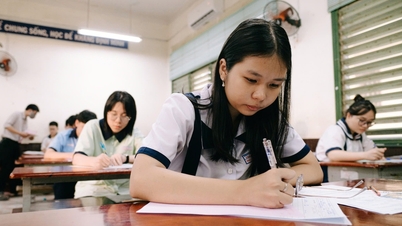
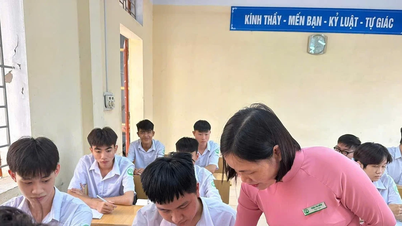
For many years, Son Dien Secondary School (Son Dien commune, Thanh Hoa province) has always been considered a learning support for students in border areas.
There are 345 students here, of which 328 are ethnic minority students, mainly Muong and Thai ethnic groups; along with 79 boarding students, accounting for 22.9% of the total school population.
Mr. Pham Ngoc Thanh - Principal of the school shared that the facilities in recent years have received attention from the locality, basically meeting the needs of studying and living.
However, with a large number of students, the school still needs support to ensure better learning conditions for students.
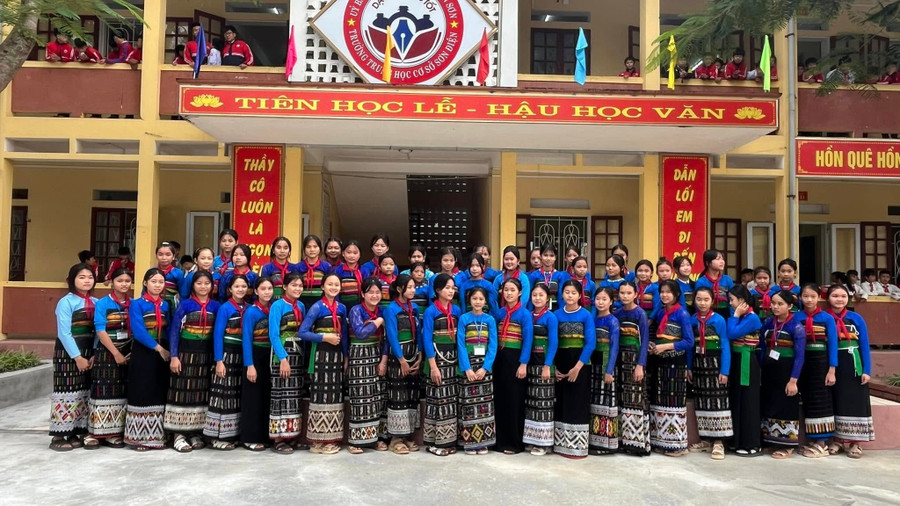
Teacher Thanh added that the whole school has 10 classes, the enrollment area is large, many villages are over 10km from the commune center on mountain roads, steep slopes and very difficult to travel.
Xa Mang, Xuan Son, Na Ho, Bun, and Ban villages all have dozens of students who have to travel long distances to get to class.
"Most parents work far away and leave their children with grandparents. Many families have to hire a car to pick up and drop off their children every day," said Mr. Thanh.
In that context, the boarding model plays an extremely important role. Over the years, the school has invested in and repaired essential items such as: toilets, boarding kitchen, old rooms, green library,...
But for the model to be effective, the school needs to invest in more common areas and multi-function houses.
Overcoming many challenges
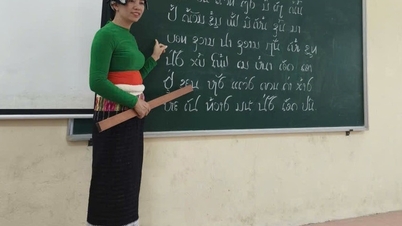
The school currently has 22 teachers, who are responsible for both teaching and managing the activities of boarding students.
With 95% of students being ethnic minorities, maintaining discipline, fostering basic skills and forming stable study habits for them becomes a challenging task.
"Teachers always spend more time with students in especially difficult circumstances, the group most vulnerable to learning disruption," said the principal.
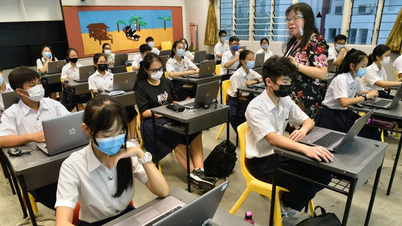
In recent years, Son Dien Secondary School has also gradually approached digital transformation. Classrooms have been equipped with televisions for teaching, and the IT room currently has 10 computers for students.
However, with a class size of 30 - 40 students, "two students per computer" is the goal that the school wants to achieve to make IT lessons truly effective.
"100% of the teaching staff have been trained in digital transformation and have a spirit of approaching technology. If more equipment, especially computers, is added, the application of digital teaching will be practical and effective," said Mr. Thanh.
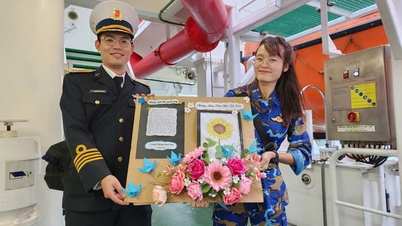
Besides the efforts of the teachers, the school also received support from Muong Min Border Guard Station through the program "Helping Children Go to School".
Every year, disadvantaged students are supported with scholarships of nearly 5 million VND/student, helping to reduce the burden on their families and creating motivation to go to class.

Looking to the future, Mr. Pham Ngoc Thanh hopes that the school will receive synchronous investment in facilities, with sufficient conditions to gradually approach the inter-level boarding model according to the orientation of the commune and province.
At the same time, the school needs to add more teachers to reduce pressure on the existing staff, especially in the context of organizing boarding schools.
"Teachers not only teach but also manage students' lives. Therefore, increasing the number of teachers, especially those with management skills and understanding of ethnic customs and practices, is an urgent need to ensure the quality of education and comprehensive care for students.
If there are more teachers, the boarding work will be more organized, teachers will have time to focus on their lessons, and students will be well taken care of. This is an important condition to improve the quality of teaching and learning in remote areas like Son Dien," Mr. Thanh emphasized.
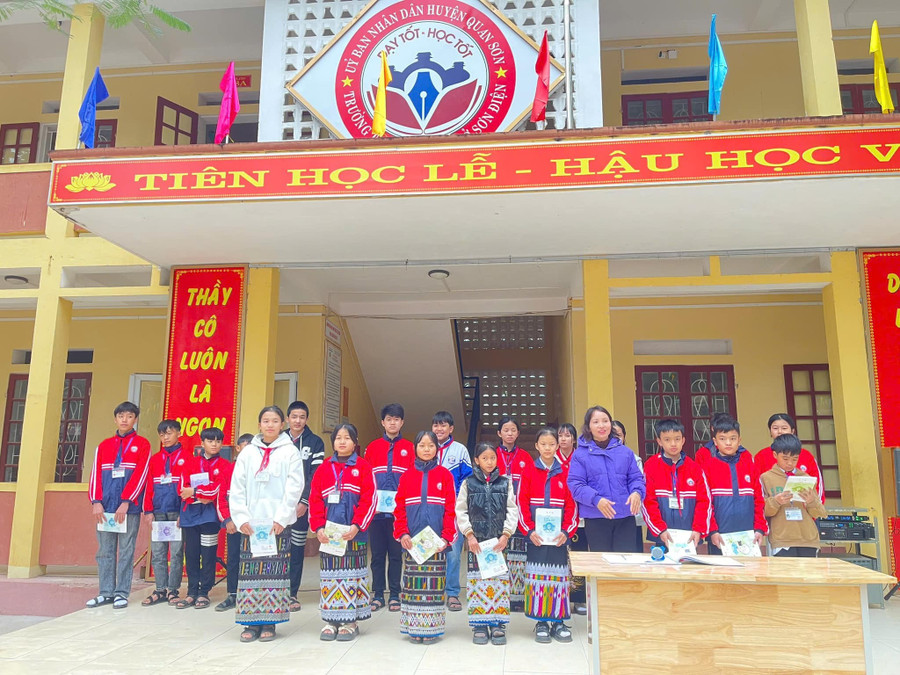
These difficulties are also a common situation in the context of implementing the 2-level local government model. However, with the efforts of the teachers, the school is still trying every day to maintain the quality of teaching.
Mr. Thanh expressed his belief that when the commune level is clearly decentralized and the education sector creates more timely and close conditions for educational facilities, Son Dien Secondary School will have an advantage in organizing boarding schools, upgrading facilities and ensuring safety for students.
"With the cooperation of authorities at all levels and the education sector, we believe that the teaching quality of Son Dien will have a clear change, and students in border areas will enjoy the best learning environment," he shared.
From the efforts of teachers, the care of local people and the support from border guards, the learning journey of Son Dien students is gradually becoming more stable.
According to Conclusion No. 81 of the Politburo , 248 land border communes will be invested in building primary and secondary boarding schools in the coming period.
This policy aims to ensure that students in border areas can study in better conditions, suitable to the difficult terrain and travel distance.
Son Dien Commune is one of the border communes that benefit from this new policy, so Son Dien Secondary School is expected to be gradually upgraded in terms of facilities and boarding conditions, contributing to helping highland students get to class conveniently and safely.
Source: https://giaoducthoidai.vn/no-luc-nang-cao-chat-luong-giao-duc-vung-bien-gioi-thanh-hoa-post759165.html
![[Photo] Parade to celebrate the 50th anniversary of Laos' National Day](/_next/image?url=https%3A%2F%2Fvphoto.vietnam.vn%2Fthumb%2F1200x675%2Fvietnam%2Fresource%2FIMAGE%2F2025%2F12%2F02%2F1764691918289_ndo_br_0-jpg.webp&w=3840&q=75)






















![[Photo] Worshiping the Tuyet Son statue - a nearly 400-year-old treasure at Keo Pagoda](/_next/image?url=https%3A%2F%2Fvphoto.vietnam.vn%2Fthumb%2F1200x675%2Fvietnam%2Fresource%2FIMAGE%2F2025%2F12%2F02%2F1764679323086_ndo_br_tempimageomw0hi-4884-jpg.webp&w=3840&q=75)





























































Comment (0)