

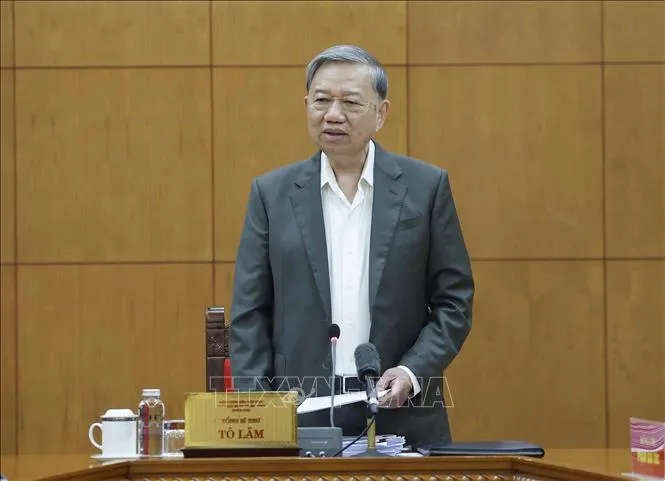
According to the Ministry of Health , Vietnam currently has more than 8 million people with disabilities. People with severe and severe disabilities receive monthly social benefits, health insurance cards, and support for education and learning costs. The country has 165 social assistance facilities caring for people with disabilities and is caring for about 25,000 people with disabilities and mental illness, and managing about 80,000 people with disabilities and mental illness in the community.
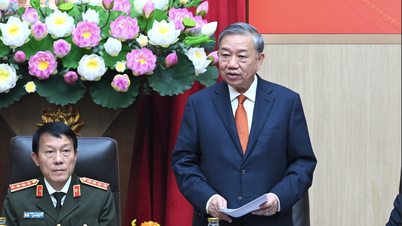
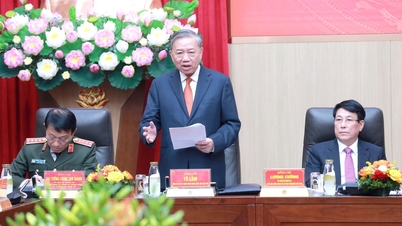
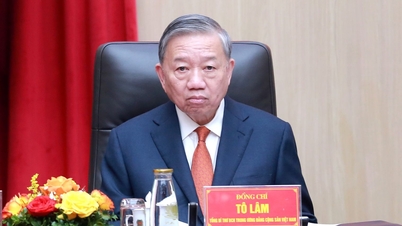
Speaking at the meeting, General Secretary To Lam emphasized that caring for people with disabilities is not only a moral responsibility, but also a measure of civilization and modernity, a requirement of sustainable development and international integration. In recent years, the Party and State have had many important policies and guidelines; many models of support, rehabilitation, inclusive education , job creation... have been effective. Many people with disabilities have strived to rise up, study, work, and contribute value to society.
General Secretary To Lam pointed out that in reality, most people with disabilities still face many difficulties in their daily lives. Many people with disabilities, especially women and children, still face the risk of violence, abandonment, and discrimination. Supporting people with disabilities is not only a social policy, but also a requirement for civilized, humane, and modern development, and is the responsibility of the entire political system. Therefore, it is necessary to clarify and perfect solutions to improve accessibility and rehabilitation for people with disabilities.
The development of policies for people with disabilities in the current period requires a change in thinking, shifting the approach from medical care to an inclusive social approach. That means developing legal policies to approach people with disabilities according to a social model, not according to the conventional medical approach model.
General Secretary To Lam said that, in addition to medical support, rehabilitation, and health insurance, it is necessary to focus strongly on policies for inclusive education, appropriate vocational training; preferential mechanisms in recruitment, access to transport infrastructure, public works, and digital transformation to allow people with disabilities to access online public services and assistive technology tools.
Social security policies must also ensure a minimum standard of living, support livelihoods, housing, and legal assistance so that people with disabilities can truly integrate. This requires raising public awareness, eliminating stigma, promoting a barrier-free and accessible social model for all. Along with that, it is necessary to encourage the private sector, social organizations, and communities to participate extensively in activities to support people with disabilities, create jobs, and create other friendly products and services.
General Secretary To Lam requested to continue researching strong solutions so that all children with disabilities can be detected early, go to school, study and integrate. Every commune and every locality where children with disabilities are still at home must be responsible; education is considered the key to ensure that children with disabilities are not left behind. The Ministry of Education and Training needs to review the system of centers supporting inclusive education; prioritize localities that lack or do not have centers to develop schools for children with visual and hearing impairments, and train support teachers...
Agencies continue to conduct deeper research, more comprehensive analysis, clarify problems in policies and practices, highlight overlapping contents between programs, and propose new solutions suitable to the country's conditions and the actual needs of people with disabilities.
Source: https://www.sggp.org.vn/cham-lo-ho-tro-nguoi-khuet-tat-la-trach-nhiem-cua-ca-he-thong-chinh-tri-post826782.html


![[Photo] Cat Ba - Green island paradise](/_next/image?url=https%3A%2F%2Fvphoto.vietnam.vn%2Fthumb%2F1200x675%2Fvietnam%2Fresource%2FIMAGE%2F2025%2F12%2F04%2F1764821844074_ndo_br_1-dcbthienduongxanh638-jpg.webp&w=3840&q=75)



































![[VIMC 40 days of lightning speed] Da Nang Port: Unity - Lightning speed - Breakthrough to the finish line](https://vphoto.vietnam.vn/thumb/402x226/vietnam/resource/IMAGE/2025/12/04/1764833540882_cdn_4-12-25.jpeg)



































Comment (0)