

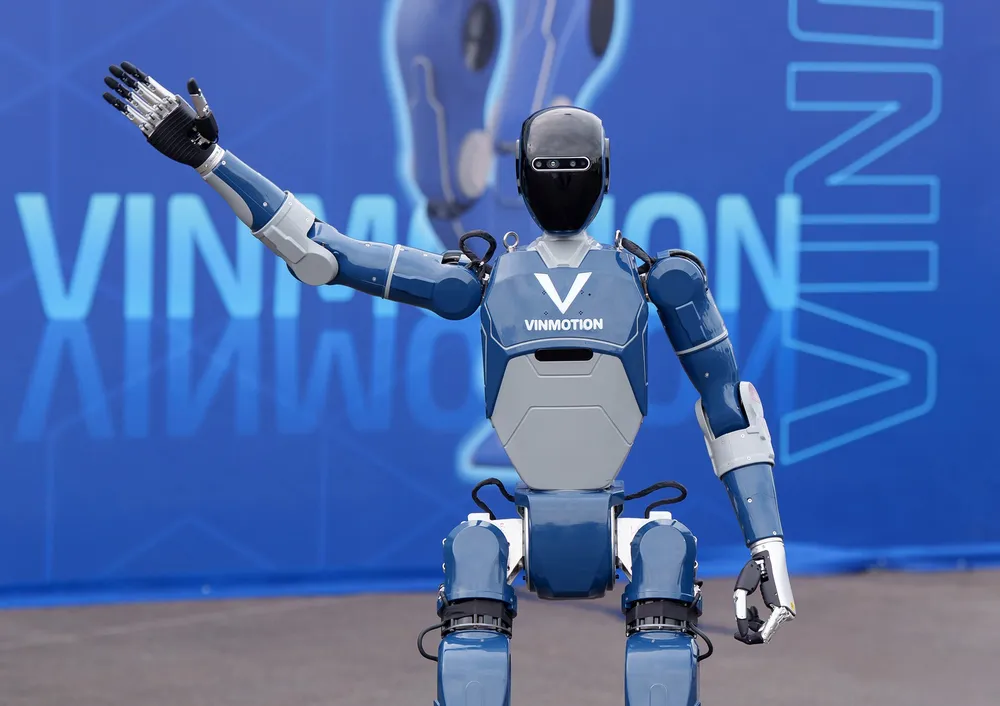
In the context of automation, robotics and artificial intelligence developing strongly globally, sensor technologies, new materials and smart interactive systems make robots safer, more flexible and closer to humans.
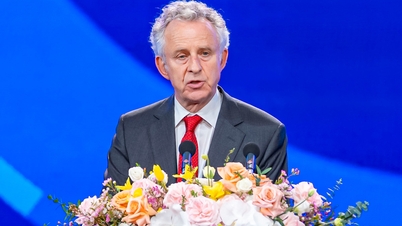
Professor Kurt Kremer, Max Planck Institute for Polymer Research (Germany), emphasized that soft materials are paving the way for a new generation of flexible, easy-to-manufacture and environmentally friendly robots. Advanced polymers can self-stretch according to temperature, pH or pressure, allowing robots to perform delicate movements, suitable for tasks requiring high precision. When soft materials are combined with electrical conductivity and dielectric properties, they create the premise for soft actuators and even simulate “neuromorphology”, an important step towards more biologically adaptive robots.
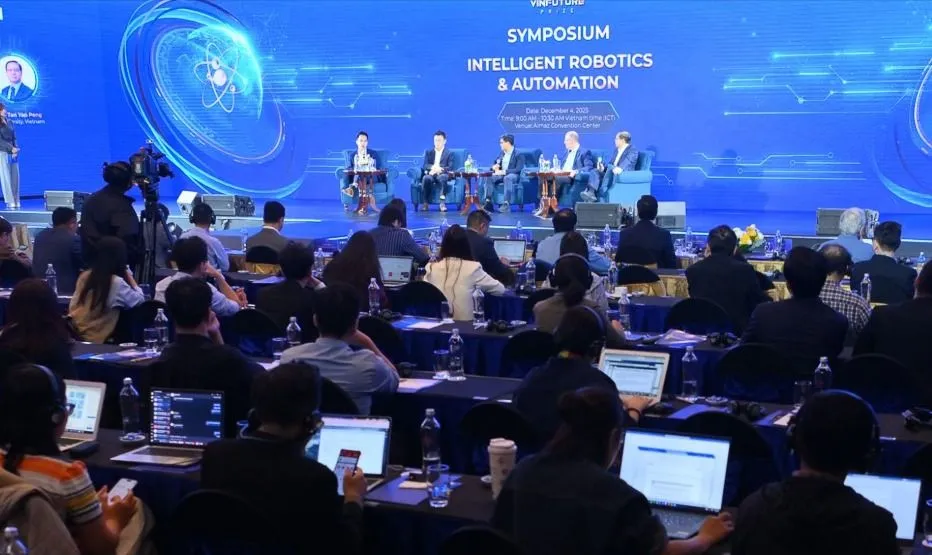
From an application perspective, Professor Ho Young Kim (Seoul National University, Korea) pointed out the big challenge when robots have to manipulate soft materials such as fabrics, food or medical supplies. Traditional robots are optimized for hard objects, while even a small change in the clamping point can completely deform soft objects. His team has developed a gripping system using elastic membranes, helping robots to stably handle each piece of fabric and even soft biological objects, thereby creating a "gearing" machine, a step that previously only humans could do.
In the direction of humanoid robots, Professor Tan Yap Peng, Principal of VinUni, believes that physical intelligence is the decisive factor for robots to understand the world and act in human environments. Models learned from video and image data allow robots to reason, receive instructions and perform complex sequences of operations, although long-term memory and multitasking are still challenges.
In addition, robots for elderly care are considered a strategic solution to the problem of population aging in many Asian countries. Robots can support movement, monitor health, provide spiritual companionship, and help reduce the pressure of a shortage of young workers. However, as Professor Tan Yap Peng emphasized, it is important for society to define the boundaries of what robots are allowed to do and who is responsible when robots intervene in human life.
According to experts, the combination of soft materials, multimodal AI and physical intelligence is bringing robots closer to the ability to live, learn and act in the same space as humans.
Source: https://www.sggp.org.vn/robot-ngay-cang-phuc-vu-con-nguoi-hieu-qua-hon-post826911.html

![[Photo] National Assembly Chairman Tran Thanh Man attends the VinFuture 2025 Award Ceremony](/_next/image?url=https%3A%2F%2Fvphoto.vietnam.vn%2Fthumb%2F1200x675%2Fvietnam%2Fresource%2FIMAGE%2F2025%2F12%2F05%2F1764951162416_2628509768338816493-6995-jpg.webp&w=3840&q=75)
![[Photo] 60th Anniversary of the Founding of the Vietnam Association of Photographic Artists](/_next/image?url=https%3A%2F%2Fvphoto.vietnam.vn%2Fthumb%2F1200x675%2Fvietnam%2Fresource%2FIMAGE%2F2025%2F12%2F05%2F1764935864512_a1-bnd-0841-9740-jpg.webp&w=3840&q=75)


















































































Comment (0)