

According to Phan Dinh Trac, Head of the Central Internal Affairs Committee , the focus should be on reforming thinking in law enforcement work by maximizing the spirit of serving the people, fostering a constructive and development-oriented mindset, and acting for the common good among officials and civil servants in law enforcement agencies.
On March 6th, the Ministry of Justice, in collaboration with the Ho Chi Minh National Academy of Politics, organized a national scientific conference titled "Innovating the Work of Lawmaking and Enforcement to Meet the Requirements of National Development in the New Era." The conference focused on analyzing the urgent needs in lawmaking and enforcement to meet the development requirements of the country in the new era – an era of Vietnam's rise and prosperity.
The workshop was chaired by: Politburo member, Chairman of the Central Theoretical Council, Director of the Ho Chi Minh National Political Academy Nguyen Xuan Thang; Politburo member, Secretary of the Central Committee of the Party, Head of the Central Internal Affairs Commission Phan Dinh Trac; Central Committee member, Minister of Justice Nguyen Hai Ninh; and Deputy Minister of Justice Nguyen Thanh Tinh.
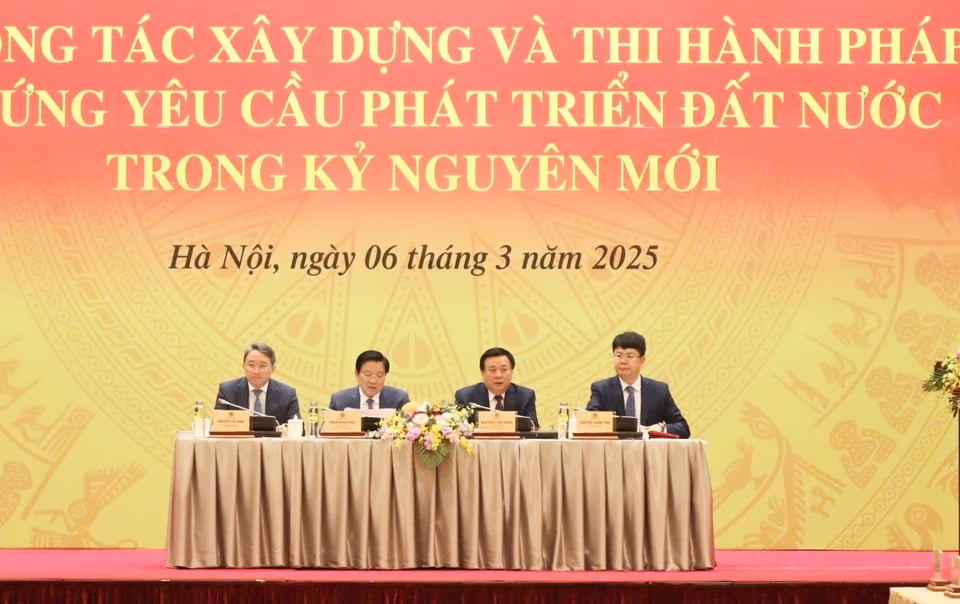
Meeting the requirements of national development in the New Era
Highly appreciating the reports in the conference proceedings, along with the opinions, advice, and policy proposals for the Party and Government on reforming the work of lawmaking and enforcement to meet the requirements of national development in the new era, Politburo member, Secretary of the Central Committee of the Party, and Head of the Central Internal Affairs Commission Phan Dinh Trac stated that this is a valuable source of reference for building and perfecting the Party's guidelines and directions related to lawmaking and enforcement in the Draft Documents of the 14th National Congress of the Communist Party of Vietnam, and in the immediate future, for developing a strategic directive from the Politburo on "Reforming the work of lawmaking and enforcement to meet the requirements of national development in the new era."
According to Phan Dinh Trac, Head of the Central Internal Affairs Commission, in recent years, the Party and State of Vietnam have implemented many policies and initiatives to innovate and improve the effectiveness of lawmaking and enforcement, achieving many important results. Vietnam has formed a relatively comprehensive, transparent, and accessible legal system that fundamentally regulates all aspects of social life; creating a legal foundation for socio-economic development, national defense and security, and international integration.
However, the process of drafting and enforcing laws still faces numerous limitations and shortcomings. Some major policies and guidelines of the Party have not been institutionalized in a timely and comprehensive manner. The quality of laws has not kept pace with practical requirements. The organization of law enforcement remains a weak point. This context, along with the demands of national development in the new era, necessitates an urgent need to innovate the process of drafting and enforcing laws, contributing to creating a strong impetus for rapid and sustainable national development.
With over 70 papers submitted to the Conference Organizing Committee and more than 50 papers selected for inclusion in the conference proceedings, the scientific reports presented at the Conference and the opinions discussed by the delegates further clarified the directions and solutions for innovating the work of drafting and implementing laws to meet the requirements of national development in the new era.
Removing the “bottleneck of bottlenecks”
Head of the Central Internal Affairs Commission Phan Dinh Trac emphasized the following key points with high consensus: First, in order for the country to enter a new era, an era of national progress, and to contribute to the successful achievement of the goal of Vietnam becoming a developing country with modern industry and high middle income by 2030, and a developed country with high income by 2045, the reform of lawmaking and enforcement to serve national development has never been more urgent than today. We need to successfully build high-quality institutions, institutions with international competitiveness, attract talent, unleash resources, and take advantage of development opportunities with the motto of harmonizing interests and sharing risks.
In February, the National Assembly enacted the Law on the Promulgation of Legal Normative Documents (amended), containing many fundamentally innovative provisions. This is a crucial tool for reforming current lawmaking practices, thereby creating a foundation for improving the effectiveness of law enforcement. However, reforming the process is very important but not sufficient to completely resolve the institutional issues that are considered the "bottleneck of bottlenecks." To overcome this limitation, comprehensive reform of lawmaking and enforcement, focusing on reforming thinking and establishing superior investment mechanisms in human resources, infrastructure, and finance for lawmaking and enforcement, is essential.
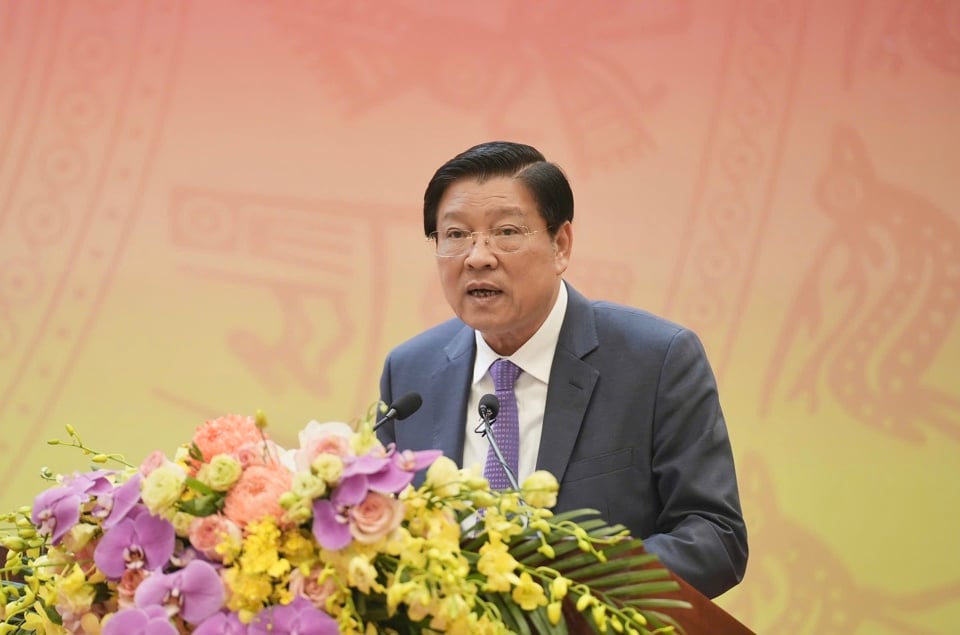
At the same time, ensure direct and comprehensive leadership, maximizing the Party's role in the development and implementation of laws. This includes unanimously defining the leadership in institutionalizing the Party's policies and guidelines into laws and leading the implementation of laws to ensure the supremacy of the Constitution and laws as a central and ongoing task of Party committees and organizations at all levels. Strengthen inspection and supervision of the institutionalization of the Party's policies and guidelines into laws. Strictly implement regulations on power control, prevention and combating corruption, negative practices, and "group interests" in the development and implementation of laws.
Fundamentally reforming the mindset in lawmaking.
According to Phan Dinh Trac, Head of the Central Internal Affairs Commission, a fundamental change in the mindset regarding lawmaking is necessary. The mindset that advisory bodies and every policy and lawmaking official need to cultivate to meet the demands of national development in the new era must be one of constructive development, seizing every opportunity for national development, and strongly mobilizing all social resources for breakthrough national development, for the happiness of the people.
Therefore, we must innovate our thinking on lawmaking towards a "both strict management and development-oriented" approach, decisively abandoning the mindset of "managing without knowing," "prohibiting what cannot be managed," and "allowing citizens and businesses to do what the law does not prohibit"; emphasizing the "results-based management" method, shifting strongly from "pre-auditing" to "post-auditing" coupled with enhanced inspection and supervision. We must appropriately promote the role of social ethics, professional ethical codes, and community self-governance rules in regulating social relations.
In the coming period, it is necessary to effectively implement the Law on the Promulgation of Legal Normative Documents (amended). This includes focusing on policy research, impact assessment, and improving the quality of legal normative document review and verification. It is also crucial to promptly research and propose to the National Assembly the issuance of a Resolution on a special mechanism to address difficulties and obstacles in the law-making process.
Ministries and sectors within their respective areas of management need to continue proactively and urgently reviewing legal documents, clearly identifying inconsistencies, contradictions, and outdated provisions to propose amendments. Priority should be given to building and perfecting the legal framework to remove bottlenecks serving economic development and meet the requirements of national development in the new era. Legal frameworks should be established promptly for new and non-traditional issues to create new growth drivers, new production relations and productive forces, and new industries. Controlled pilot mechanisms should be applied appropriately. The legal framework for the organization and operation of institutions within the political system should continue to be improved to meet the requirements of building a socialist rule of law state in Vietnam in the new period, ensuring it is "lean, strong, efficient, effective, and effective."
Maximizing the spirit of serving the people.
According to Phan Dinh Trac, Head of the Central Internal Affairs Commission, the focus should be on reforming thinking in law enforcement work by maximizing the spirit of serving the people, fostering a constructive and development-oriented mindset, and acting for the common good among officials, civil servants, and law enforcement agencies. Priority should be given to ensuring effective law enforcement, primarily in areas promoting economic development (especially improving the investment and business environment, protecting the freedom of business, competition, entrepreneurship, and innovation), and areas directly related to people's lives such as ensuring food safety, environmental protection, and cybersecurity.
The process of lawmaking and enforcement should be closely linked, emphasizing the summarization of practical law enforcement experiences, regularly evaluating the effectiveness of law enforcement, and assessing the quality of policies after promulgation. This will accelerate policy responsiveness, promptly address difficulties and obstacles, and amend and adjust inadequate or contradictory regulations to seize all development opportunities and minimize resource losses and waste.
Furthermore, it is necessary to create breakthroughs in law enforcement, focusing on building a culture of law compliance, integrity, and freedom from corruption, waste, and negative practices, primarily among cadres, Party members, and agencies and organizations within the political system, and spreading this strongly throughout society; promoting the strong development of legal services, legal aid, legal support, arbitration, and mediation; and improving the quality of the national legal database to make it easier for citizens and businesses to access the law and manage legal risks.
Regularly evaluate the effectiveness of laws after their promulgation; proactively identify and quickly resolve bottlenecks stemming from legal regulations. Strengthen dialogue, receive and listen to opinions, and promptly resolve legal difficulties and obstacles faced by citizens and businesses, consolidating trust and social consensus in law enforcement. Emphasize the prevention and warning of legal violations, coupled with strengthening supervision, inspection, and investigation, detecting and strictly and promptly handling violations of the law.
Furthermore, it is necessary to urgently address the difficulties and obstacles related to human resources, infrastructure, and finance for the work of lawmaking. The principle of investing in lawmaking is an investment in development. The State must ensure and prioritize resources for investing in physical facilities, modernizing technical infrastructure and working equipment; and establish specific financial mechanisms and policies for the work and personnel involved in legal affairs and lawmaking.
Proactively apply artificial intelligence, urgently build national digital platforms, develop databases, ensure unified and interconnected operation, data exploitation, and effective support for lawmaking and enforcement. Restructure and improve the national database on laws to ensure unified operation, accuracy, completeness, cleanliness, and viability, interconnection, and effective exploitation to serve lawmaking and enforcement.
In particular, many participants also argued that, in the new context and situation, with recent strategic directives from the Central Committee, the Politburo, the Secretariat, the General Secretary, and other Party and State leaders, the work of drafting and implementing laws requires comprehensive, systematic, and "breakthrough-of-breakthrough" reforms.
Simultaneously, the entire political system is vigorously implementing a revolution in streamlining organizational structures, aiming for a lean, efficient, effective, and effective system, promoting decentralization and delegation of power in the spirit of "Local authorities decide, local authorities act, local authorities take responsibility, the Central Government, the National Assembly play a facilitating role" and "strengthening supervision, inspection, urging, and resolving difficulties and obstacles."
Strengthening supervision of the implementation of the Constitution and laws.
Conclusion 126-KL/TW dated February 14, 2025, of the Politburo and Secretariat on some contents and tasks for continuing to reorganize and streamline the organizational structure of the political system in 2025; Conclusion 127-KL/TW dated February 28, 2025, of the Politburo and Secretariat on implementing research and proposing further reorganization of the organizational structure of the political system clearly states the research direction for amending and supplementing some articles of the Constitution with the scope being issues related to the organizational structure of the political system.
Against this backdrop, the country is facing the need for strong, strategic, and revolutionary policies and decisions on building and perfecting institutions, especially in the development and implementation of laws, to create new momentum for breakthrough development in the new era - an era of national prosperity and well-being.
Therefore, if we only focus on research and drafting a Politburo Directive on "Reforming the work of lawmaking and enforcement to meet the requirements of national development in the new era," it will be difficult to fully convey the groundbreaking orientations and solutions for strongly reforming this work. Therefore, we need to propose to the competent authority that this task be transformed into research and drafting of a Politburo Resolution on "Reforming the work of lawmaking and enforcement to meet the requirements of national development in the new era."
The Head of the Central Internal Affairs Committee, Phan Dinh Trac, also requested the Ministry of Justice to continue to closely coordinate with the Ho Chi Minh National Political Academy to research and fully incorporate the insightful opinions and wisdom of the delegates, experts, and scientists, and to promptly finalize and send the results of the Conference to the competent authorities for reference in advising and formulating the Party's guidelines and policies, and in the development and implementation of laws.
"In addition, agencies of the National Assembly, committees, ministries, and sectors will continue to closely coordinate with the Ministry of Justice in the work of building and perfecting the legal system, while strengthening supervision of the organization and implementation of the Constitution and laws," emphasized Phan Dinh Trac, Head of the Central Internal Affairs Committee.
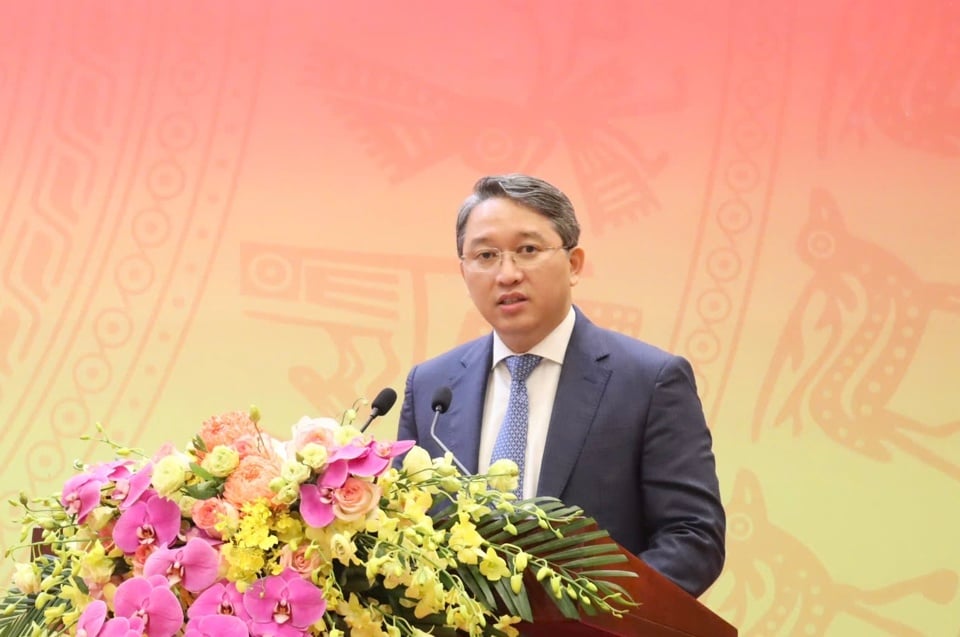
Building and enforcing laws in the new era requires an open mindset and innovative approaches that are appropriate to Vietnam's reality. This requires dedicated experts and scientists to contribute their ideas. We prioritize economic development, but we put people at the center; therefore, focusing solely on development will not be sustainable.
Recently, the Prime Minister has had many interactions with foreign businesses, and these businesses have expressed concerns about the changes to the law. However, we must assess and recognize that these changes aim to streamline the administrative apparatus. Although the law is changing, it is necessary to clearly state to investors that Vietnam's commitments to other countries remain unchanged. The changes to the law will not increase costs for businesses; in fact, they will reduce procedures as requested by the General Secretary and the Prime Minister regarding administrative procedure reduction. We are changing the law to ensure stability and development.
Minister of Justice Nguyen Hai Ninh
Source: https://kinhtedothi.vn/doi-moi-tu-duy-thi-hanh-phap-luat-phat-huy-tinh-than-phuc-vu-nhan-dan.html





























![[Photo] Reception to welcome General Secretary and President To Lam and his wife on their State visit to the Philippines](https://vphoto.vietnam.vn/thumb/1200x675/vietnam/resource/IMAGE/2026/06/01/1780295488620_vna-potal-chieu-dai-chao-mung-tong-bi-thu-chu-tich-nuoc-to-lam-va-phu-nhan-tham-cap-nha-nuoc-toi-philippines-8798060-7855-jpg.webp)

































































Comment (0)