

 |
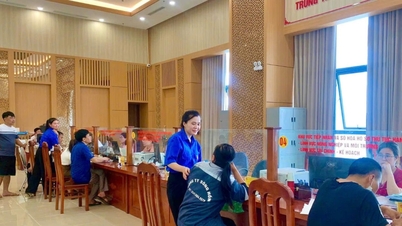
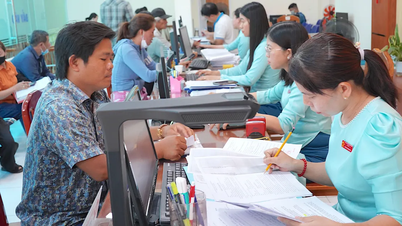
| People come to complete administrative procedures at the Na Rì Commune Public Administrative Service Center. (Photo: Provided) |
A noteworthy aspect of the plan implemented by the Provincial People's Committee is that the reform begins with specific behaviors in official communication. The set of principles "4 requests, 4 always, 5 things to know, 4 things to demonstrate" has been introduced as a clear standard of conduct.
Seemingly simple requests like greetings, expressions of gratitude, or proactive apologies when mistakes occur are precisely what citizens have long expected. When officials listen, explain clearly, and take full responsibility, trust is built from even the smallest interactions.
Beyond communication, the plan also aims to "humanize" administrative activities. Offering congratulations upon marriage or birth registration, or sending condolences during family bereavement, are details that demonstrate a shift in service-oriented thinking.
Public authorities handle procedures while also sharing in the important milestones in people's lives. If these actions are maintained regularly, they will help soften the often rigid image of the administrative apparatus.
Alongside this is the demand for stricter discipline in public service. Any signs of sluggishness, shirking responsibility, or causing inconvenience to the public are placed under close supervision.
Sending apology letters for delays or errors in processing applications is a step forward, demonstrating a clearer sense of responsibility, rather than the previous internal handling methods. When responsibility is specifically identified, the pressure for self-improvement becomes more substantial.
Conversely, the people are both beneficiaries and direct participants in the monitoring process. All construction projects in the area are subject to community oversight.
Information is widely available through digital platforms, facilitating public access and feedback. When oversight is exercised regularly, the relationship between the government and the people will shift from a one-way street to a more distinct two-way interaction.
However, the key lies in implementation. Even the most detailed plan is unlikely to bring about change without persistence and consistency in execution.
Administrative reform cannot be measured by the number of documents or models published. Its true value can only be verified through each time citizens come to conduct business, through how they are received, and through their feelings upon leaving.
When the doors of the headquarters are no longer a psychological barrier, when every interaction becomes more open and respectful, when people feel they are truly listened to and served, that is when reform truly goes in-depth.
And the clearest measure, ultimately, remains the satisfaction evident on the faces of the people after each time they leave the "government office" with a feeling of relief and trust.
Source: https://baothainguyen.vn/xa-hoi/202603/doi-moi-tu-thai-do-phuc-vu-6796c34/





![[Photo] General Secretary and President To Lam presides over a meeting on assessing national development resources.](https://vphoto.vietnam.vn/thumb/1200x675/vietnam/resource/IMAGE/2026/05/20/1779253785852_a1-bnd-2943-8519-jpg.webp)











































































Comment (0)