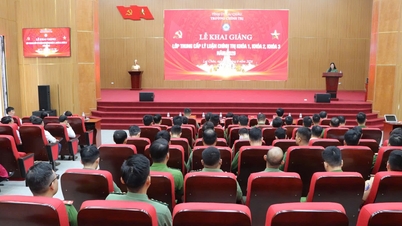
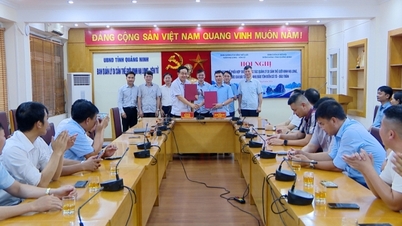
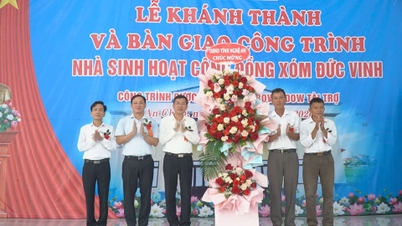
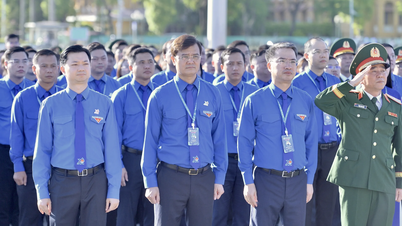
Attending the ceremony were Comrade Pham Trong Hoang - Member of the Standing Committee of the Provincial Party Committee, Chairman of the Provincial Inspection Committee; members of the Provincial Party Committee: Bui Dinh Long - Vice Chairman of the Provincial People's Committee; Tran Thi My Hanh - Director of the Department of Culture and Sports ; representatives of the Nghe An Provincial Relics Management Board; leaders of Con Cuong district, representatives of leaders of Ky Son, Tuong Duong, Anh Son, Do Luong districts... along with a large number of local people and tourists from all over.

After the procession from the District People's Committee to Khe Sat Temple with the participation of hundreds of people and students, there was a 30-minute epic performance with rich cultural identity of ethnic groups, grand and elaborately invested with the participation of a large number of amateur actors recreating the great contributions of Prince Uy Minh Ly Nhat Quang - the 8th Prince of King Ly Thai To, born in the year Mau Ty (988) in Hoa Lu capital ( Ninh Binh today).
The speech at the ceremony emphasized that he was well-versed in classical texts and skilled in both literature and martial arts. In 1039, King Ly Thai Tong appointed him to Nghe An to oversee tax collection. In 1041, he was appointed Governor of Nghe An and granted the title of Uy Minh Marquis. From then on, the career of Uy Minh King Ly Nhat Quang became truly intertwined with the land and people of Nghe An.


During his 16 years as Governor of Nghe An (1041-1057), Uy Minh Vuong Ly Nhat Quang made significant contributions to the Nghe An region in the political, social, economic, and military fields. In particular, he paid close attention to the people of Cu Don (present-day Con Cuong), implementing numerous measures that transformed the entire area. This included land reclamation and village establishment. Remaining historical evidence shows that, besides Khe Diem, many other areas in the region were also developed, such as Khe Choang (now part of Chau Khe commune) and Khe Thoi (now part of Lang Khe commune)...
To commemorate the great contributions of Uy Minh Vuong Ly Nhat Quang, people in many places in Con Cuong and the surrounding areas have built temples to worship him, honoring him as the tutelary deity of the village. At Khe Sat Temple, there are also temples dedicated to Dong Chinh Vuong, Duc Thanh Vuong, the local tutelary deity, the Four Palaces Mother Goddess, and several other Buddhas.

Khe Sat Temple, built hundreds of years ago, consists of two main halls and a sanctuary, as well as a gate, a pavilion for civil officials, and a pavilion for military officials. Around the 1960s, the temple fell into disrepair. In 2012, people from all over contributed money and effort to restore the sanctuary, and in 2017, they continued to restore the main hall.
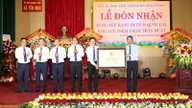
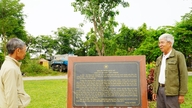
At the ceremony, the Provincial People's Committee announced the decision to recognize Khe Sat Temple as a provincial-level historical relic. Following the ceremony was the festival with sports competitions in men's volleyball and folk games such as crossbow shooting, throwing the ball, tug-of-war, and stick pushing…
The ceremony to receive the Provincial-level Historical Monument Certificate for Khe Sat Temple serves as a foundation for Con Cuong district to continue protecting and promoting the values of historical relics and cultural heritage, thereby creating many activities for the annual Khe Sat Temple Festival. Along with the National Historical Monument of Bia Ma Nhai, the National-level Revolutionary Historical Monument of the House of Mr. Vi Van Khang, and the remnants of Tra Lan Citadel in the great victory of Le Loi's army, creating the "Tra Lan region where bamboo splits and ashes fly," along with famous landmarks such as Khe Kem Waterfall and Khe Nuoc Moc stream, these will become attractive destinations for tourists from all over when visiting Con Cuong.
Source
![[Photo] Prime Minister Le Minh Hung presides over the thematic session on promoting science and technology development and innovation.](https://vphoto.vietnam.vn/thumb/1200x675/vietnam/resource/IMAGE/2026/06/23/1782207872934_ndo_br_dsc-1724-jpg.webp)