

Kinhtedothi - Thoroughly practicing thrift and combating waste (CLP) has become a central and regular task for all levels and sectors, and the results obtained have contributed to the effective management and use of resources for socio -economic development.
Improving the efficiency of public asset resources.
Through parliamentary oversight and practical experience, it has been shown that strengthening austerity measures and implementing the CLP (Continuing Economical and Efficient Use of Resources) has created important resources for development. Some localities have focused on and decisively handled the recovery of many stalled and delayed projects, requiring the utilization of hundreds of thousands of hectares of land from slow-developing projects.
Each year, the budget management and expenditure are strictly controlled, with a rational spending structure that avoids spreading resources too thinly, focusing on key priorities, prioritizing development and investment, and ensuring spending on social welfare. Many assets recovered from corruption cases are higher each year than the previous year. In particular, the streamlining of the administrative apparatus, reduction of staff, and reform of administrative procedures are positive achievements.
It can be said that the practice of thrift and anti-corruption has contributed to the successful achievement of socio-economic development goals and targets, ensuring national defense, security, social security, and social welfare. However, how to effectively and thoroughly prevent and combat corruption remains a question that requires synchronized solutions and consistent action.
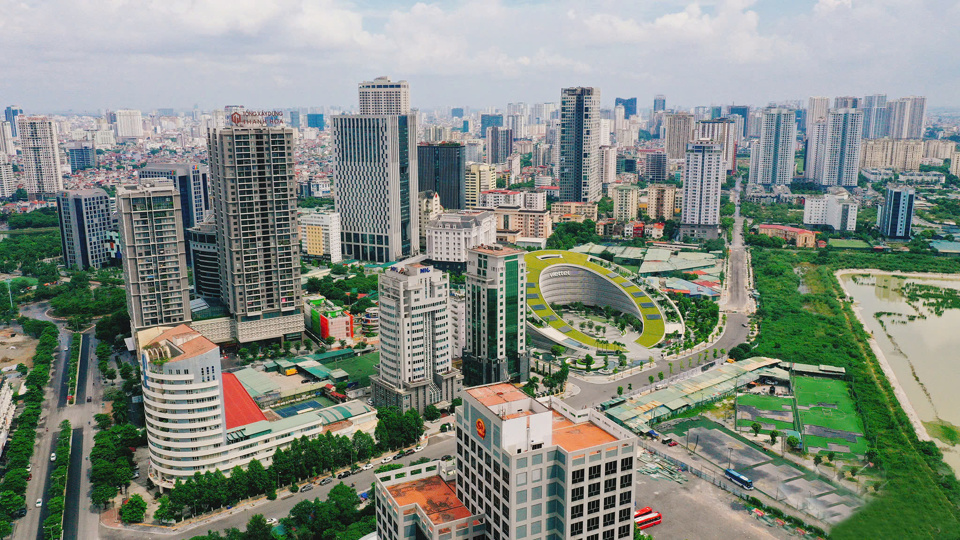
In Hanoi , practicing thrift and combating corruption is a key component of the Hanoi City Party Committee's Program No. 10-CTr/TU on "Improving the effectiveness of anti-corruption efforts; practicing thrift and combating corruption in the 2021-2025 period". The city has issued numerous directives and instructions to promote awareness campaigns and direct departments, agencies, and units to implement these measures to enhance the effectiveness of this work.
Accordingly, Hanoi is recognized as a locality with a high sense of responsibility in practicing thrift and combating waste in both the public and private sectors. A prime example is the city's increasingly frequent and widespread implementation of online meeting systems, which helps to quickly disseminate directives and resolutions while reducing the number of meetings, travel time, and effort required.
The Standing Committee of the Hanoi City Party Committee also directed the creation of breakthrough steps in decentralization and delegation of authority; to date, more than 700 administrative procedures at the city level have been delegated, helping to shorten the time for citizens and businesses, creating a favorable environment for production, business, and investment...
In the allocation of the State budget, statistics from 2023 show that the city saved 10% of recurrent expenditures to implement salary reforms, amounting to over 3,331.5 billion VND. At the same time, it saved over 5,643.4 billion VND in the use, payment, and settlement of the State budget at agencies, organizations, and units; making it one of the three most economical localities nationwide.
In addition to practicing austerity, the CLP (Corporate Social Responsibility Program) also aims to improve the efficiency of public assets. Hanoi is making great efforts to do this well, implementing the "Project on the effective management, use, and exploitation of public assets of Hanoi City for the period 2022-2025, with a vision for the period 2026-2030," encompassing four groups of public assets: buildings; land; infrastructure assets; and other assets. Based on this framework project, the city has assigned 9 groups of solutions and 67 tasks (including 29/67 tasks with deadlines and 38/67 tasks on a regular basis).
With a new spirit and the determination of the Party, State, National Assembly, and Government to change and revise the approach to the CLP (Capital Development Program), the Hanoi City leadership continues to emphasize the requirement that departments, agencies, and localities fully understand and adopt new approaches within their authority, proactively reviewing with the highest responsibility. This will ensure the promotion of the city's resources and potential into driving forces and resources for the development of Hanoi, truly benefiting society; preventing delays and prolonged processes, whether for public or non-budgetary investment projects.
After a year of implementation, the project has created a bright spot in public asset management in the city. The project has helped Hanoi build a system for managing public assets that is not only sustainable but also contributes to maximizing the potential and value of resources, aiming for comprehensive socio-economic development of the capital. According to the head of the Department of Finance, immediately after the project was implemented, Hanoi approved a plan for rearranging and handling 10,427 properties; proceeded to recover the land and property areas that had to be handed over to the city for management (ground floor area of commercial apartment buildings, temporary housing fund, etc.); recovered land and property areas that were in violation of regulations or used improperly to develop plans for management, exploitation, and handling according to regulations... The Department of Finance has also completed the public asset data warehouse, connecting data from units throughout the city; and developed mechanisms and policies to resolve obstacles and unlock public asset resources. Decentralization and delegation of authority are necessary to improve the efficiency of managing and utilizing public assets and prevent waste.
According to a representative from the Hanoi Department of Construction, the Department has advised the Hanoi People's Committee to issue a document approving the policy and decision to reclaim and forcibly reclaim 113 locations that are being used improperly. 56 locations have already been reclaimed (including 6 specialized state-owned buildings and 42 business service areas in resettlement buildings). Currently, the People's Committees of the districts and counties are continuing to forcibly reclaim the remaining violating locations, with a firm commitment to addressing existing violations.
Taking decisive action to resolve slow-moving projects.
According to National Assembly deputies, one of the pressing issues in the CLP (Continuing the National Assembly's Resolution on Capital Contribution) is to review and definitively resolve long-standing, inefficient projects that cause significant losses and waste, because "these are state assets, the people's money." Above all, responsibility for projects that are behind schedule and causing waste must be clearly identified, and those responsible for the waste must be held accountable; projects that cannot be completed must be revoked.
This is also an issue that Hanoi is actively working to resolve. Many projects in Hanoi are currently experiencing delays, including those located in prime real estate areas of the capital. To address these obstacles, Hanoi has implemented various solutions, including strengthening inspections and audits to propose solutions...
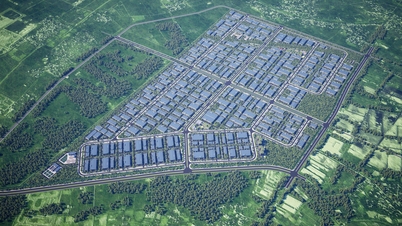
Specifically, the city has identified 712 non-budgetary capital projects using land that are experiencing delays in implementation and is focusing on addressing them (according to Resolution No. 04/NQ-HĐND dated April 8, 2022, of the Hanoi People's Council on measures to accelerate investment progress and focus on handling slow-moving non-budgetary capital projects using land). After two years of implementation, statistics show that by the end of June 2024, the Hanoi People's Committee had directed the handling of a cumulative total of 705 projects, with a total area of 11,345 hectares of land that had undergone inspection, audit, and post-audit conclusions, and directed the handling of these projects, assigning relevant units to continue monitoring and urging the acceleration of investment progress and putting the land into use; there are 7 projects with a total area of 88.5 hectares of land that have received policy decisions but have not yet been allocated or leased land by the State, and the Department of Planning and Investment is continuing to review them to propose solutions.
Of these 712 projects, 410 projects (with a total land area of 9089.5 hectares) were removed from the list of slow-moving projects and will continue to be monitored according to the law. A special task force of the city was established to address difficulties and obstacles, and effectively support businesses, investors, and investment projects in the city. This task force will coordinate, monitor, and direct units to promptly resolve and address issues for each project in order to rectify violations and accelerate implementation progress.
At a recent meeting organized by the Hanoi People's Committee to address difficulties and obstacles in several investment projects, Chairman Tran Sy Thanh gave directives regarding a number of housing projects that have been slow to implement or put into use, causing public dissatisfaction due to wastefulness. He assigned specific tasks to relevant units, with deadlines for completion, demonstrating the city's determination to resolve and address these issues.
For example, regarding the Phap Van - Tu Hiep Student Housing Project, the City requires the Department of Construction, the Department of Finance, and the City's Civil Construction Investment Project Management Board to coordinate and finalize the accounts according to completed items; to be completed in December 2024 (except for the transformer substation item, which will be paid and finalized later). Regarding the conversion of items A2, A3, and A4 into social housing for rent, the Department of Construction and the City's Civil Construction Investment Project Management Board are tasked with urgently preparing a report proposing the investment policy, organizing the appraisal, and submitting it to the City People's Council for consideration and approval at the meeting in early 2025.
Based on that, the renovation and upgrading of buildings A2 and A3 should be completed in 2026, and the construction of building A4 should be completed no later than 2027. Similarly, regarding the resettlement housing project in the Den Lu III urban area, the Chairman of the Hanoi People's Committee requested the Hoang Mai District People's Committee to focus on directing relevant units to urgently carry out the renovation and repair of buildings CT1, CT2, and CT3, ensuring quality and environmental landscape to serve the resettlement of the people; completing and handing over the project in the second quarter of 2025 to arrange resettlement for projects in the district and other projects in the district…
The city's leaders have consistently recognized that, regardless of subjective or objective reasons, the aforementioned projects, which have been delayed in implementation and commissioning, show signs of wastefulness, especially in terms of time spent on their execution. This is one of the proofs that Hanoi has been making efforts to address and resolve obstacles for abandoned projects in the city, thereby creating additional resources for development.
To improve implementation efficiency, Hanoi City has resolutely required departments, agencies, and local governments to be transparent in implementing and practicing thrift and anti-waste measures; especially in publicly disclosing wasteful behaviors and the results of handling such behaviors. Notably, the city has done well in reducing the number of departments, organizations, and administrative structures, thoroughly eliminating duplication and overlap of functions and tasks, thereby improving the management capacity and anti-waste of human resources in agencies and units.
(To be continued)
Source: https://kinhtedothi.vn/bai-3-dong-bo-giai-phap-xuyen-suot-trong-hanh-dong.html

























































































Comment (0)