

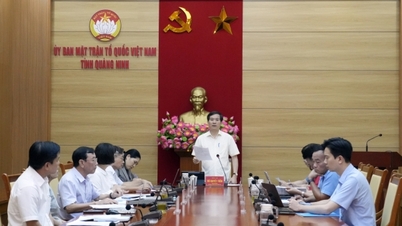
By 2025, the district aims to increase production value by over 15%, with border trade and services/tourism being the two main growth drivers: total import and export turnover increasing by 10%, attracting tourists. Two to three times the figure of 2024... These are very ambitious goals, requiring close guidance and the mobilization of resources...
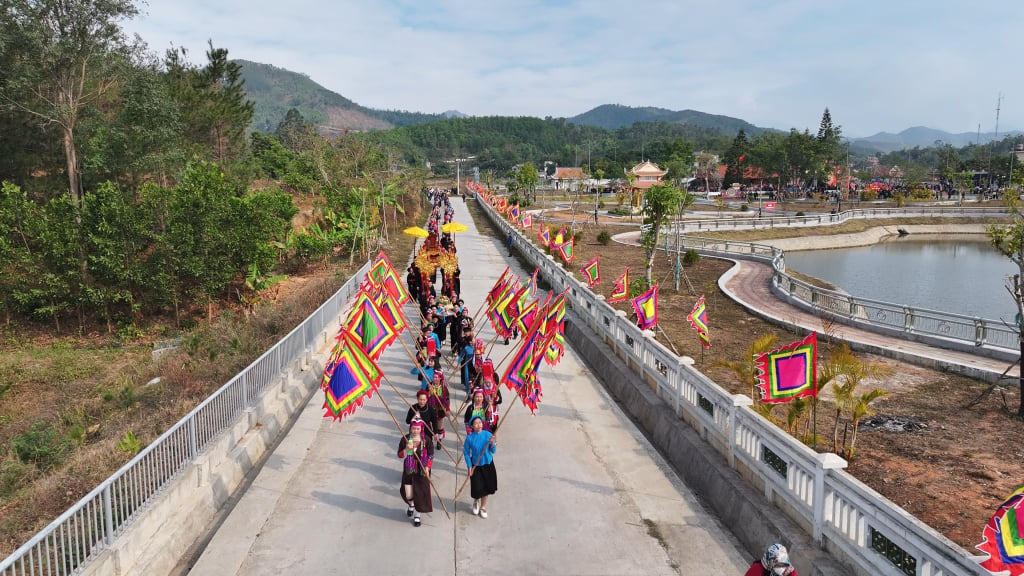
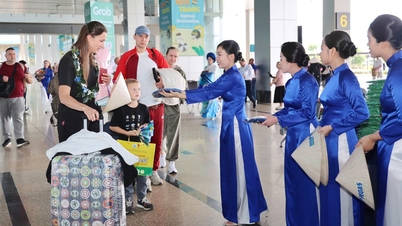
The district aims for a service sector growth rate of over 17% in 2025, with tourism as the main driving force; attracting over 500,000 tourists (480,000 domestic tourists and 20,000 international tourists), nearly 2.3 times more than in 2024; marking a strong transformation in the economic structure and striving to make services a key economic sector of the district.
To realize this goal, since the beginning of 2025, the district has implemented plans and programs to stimulate tourism. A prime example is the Luc Na Temple Festival, with many attractive activities such as the traditional procession of royal decrees and the expanded traditional martial arts championship, attracting a large number of locals and tourists.
Focusing on preserving and promoting the cultural identity of ethnic groups in conjunction with tourism development, in the coming months the district will maintain and refresh the organization of festivals such as Soóng Cọ, Kiêng Gió, Mùa Vàng, and Hoa Sở; implement the Tay ethnic group's cultural village project; urgently complete and implement the San Chỉ and Dao ethnic group's cultural village projects; protect, preserve, manage, and effectively exploit the provincial-level historical and scenic site of Lục Hồn terraced rice fields and Khe Vằn waterfall; promote tourist destinations such as Cao Ly mountain, Cao Xiêm mountain, Cao Ba Lanh mountain, and Sông Moóc waterfall… Simultaneously, the district will accelerate the construction and operation of the Khe Vằn Waterfall scenic ecological tourist area.
Along with developing in scale and products, the district is focusing on investing in and improving the quality of services. The district has assigned the Department of Culture and Tourism to assess human resources and propose solutions for training and developing tourism personnel who are knowledgeable about customs and traditional culture, while also possessing a professional service style; strengthening state management, building a healthy, secure, and safe tourism business environment for tourists, and improving the effectiveness of digital transformation in the tourism and service sector, identifying this as a key task to create a breakthrough for tourism.
Binh Lieu tourism in 2025 is anticipating a surge in Chinese tourists with the implementation of border crossings at the Hoanh Mo (Vietnam) - Dong Trung (China) bilateral border gate. Currently, relevant agencies and the Hoanh Mo Border Gate Management Board have prepared the necessary technical and human resources, and are actively coordinating with the Fangcheng District government (China) to soon allow citizens of both countries to cross the border at the Hoanh Mo border gate.
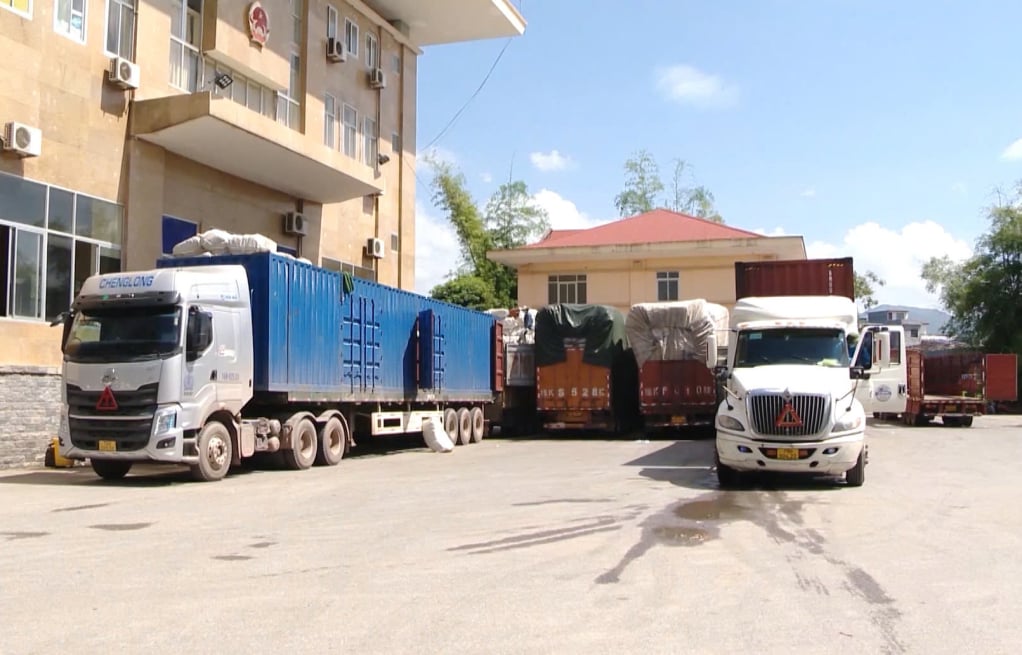
Mr. La Duc Toan, Deputy Head of the Hoanh Mo Border Gate Management Board, shared: In 2024, the total value of import and export goods through the border gate reached 92.57 million USD. To achieve the target of a 10% increase in total import and export turnover in 2025, the Management Board closely monitors the situation, advises on solutions, promptly overcomes difficulties and obstacles, creates the best conditions for businesses to operate, and ensures smooth goods circulation; promotes activities to attract businesses, focusing on implementing proposals including supplementing and expanding the list of Vietnamese goods allowed to be exported through the Hoanh Mo Border Gate. At the same time, it accelerates the completion of the Hoanh Mo Border Gate warehouse project with an area of over 7.5 hectares and a designed capacity of 5-10 million tons of goods per year.
Source
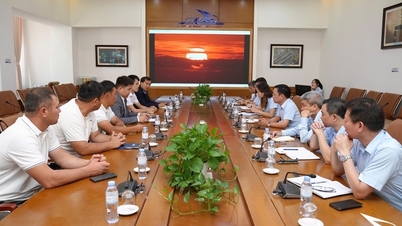
![[Photo] General Secretary and President To Lam presides over a meeting with the Central Organizing Committee.](https://vphoto.vietnam.vn/thumb/1200x675/vietnam/resource/IMAGE/2026/06/03/1780482764658_a1-bnd-4741-3342-jpg.webp)
![[Photo] Secretary of the National Assembly Party Committee, Chairman of the National Assembly presides over the meeting of the Standing Committee and Executive Committee of the National Assembly Party Committee.](https://vphoto.vietnam.vn/thumb/1200x675/vietnam/resource/IMAGE/2026/06/03/1780480353201_ndo_br_bnd-2585-jpg.webp)
![[Photo] First session of the 14th Congress of the Vietnam Trade Union](https://vphoto.vietnam.vn/thumb/1200x675/vietnam/resource/IMAGE/2026/06/03/1780465947883_ndo_br_img-3852-jpg.webp)


































![[Video] Sunset at Lap An Lagoon – Where the sun sets over the fishing nets](https://vphoto.vietnam.vn/thumb/1200x675/vietnam/resource/IMAGE/2026/05/31/1780192137701_beach-landscape-sea-water-nature-grass-745871-pxhere-com.jpeg)





























Comment (0)