

In implementing Resolution 57-NQ/TW dated December 22, 2024, of the Politburo on "Breakthroughs in the development of science and technology, innovation, and national digital transformation" (hereinafter referred to as Resolution 57), Dong Thap is actively applying science and technology and digital transformation to modernize its agricultural sector towards a green, circular, smart, and climate change-adaptive direction.
The Agriculture and Environment Newspaper conducted an interview with the Vice Chairman of the People's Committee of Dong Thap province, Nguyen Thanh Dieu, to further clarify the province's orientation, challenges, and solutions in this important field.

Mr. Nguyen Thanh Dieu, Vice Chairman of the People's Committee of Dong Thap province. Photo: Thanh Bach.
Resolution 57 is considered a strategic turning point. From the perspective of the provincial leadership, how do you assess the opportunities this resolution brings to the agricultural sector of Dong Thap province ?
Resolution 57 is not only a guiding principle in terms of policy, but also a powerful impetus for localities, especially provinces with key agricultural sectors like Dong Thap, to accelerate the transformation of their development models.
Following the administrative merger, Dong Thap has a larger scale, a broader scope of management, and requires a more comprehensive approach in governance, production planning, resource protection, and environmental protection. This presents an opportunity for the province to accelerate the application of digital technology, land mapping, water resource management, and real-time environmental monitoring.
In particular, Resolution 57 facilitates the formation of a provincial-level innovation ecosystem – where scientists, technology companies, cooperatives, and farmers can connect to jointly develop smart, high-tech agricultural models. With its strengths in products such as rice, mangoes, dragon fruit, catfish, ornamental flowers, and many other valuable fruit trees, Dong Thap has the potential to become a center for green, high-quality agricultural production for both domestic and international markets.
Furthermore, digital transformation helps expand consumer markets through traceability, e-commerce, and digital platforms. This is a crucial foundation for developing circular, environmentally friendly agriculture that adapts to climate change – an essential condition in the current context.
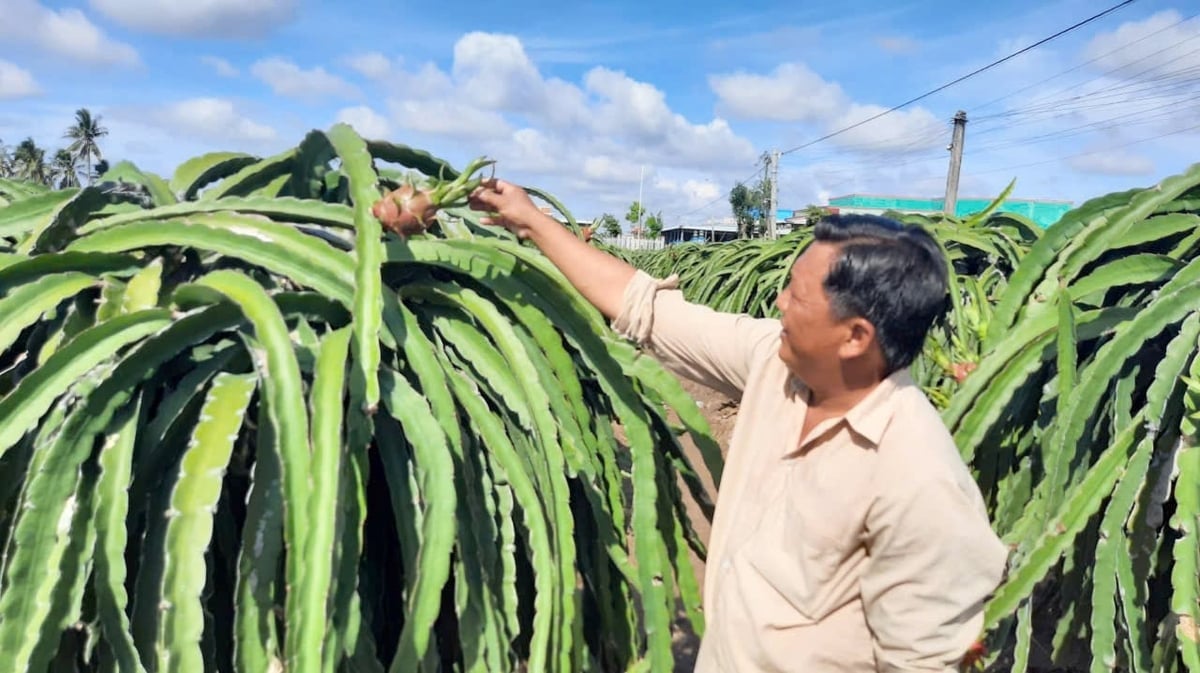
Dragon fruit, one of Dong Thap's key products. Photo: Thanh Bach.
Besides opportunities, Dong Thap is also facing many challenges in the process of applying science and technology and digital transformation. Could you share more specific details about these difficulties?
That's right, innovation always goes hand in hand with challenges, especially in the agricultural sector, where production remains fragmented and heavily reliant on traditional experience.
In terms of infrastructure, many remote and rural communes still have limited access to information technology and telecommunications networks. This hinders the synchronized implementation of digital solutions in production and management.
Regarding human resources, grassroots officials, especially in the agricultural sector, lack technological skills. The majority of farmers still cultivate based on experience, with limited access to modern management tools. Technology, without specific training and guidance, is difficult to utilize effectively.
Furthermore, the local innovation ecosystem lacks strong linkages among the "four stakeholders": the State, scientists, businesses, and farmers. Without effective coordination mechanisms, it is very difficult to translate research into practical production.
Another bottleneck is capital. Digital transformation and high technology require significant investment resources. Meanwhile, many cooperatives and small and medium-sized enterprises are hesitant to make long-term investments or have difficulty accessing credit.
Finally, there is the increasingly serious impact of climate change in the Mekong Delta region. Without applying science and technology for forecasting and early warning, people will face many risks in production.
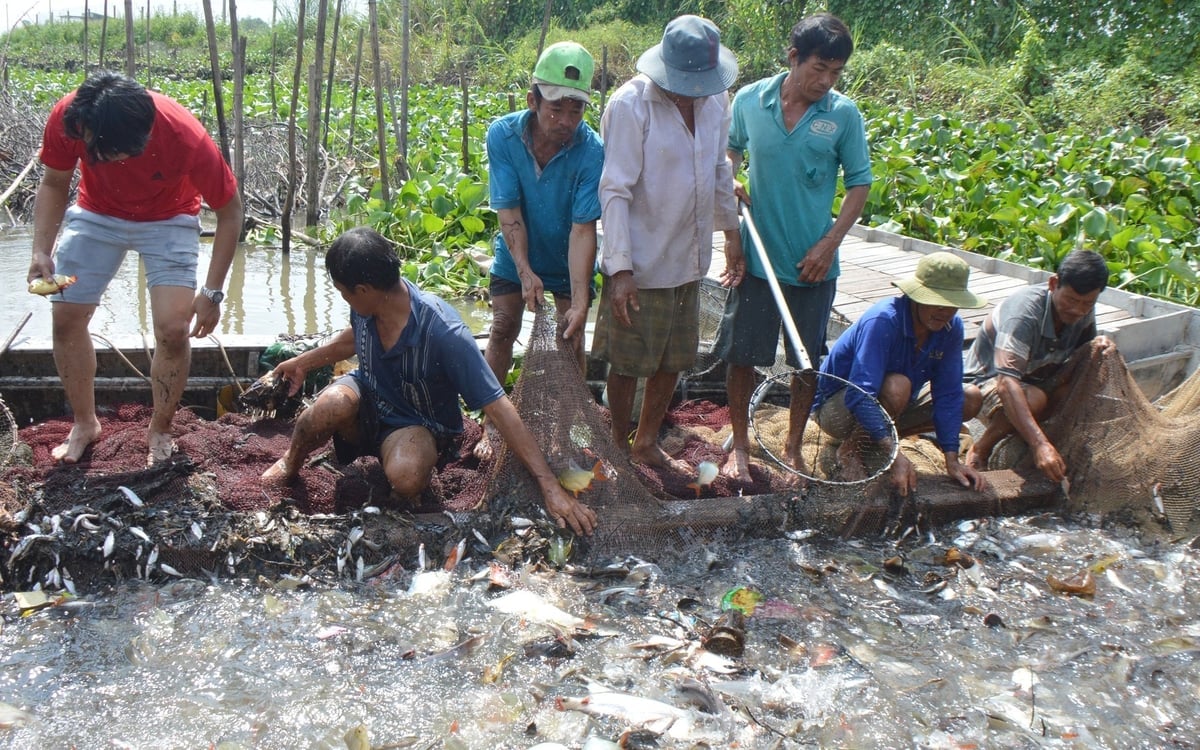
Aquaculture is considered a key economic sector in Dong Thap province. Photo: Thanh Bach.
How do you assess the role of science and technology and digital transformation in building a green, circular, and climate-change-adaptive agriculture in your locality?
This is a key factor. We recognize that science and technology and digital transformation are indispensable tools for restructuring the agricultural sector towards sustainability, efficiency, and better adaptation to the environment.
Technology helps optimize the entire production value chain, from cultivation, care, and harvesting to processing and consumption. For example, the application of IoT in mango cultivation helps regulate water, light, and nutrients intelligently, saving costs and increasing productivity.
The province is also implementing a circular agriculture model, such as reusing by-products to produce organic fertilizer and applying biotechnology to minimize environmental pollution.
In aquaculture, sensor systems that monitor water quality help control pond quality and prevent disease outbreaks. Big data and digital maps of climate risks are being used to support more accurate decision-making.
Models that have been implemented, such as smart rice-fish farming, high-tech greenhouses, and traceability using QR codes, show that, if applied correctly, technology not only creates clean and safe products but also meets demanding market standards.
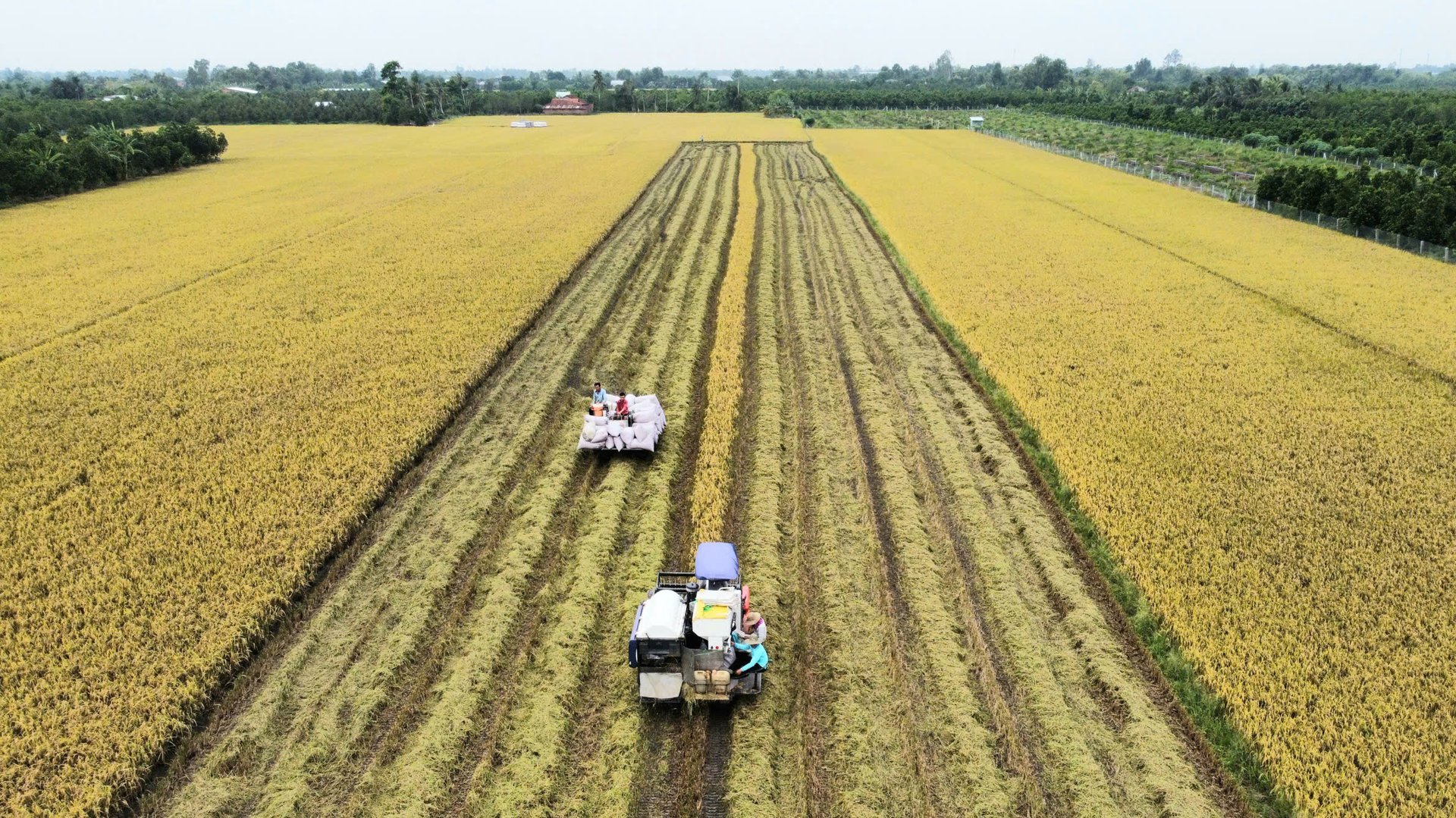
Dong Thap has the potential to become a region producing high-quality agricultural products. Photo: Thanh Bach .
So, in the coming period, what strategic directions will Dong Thap implement to effectively carry out Resolution 57 in the agricultural sector, sir?
The province has clearly identified five strategic directions for the 2025-2030 period, with technology as the cornerstone for agricultural and environmental development in the new era.
Firstly, we need to build an innovation ecosystem in agriculture. We encourage startups, research institutes, universities, and farmers to collaborate in developing practical models that meet market demands.
Secondly, we need to promote comprehensive digital transformation. The agricultural sector is deploying a shared data platform, digital agricultural maps, and online agricultural product trading platforms, moving towards building a digital government in production management and environmental protection.
Thirdly, replicate smart, high-tech agricultural models linked to key products such as rice, mangoes, catfish, and ornamental flowers. Particular emphasis should be placed on resource conservation and emission reduction, moving towards circular agriculture.
Fourth, improve the quality of human resources. The province is expanding digital technology training programs for technical staff, cooperatives, and farmers; while strengthening international cooperation and learning from the experiences of countries with advanced agriculture such as Japan and South Korea.
Fifth, build mechanisms to attract investment in research, application, and technology transfer. The province is proposing pilot public-private partnership models to mobilize resources for the development of science and technology and the transfer of technology into production.
Thank you very much, sir!
To commemorate the 80th anniversary of the Agriculture and Environment sector and the First National Emulation Congress, the Ministry of Agriculture and Environment is organizing a series of events from July to December 2025. The highlight will be the ceremony celebrating the 80th anniversary of the Agriculture and Environment sector and the First National Emulation Congress, held on the morning of November 12, 2025, at the National Convention Center (Hanoi), with over 1,200 delegates in attendance. The Agriculture and Environment Newspaper will broadcast this event live.
Source: https://nongnghiepmoitruong.vn/dong-thap-but-pha-cong-nghe-chuyen-doi-so-d781424.html



![[Image] A night of light, many layers of message](https://vphoto.vietnam.vn/thumb/1200x675/vietnam/resource/IMAGE/2026/03/10/1773158812907_hoa-nhac9-jpg.webp)












![OCOP during Tet season: [Article 4] Elevating local products](https://vphoto.vietnam.vn/thumb/402x226/vietnam/resource/IMAGE/2026/01/29/1769652810578_2935-z6982071462129_649e82db06fb2f2ea701388b1f5f5b0b-173322_176-185229-202804_457.jpeg)
























































Comment (0)