

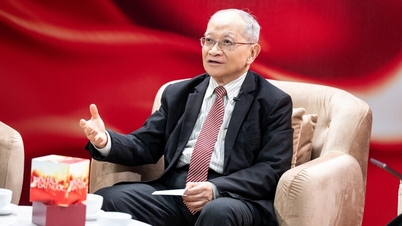
Dr. Nguyen Nhu Quynh - Director of the Institute of Economic Strategy and Policy, Ministry of Finance :
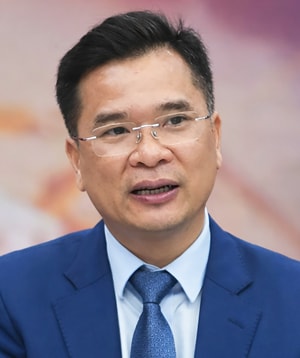
Timely institutionalization is essential for the resolution to be put into practice.
A prerequisite for Resolution No. 79-NQ/TW to be put into practice and be effective is its timely institutionalization. Currently, we are tasked with leading the drafting of a National Assembly resolution on some specific mechanisms and policies for the development of the state-owned economy ; and simultaneously drafting a Government resolution promulgating an action plan to implement Resolution No. 79-NQ/TW. During this process, agencies are widely soliciting opinions from ministries, sectors, localities, and the business community to ensure feasibility during implementation.
A crucial requirement is that state-owned enterprises – the entities directly affected by the resolution – need to proactively propose specific goals and tasks to be included in the action plan. Resolution No. 79-NQ/TW has a broad scope, involving many fields, many entities, and most ministries, sectors, and localities; therefore, specifying the tasks and implementation roadmap is of particular importance.
For resolutions to be effectively implemented, policies and guidelines need to be concretized through a system of laws, decrees, and guiding documents with clear objectives and tasks, avoiding situations where resolutions have very progressive content but are slow, confusing, and difficult to implement.
Besides improving institutions and implementation mechanisms, the human factor is identified as playing a decisive role. Therefore, to effectively implement Resolution No. 79-NQ/TW, it is necessary to build a team of competent officials who understand the market, possess innovative thinking, dare to act, dare to take responsibility, and have mechanisms to protect them when performing their duties.
Economist Dinh Trong Thinh:
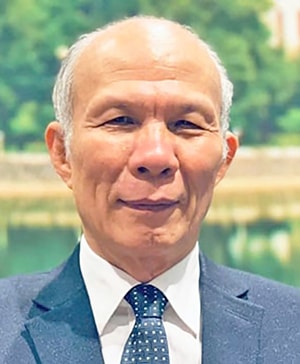
Avoid formality and lack of substance.
Hanoi's proactive implementation of Resolution No. 79-NQ/TW of the Politburo on the development of the state-owned economy is a timely and strategically significant step in the context of an economy facing strong restructuring requirements.
To implement this effectively, in my opinion, Hanoi first needs to drastically reform the governance of state-owned enterprises towards a modern, transparent approach that aligns with international standards. In particular, clearly separating the functions of state management and the functions of capital ownership is a key factor in limiting conflicts of interest and improving operational efficiency.
Furthermore, Hanoi needs to focus on restructuring its portfolio of state-owned enterprises, clearly identifying which sectors the State should retain ownership of and which can be privatized or divested. Another important solution is to improve the quality of human resources, especially the leadership and management team of state-owned enterprises. In addition, it is necessary to promote the application of science and technology and digital transformation in the operations of state-owned enterprises. In particular, Hanoi needs to build a system for evaluating the effectiveness of state-owned enterprises based on specific, clearly quantifiable criteria, linked to the responsibility of the head of the enterprise.
Dr. Nguyen Thi Cam Giang (Faculty of Finance - Banking Academy):

Establishing a groundbreaking management system.
With the goal of completing the restructuring of state-owned enterprises by 2027 and building 1-3 enterprises into the group of the 500 largest enterprises in Southeast Asia, I believe Hanoi is facing an urgent need to establish a breakthrough governance system.
Firstly, it is necessary to optimize the public investment portfolio by establishing clear strategic coordinates. Currently, Hanoi manages many enterprises with 100% state ownership, mainly in the public utility and service sectors. However, to play a leading role, the capital's state-owned enterprises need a divestment roadmap, moving towards completely withdrawing from saturated market sectors or private sector areas with high competitive advantages such as tourism and trade. The resources obtained should be reallocated to key sectors such as urban transport infrastructure (especially urban rail), clean energy, and digital data infrastructure.
Secondly, it is necessary to establish a growth model based on genuine efficiency, avoiding the "mechanical scale trap." The formation of large corporations must be based on the principle of value chain synergy and core competencies, not on mergers of weak units that create cumbersome entities. Therefore, Hanoi needs to promote financial transparency, restructure its balance sheet, and apply international best practices in governance before expanding its scale.
Thirdly, breakthroughs in governance and personnel mechanisms are needed. To compete regionally, state-owned enterprises in the capital city need to be granted genuine autonomy. At the same time, Hanoi needs to build a sufficiently secure legal framework to protect managers who dare to think and act, thereby encouraging leading investment decisions, especially in the technology sector.
Ultimately, the state-owned economy needs to play a pivotal role in the transformation of the growth model from "brown" to "green." The leading role of Hanoi's state-owned enterprises must be demonstrated through pioneering the mastery of core technology platforms and green solutions.
Source: https://hanoimoi.vn/dot-pha-tu-the-che-quan-tri-den-con-nguoi-741990.html

![[Photo] National Assembly Chairman Tran Thanh Man working with the Standing Committee of the Law and Justice Committee](https://vphoto.vietnam.vn/thumb/1200x675/vietnam/resource/IMAGE/2026/05/21/1779378929214_ndo_br_1-4610-jpg.webp)

![[Photo] General Secretary and President To Lam presides over a working session with the Central Policy and Strategy Committee on the development of the materials industry.](https://vphoto.vietnam.vn/thumb/1200x675/vietnam/resource/IMAGE/2026/05/21/1779359935432_a3-bnd-3129-1412-jpg.webp)

































































































Comment (0)