

At a press conference on banking performance in 2025 and tasks for 2026 held on December 29th, Deputy Governor of the State Bank of Vietnam Pham Thanh Ha stated that the total outstanding credit balance of the entire system reached VND 18.4 million billion as of December 24th, an increase of 17.87% compared to the beginning of the year and an increase of 19.41% compared to the same period last year.
Mr. Ha noted that this growth rate is quite high compared to previous years. The credit structure continues to focus on production and business sectors, especially priority sectors and growth drivers in line with the Government 's policies.
Mr. Pham Chi Quang, Director of the Monetary Policy Department (State Bank of Vietnam), commented that this is the highest growth rate in recent years. Mr. Quang emphasized that towards the end of the year, the demand for payments and capital in the economy usually increases sharply due to seasonal factors, creating additional pressure on system liquidity.
Data updated as of December 24th shows that deposit growth reached only about 14.1%, significantly lower than credit growth of 17.87%. This difference is the main reason for the pressure on liquidity.
Furthermore, the banking system faces competitive pressure from other investment channels, causing the pace of capital mobilization to lag behind the economy's capital needs. In this context, interest rates in the interbank market have at times risen sharply, reflecting the pressure to ensure liquidity safety.

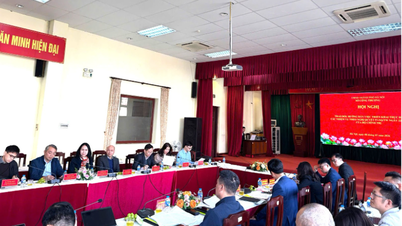
The scene at the press conference on the afternoon of December 29 (Photo: SBV).
According to Mr. Pham Thanh Ha, this year, the global economy continues to face many risks and uncertainties. Global economic growth is slowing down, affected by many factors, from rapidly changing tariff policies to increasing geopolitical tensions; the unpredictable monetary policy trajectory of major central banks…
Furthermore, while inflation has cooled, there is still a potential risk of it rising again. The potential risks in global financial and monetary markets, as well as commodity markets, are significant. These are all factors that affect a highly open economy like Vietnam's.
A representative from the State Bank of Vietnam stated that over the past year, they have managed the exchange rate flexibly, in line with market conditions, contributing to absorbing external "shocks". The institution also coordinated various monetary policy tools, including interest rates, VND liquidity, and foreign exchange intervention sales.
At the same time, to meet liquidity needs, especially at the end of the year, in addition to the money supply channel through open market operations, the State Bank of Vietnam has implemented foreign exchange swap transactions with credit institutions, thereby contributing to supporting exchange rate stability, macroeconomic stability and inflation control.
Over the past year, the restructuring of the credit institution system has continued to be promoted, the stability and safety of the banking system have been maintained, and the legitimate rights of depositors have been ensured. Non-performing loans have been focused on and controlled amidst the economic and business difficulties that have affected the debt repayment capacity of enterprises.
The State Bank of Vietnam stated that, in the coming period, given the mixed economic context of difficulties, challenges, and opportunities, the banking sector will continue to adhere closely to the goals and directions of the Party and Government to manage monetary policy in a proactive, flexible, and prudent manner.
The management will be closely coordinated with fiscal policy and other macroeconomic policies to maintain macroeconomic stability, control inflation, support economic growth, and ensure the major balances of the economy.
The State Bank of Vietnam will manage interest rates and exchange rates in line with macroeconomic developments, inflation, and monetary policy objectives; while continuing to implement comprehensive solutions for managing the gold market. Credit management will be carried out flexibly, in accordance with macroeconomic developments and the economy's capacity to absorb capital, thereby contributing to promoting growth, controlling inflation, and ensuring the safety of the banking system.
In addition, the State Bank of Vietnam will direct credit institutions to increase credit growth safely and effectively, focusing on production and business sectors, priority sectors, and economic growth drivers; continue to implement credit programs as directed by the Government and the Prime Minister; and at the same time implement solutions to create more favorable conditions for people and businesses to access bank capital.
Source: https://dantri.com.vn/kinh-doanh/du-no-tin-dung-dat-184-trieu-ty-dong-tang-1787-20251229152829146.htm





















































































Comment (0)