Connecting raw material sources and deep processing.
According to statistics from the Department of Agriculture and Environment, after the merger, the province now has nearly 225,000 hectares of planted forest, creating a continuous and long-lasting raw material area with an exploitable reserve of more than 2 million cubic meters per year. This is a clear advantage for the province to develop large-scale wood processing industry, while ensuring a stable supply, a decisive factor for wood production and processing businesses to sign long-term contracts with foreign partners.
As a result, in recent years, in addition to wood chips, processing enterprises have proactively linked raw material areas, invested in modern technology, and built stable supply chains, creating an important impetus for the sustainable development of the forestry industry.
Established in 2005, VRG Quang Tri MDF Wood Joint Stock Company is one of the key enterprises in enhancing the value of plantation timber in the province. Currently, the company owns two production lines equipped with European technology, with a total capacity of 180,000 m³ per year. The company's products include MDF boards of various types such as MDF E2, MDF Carb P2, HDF, HDF HMR, and Melamine-coated MDF, meeting the needs of the domestic market and several countries in the region.

|
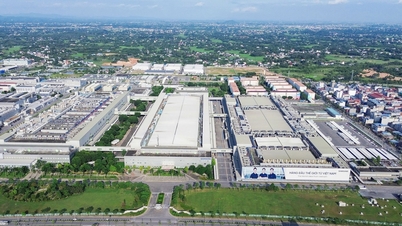
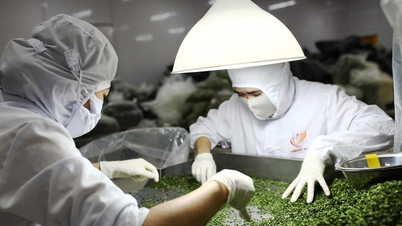
MDF board production at VRG Quang Tri MDF Wood Joint Stock Company - Photo: LA |
According to Duong Tan Thanh, General Director of VRG Quang Tri MDF Joint Stock Company, as a large-scale processing plant, VRG Quang Tri MDF has a stable and continuous demand for raw materials. Specifically, in 2024 alone, the company purchased nearly 332,150 tons of plantation timber for production; from January to November 2025, the purchase volume reached approximately 315,700 tons. This large volume of raw materials reflects the company's leading role in consuming plantation timber in the province and creating a stable market for local people.
According to Mr. Thanh, the company's products are currently highly regarded for their quality in both domestic and international markets. In addition to domestic consumption, the company's products are exported to Asian markets and countries in the Middle East. "The company has actively implemented digital transformation, applied ISO 14001:2015 in environmental management, and completed documentation in accordance with the European Union's Anti-Deforestation Regulation (EUDR), a crucial step towards expanding sustainable export markets," Mr. Thanh stated.
As for Tien Phong Cam Lo Co., Ltd., one of the province's leading enterprises in the export wood furniture manufacturing sector, with its modern production line, the company processes approximately 13,000-15,000 cubic meters of wood annually, producing a diverse range of products from beds, wardrobes, tables and chairs to household and outdoor furniture. Notably, all of the company's products are exported to demanding markets such as Germany, France, Poland, Spain, the United States, and Canada; and are available in major distribution systems like IKEA and Metro. Annual revenue reaches 9-10 million USD, providing stable employment for over 400 workers.
According to Mr. Ta Van Hien, Deputy Director of Tien Phong Cam Lo Co., Ltd., in order to export wooden furniture to the European and US markets, the company has invested in a factory that meets CoC, BSCI, QMI certifications, and many other international standards. In particular, the company has signed cooperation agreements with large-scale FSC-certified timber plantations in the province. This is a key factor in ensuring a legal and stable long-term supply of raw materials.
“Previously, we mainly imported timber from other places because the local acacia wood did not meet the standards. But with the increase in the area of large-scale timber forests and FSC-certified forests, the company now has a stable source of raw materials, reducing transportation costs and increasing the competitiveness of export goods. In the near future, we plan to sign contracts for linkage and procurement with units and cooperatives in northern Quang Tri to expand production,” Mr. Hien added.
Completing the value chain, expanding the certified forest.
Significant movements from businesses have provided a crucial impetus for the province's planted forest raw material areas to transform towards greater standardization and sustainability. From dense planting and early harvesting, many households have boldly switched to sparser planting, extending the cycle, following standardized care procedures, and applying regular thinning to increase trunk diameter, aiming for higher value.
Furthermore, an increasing number of businesses, cooperatives, and forest-planting groups are proactively developing sustainable forest management plans, participating in FSC certification, and linking with processing facilities to sign long-term consumption contracts. This not only helps to increase wood prices compared to traditional markets but also enhances production stability, especially in the context of the wood industry being heavily impacted by international market fluctuations.

|
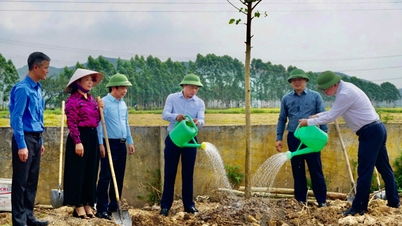
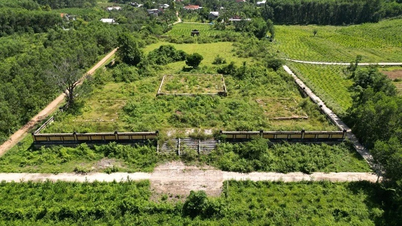
Area of large timber forest in Hieu Giang commune has received FSC certification - Photo: LA |
According to Phan Van Phuoc, Deputy Director of the Department of Agriculture and Environment, expanding the area of sustainably certified forests is becoming an inevitable direction as European, US, and Japanese markets continuously tighten regulations on supply chain transparency, especially the EUDR's anti-deforestation regulations, which are expected to be fully implemented in the near future. In addition, the province has identified investment in forestry infrastructure as a key task. Upgrading roads leading to the western plantation areas, expanding the timber collection points, improving transportation capacity, and connecting with seaports will help reduce logistics costs, one of the major factors affecting the price of timber.
“With a focus on sustainable forest development, improving the quality of raw material areas, perfecting infrastructure, and promoting deep processing, the province is gradually forming a closed-loop timber value chain. The strong shifts from forest growers and cooperatives to processing enterprises show that the province's planted timber industry is ready to expand in scale, improve quality, and reach the international market,” affirmed Phan Van Phuoc, Deputy Director of the Department of Agriculture and Environment.
Simultaneously, the Project to Enhance Forestry Seed Productivity for the period 2025-2030 aims to increase the area of intensively cultivated forests, using tissue-cultured seeds and high-quality cuttings, helping to steadily increase the productivity of planted forests year after year. Many models applying new, highly effective varieties are being replicated, creating a basis for shortening the growth time while still ensuring the required trunk diameter for deep processing. The province also encourages the synchronized development of non-timber forest products such as bamboo, rattan, palm leaves, pine resin, and wicker... towards forming concentrated raw material areas linked to processing chains to diversify products. This is an important direction to expand livelihoods for people in mountainous areas, reduce pressure on natural forests, and increase the overall value of the forestry sector.
Le An
Source: https://baoquangtri.vn/kinh-te/202601/dua-go-rung-trong-ra-the-gioi-4c71ac1/
















































































Comment (0)