Germany wants to create a shared "heart" for humanoid robots.
Schaeffler has garnered attention for both selling robot components and deploying 1,000 humanoid robots to standardize core technology for the AI robotics industry.
Báo Khoa học và Đời sống•14/05/2026
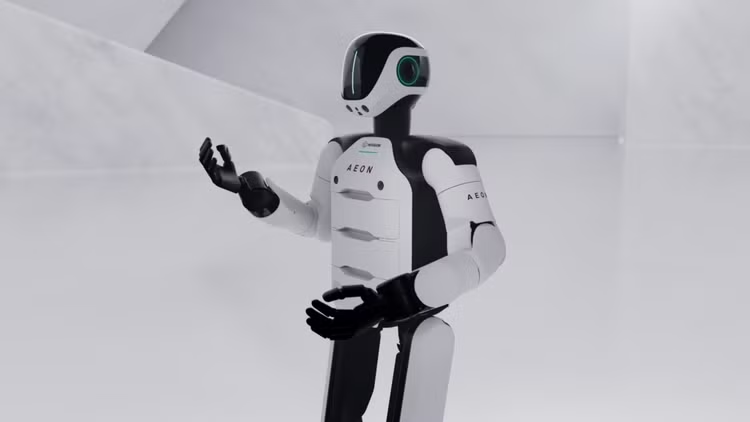
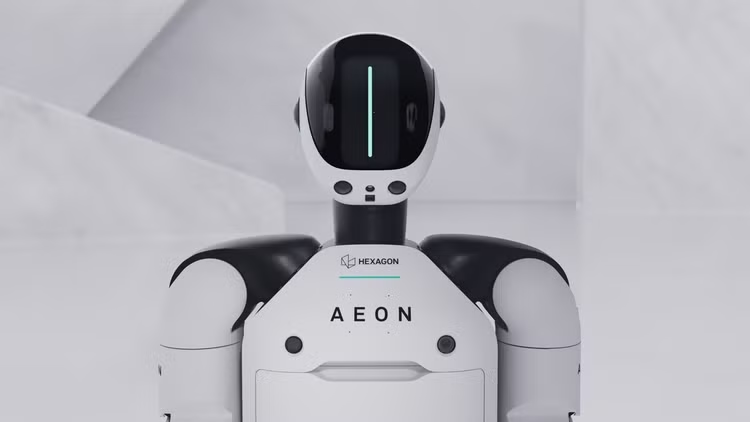
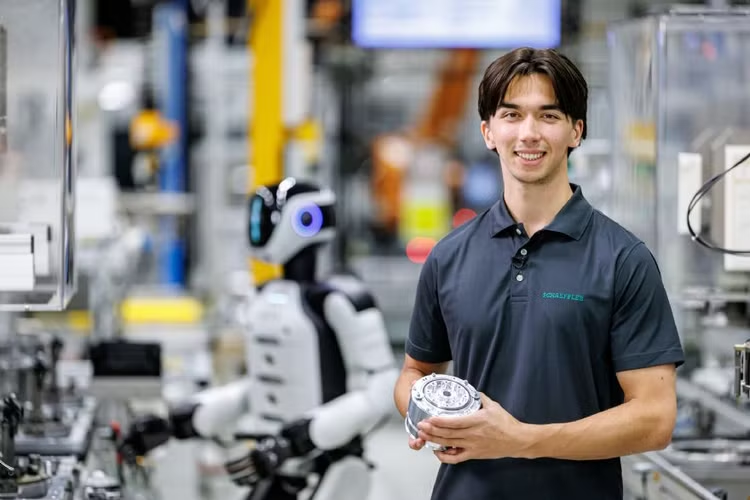
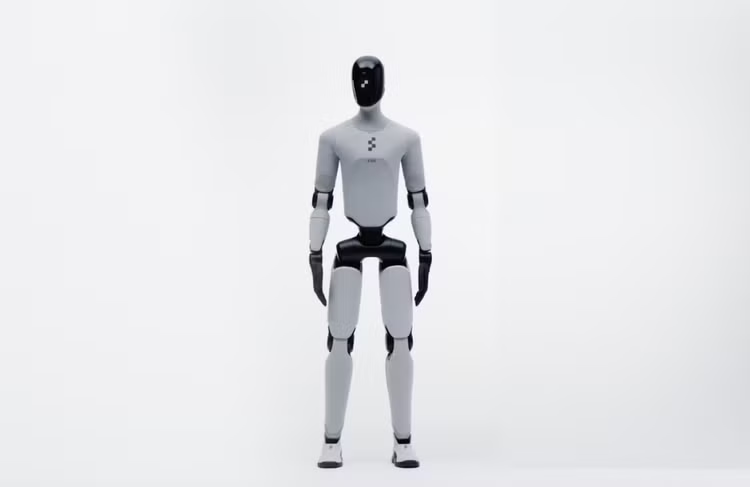
Schaeffler AG made a big splash at Hannover Messe 2026 by announcing plans to supply robotic actuators to Hexagon Robotics and deploy up to 1,000 AEON humanoid robots in its factories, kicking off an ambitious global standardization of the "heart" of humanoid robots. Beyond simply selling mechanical components, Schaeffler aims to transform articulated actuators into standard modules, similar to gearboxes or braking systems in the automotive industry. This will allow future robots to be easily repaired, replaced, and upgraded at significantly lower costs.
The German company's unique strategy lies in transforming its own factory system into a "living laboratory," where 1,000 AEON robots will operate continuously for Schaeffler to collect data on the durability, performance, and stability of the drive systems in a real-world industrial production environment.
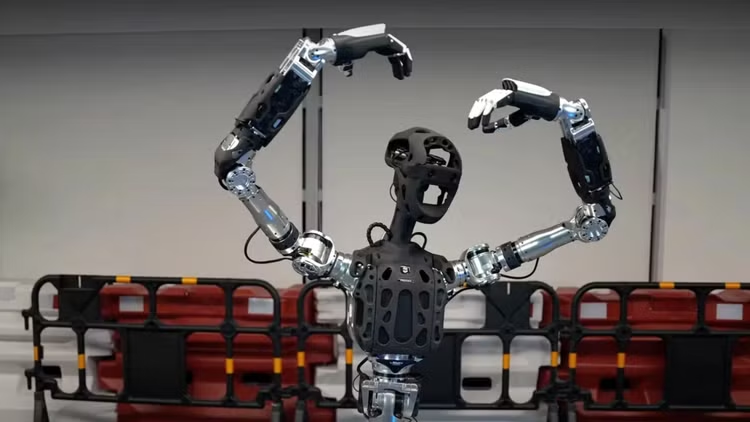
According to experts, the drive system currently accounts for nearly 40% of the material value of humanoid robots and acts as both the muscular and skeletal systems, determining the precise and flexible movement capabilities as well as the operational lifespan of the robot in modern production lines.
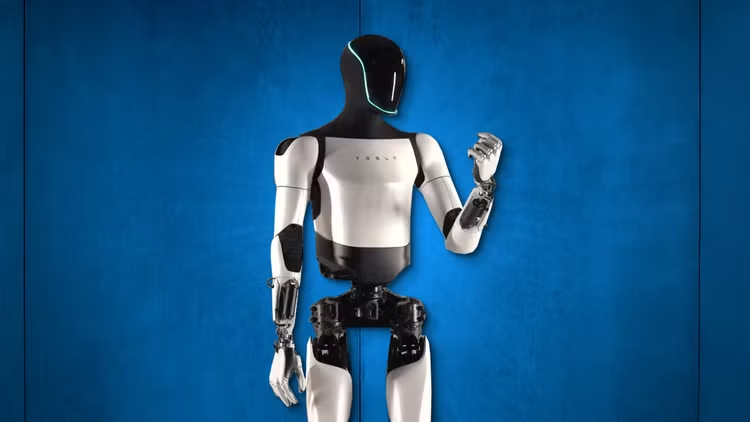
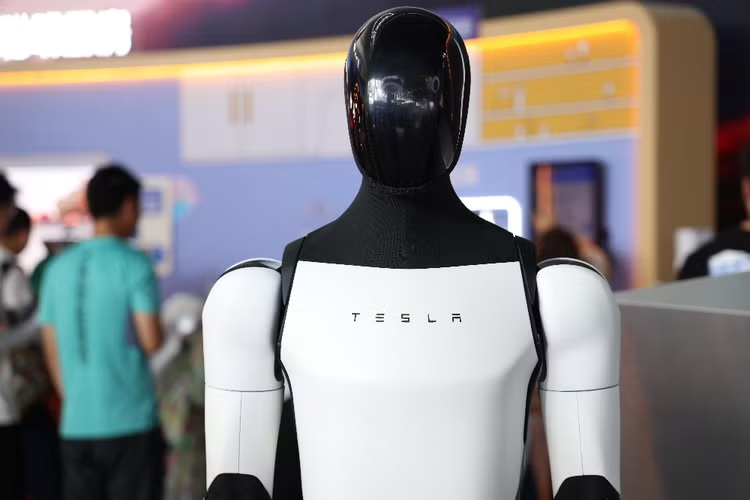
Schaeffler is placing a big bet on integrating motors, gear reducers, encoder sensors, and control systems into a single module to reduce engineering fragmentation, hoping to make its components a common standard in the same way Intel chips once dominated the personal computer market. However, the German conglomerate's ambitions are facing immense pressure from China, where companies like Leaderdrive and Kinco possess the advantage of a massive supply chain, along with the ability to produce at low cost and scale up extremely quickly in the global humanoid robot race. While Tesla pursued a strategy of developing the entire Optimus robot in-house using a "vertical integration" model, Schaeffler chose a path of component specialization with the goal of making robot hardware a mainstream product, where cost, maintainability, and durability would be more important than flashy technological displays.
Observers suggest that if Schaeffler succeeds, the future of humanoid robotics could operate similarly to the modern automotive industry, where factories only need to replace individual component modules instead of entire systems, opening up a new competition between Tesla-style closed-loop robotics and the standardized robotics ecosystem led by European industrial corporations.

 Báo Khoa học và Đời sống•14/05/2026
![[Image] Close-up view of the interchange connecting the two expressways and Long Thanh Airport.](https://vphoto.vietnam.vn/thumb/1200x675/vietnam/resource/IMAGE/2026/05/25/1779703378210_ndo_br_z7863716673926-224453a31600126cce10622af6290afd-4549-jpg.webp)





















































































Comment (0)