

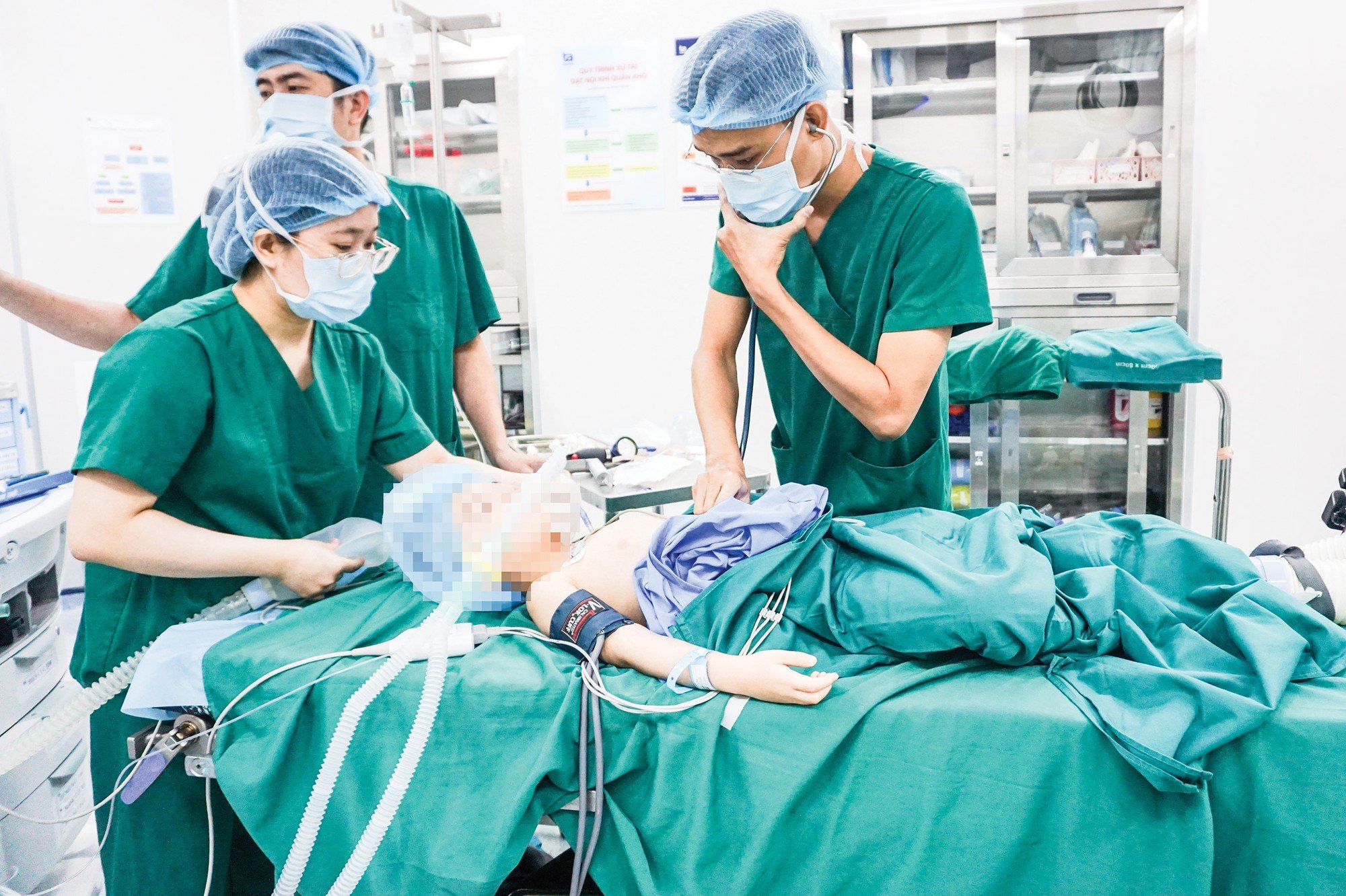
The child was anesthetized before undergoing brain tumor surgery using an artificial intelligence (AI) robot.
The family took Dang to several pediatric hospitals for examination, but surgery was not possible due to the severity of the condition. "The surgery is very difficult; even the doctors wouldn't dare operate without the support of a modern AI (artificial intelligence) robot," said Dr. Chu Tan Si, Head of the Neurosurgery Department at Tam Anh General Hospital in Ho Chi Minh City.
" My dear son, keep up the good work!"
Taking hold of little Dang, Dr. Le Hoang Quan, a specialist in Anesthesia and Resuscitation at Tam Anh General Hospital in Ho Chi Minh City, gently said, "My dear son, be strong. I'll help you sleep, and then your headache will be gone, you'll be able to see better, and you can run, jump, and play with your friends. Do you like that?" Little Phuong Dang seemed to understand, grasping his mother's hands and obediently listening. The operating room door closed, and the boy lay still, then drifted off to sleep under the effect of anesthesia.
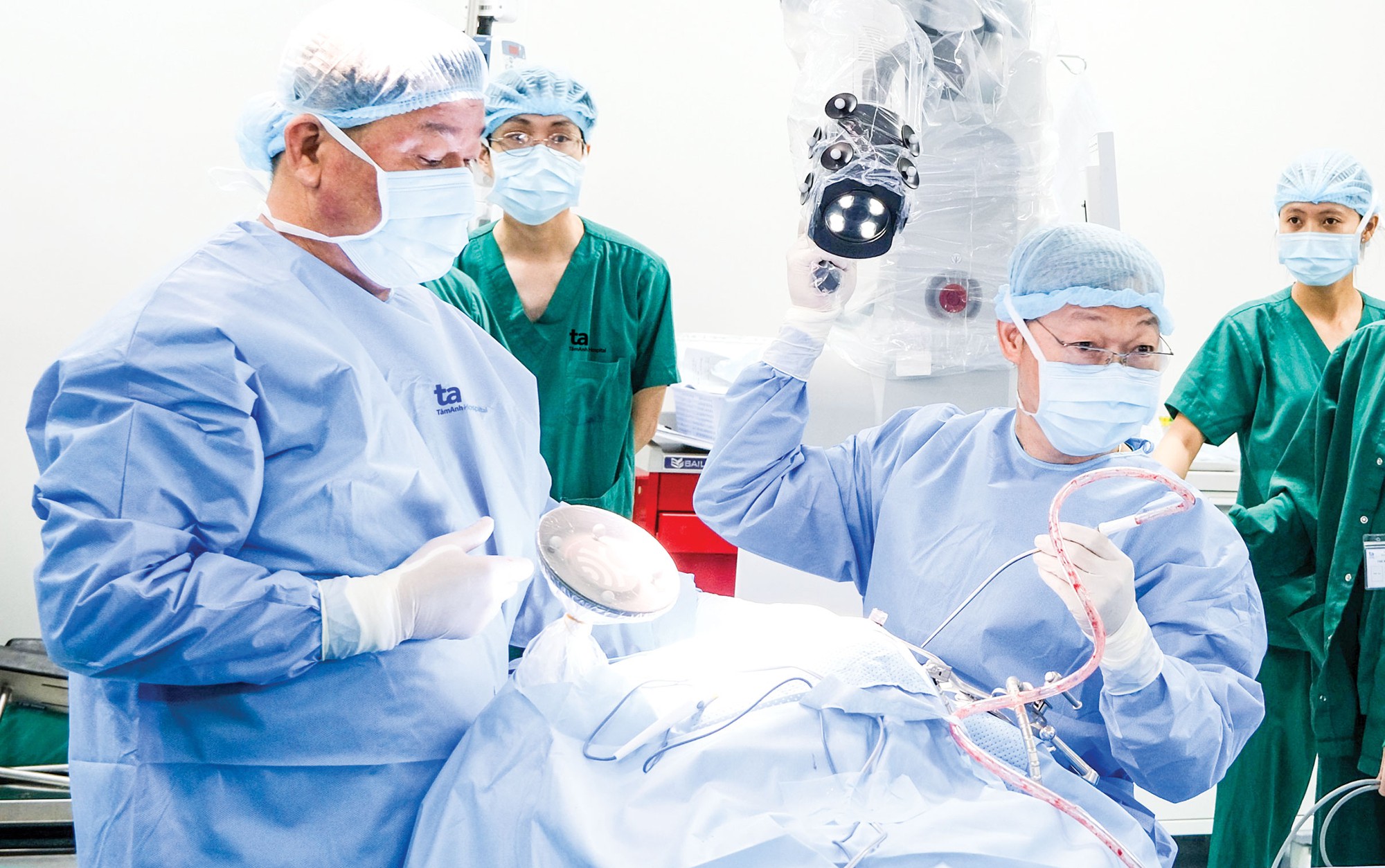
Doctors are performing brain tumor surgery on a pediatric patient using the Modus V Synaptive robot.
According to Dr. Hoang Quan, administering anesthesia for neurosurgery in young children is much more difficult than in adults, as it requires maintaining homeostasis for the child's immature nervous system while also meeting the surgical requirements. For large brain tumors located deep within the brain in children, the risk of bleeding and blood loss is high. Therefore, anesthesiologists must carefully assess risk factors before surgery, plan for blood transfusions, and anticipate all possible risks.
Pediatric patients undergoing brain tumor surgery are also at risk of cerebral edema, seizures, and diabetes insipidus during and after the operation. The surgical team must carefully plan medication use, closely monitor urine output, and conduct on-site tests to ensure safety. Post-operative resuscitation plans need to be meticulous and precise.
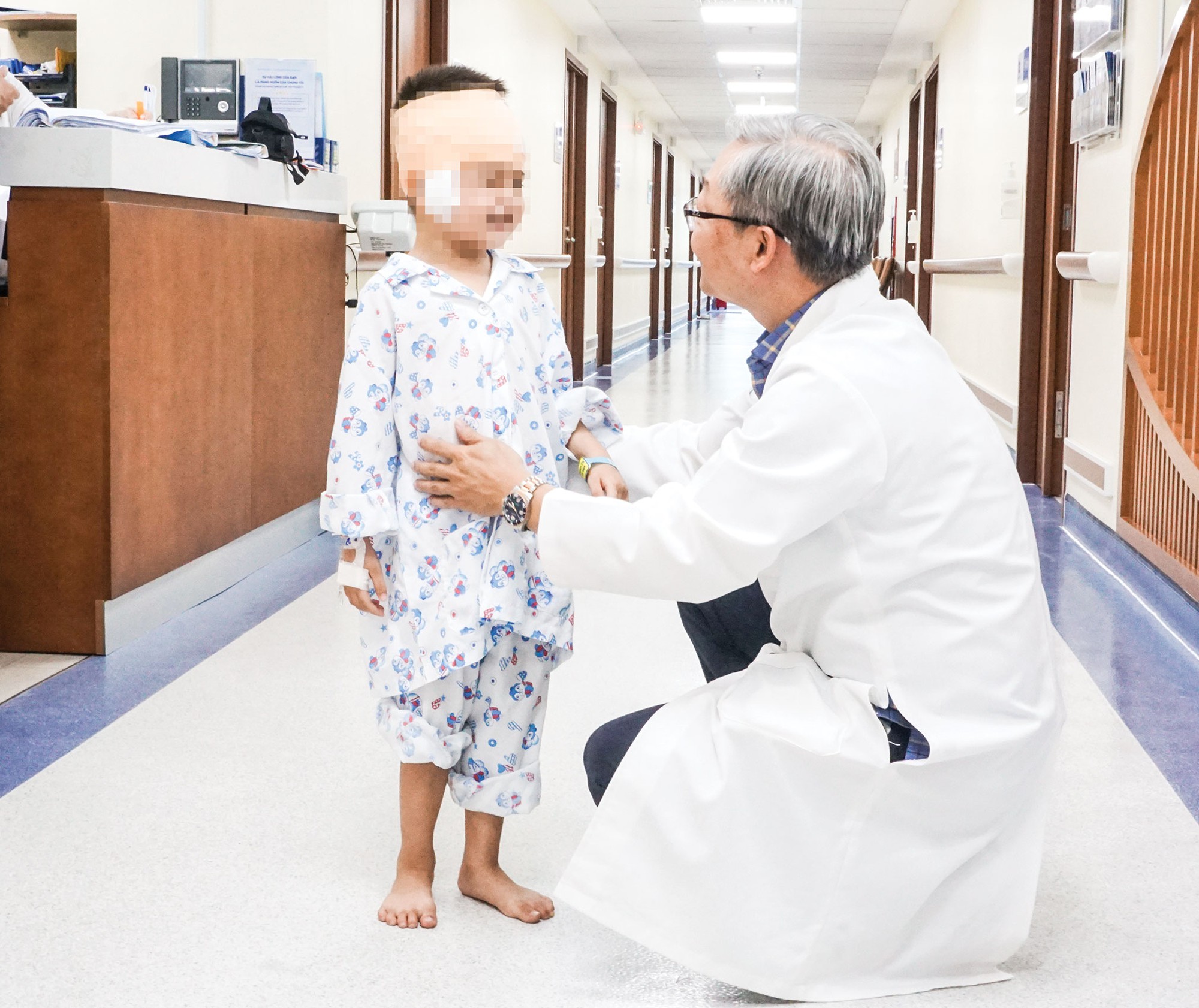
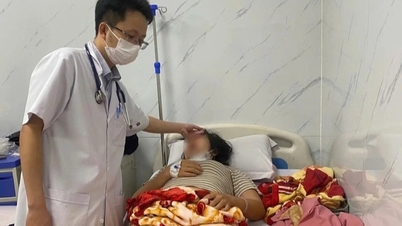
Doctor Chu Tan Si visits baby Phuong Dang recovering after surgery.
AI robots help with pre-surgery simulations.
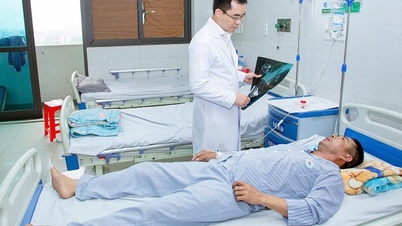
Before beginning the surgery, Dr. Tan Si reviewed the patient's medical records and imaging diagnoses. He stated that thanks to the Modus V Synaptive AI robot and the Neuro-Navigation AI navigation system, the team confidently accessed and safely removed the tumor located 8 cm deep in the brain, increasing the success rate.
Before surgery, the Modus V Synaptive AI robot integrated MRI, DTI, CT, and DSA images of little Dang. The entire brain structure, nerve fiber bundles, and tumor were clearly visible on a single 3D image. Doctor Tan Si simulated the surgery using the robot's specialized software, selecting the safest location for the skull opening and surgical approach to the tumor, avoiding accidental cutting of nerve bundles and surrounding healthy brain tissue. This is a significant advantage of the robot that traditional brain surgery techniques lack.
Modus V Synaptive is currently the first and only AI-powered brain surgery robot in Vietnam.
At exactly 9:00 AM, the actual surgery began. Throughout the operation, the doctors were able to clearly see the entire brain structure. The robot performed a "double check" by monitoring each of the doctors' actions to ensure adherence to the established surgical path. The robot would provide warnings using green, red, and yellow lights, similar to traffic lights. The doctors also used a new generation of microsurgical microscopes with 3D fluorescence imaging capabilities, allowing them to see the entire brain structure with a wider field of view.
Dr. Mai Hoang Vu, a specialist in internal medicine and a member of the surgical team, said that upon entering the intracranial cavity, they found a tumor spreading in many branches, each branch covered by a thick layer of arachnoid membrane. The tumor was soft, tough, and in some places friable, easily bleeding. The doctors proceeded to remove each branch of the tumor using a glove-like technique (lifting the arachnoid membrane layer by layer to remove each branch). To safely remove the tumor, the doctors used a specialized CUSA ultrasound machine to break down the tumor into smaller pieces and suction them out in small chunks, avoiding removing the entire mass which could cause brain damage.
The surgery lasted 3 hours, and the surgeon removed 90% of the tumor. Some small portions of the tumor adhering to the pituitary stalk and carotid artery will be treated additionally using gamma knife radiosurgery. Post-surgery, the patient experienced relief from headaches, improved vision, reduced intracranial pressure, preservation of the optic nerve, and elimination of the risk of pituitary and pituitary stalk compression. The tissue samples were sent for cell analysis to guide further treatment.
Overwhelmed with happiness
Sitting in the waiting room, Ms. Thu Van was anxious and nervous. She recounted that more than a year ago, she noticed her child frequently complaining of headaches and blurred vision. At school, the teacher said the child could only see up close and lacked confidence when walking. They took her to many doctors, but the problems only resulted in glasses being prescribed, and then the symptoms returned. Worried, Ms. Van researched and took her child to Tam Anh General Hospital for examination, where a large brain tumor was discovered, requiring surgery.
"Baby Dang's surgery was successful, the family can see him in 10 minutes," at 1 PM that day, the nurse's voice broke the silence. The patient's family erupted in joy and happiness.
"After more than 5 hours of waiting, filled with anxiety, praying to God and Buddha, there were times I felt like I was suffocating. When I was finally allowed to see my child, call out to her, and see her awake, able to hear and respond by kicking her legs, tears streamed down both my face," Thu Vân said, her voice choked with joy.
Dr. Tan Si shared that the surgery was successful, bringing joy not only to the family but also to the doctors. This was a difficult brain tumor case, the youngest patient ever to undergo robotic surgery at Tam Anh General Hospital in Ho Chi Minh City. The surgery carried high risks of blood loss and brain edema, posing a significant challenge for the doctors. This is also one of approximately 40 recent cases where Tam Anh General Hospital used AI robots to operate on brain tumors, pituitary tumors, nerve tumors, spinal tumors, and hemorrhagic strokes.
"If surgery is performed using traditional methods such as navigation or microsurgery, the tumor can still be removed, but the risk of damaging nerve fibers and healthy brain tissue can be high. Robots help overcome this limitation," said Dr. Tan Si.
The only AI brain surgery robot in Vietnam.
Currently, only 10 countries use the Modus V Synaptive brain surgery robot (mostly in Europe and America). In Vietnam, the only Modus V Synaptive robot is in operation at Tam Anh General Hospital in Ho Chi Minh City. Dr. Chu Tan Si and his colleagues are the only team in Vietnam with the expertise to operate and master this robot technology.
Source link


![[Photo] Prime Minister Pham Minh Chinh presides over a meeting on private sector economic development.](/_next/image?url=https%3A%2F%2Fvphoto.vietnam.vn%2Fthumb%2F1200x675%2Fvietnam%2Fresource%2FIMAGE%2F2025%2F12%2F20%2F1766237501876_thiet-ke-chua-co-ten-40-png.webp&w=3840&q=75)















































































Comment (0)