

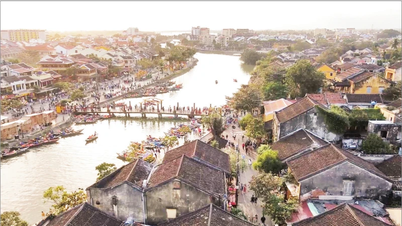
La Gàn is the French name for the former Bình Thạnh area, known as Lagar. It was once a place of both peace and prosperity. People compare La Gàn to a miniature Hội An. On the shore, boats and ships bustled with trade, and the sea teemed with fish and shrimp. Over the centuries, La Gàn is no longer as prosperous as it once was, but the La Gàn cape still boasts clear blue skies, white clouds, and a picturesque, charming landscape beside the vast ocean.
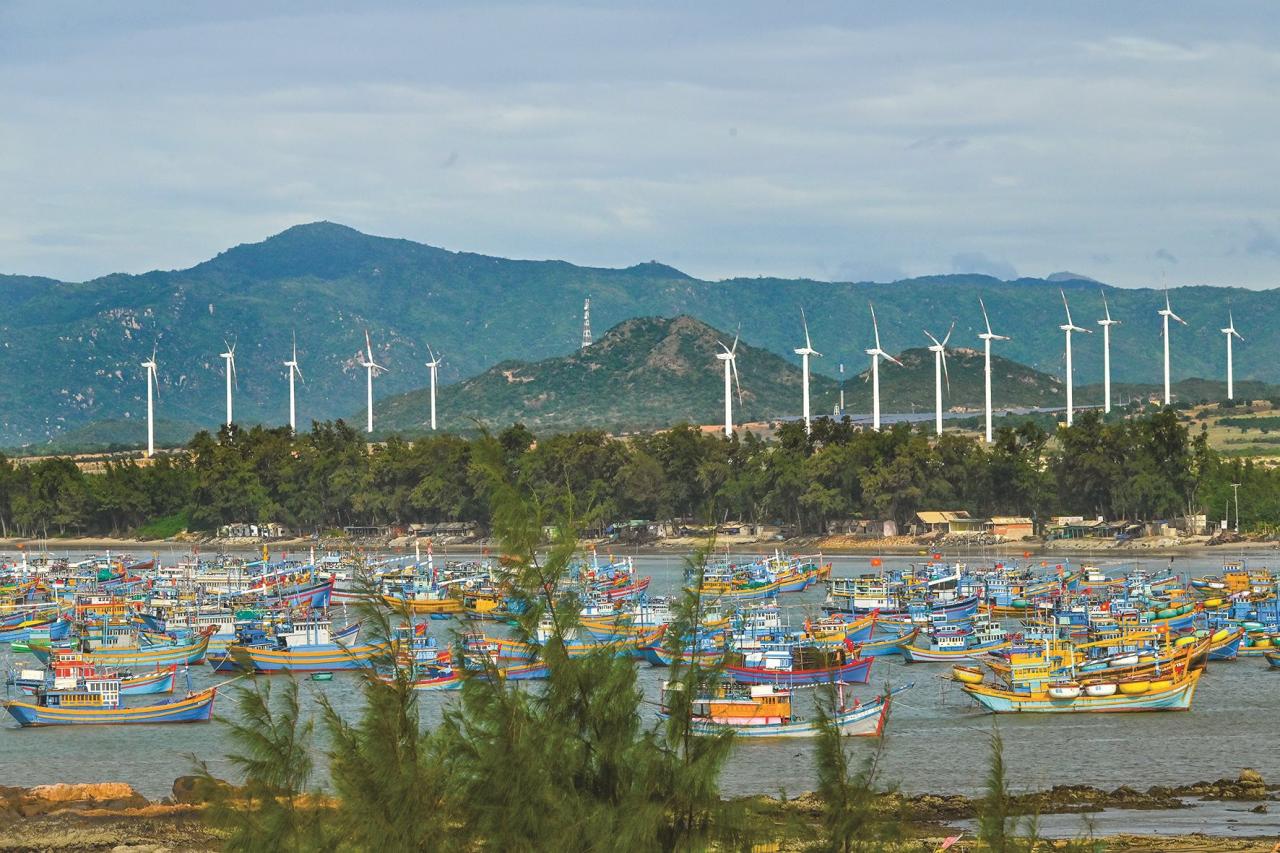
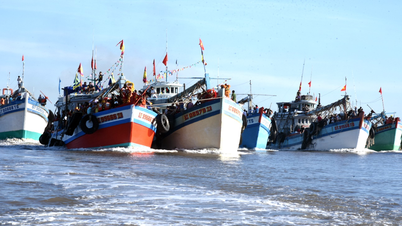
Our journey to La Gàn Cape to rediscover ancient legends began on a sunny, windy day in early April. Our first destination was a small bay, where, during the monsoon season, fishing boats from local areas like Liên Hương and Phước Thể dock to rest after long days of fishing. The morning scenery was incredibly beautiful. Boats of all kinds crowded the harbor, and colorful basket boats added to the lively and bustling atmosphere. In the distance, rotating wind turbines added to the shimmering, magical ambiance.
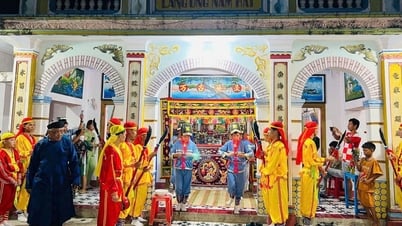
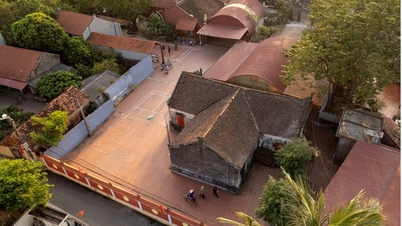
Further ahead is Binh An communal house, a place of worship for the village's guardian deity and a national-level architectural and artistic heritage site. With its "Phoenix drinking water" shape, its back against the sand dunes and its face towards the sea, Binh An communal house is considered a large and beautiful temple, typical of the folk architectural style in Binh Thuan.
The temple complex consists of 11 interconnected roofs, forming a large whole. Each structure has a distinct function and occupies an area of 1,400 square meters, enclosed by thick stone walls. The roofs follow one another: the main temple, the central hall, the main worship hall, the left and right wings, the triple-arched gate, the ancestral shrine, and the shrine dedicated to soldiers from various eras. Despite hundreds of years passing, Binh An Temple retains its unique features and remains a popular tourist destination.
Beyond Binh An communal house, across the small sand dunes, lies the Nam Hai Mausoleum. Like Binh An communal house, the Nam Hai Mausoleum in Binh Thanh is also a unique architectural complex rarely found elsewhere. Every year, the Nam Hai Mausoleum hosts a very distinctive and culturally rich performance of "ho ba trao" (a type of folk singing) during the fishing prayer ceremony. The mausoleum was built during the reign of Emperor Minh Mang, between 1820 and 1840. Its location is strategically situated with water converging on the undulating sand dunes, facing southeast and northwest, reflecting itself beautifully on the coastline.
Despite enduring many historical events, the mausoleum still retains many cultural values, and the people of Binh Thanh have a folk verse that they know by heart:
June in the lunar calendar, offering sacrifices to the revered deity.
Whoever goes somewhere will long to come home.
About 300 meters from the Nam Hai Mausoleum is a place called Gieng Liet (Liet Well). It's a small rocky outcrop with a freshwater well right next to it. It's called Gieng Liet because the area is home to many oilfish, a specialty of Tuy Phong's sea. There are many types of oilfish, but the oilfish is the best. The meat of the oilfish is incredibly delicious, fragrant, sweet, and fatty. There are two ways to prepare this specialty fish: grilling and making a light soup. Beside a vast expanse of white sand, interspersed with the pale green of prickly grass, the grass is a sight to behold. During this season, the prickly grass is about to split open and blow across the sand dunes, creating a truly peaceful and serene scene. Prickly grass is the grass of childhood and evokes the romance of first love. Looking at the prickly grass on the sand, with the waves crashing against the shore below, a feeling of wistfulness and longing fills the soul.
Just beyond the emotionally evocative thorny meadow lies Thuong Chanh beach, also known locally as the outer beach. The name Thuong Chanh dates back to the French colonial era, when the French established a checkpoint here to collect taxes from people trading and doing business, especially merchants traveling along the North-South coast. Thuong Chanh is a small, beautiful beach, covered in lush green casuarina forests, with gentle waves and clear blue water, perfect for swimming and picnicking. Located far from the Binh Thanh tourist area and residential areas, it remains unspoiled and tranquil.
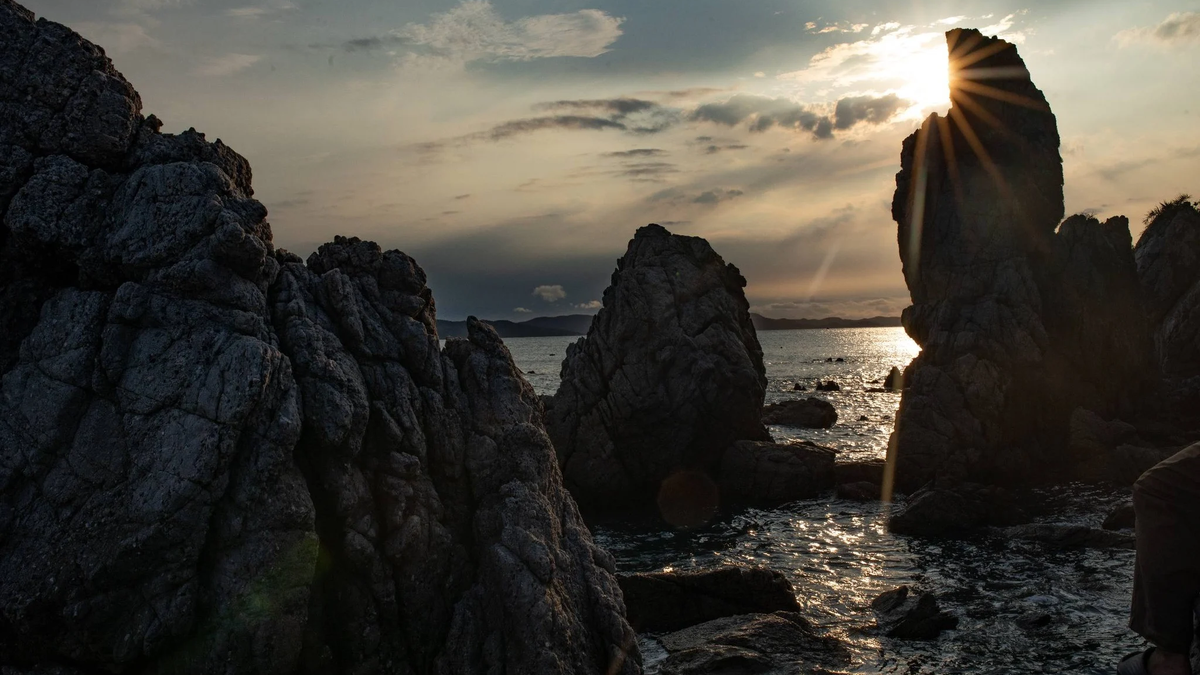
Beyond Thuong Chanh beach, and across the jagged rocks and sand, we arrive at a place called Dong Chung Gorge. This is a small strait with very beautiful scenery. In the past, this area was famous for its barracuda, especially the fragrant barracuda, some weighing over a kilogram. Dong Chung Gorge has a landscape quite similar to Hang Cliff in Phu Quy, because it has not yet been developed for tourism and remains very pristine.
As we traveled, the road to La Gàn Cape is pristine and untouched by human intervention. Everything remains intact as it was originally. The names are still there, both strange and familiar, old yet well-known. At La Gàn Cape, there are still Hòn Ó, Hòn Yến, Hòn Tai, and Mũi Cậy, all of which create a strangely captivating La Gàn.
In the distance, the wind blowing towards La Gan Cape grew stronger, each wave crashing against the rocky shore, sending up white foam. The squid fishing boats swayed precariously, but the fishermen remained steadfast against the gusts of wind. As the sun rose higher, La Gan Cape became even more beautiful in the eyes of the beholder. Perhaps one day, not too far in the future, the road to La Gan Cape will be as beautiful as the road to Mui Ne and Hon Rom.
Source









































































Comment (0)