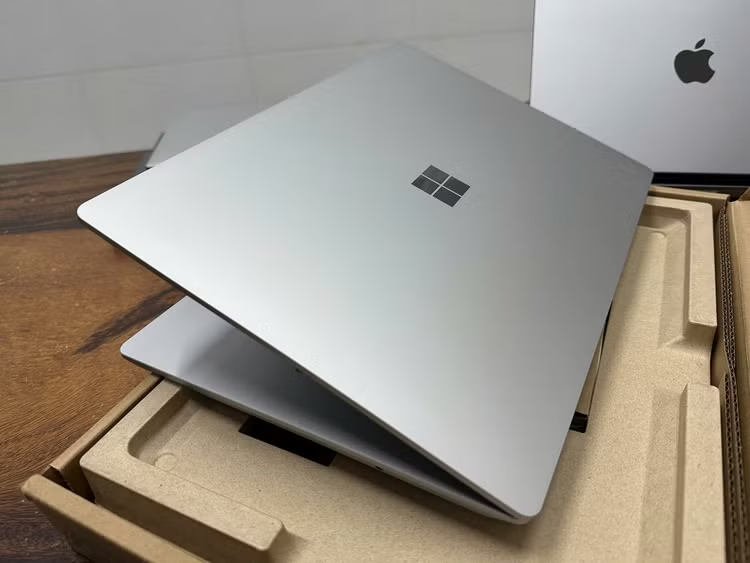
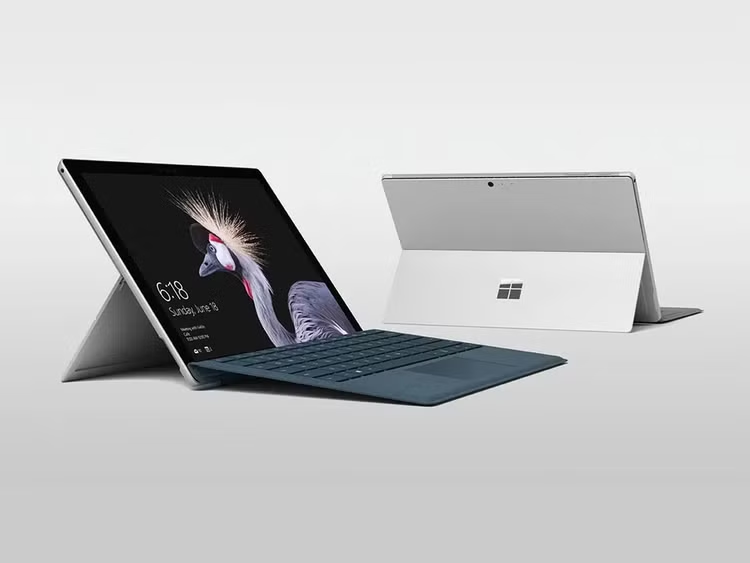
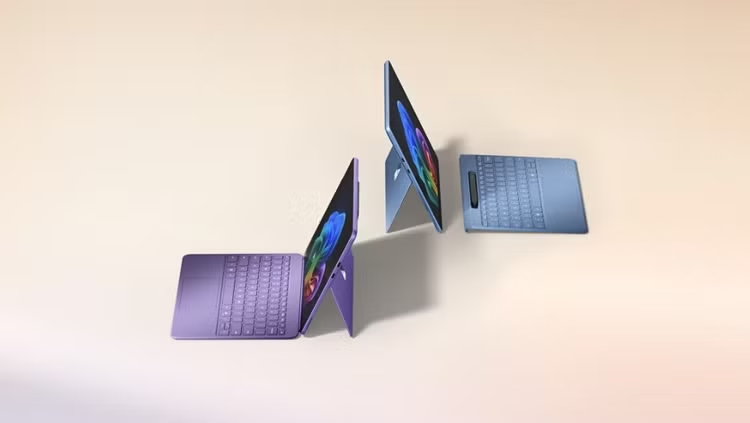
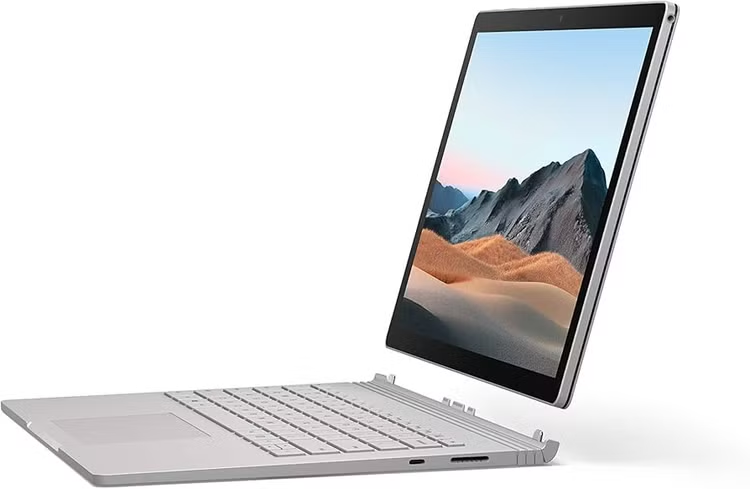
Source: https://khoahocdoisong.vn/gallery-microsoft-surface-bi-quay-lung-vi-laptop-ai-qua-dat-post2149101591.html

 Báo Khoa học và Đời sống•01/06/2026
Source: https://khoahocdoisong.vn/gallery-microsoft-surface-bi-quay-lung-vi-laptop-ai-qua-dat-post2149101591.html



![[Photo] General Secretary and President To Lam and the President of the Philippines hold talks.](https://vphoto.vietnam.vn/thumb/1200x675/vietnam/resource/IMAGE/2026/06/01/1780286997787_anh-man-hinh-2026-06-01-luc-11-09-43.png)





![[GALLERY] China speeds up robot production, one machine shipped every 15 minutes.](https://vphoto.vietnam.vn/thumb/402x226/vietnam/resource/IMAGE/2026/06/01/1780279886507_ty-2-png.webp)









![[GALLERY] Many electronics companies thought to be American are actually Chinese.](https://vphoto.vietnam.vn/thumb/402x226/vietnam/resource/IMAGE/2026/06/01/1780285884046_t-9-png.webp)

![[INFOGRAPHIC] PocketBook InkPad One](https://vphoto.vietnam.vn/thumb/402x226/vietnam/resource/IMAGE/2026/05/31/1780216562391_thumb-may-doc-sach-28-5-jpg.webp)


































































Comment (0)