

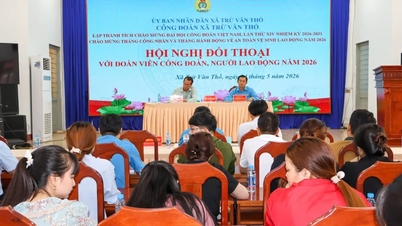
On the afternoon of May 21st, the Vietnam Fatherland Front Committee of Dien Hong Ward, Ho Chi Minh City, organized a thematic seminar on "Promoting the values of community solidarity in the digital age".
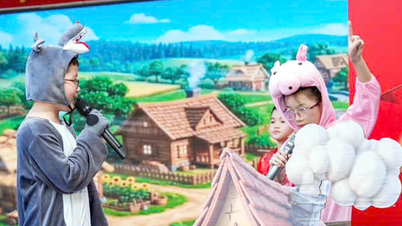
To begin the discussion, delegates watched a short play titled "Turn Off the Internet – Turn On Human Kindness." The play conveyed a message that in modern society, digital technology helps people connect quickly and conveniently, but it also makes them forget the close relationships with their neighbors who live and work together in the same neighborhood.
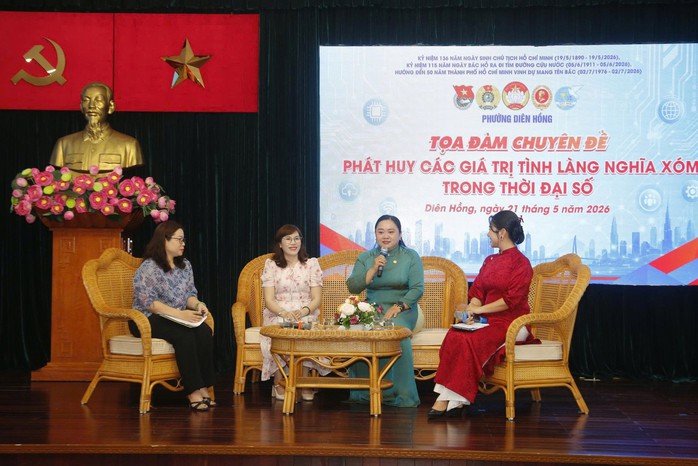
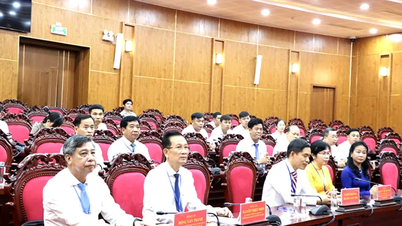
Delegates shared their views at the seminar.
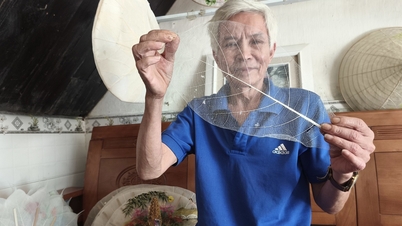
Ms. Lam Quynh Hoa, Head of Ward 5, recalled that during the COVID-19 pandemic, as soon as she opened her door, she saw six elderly people from the neighborhood waiting for her to assign tasks to everyone to participate in the fight against the pandemic.
"I was deeply moved and will never forget the kindness of my neighbors at that time. They weren't afraid of danger, they didn't wait for me to call on them, but completely voluntarily joined hands to support their neighbors. Then, when they tested positive, they quietly retreated into their homes to self-isolate. After the pandemic passed, my neighbors didn't ask for any reward or gratitude," Mrs. Hoa shared emotionally.
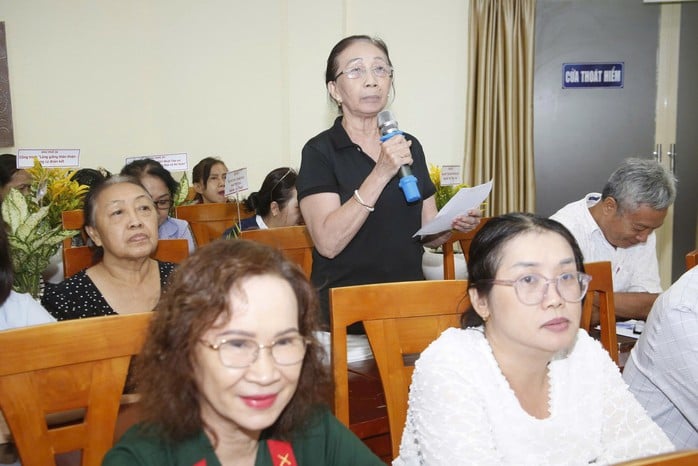
People contribute ideas to promote community spirit and neighborly solidarity.
Ms. Truong Thi Minh Hanh, Vice Chairwoman of the Dien Hong Ward People's Committee, said that in recent times, promoting community spirit and building national unity in residential areas has always been a priority for the Ward Party Committee, People's Committee, and Vietnam Fatherland Front Committee, implemented comprehensively through many specific movements and activities in the locality.
The ward focuses on movements such as "All people unite to build a cultured way of life," "All people unite to build a civilized urban area," and building residential areas based on "Unity - Compassion - Self-governance."
Dien Hong Ward also organizes the National Unity Day, cultural and artistic activities in the neighborhood, takes care of disadvantaged households, mobilizes people to support each other in life, and promotes the self-governance role of people in residential areas.
According to Ms. Truong Thi Minh Hanh, in the context of the current digital transformation, the ward also encourages neighborhoods to apply technology in connecting the community. Typical examples include neighborhood Zalo groups and resident information groups.
The ward also focuses on disseminating information through digital platforms, supporting residents in accessing digital amenities, and implementing the "Digital Literacy Movement" for the general public.
The delegates unanimously agreed that even with societal development and modern technology, neighborly solidarity remains the foundation of the community and the basis of the "National Unity for Building a Culturally Rich Life" movement.
"The most important thing is still 'emotions connecting with emotions' to deepen human connection," said Dr. Vu Thi Phuong, Head of the Department of Cultural Management (Ho Chi Minh City University of Culture).
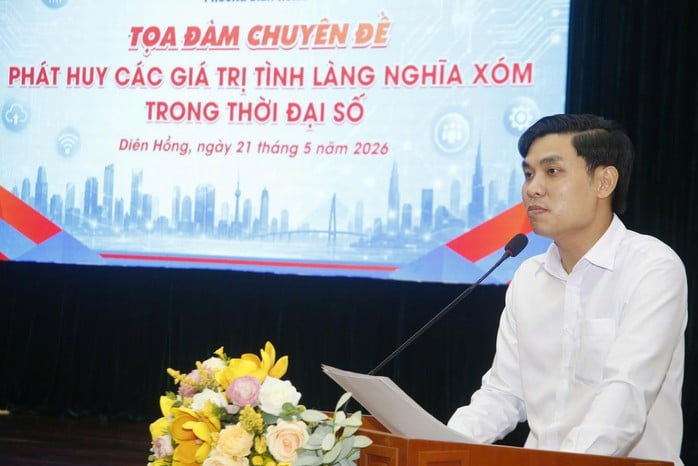
Mr. Nguyen Kim Trung emphasized that building a united community is a shared responsibility of each individual and each family.
In his concluding remarks at the seminar, Mr. Nguyen Kim Trung, Chairman of the Vietnam Fatherland Front Committee of Dien Hong Ward, assessed that the seminar provided many meaningful and practical insights with rich real-world value.
According to Mr. Nguyen Kim Trung, in the coming time, Dien Hong ward will continue to promote propaganda and raise awareness about the value of neighborly solidarity in modern life. It is necessary to make each citizen understand that building a united community is not solely the responsibility of the government or the Fatherland Front, but a shared responsibility of each individual and family to create great strength for the community.
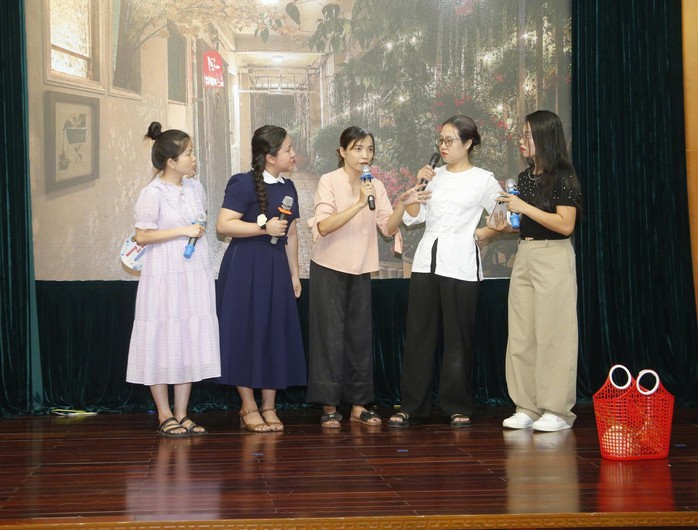
Short play "Turn off the Internet - turn on human kindness"
Simultaneously, effectively utilize digital platforms and technology in connecting residential communities. Continue to guide neighborhoods in building and maintaining effective community Zalo groups and online resident groups in a way that is closer to the people, more practical, and more humane.
At the same time, we should replicate practical community-building models in residential areas such as: "Charitable Alleyways," "Solidarity Neighborhoods," and "Mutual Support Groups of Residents," thereby creating more spaces for people to meet, interact, and connect.
To leverage the core role of the grassroots political system and the people in community building, the Front Committee, neighborhood committees, and residential groups need to continue to be close to the people, listen to the people, and proactively understand their concerns in order to promptly mobilize, connect, and support them.
Source: https://nld.com.vn/gan-ket-tinh-lang-nghia-xom-trong-thoi-dai-so-196260521205542819.htm





































































Comment (0)