

Price is the biggest obstacle.
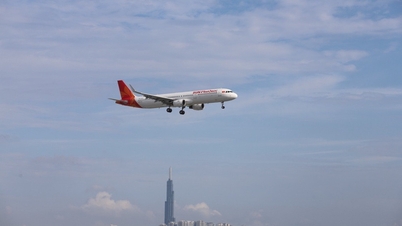
According to Mr. TL, the leader of a travel company in Ho Chi Minh City: This year's April 30th holiday offers many days off, so families have booked tours very early. To date, his company has almost completely closed most tour bookings, with 39% choosing domestic tours and the remaining 61% opting for international tours. The reason is that the cost of domestic tours has increased significantly, by 40% or more, mainly due to airfares nearly doubling. Therefore, even though hotels and destinations haven't increased prices, the sharp rise in airfares has driven up the price of domestic tours.
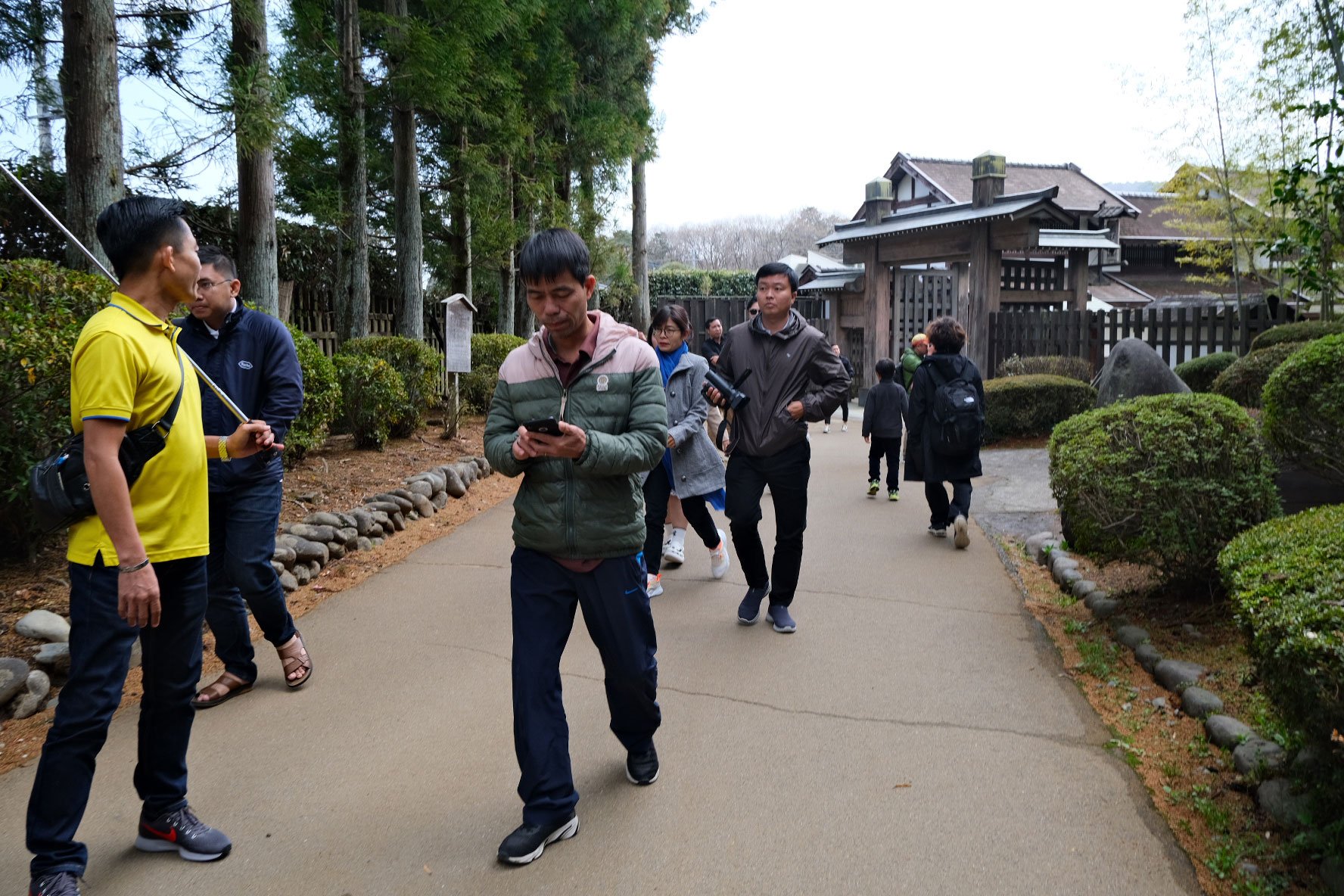
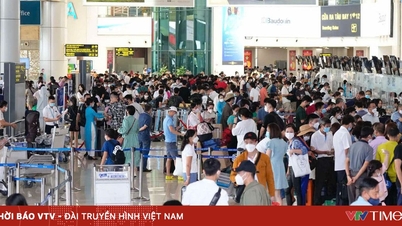
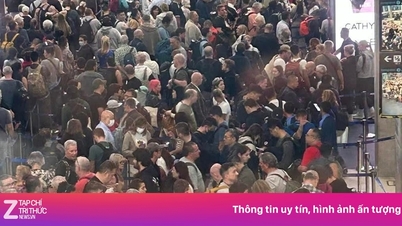
With high domestic costs, more and more Vietnamese people are traveling abroad.
"In terms of attractiveness, destinations like Thailand and Indonesia may not necessarily be as appealing as Vietnam. During the recovery phase, most localities are focusing on investing in infrastructure. Quang Binh , Quang Tri, and the northern provinces of Central Vietnam, which were once tourism backwaters, are beginning to see many positive changes and innovations in tourism products. Provincial and city leaders are also very aware of the need to proactively attract tourists and have taken the initiative to directly visit source markets to introduce their resources. After the pandemic, travel businesses have also focused on building many new and unique domestic tour programs, adding more attractive destinations and higher quality to meet the trends of tourists. However, price is a major obstacle. Many customers come to us, find the tours great, but complain about the high price. After comparing and contrasting, they choose to go to Thailand or Singapore instead. In fact, for travel businesses, sales are still meeting targets. The only problem is that being forced to shift towards taking tourists abroad means that destinations suffer, customers suffer, and the entire Vietnamese tourism industry suffers." "What a disadvantage," Mr. TL shared with regret.
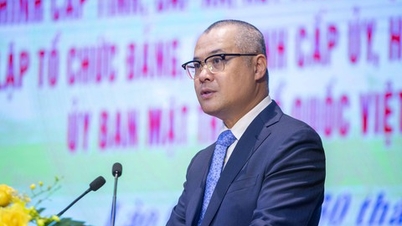
Mr. Nguyen Quoc Ky, Chairman of the Board of Directors of Vietravel Corporation
Mr. Nguyen Minh Man, Director of Communications, Marketing, and Information Technology at TST Tourist, also announced that the company has almost reached its target of serving 2,000 tourists for the April 30th - May 1st holiday. This year, customers booked tours early, three months in advance, instead of the usual 1-1.5 months. "Thanks to early bookings, businesses have been able to proactively plan and maintain good airfare and service prices. If customers had booked close to the date as before, both customers and businesses would be in serious trouble because airfare prices are increasing sharply. Especially if the Ministry of Transport's proposal to increase the ceiling price of airfares is approved, the April 30th - May 1st holiday will fall during this period. A holiday combined with a price increase is essentially a double price hike. Businesses will not be able to sell the planned number of tickets," Mr. Man said with a sigh of relief.
According to TST Tourist, the most popular and early booked tours include: Thailand, Taiwan, Dubai, South Korea, Japan, and Europe. Since tourism reopened, TST Tourist has seen a 6/4 ratio of outbound tours booked internationally. This ratio is projected to increase further from June onwards, as China eases quarantine requirements for tourists. In this context, rising airfares and increased domestic travel service costs will immediately impact travel behavior, prompting hesitant groups to confidently opt for overseas travel.
With everyone doing their own thing, tour prices are difficult to compete with.
The surge in Vietnamese people traveling abroad was a trend predicted by Mr. Nguyen Quoc Ky, Chairman of the Board of Directors of Vietravel Corporation. After a year of booming domestic tourism, surpassing even the 2019 period, people shifted their focus to overseas travel. This is a natural trend, a compressed spring gradually expanding. However, he still expressed concern about the current instability in travel costs.
Mr. Nguyen Quoc Ky analyzed: From an aviation perspective, it is very difficult to demand that airlines reduce ticket prices in the current period. Fuel prices, which previously accounted for only about 30% of aviation costs, have now risen to 50-60%. The total input costs of the aviation industry are increasing very rapidly. Meanwhile, the demand for air travel is not only for tourism but also for business travelers, and the imbalance between passenger and passenger numbers occurs almost year-round, seasonally, according to events, holidays, and festivals. For example, on April 30th, people flock from Hanoi to Phu Quoc; flights on that route may reach 90-100% occupancy, but the return flight may not even reach 20-30%. Airlines cannot keep planes in Phu Quoc waiting for passengers, so they are forced to calculate the costs from both ends and redistribute them.
In this case, according to Mr. Ky, if there were a policy of selling round-trip tickets, where customers buy a complete package, businesses could proactively calculate to offer better prices. On the other hand, airplanes are essentially a high-quality means of transportation, requiring costs to ensure flight safety and to keep the aircraft airworthy, often exceeding the affordability of most people. In the context of a difficult economy, low-cost airlines were created based on cutting all costs to achieve the lowest possible prices, making them accessible to passengers who previously traveled by train or bus. However, in recent times, maintaining excessively low ticket prices has inadvertently crippled the railway industry, and even the aviation industry is struggling to survive because airlines are selling tickets below cost. This situation cannot be sustained for long.
Meanwhile, from a tourism perspective, maintaining stable prices requires businesses to plan very early, placing deposits well in advance to secure a series of tickets, accepting the risk of "all or nothing." The increase in airfare is something no travel agency wants. Furthermore, tourist destinations are currently quietly imposing fees or increasing entrance costs. If left unchecked, this will disrupt the sales plans of travel agencies and negatively impact the entire tourism industry.
"In Southeast Asia, tourist-attracting countries like Thailand, Singapore, and Malaysia allow airlines to compete freely, with ticket prices determined by the market. But why do they still have attractive tourism prices? It's because they have the 'key' to connectivity. And to achieve connectivity, there needs to be a 'conductor,' because tourism is a comprehensive economy, composed of many infrastructure sectors. Therefore, connectivity must rely on the top-level infrastructure. This is precisely the weakness of Vietnamese tourism," Mr. Ky stated frankly. According to him, "Vietnam's tourism stimulus efforts have never been fully realized. With everyone trying to offer every service to maximize profits, Vietnam cannot sell tours cheaper than Thailand or some other Southeast Asian countries."
"With a budget of 5-6 million VND, you can choose Thailand or Cambodia, while this amount might only be enough to buy a plane ticket from Ho Chi Minh City to Hanoi; with a little more money, you can go to Singapore or Malaysia; with a higher budget, you can choose South Korea or Japan; and with even higher budgets, you can go to the US or Europe… The peak summer season is extremely important for Vietnam's tourism industry. If the number of international tourists hasn't yet compensated for the shortfall, the system of destinations, hotels, and restaurants will face significant difficulties."
Mr. Nguyen Minh Man , Director of Communications, Marketing and Information Technology at TST Tourist
Source link








































































Comment (0)