

Customs data shows that fruit and vegetable exports in the first quarter reached approximately $1.3 billion, an increase of over 27% compared to the same period last year. Durian continued to be a highlight, increasing by nearly 128%, while coconut and pomelo increased by about 26% and nearly 29% respectively.
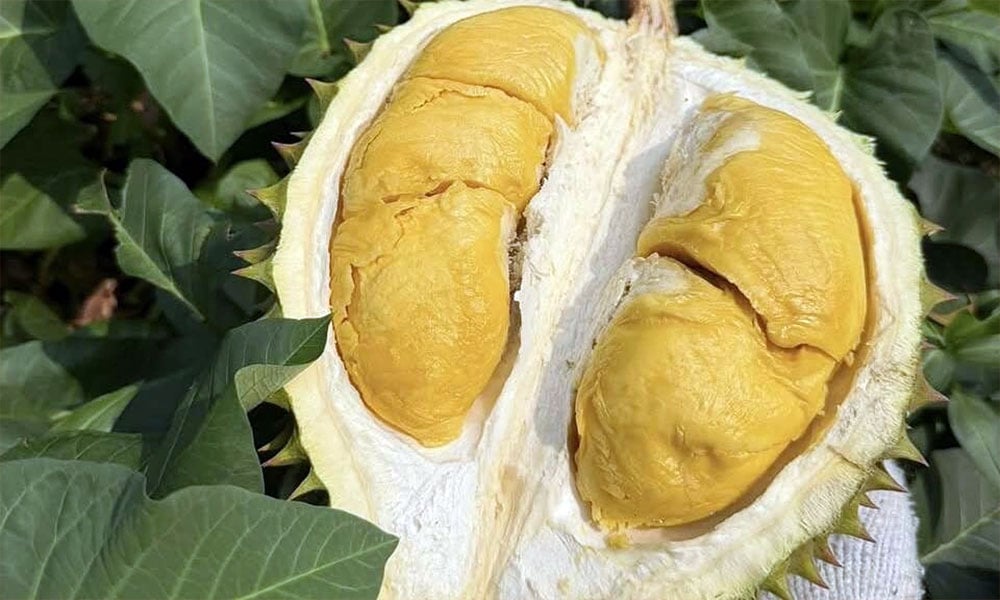 |
Ri6 durian at a farm in Can Tho . |
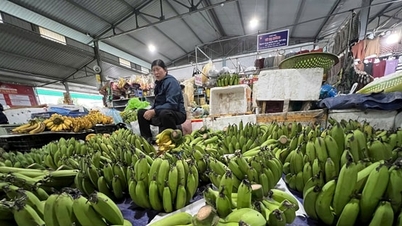
However, the price increase has not been evenly distributed across all items, with many fruits recording declines. Bananas fell by nearly 20%, mangoes by over 15%, watermelons by about 12%, while jackfruit and lemons decreased by 7% and over 9% respectively, dragging domestic prices down. These are all fruits heavily dependent on traditional markets, making them vulnerable to weakening demand or changes in import regulations.
The imbalance between these commodity groups quickly became apparent in the domestic market. When exports slowed down or consumption became unstable, goods piled up domestically, creating pressure from oversupply and driving prices down sharply.
In fact, many agricultural products are experiencing very low prices. Watermelons have at times dropped to only 1,000-5,000 VND per kilogram in some growing regions, and mandarin oranges have fallen to 1,000-3,000 VND per kilogram at the farm. The price of jackfruit for export is also only 5,000-8,000 VND per kilogram. Even Hoa Loc mangoes - which used to be in the high-price group - are now down to 9,000-15,000 VND per kilogram, a sharp decrease compared to before Tet (Lunar New Year).
Notably, the downward price trend is not only occurring in fruit groups with low consumer demand but is also spreading to export-leading products. Recently, the price of Ri6 durian in many growing regions has fallen to only about 20,000-35,000 VND per kg, the lowest in many years and a sharp decrease compared to the beginning of the year. This development shows that even high-growth products are beginning to face pressure as supply increases rapidly, while demand from import markets weakens and becomes more cautious.
According to Mr. Dang Phuc Nguyen, General Secretary of the Vietnam Fruit and Vegetable Association, the sharp drop in agricultural product prices is due to a combination of factors. First, the Chinese market – which consumes the majority of Vietnamese fruit – is tightening quarantine and quality standards. For durian, Thai durian is currently in its peak season, leading to fierce competition for Vietnamese durian.
Furthermore, the market is in a transitional phase before the full implementation of new requirements on traceability and planting area codes under the Protocol and Order 280 from June 1st. Purchasing agents are therefore becoming cautious, only buying in small quantities to minimize the risk of goods being returned at border crossings.
Furthermore, logistics costs have also increased due to the Middle East conflict driving up fuel prices and shipping rates. This has slowed fruit exports to EU and US countries compared to the same period last year. Many businesses have even had to temporarily suspend operations, waiting for shipping through these regions to stabilize to avoid the risk of loss or damage to goods.
Source: https://baobacninhtv.vn/gia-nhieu-trai-cay-lao-doc-postid444756.bbg




![[Photo] General Secretary and President To Lam presides over a working session with the Central Policy and Strategy Committee on the development of the materials industry.](https://vphoto.vietnam.vn/thumb/1200x675/vietnam/resource/IMAGE/2026/05/21/1779359935432_a3-bnd-3129-1412-jpg.webp)












































































Comment (0)