

This makes the HiSilicon Kirin 9006C stand out from previous Kirin chips, and it's no surprise that the tech world is questioning how Huawei managed to circumvent the ban. Many believe the company finally found a way to overcome the restrictions from US sanctions and produce such advanced chips.
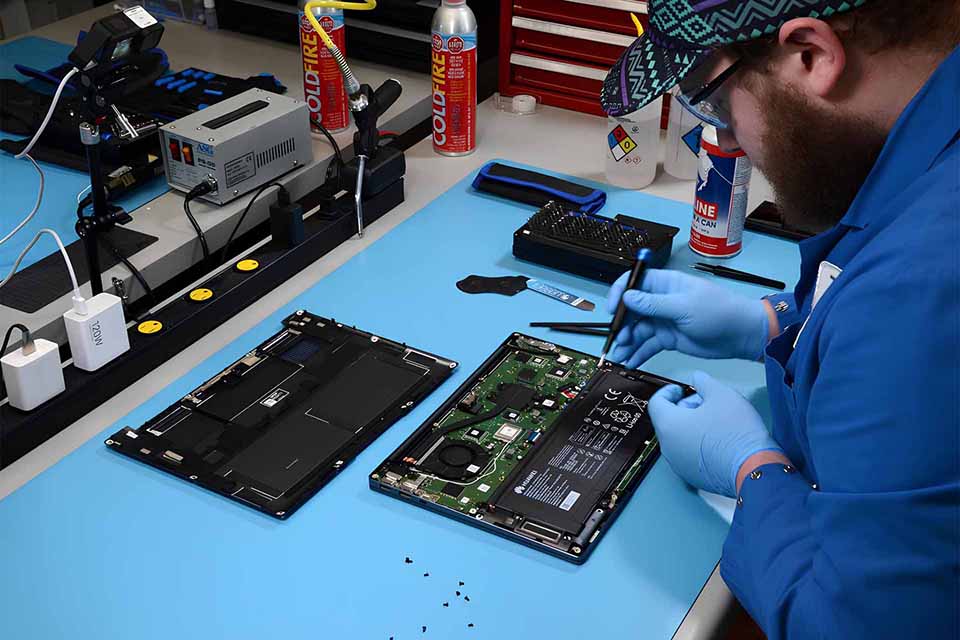
The Kirin 9006C is actually an older chip manufactured by TSMC for Huawei before the ban came into effect.
However, a discovery from TechInsights has put an end to all rumors. According to them, the Kirin 9006C is not manufactured by SMIC, the semiconductor company behind Huawei's recent 7nm chip breakthrough, but by TSMC from Taiwan.
Currently, due to sanctions, Huawei has not been able to regain its contract with TSMC. Did TSMC violate the sanctions, or how did Huawei obtain 5nm chips from SMIC? Based on its findings, TechInsights reports that the Kirin 9006C found in the Qinguyan L450 is actually not new. Instead, it is based on a very old and low-quality manufacturing process dating back to 2020. This suggests that Huawei is using its old 5nm stockpile from TSMC.
It's worth noting that there are still reports of SMIC researching its 5nm process to create an advanced Kirin chip. The problem is that, at the moment, this process will require more time. Perhaps SMIC is still in the early stages, and we may soon receive specific reports on that progress. So far, 7nm chips are the best that the leading Chinese semiconductor manufacturer has achieved. The 7nm Kirin 8000 chip, launched alongside the Nova 12 series, is also a scaled-down version of the Kirin 9000, meaning it's not really a new SoC.
Source link

















![[Video] Sunset at Lap An Lagoon – Where the sun sets over the fishing nets](https://vphoto.vietnam.vn/thumb/340x192/vietnam/resource/IMAGE/2026/05/31/1780192137701_beach-landscape-sea-water-nature-grass-745871-pxhere-com.jpeg)







![[Image] A brilliant symphony and explosive power in the skies of Da Nang.](https://vphoto.vietnam.vn/thumb/1200x675/vietnam/resource/IMAGE/2026/05/31/1780196945787_anh-man-hinh-2026-05-31-luc-10-08-51.png)































































Comment (0)