

In this context, many alternative models to burning rice straw are also being implemented in Vietnam through the "Raising Awareness on Reducing the Impact of Open Burning by 2025" project, carried out by the Global Alliance for Health and Pollution (GAHP) in collaboration with the Vietnam Association for Nature and Environment Protection (VACNE), with funding from the UK Department for Environment, Food and Agriculture (Defra). However, for the model to go beyond pilot projects, experts believe that the solution cannot stop at technology alone but requires synchronized progress in policy, finance, and collaboration among stakeholders.
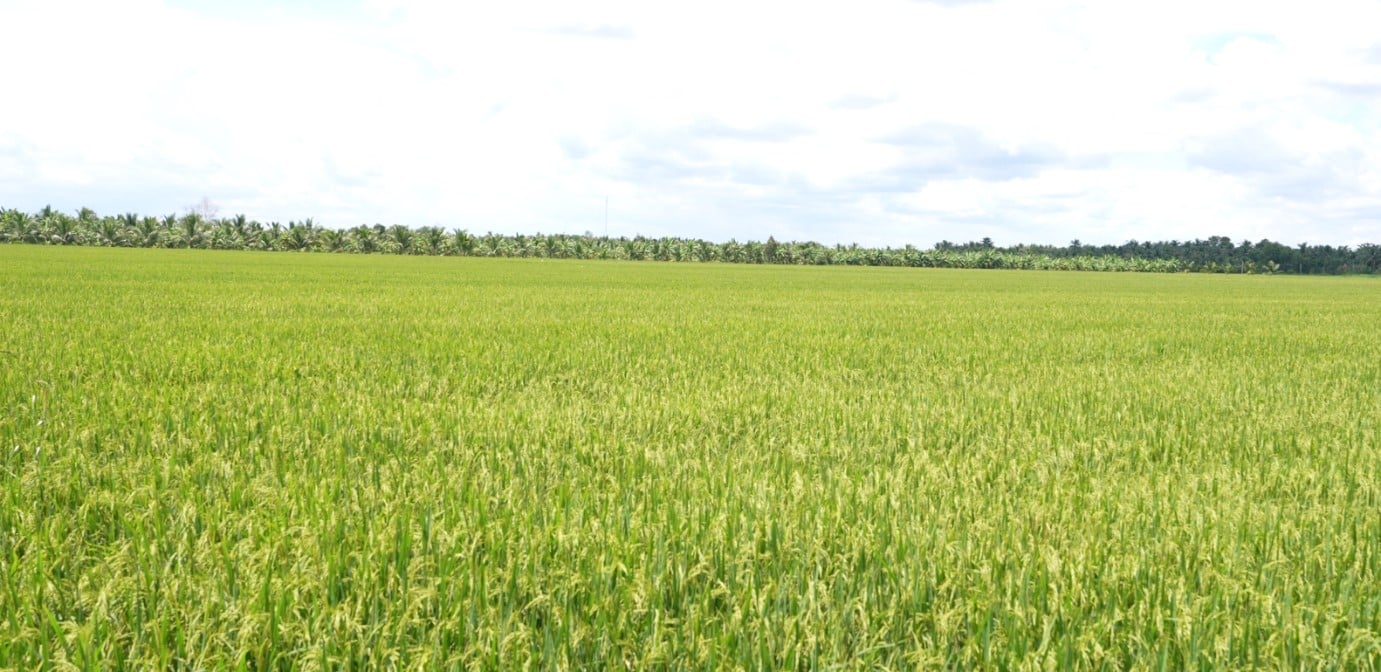
The lush green rice fields of farmers in Vinh Long province after implementing the use of microorganisms in the GAHP - VACNE Project.
Microbial technology: Benefits but facing entry barriers.
Associate Professor Dr. Dinh Van Phuc - Director of the Institute of Interdisciplinary Sciences , Head of the Faculty of Applied Science and Technology (Nguyen Tat Thanh University) said that the university's research group has implemented a model for treating rice straw using microbial preparations in Vinh Long over four seasons. The model has been positively received by farmers, but the biggest "bottleneck" is the cost and initial support policies.
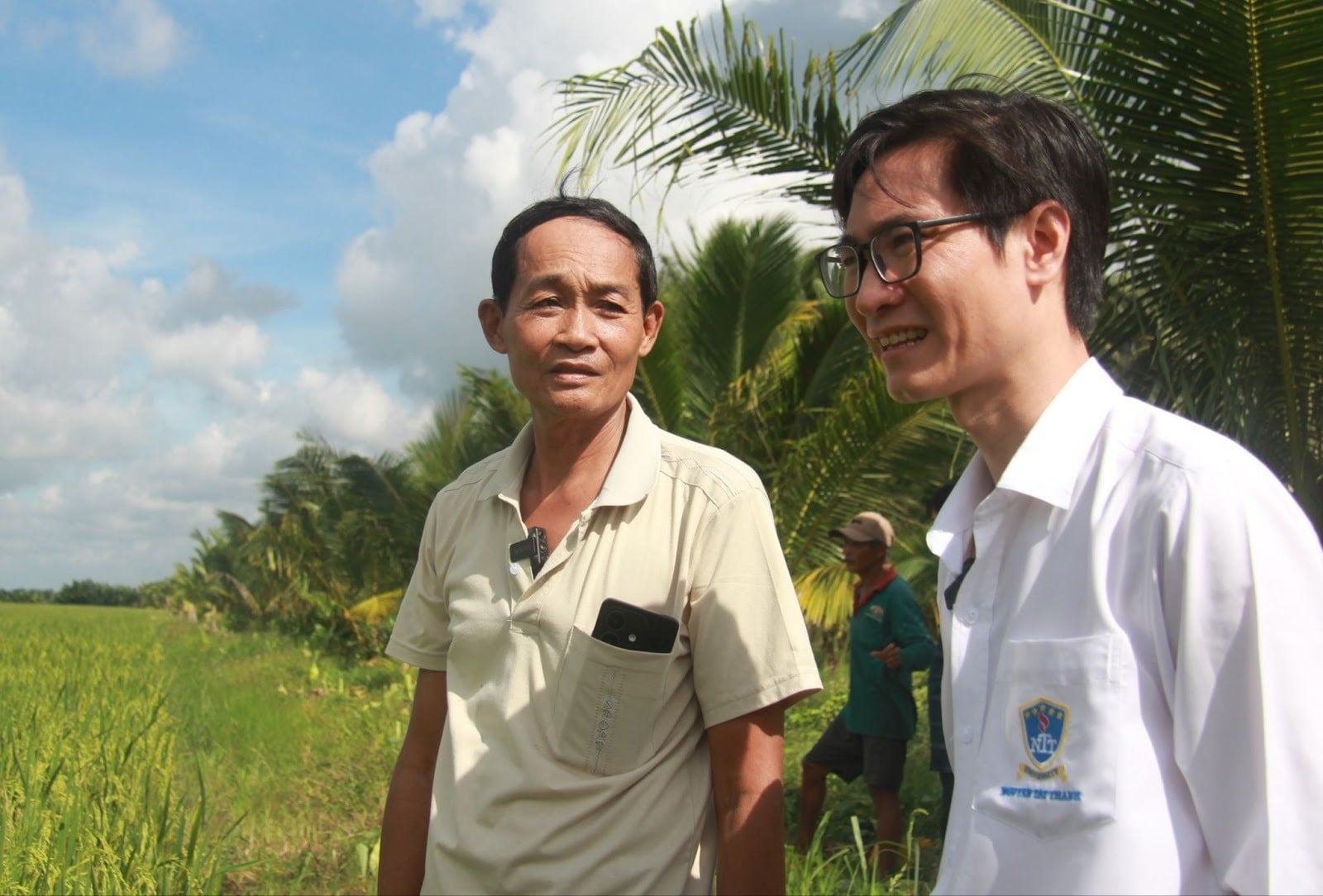
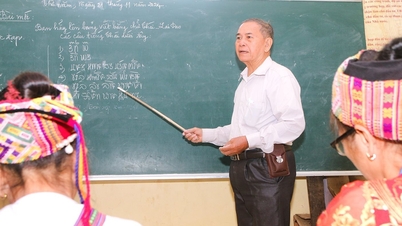
Associate Professor Dr. Dinh Van Phuc shared his experience with farmers after using microorganisms.
He argued that mechanisms, finances, and equipment are the three major barriers that make farmers hesitant to switch from burning straw to using microorganisms. The price of biological products may be slightly higher than chemical fertilizers, causing concern among farmers in the first few seasons when they use them for the first time. However, when considering the total cost, including fertilizers, pesticides, labor, and harvest yield, microorganisms significantly reduce costs and increase profits.
When expanding the model to 100 hectares, The biggest concern for farmers remains the ability to maintain reasonable prices and a stable supply. Therefore, he proposed a more sustainable strategy: “To replicate this model, a linkage of four stakeholders is needed: the State, scientists, businesses, and farmers. Most importantly, the State needs to provide financial support for at least the first 2-3 seasons to form habits among farmers. Once they are familiar with the effectiveness of microorganisms, they will invest on their own, without needing any further persuasion.”
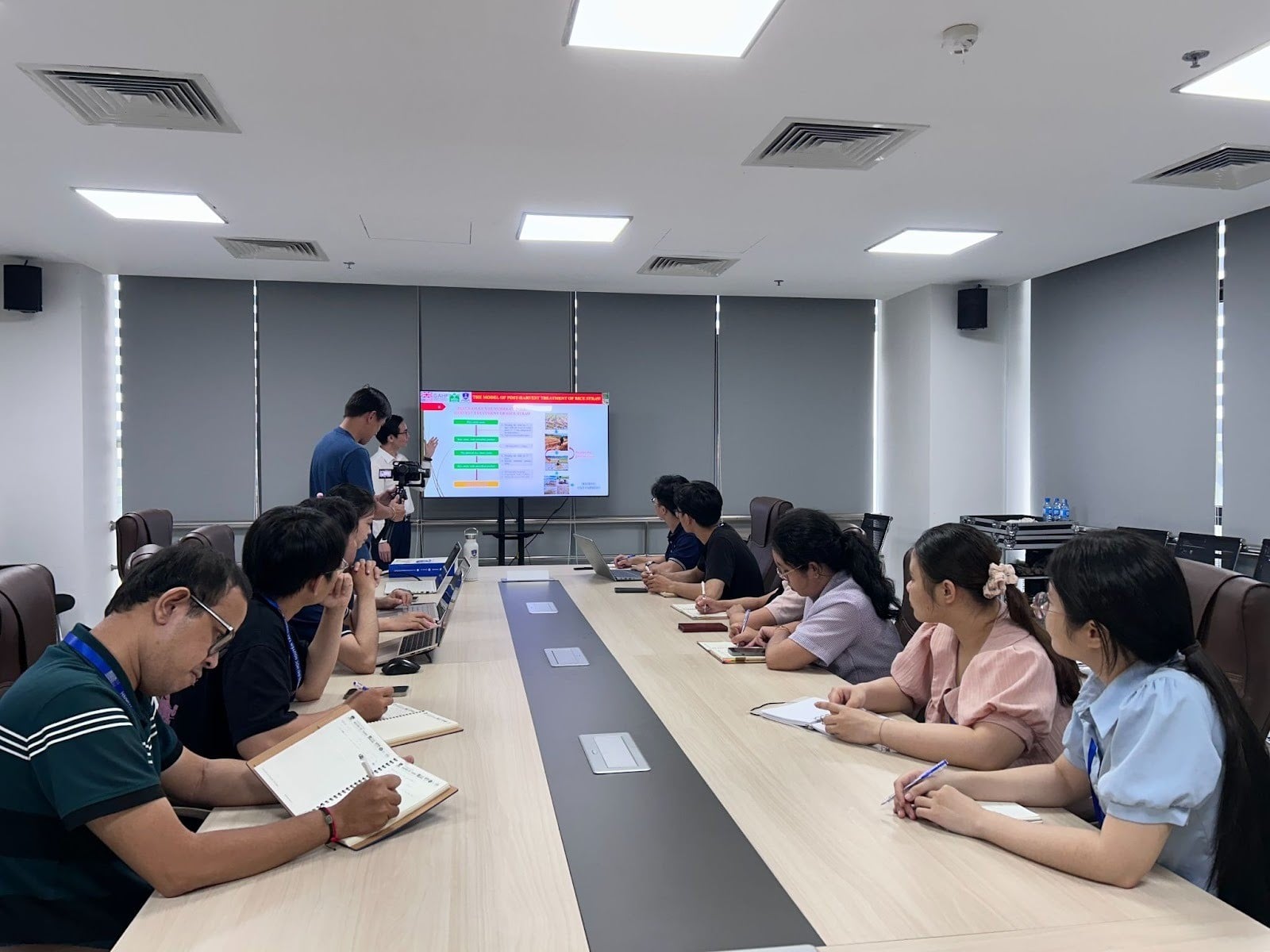
Coordination among the "four stakeholders" is needed to replicate and develop the straw processing model.
Encouragingly, in implementation sites such as An Truong and Quoi An communes (Vinh Long province), farmers have shifted from skepticism to proactiveness and trust, thanks to directly witnessing the benefits and effectiveness of the model: the soil is more porous; the rice plants are healthier, with reduced organic toxicity; there are fewer pests and diseases; fertilizer costs are significantly reduced, and yields and rice quality are improved.
Economy and environment: You can benefit from both if done correctly.
From an environmental-economic perspective, Associate Professor Dr. Trinh Thi Tham (Hanoi University of Natural Resources and Environment) affirmed that stopping the burning of rice straw always brings outstanding environmental benefits, but for farmers to voluntarily change their behavior, the solution must be accompanied by real economic value.

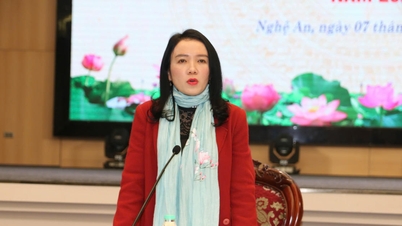
Associate Professor Dr. Trinh Thi Tham - Deputy Head of the Faculty of Environment (Hanoi University of Natural Resources and Environment) outlined the economic and environmental benefits.
According to her, burning straw not only pollutes the air but also kills beneficial microorganisms in the soil, leading to a depletion of organic matter. By adopting alternative methods such as baling straw into pellets or treating straw on-site with microorganisms, farmers not only protect the soil but also gain additional income.
Currently, the market price for straw bales ranges from 10,000 to 15,000 VND per bale. With 20-30 bales produced per hectare, farmers can earn 200,000 to 450,000 VND per hectare, providing additional income and eliminating the need for burning. Meanwhile, treating straw with microorganisms offers a double benefit: reducing the use of herbicides, pesticides, and fertilizers; increasing crop yields; and reducing labor, which is suitable for the labor shortage in rural areas.
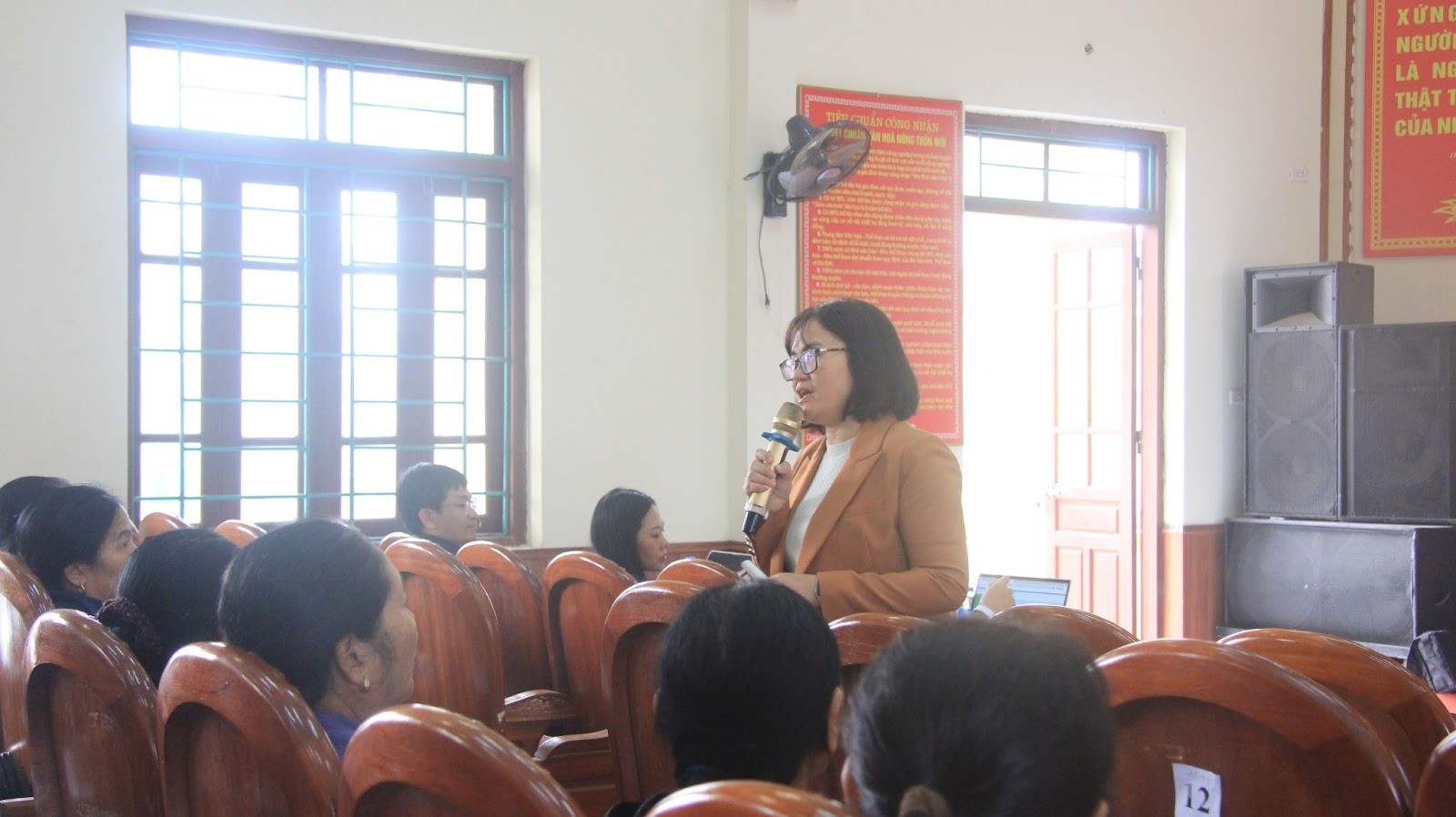
Associate Professor Dr. Trinh Thi Tham shares with farmers how to practice clean agriculture.
However, according to Associate Professor Dr. Trinh Thi Tham, the biggest challenge remains the technical aspect: “Many elderly people are the primary agricultural laborers. The spraying of pesticides or straw collection needs clear, simple instructions, and initial support from a workforce.” She also emphasized the coordinating role of local authorities, the Farmers' Association, the Women's Association, etc., to ensure the model is implemented in groups rather than through individual guidance.
Microorganisms reduce organic toxicity and improve soil quality.
Sharing his perspective from a practical standpoint, Mr. Nguyen Van A, Chairman of the People's Committee of An Truong commune (Vinh Long), said that Vinh Long cultivates three rice crops per year, and the planting season is very tight, so the straw doesn't have time to decompose, making the rice susceptible to organic poisoning. Previously, farmers often plowed the straw under immediately after harvest, but this method only "hid the straw in the ground" and didn't completely eliminate it.
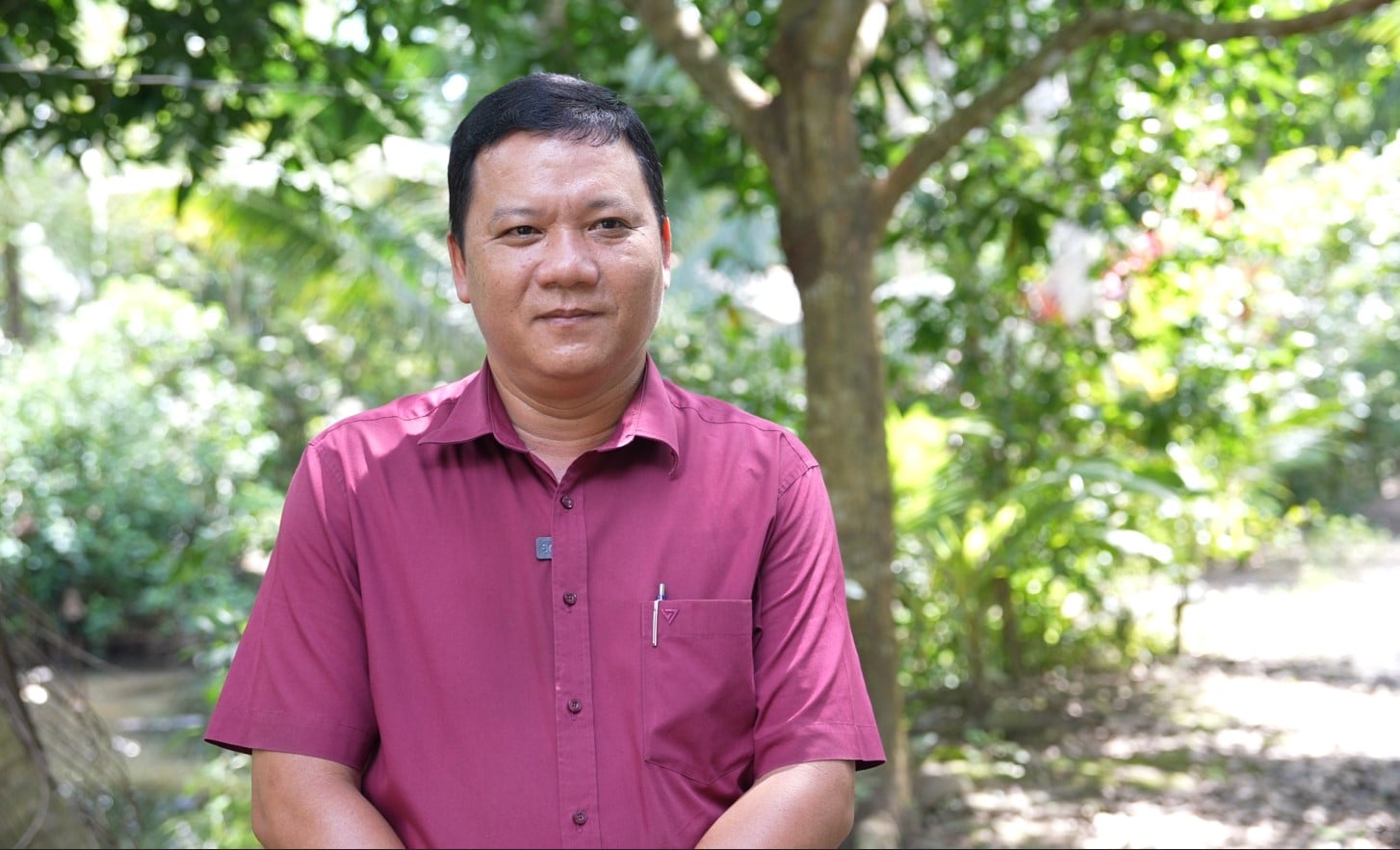
Mr. Nguyen Van A - Chairman of the People's Committee of An Truong commune (Vinh Long) shared his perspective on the Project.
After three applications of microbial products from the GAHP-VACNE Project, the commune has recorded significant progress such as a sharp reduction in organic poisoning, almost the complete elimination of wild rice ; increased humus content, looser soil with better water retention, resulting in more stable yields and reduced fertilizer costs. In addition, farmers "highly agree" and request the continued development and expansion of the model.
"Microbial preparations are a mandatory requirement in the current stage if we want to develop green rice and rice for export. At the same time, the commune government is proposing support policies to expand the model on a large scale and replicate it in neighboring areas," Mr. Á affirmed.
Scaling up the model: Requires long-term policies, not just pilot programs.
The results from Vinh Long have clearly shown that the alternative to burning rice straw has been effective, but to scale it up, it needs support from public policy.
According to experts, the practical implementation of expanding the straw burning alternative model requires financial support for the first 2-3 seasons to help farmers establish the habit, as many farmers may be hesitant to switch without initial support. Once they become accustomed to it, they will proactively pay for the support.
Next, it is necessary to strengthen the linkages among four key stakeholders: the government providing policy and financial support; businesses ensuring a stable supply of products and machinery; scientists guaranteeing technical expertise and guiding farmers in implementing and using the solutions correctly; and the farmers themselves, putting the knowledge into practice directly in the fields. Without any link, the model will be difficult to sustain.
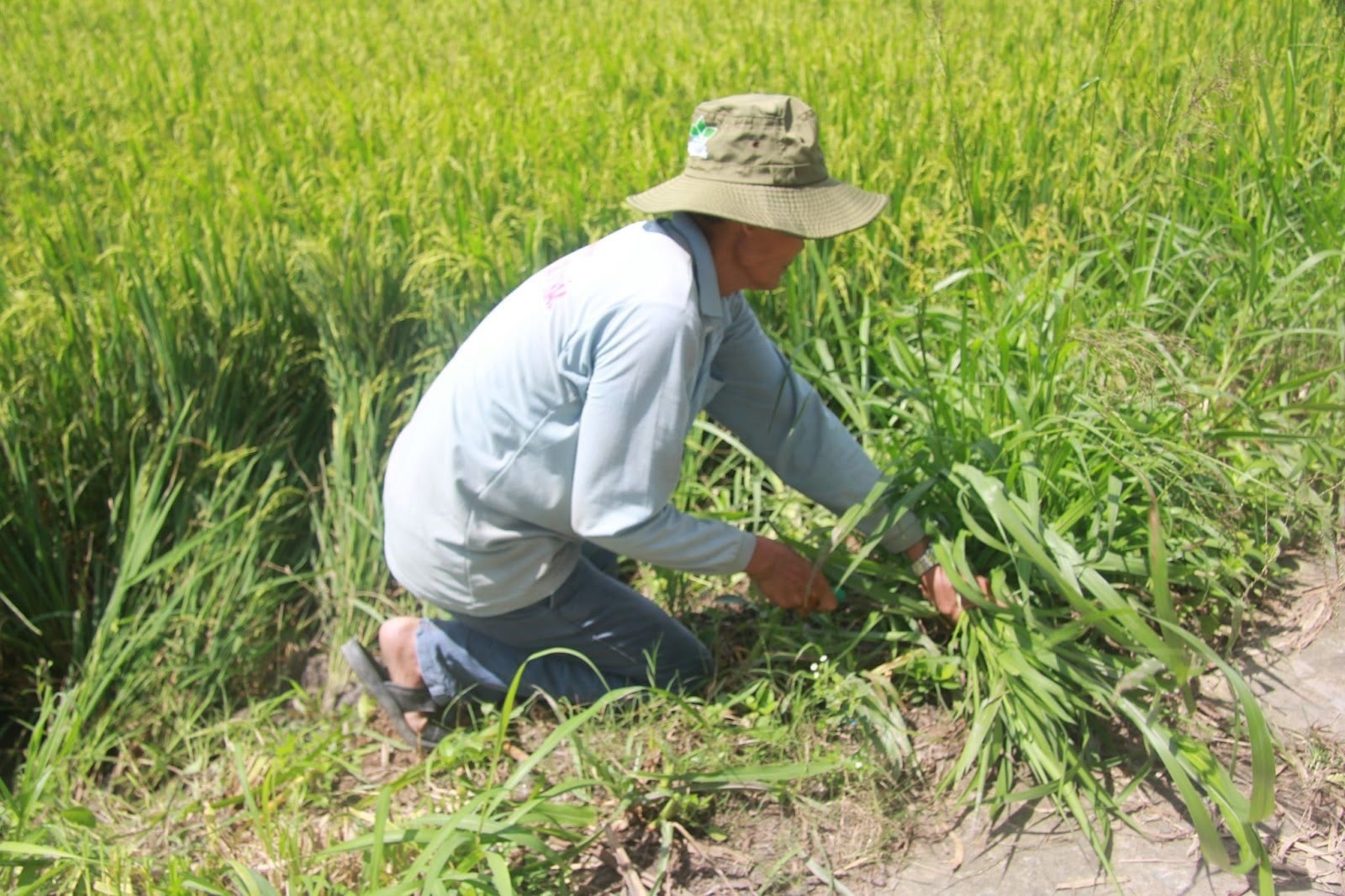
Farmers don't need to kill weeds or wild rice when using microorganisms in their fields.
Furthermore, popularizing simple, easy-to-implement, and easy-to-remember techniques, especially in agricultural areas with elderly workers, is extremely important. And if we only view microbial technology or straw baling machines as "a solution," it will be very difficult to achieve a shift. But when viewed more broadly as a component of green agriculture, reducing emissions and increasing the value of rice exports, the role of straw processing becomes clearer than ever.
From the model that GAHP - VACNE is implementing, one thing is clear: Farmers can absolutely become leaders in transformation if they receive the right support, for a sufficient period of time, and in a substantial way.
In the context of increasingly severe climate change, solutions such as microorganisms, straw bales, and pellets not only aim to reduce pollution but also open up a future of "green, clean, and sustainable" rice production. This is not only a requirement of the international market but also a key to helping Vietnamese agriculture maintain its long-term competitiveness.
PV























































Comment (0)