

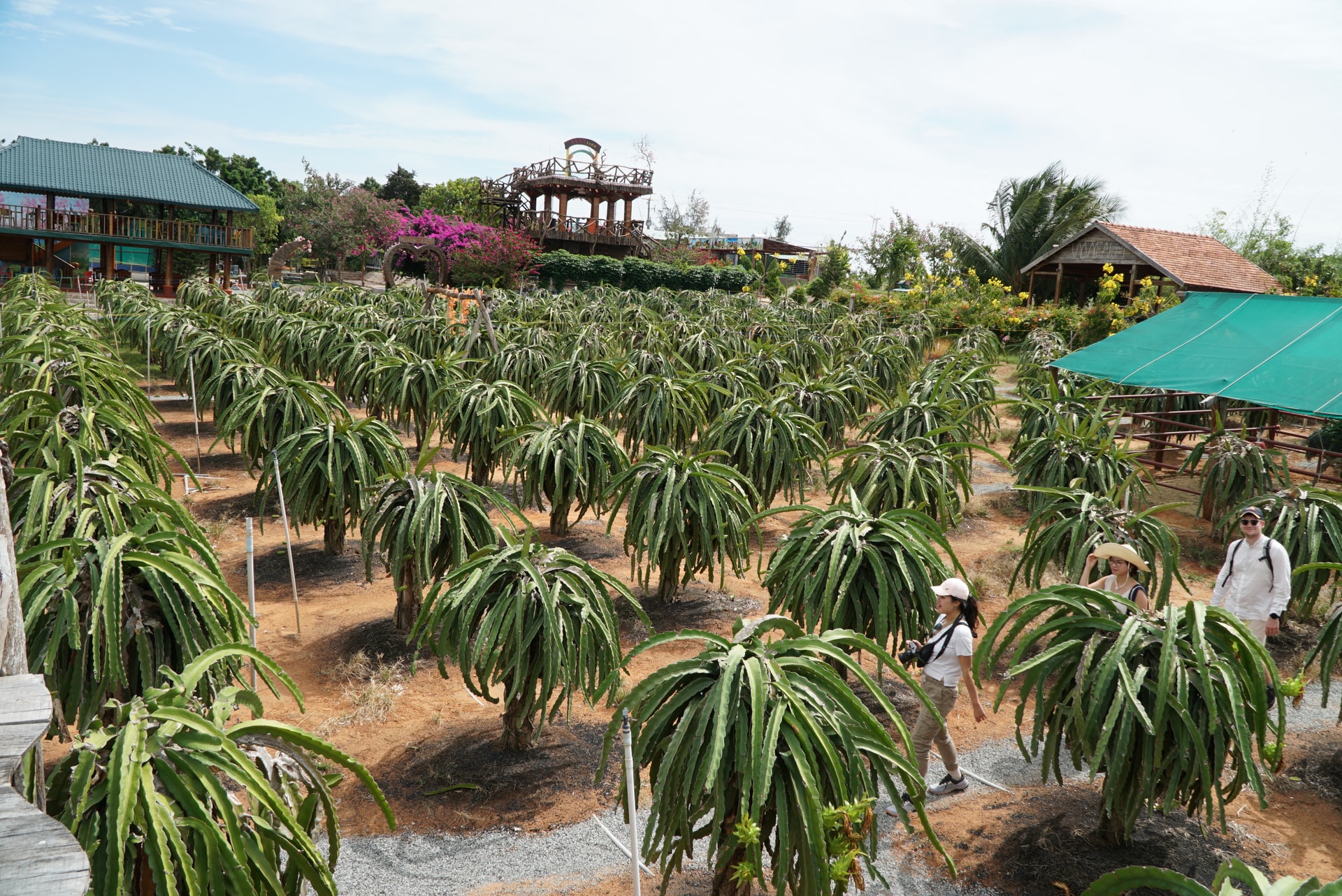
The garden becomes an experiential destination.
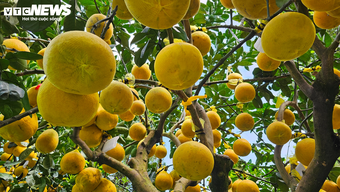
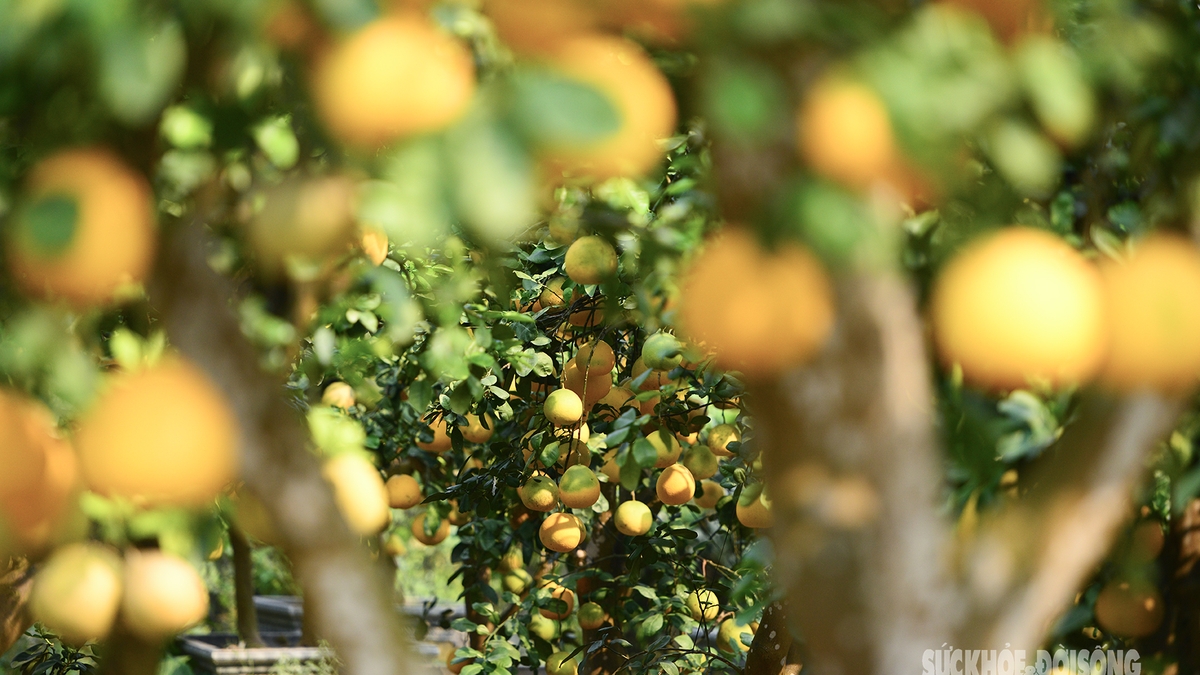
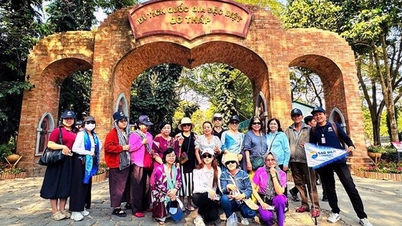
The sun shines down on the ripening grapevines in Hong Lam village, Hoa Thang commune. Under the green canopy, groups of tourists leisurely take photos, bending down to cut bunches of grapes still covered in white bloom, and enjoying them right in the vineyard. Nearby, the dragon fruit orchards in bloom have become a popular check-in spot. The scenery of the fruit orchards creates a very different atmosphere from familiar tourist destinations. Few would imagine that from a land traditionally used for agriculture , this place is contributing a vibrant piece to the emerging agricultural tourism landscape in Lam Dong.
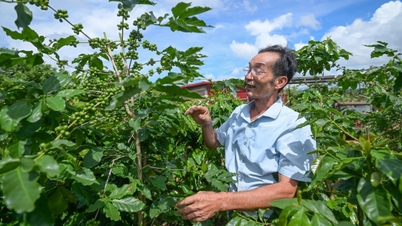
The owner of the garden is Mr. Duong Minh Quang, born into a farming family. This 2-hectare plot of land in Hong Lam village has been associated with his parents for decades, sometimes growing vegetables, sometimes switching to fruit trees according to market demand. The familiar farming method is to grow to sell; a good harvest brings in some capital, a bad harvest leaves them empty-handed. The value of agricultural products largely leaves the garden immediately after harvest.
In recent years, Mr. Quang has chosen a different path. On his 2 hectares of land, he allocated 1 hectare for growing dragon fruit and 1 hectare for growing grapes and apples… combining production with opening his farm to visitors. The garden still retains the appearance of a genuine agricultural production area, not transformed into a "film set," but it has been invested in with clean pathways and a few photo spots just enough for visitors to stop by.
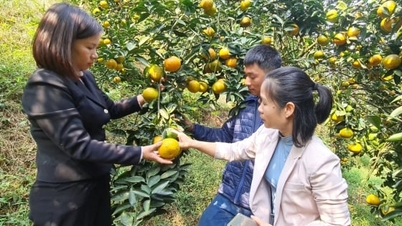
Visitors come here not only to take pictures, but also to pick grapes, dragon fruit, and apples themselves, and enjoy the fruit right in the orchard. The entrance fee is 50,000 VND per person, including drinks made from fresh, seasonal fruits. This revenue helps cover operating costs and provides a stable source of income for the orchard owner.
What's even more valuable is that Quang uses the grapes from his own garden to make wine for tourists . A bottle of wine isn't just a product; it's an extension of the experience. Buyers know where the grapes were grown, who planted them, and in what context they're enjoying it. The value, therefore, isn't measured in kilograms of grapes, but in the emotions and stories associated with the product.
Quang shared that relying solely on selling agricultural products for farming is very precarious. He emphasized the need to find ways to retain customers and preserve the value of this land.
Preserving the value of agricultural products through on-site experiences.
In 2025, Lam Dong province is expected to welcome over 20.7 million tourists, generating approximately 56,800 billion VND in tourism revenue. This figure demonstrates the strong appeal of the tourism industry. However, the value created for agricultural production is that the flow of tourists is not concentrated in urban centers but is spread to rural areas and production zones.
Agritourism draws tourists away from the city, bringing them closer to the fields and farmers. Tourists come not only to admire the scenery, but also to experience, consume agricultural products, and purchase them on the spot. Agricultural products become experiential products, gifts, and an integral part of the trip.
For farmers, this is a proactive way to engage in tourism, without waiting for large businesses or large-scale projects. They themselves tell the story of their land through their gardens, their products, and their firsthand experiences. The value is preserved right at the point of production, instead of being lost through intermediaries.
Orchards become destinations, fields become experiential spaces, and agriculture not only produces crops but also creates local jobs, living spaces, and recreational areas for the local community. Furthermore, labor is retained in rural areas, and livelihoods become more stable.
According to the 2025 socio-economic report, the agriculture, forestry, and fisheries sector of Lam Dong province is projected to grow by approximately 5.5%, with an average production value of around 195 million VND/hectare. This figure is expected to increase as the agricultural trend shifts from "producing large quantities" to "producing high-value products." Agricultural tourism is one way to realize this shift.
Source: https://baolamdong.vn/vuon-cay-don-du-khach-417070.html















































Comment (0)