

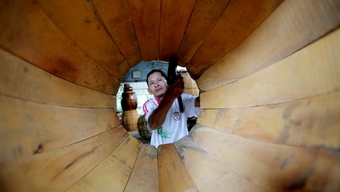
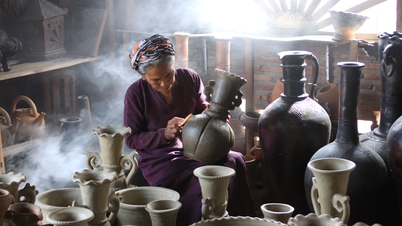
In the final days of the year, the sounds of saws and chisels resound through the narrow alleys of Phu Khe ward. The scent of sandalwood and rosewood blends with the rhythm of life in this centuries-old craft village. Mr. Nguyen Cong Kien, Chairman of the People's Committee of Phu Khe ward, said: "The challenge for Phu Khe is to simultaneously achieve rapid urbanization while preserving the essence of the craft village. To do this, the locality is planning concentrated production clusters to reduce pollution; at the same time, restoring ancient cultural values and transforming the fine wood carving craft into an urban economic brand." According to Mr. Kien, the average income in the area reaches 85-90 million VND/person/year, with over 80% of households being well-off or wealthy. Craft streets are being formed; infrastructure such as electricity, clean water, and telecommunications are gradually being undergrounded. Many young artisans are accessing digital platforms and exporting products to Europe and Japan. In its development process, Phu Khe ward is choosing the path of urbanization based on the craft village, transforming traditional crafts into a competitive advantage.
 |
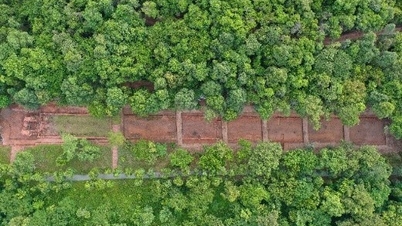
A view of the rural village of Phat Tich. |
While Phu Khe boasts vibrant craft villages, Phat Tich commune impresses visitors with the beauty of its mountains, temples, and ancient stone statues. This is a newly developed rural area with many unique features. On a winter evening, in a small house, artisan Hoang Thi Mui is enthusiastically practicing the traditional Quan Ho folk song "Guests Visiting the House" with other women and children, preparing for the Spring Festival of the Year of the Horse 2026. The artisan, now over seventy years old, shared: "I'm happy that my hometown is developing, but I'm even happier to see that my village still preserves its old traditions. Singing Quan Ho is not only a passion but also a way to preserve the elegance of the Kinh Bac people."
| In Bac Ninh, urban areas, industry, traditional crafts, heritage sites, and commercial agricultural production coexist and complement each other. This diversity forms the foundation for the province to build a model of civilized urban areas and new rural areas with a strong local identity, creating "livable countryside." |
In this new phase of development, Phat Tich commune always prioritizes economic development alongside the preservation and promotion of heritage values. The locality is implementing a "Cultural and Tourism Space" model. Roads leading to the commune's historical sites are being upgraded; homestays in rural villages and cultural markets, along with a digital tour guide system for visitors, are being perfected, attracting more young people to visit and use the services.
Heading up towards the hills of Kep commune, one finds sprawling pineapple fields and lush green vegetable paddies. In the distance, newly built, spacious houses stand out. Mr. Nguyen Huu Trung, a resident of Vac village, said: “The provincial merger has opened up great opportunities. We hope to learn from the successful practices of many localities within the new province. Now, cooperatives operate more systematically, businesses are linking up to develop more raw material areas, roads have been upgraded, and people feel more secure investing.”
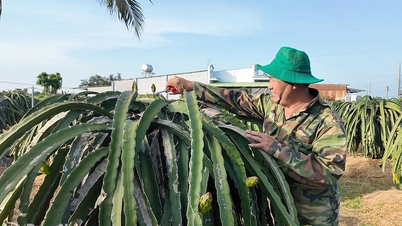
In Kep commune, pineapple has become the main crop. The entire commune currently has about 200 hectares of pineapple, of which the Huong Son Clean Pineapple Cooperative has 100 hectares. Bringing an average income of about 300 million VND/hectare/year, pineapple cultivation not only helps many households improve their lives but also contributes significantly to achieving the income criterion in the new rural development program. Along with pineapple, farmers in Kep commune are boldly switching from traditional crops to growing safe vegetables, fruit trees, and various vegetables for processing. The average income reaches 52 million VND/person/year. Currently, nearly 100% of the roads in the area have been paved.
 |
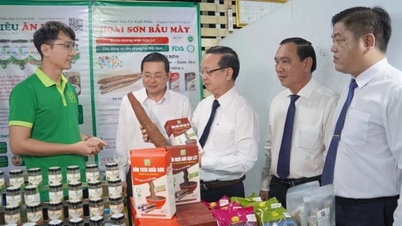
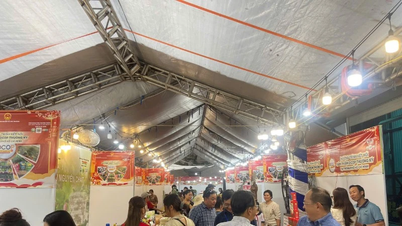
Exhibition booth showcasing OCOP products of Truong Son High-Tech Medicinal Herbs Cooperative, Truong Son commune. Photo: Nguyen Huong. |
Currently, Bac Ninh has a vast development space where urban areas, industries, traditional crafts, heritage sites, and commercial agricultural production coexist and complement each other. This diversity provides a foundation for the province to build a model of civilized urban areas and new rural areas with a strong local identity, creating "livable countryside." In these areas, the infrastructure for electricity, clean water, and telecommunications is being invested in comprehensively, moving towards undergrounding; modern inter-regional transportation routes are gradually being formed, creating a new face for Bac Ninh's rural areas. The commercial service system is gradually developing with supermarkets, markets, and modern distribution centers; industrial clusters and traditional craft villages are systematically planned, linked to centralized drainage and wastewater treatment systems to reduce pollution pressure and ensure sustainable development. As smart infrastructure develops widely, cultural identity is maintained and preserved, contributing to transforming today's villages into "small cities with the soul of Vietnamese villages." In its overall development plan, Bac Ninh province is striving to form a series of model rural areas, including: an urbanized area based on traditional crafts in Phu Khe and Dong Ky; a spiritual tourism heritage area with Do Temple, Phat Tich Pagoda, Dau Pagoda, But Thap, Bo Da, and Vinh Nghiem connected to Tay Yen Tu; and a green agricultural area associated with experiential tourism…
Today, traveling across the misty hills of Phat Tich and Yen Dung, or through the vast fields of Kep, Luc Nam, Tan Yen, Cao Duc, and Trung Chinh, one can easily feel the beauty and vibrant energy of the Kinh Bac region, where each person is diligently building a new life. Each locality, with its own advantages and unique path, is weaving a colorful tapestry, preserving the essence of rural life while simultaneously adapting and transforming in the process of urbanization.
Source: https://baobacninhtv.vn/giu-ban-sac-tao-suc-bat-cho-vung-que-moi-postid436299.bbg

























































Comment (0)