

Efforts to preserve the old traditions
In the Lang area (Lang Ward), remnants of an ancient village along the To Lich River, once associated with the traditional residential space of Thang Long, now mainly remain in memory and name. Along Lang Street today, it's hard to imagine that this place was once filled with lush green vegetable fields and tranquil village ponds; instead, there are wide streets and densely packed high-rise buildings. Mr. Nguyen Van Huan, who lives near Lang Pagoda, shared: "The streets are crowded and more convenient, but the familiar feeling of the countryside has faded over time."
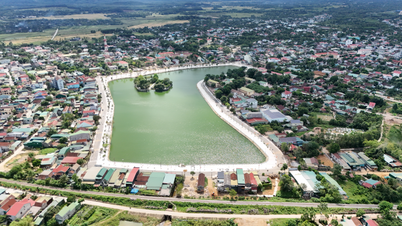
The process of urbanization is not limited to the Lang area; it is also happening vigorously in many other locations. In the Thanh Cong area (Giang Vo ward), the once-famous vegetable villages, fields, and ponds have disappeared, giving way to urban infrastructure and modern apartment buildings. While this change opens up opportunities for economic development, it also leaves a void in people's spiritual lives, as memories passed down through generations gradually fade.
Nevertheless, amidst this urbanization, there are still places that steadfastly preserve their identity. Dong Ngac village (Dong Ngac ward) is one example. Surrounded by modern buildings, Dong Ngac still retains hundreds of ancient houses with exquisite architecture. What is valuable is that these are not only tangible heritage but also expressions of community spirit, as many families, even when building new houses, still retain the traditional brick and mortar gates. The gates shaped like pen towers and inkwells still bear the strong imprint of a village of scholars. In this space, the image of a "city within a village" is clearly evident: modern villas stand next to ancient houses, concrete roads interspersed with brick alleys. This blend creates a new appearance but also places great pressure on preservation. Pham Thi Minh Hong, Secretary of the Dong Ngac 2 residential group, frankly stated: "Without clear direction, these values are very easily lost under the pressure of urbanization."
To ensure the village remains the "source" of the city.
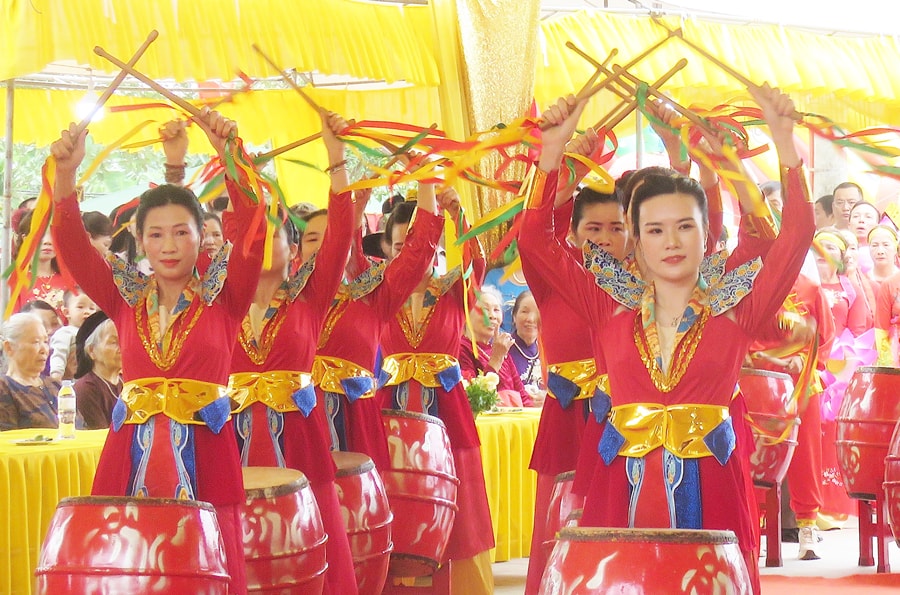
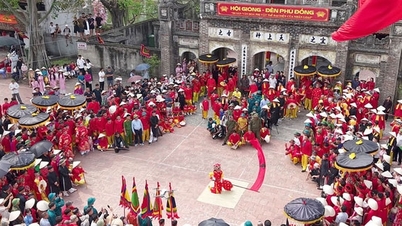
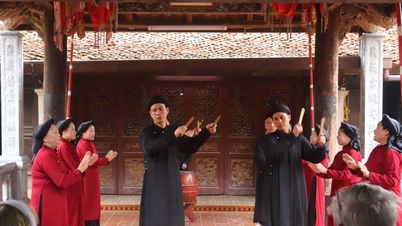
Preserving the "soul of the village" is not just about preserving architecture, but also about safeguarding cultural spaces. In Tay Tuu ward, the village festival held in late April 2026 attracted a large number of locals and tourists who came to enjoy drum performances, lion dances, dragon dances, flower festivals, and more. According to Nguyen Huu Tuyen, Secretary of the Tay Tuu Ward Party Committee: "Maintaining the annual festival not only preserves the local intangible cultural heritage such as the Dam Swimming Festival, but also creates a community space, affirming the enduring vitality of heritage within the urban environment." Thanks to the involvement of the government, the suburban village space with its ancient communal house, flags, drums, rituals, and the hospitality of the people has created a unique identity for the traditional Tay Tuu festival. This is not only a cultural activity but also a way for the community to "anchor" the soul of the countryside amidst the process of urbanization.
In Thien Loc commune, where hundreds of projects are underway and will be implemented in 2026, the challenge of preserving cultural identity has become even more urgent. At the beginning of spring, the commune organized many traditional festivals such as the Chai Temple, Den Bau Temple, Dai Do Temple, Nhue Temple, etc., ensuring compliance with regulations, safety, and civility. Through these events, the awareness of cultural preservation among the people has been strengthened, while also creating a strong connection with those who have left their hometown. Attending the Mach Lung Temple festival, Mr. Tran Van Minh, a local resident currently working in Hung Yen , shared: “Every year I return on the festival day, because it’s a promise to my homeland.” Such “promises” are the invisible “threads” that keep the village in the hearts of those who have left their hometown.
"Village within the city, city within the village" is a unique characteristic of the capital city. The harmonious combination of distinctive spaces, cultural environments, and living environments has created a diverse urban model, developing in a modern direction while still retaining the depth of thousands of years of ancestral traditions. This is what makes Hanoi attractive and unique compared to many other cities. On the other hand, in the context of new development, the trend of "city within the village" is unavoidable and needs to be regulated to ensure harmonious development.
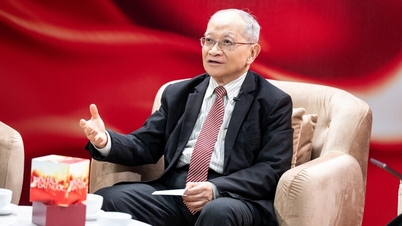
Associate Professor Bui Tat Thang, former Director of the Institute for Development Strategy, Ministry of Planning and Investment, believes that Hanoi needs to clearly identify areas with special cultural value to prioritize preservation. Planning cannot simply "erase" old structures, but must integrate and preserve characteristic spaces and core cultural institutions such as village gates, communal houses, and village ponds. Along with this, it is necessary to limit high-rise construction in core heritage areas, encourage architecture that harmonizes with traditional landscapes; have mechanisms to support the restoration of relics, strictly control construction planning, and integrate preservation elements into urban development strategies.
One noteworthy approach is the development of heritage-based economy. When ancient villages are linked to experiential tourism, and when traditional festivals are restored and exploited appropriately, heritage is not only preserved but also creates livelihoods for the people. When heritage brings economic value, preservation will no longer be a mere responsibility, but become an intrinsic need of the community.
Urbanization is an inevitable trend, and for a capital city with a thousand years of cultural heritage, development cannot come at the expense of its identity. Preserving the "village soul" within the urban landscape is not only a management requirement but also a development choice. Only when villages remain within the city can Hanoi retain its cultural depth and identity – values that contribute to the enduring vitality of the capital.
Source: https://hanoimoi.vn/giu-hon-lang-trong-dong-chay-do-thi-hoa-749072.html
![[Photo] General Secretary and President To Lam presides over a working session with the Central Policy and Strategy Committee on the development of the materials industry.](https://vphoto.vietnam.vn/thumb/1200x675/vietnam/resource/IMAGE/2026/05/21/1779359935432_a3-bnd-3129-1412-jpg.webp)

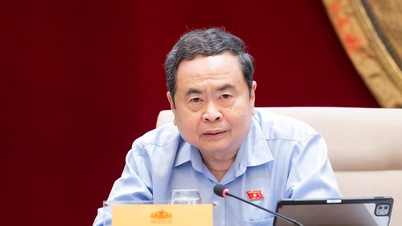
![[Photo] National Assembly Chairman Tran Thanh Man working with the Standing Committee of the Law and Justice Committee](https://vphoto.vietnam.vn/thumb/1200x675/vietnam/resource/IMAGE/2026/05/21/1779378929214_ndo_br_1-4610-jpg.webp)



































































Comment (0)