

This is not only a requirement for the review process, but also a major direction in the National Assembly's efforts to improve the economic institutions in the current period, as the country strives to achieve high and sustainable growth.
In economic management, the biggest challenge is not choosing between growth and stability, but building institutions to simultaneously achieve both goals. The message from the Speaker of the National Assembly is clear: "Financial discipline must be strict, but development policies must be open; management must be tight, but must not stifle resources; macroeconomic stability must be solid, but must not miss opportunities for growth."
Vietnam is entering a new phase of development with very high demands on growth and the quality of growth. In the context of a rapidly changing and unpredictable international environment, internal strength remains the most important foundation for achieving the set goals. However, reality also shows that many national and local resources are currently "lying dormant" due to procedural obstacles, legal disputes, lack of coordinated efforts, and a fear of making mistakes and taking responsibility among some implementing officials.
It is here that the message of National Assembly Chairman Tran Thanh Man becomes particularly relevant: “Financial discipline must be strict, but development policies must be open; management must be tight, but must not stifle resources; macroeconomic stability must be firm, but must not miss opportunities for growth.” A good institution is not one that seeks to eliminate all risks. More importantly, it is about creating a clear legal framework so that implementers can proactively make decisions, while also being publicly and transparently accountable for their decisions.
The directive from the Chairman of the National Assembly sets a very fundamental requirement: a clear boundary must be defined between the necessary flexibility to promote development and the laxness that could create loopholes for policy abuse. For example, special mechanisms and policies applied on a pilot basis in many localities and in areas that are inherently "sensitive" and prone to irregularities, such as land, transportation, projects, and finance, can easily be exploited if not strictly controlled. However, if too strict, these mechanisms may become ineffective even with special mechanisms in place. Therefore, flexibility must always go hand in hand with transparency; empowerment must be linked to accountability; and expanding mechanisms must be accompanied by strengthening supervision.
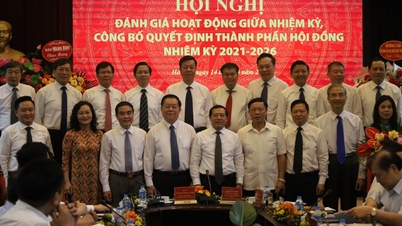
In this context, the role of the Economic and Financial Committee is not only to technically review draft laws and resolutions on economics, finance, and the budget, but more importantly, to provide strategic advice to the National Assembly in areas with the biggest bottlenecks. For example, in the field of public investment, it is necessary to clearly distinguish between necessary control procedures to prevent losses and cumbersome procedures that only slow progress and increase compliance costs. Regarding the capital market, strengthening investor confidence should not only rely on handling violations, but more importantly, on building a mechanism for full and transparent information disclosure to ensure a healthy market operation. In budget management, there must be genuine decentralization, granting sufficient autonomy to capable localities, while closely linking it to accountability and effective oversight mechanisms.
Ultimately, competition between nations is a competition of institutional quality. Opportunities will belong to those nations that reform faster, build "smarter" and more transparent institutions, maintain discipline while paving the way for development, and create conditions for resources to be allocated, managed, and used in the right place at the right time.
Financial discipline and the aspiration for growth are not two opposing goals. On the contrary, they are two inseparable conditions for sustainable development. Without strict discipline, sustainable growth is difficult to achieve. But if policies lack flexibility, discipline can easily become a barrier to innovation and development. The meeting point of these two requirements is the quality of institutions.
In a period when the country needs to accelerate and make breakthroughs, the National Assembly must not only enact laws, but also truly become the entity that creates the institutions for development. The mechanisms built today, as directed by the Chairman of the National Assembly, will determine the ability to mobilize resources, seize opportunities, and realize the aspirations for national development.
Source: https://daibieunhandan.vn/giu-ky-cuong-mo-duong-phat-trien-10417776.html




























































































Comment (0)