

In the traditional Vietnamese cultural life, festivals typically consist of two closely intertwined parts: the ceremonial part and the celebratory part. While the ceremonial part expresses gratitude to ancestors and prominent figures who have contributed to the homeland, the celebratory part is a space for community cultural activities, where folk cultural values are vividly recreated. This combination is what gives festivals their enduring vitality in social life.
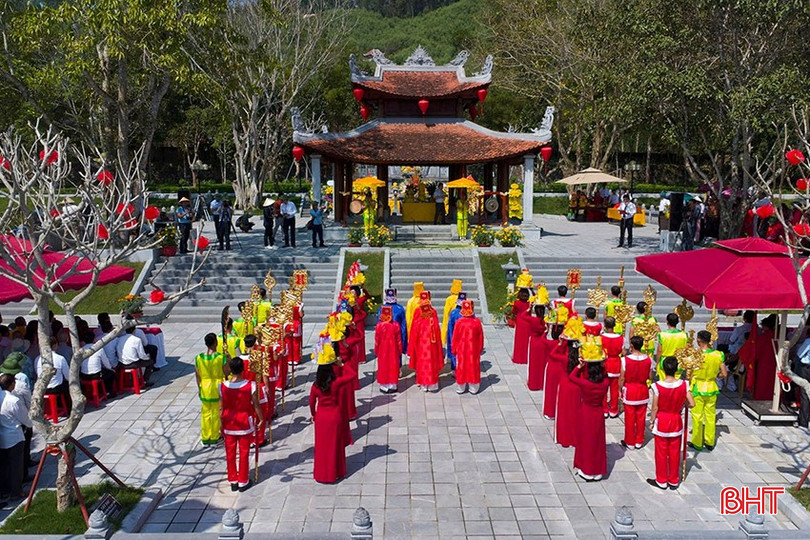
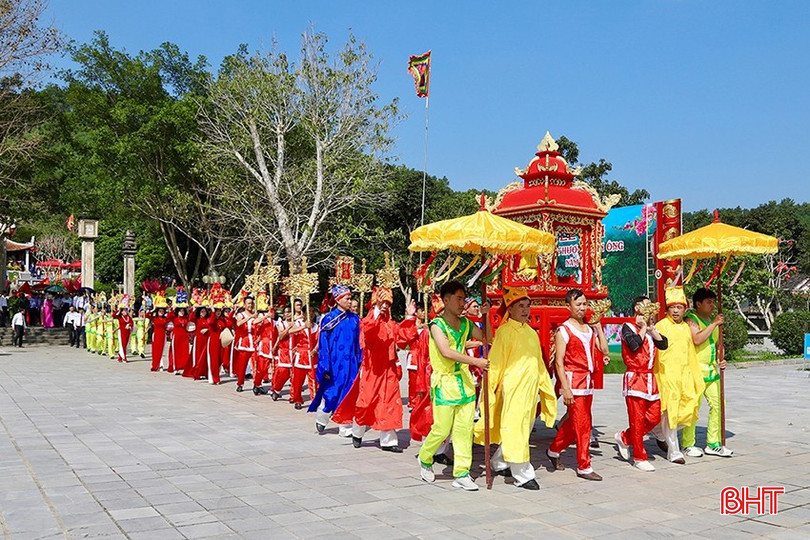
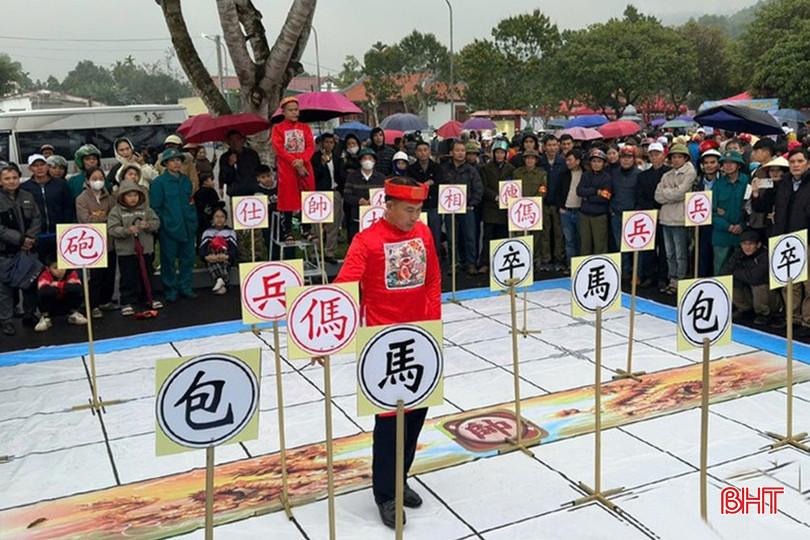
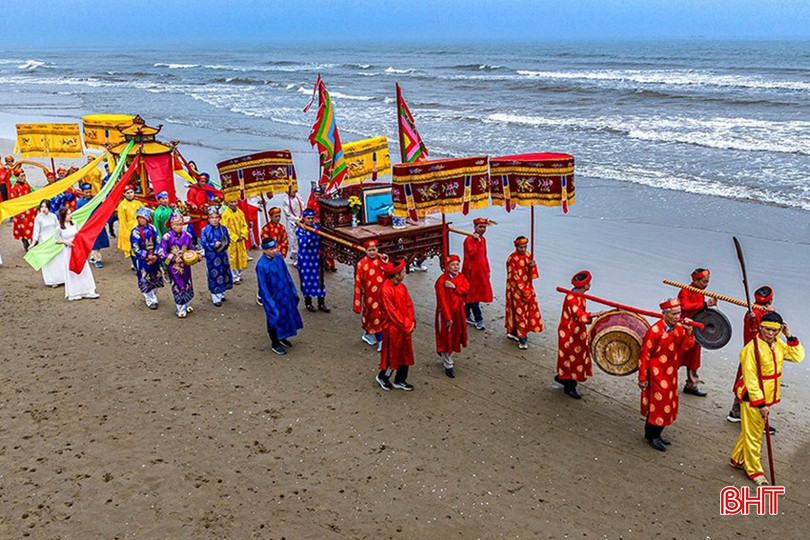
Along the more than 130 km coastline of Ha Tinh province, many villages have long had festivals associated with maritime life. The coastal areas are not only a source of livelihood but also a unique cultural space, where distinct beliefs and customs are formed. Therefore, festivals in coastal villages often bear the strong imprint of fishermen's lives with rituals praying for a good catch, offering sacrifices to the Whale God, and folk performances reenacting the journey out to sea...
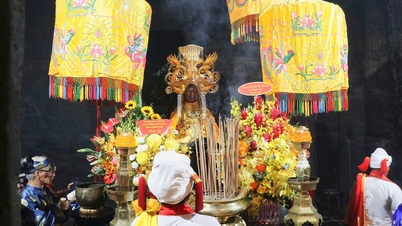
During those festival days, there was not only the scent of incense at the communal houses, temples, and shrines, but also the sound of drums, chants, and performances deeply rooted in the maritime culture. The elderly participated in traditional rituals, while young men joined teams for boat races, wrestling, tug-of-war, human chess, and stilt walking. All of this created a vibrant village festival atmosphere, and every villager became a part of the celebration.
In the coastal area of Cua Nhuong (Thien Cam commune), every year, when the Nhuong Ban Fishing Festival arrives, the sound of drums resounds joyfully by the sea. For the residents of the fishing village, this is not only an occasion to pray for favorable weather and safe voyages, but also a festival for the entire community.
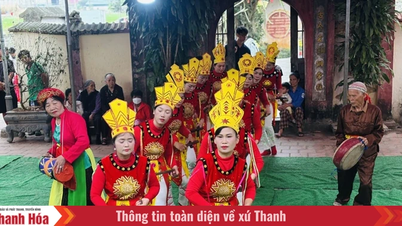
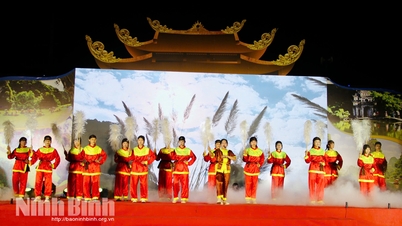
In that setting, the "Ho Cheo Can" (rowing chants) become a distinctive highlight. This folk performance combines folk songs, folk dances, and rituals, recreating the journey of fishermen setting out to sea. The rhythmic rowing symbolizes the boat overcoming the waves, the simple chants tell of the working life in the fishing village, blending with the sound of the festival drums to create a cultural space that is both sacred and intimate.
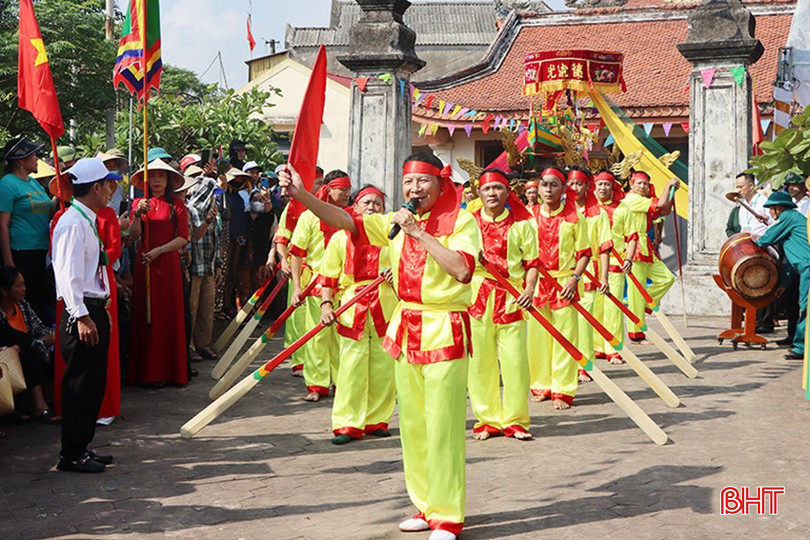
"Ho Cheo Can" is a form of folk performance combining folk songs, folk dances, and rituals, recreating the journey of fishermen setting sail during the Nhuong Ban Fishing Festival in Thien Cam commune.
Having been closely associated with the village's traditional folk opera troupe for many years, folk artist Hoang Ngoc Chung is considered one of the people who has preserved quite a complete collection of ancient folk opera melodies of the Cua Nhuong region. Besides his daily work on fishing boats, he still dedicates time to collecting folk songs from the elders in the village and passing them on to the younger generation.
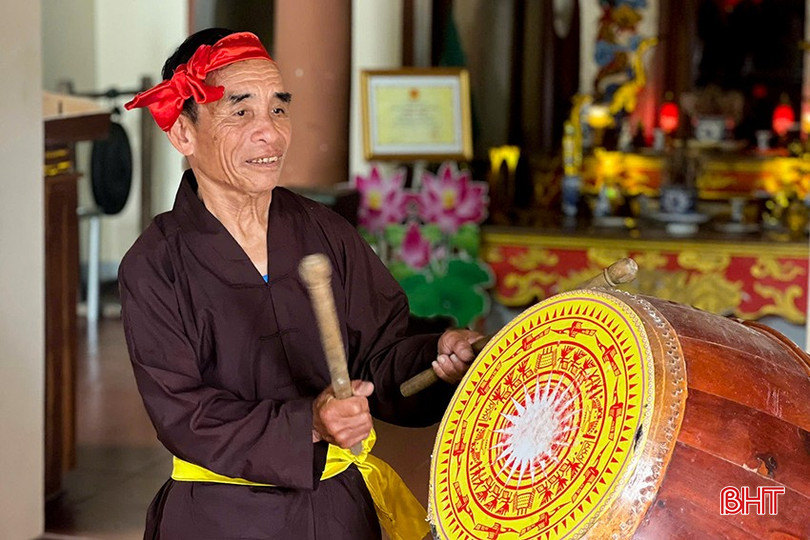
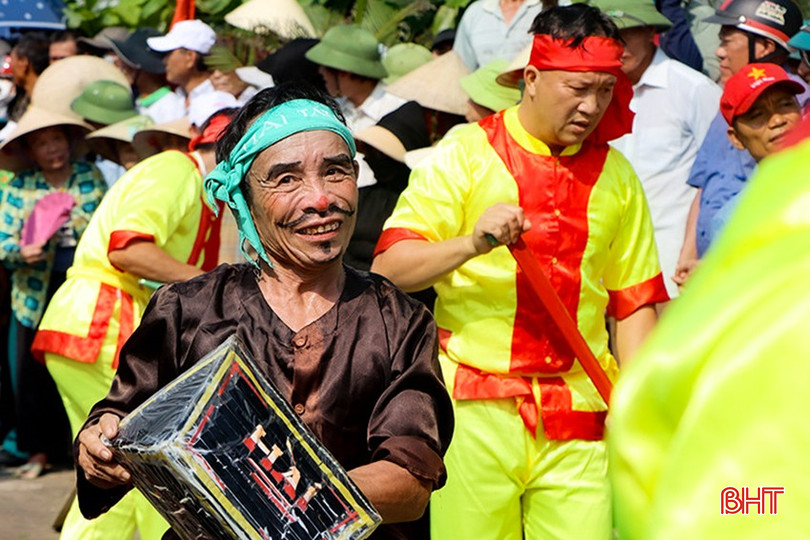
“Dry rowing is a long-standing cultural tradition of our coastal village. Every festival season, the villagers gather to practice and perform. I have participated in dry rowing since 1978, mastering the role through learning and accumulating experience from previous generations. Currently, the festival still receives enthusiastic participation from the younger generation, and I am always ready to share and teach them the old songs and melodies so that traditional culture can be continued and present in community life,” shared artisan Hoang Ngoc Chung.
Not only in coastal villages, but many other traditional festivals in Ha Tinh province are also being preserved and maintained by the community. According to statistics from the cultural sector, the province currently has nearly 100 traditional festivals of various sizes, of which about 67 are still held annually, mainly in the spring - the season of new beginnings and aspirations.
Each festival is associated with a historical story, a significant figure, or an event meaningful to the community. Typical examples include the Hai Thuong Lan Ong Le Huu Trac Festival, the Huong Tich Pagoda Festival, the Bao An Do Dai Ngu Su Bui Cam Ho Festival, the Che Thang Phu Nhan Nguyen Thi Bich Chau Temple Festival, the Le Khoi Temple Festival, etc.
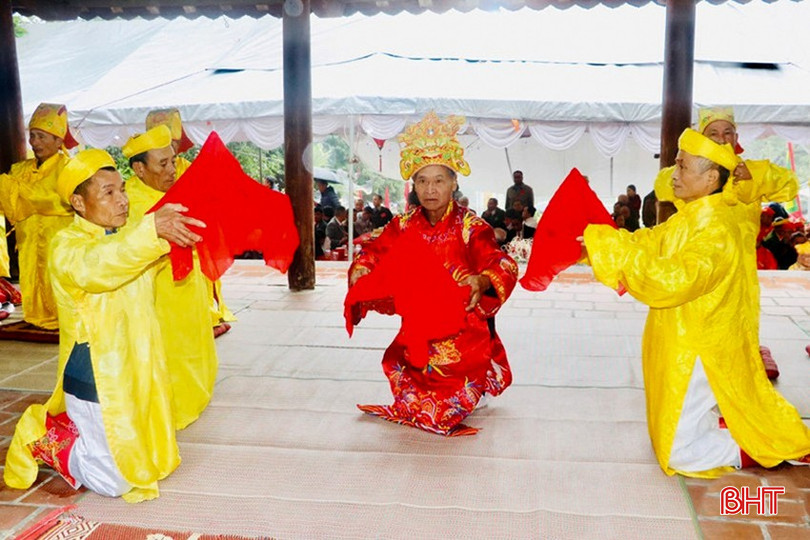
It is noteworthy that in many festivals in Ha Tinh, the community always plays a central role. Those participating in the procession, those performing the ceremonial rituals, those practicing folk performances, those preparing offerings… all contribute to creating the atmosphere of the village festival – a cultural activity that is both sacred and intimate.
Mr. Nguyen Tien Thich – Vice Chairman of the People's Committee of Huong Son commune, and chief officiant of the Hai Thuong Lan Ong festival – said: “To ensure the festival is solemn and in accordance with tradition, before each festival season we organize preparations and practice the rituals very carefully. More importantly, the participation of the local people is crucial, because the community is the main subject of the festival.”
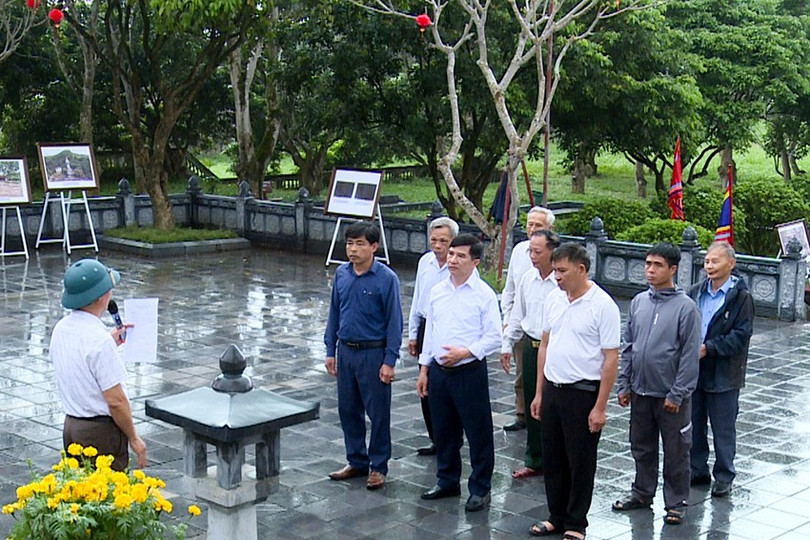
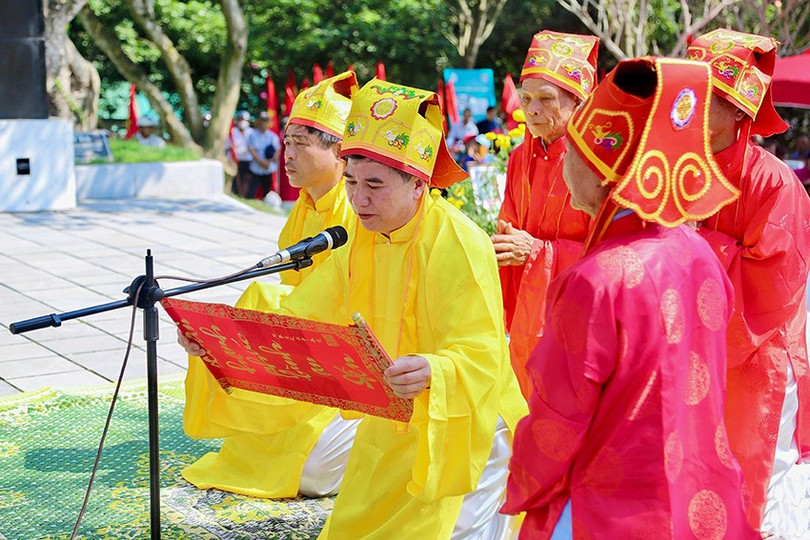
In modern life, many festivals have faded and disappeared. And behind these lively celebrations and solemn, culturally rich rituals lies the silent contribution of researchers and cultural workers. For many years, through field trips to rural villages, many cultural officials and researchers have persistently collected source materials related to festivals such as royal decrees, legends, genealogies, funeral orations, as well as recording the oral traditions and memories of elders in the community.
From these seemingly fragmented pieces of documentation, the history of many festivals is gradually being reconstructed; the rituals, processions, and folk performances that had been interrupted over time are being compared, restored, and perfected. This quiet work has contributed to the gradual restoration of many traditional festivals in Ha Tinh, bringing them back into community cultural life with an increasingly complete and standardized appearance.
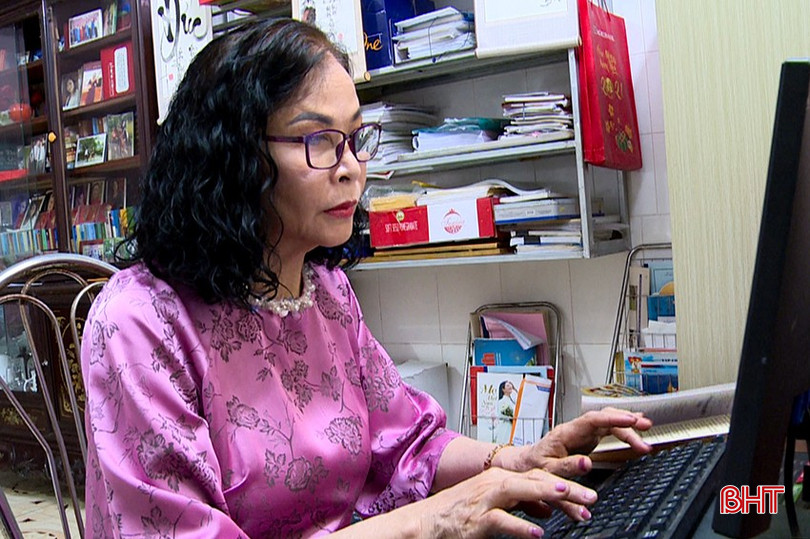
Cultural researcher Phan Thu Hien – former Deputy Director of the Department of Culture, Sports and Tourism of Ha Tinh province – shared: “Having participated in the restoration of many festivals, I find that fieldwork and document collection are only the first steps. More importantly, it is necessary to compare and select elements to restore the true spirit of the traditional festival. Furthermore, a festival cannot exist only in documents or restorations; it must be practiced and continued by the community through each season. When people understand and voluntarily participate in preserving it, only then will the heritage truly come alive.”
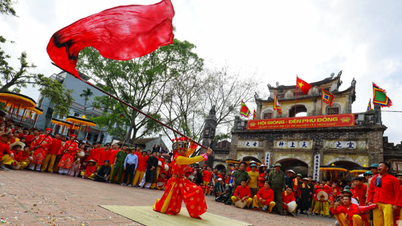
From solemn rituals in the village square to the lively rhythm of rowing at the sea, from exciting boat races on the river to human chess games in the village square… all are creating an enduring cultural stream in the land of Ha Tinh. Therefore, keeping the flame of village festivals alive is not just about preserving a festival season, but also about preserving the cultural soul of each village in the flow of time.
Traditional festivals are not only spaces for cultural and religious activities of the community but also contain many unique historical and cultural values of the locality. Therefore, preserving and promoting these festivals is very important, not only for preserving heritage but also contributing to the creation of distinctive cultural and tourism products. In this process, folk artisans, cultural workers at the grassroots level, and local communities play a key role. They not only possess ancient rituals and folk melodies but also pass these values on to future generations, helping the festivals continue to be maintained and developed in contemporary life.
Source: https://baohatinh.vn/giu-lua-hoi-que-post306970.html











































































Comment (0)