


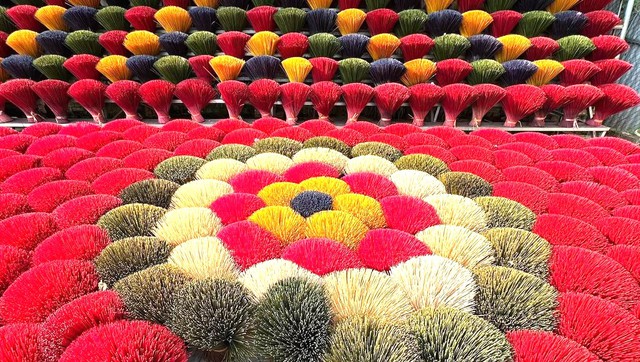
The incense stick making village of Quang Phu Cau is at its busiest time of year. Photo: VGP/TL
For Mr. Nguyen Tien Thi, Director of the Xa Cau Village Incense Production Cooperative, Tet (Lunar New Year) is not only a time for family reunions, but also a season of responsibility. Responsibility to the family craft, to the artisans, and to a cultural value that has accompanied the Vietnamese people through countless springs.
Quang Phu Cau is a traditional incense-making village with a history spanning many generations. The craft has been passed down through generations and is deeply intertwined with the spiritual life of the Vietnamese people. In 2003, Thao Cau black incense village was recognized by the State as a traditional craft village – a significant milestone affirming the value of the craft amidst the flow of modernity.
Mr. Thi's family has been making incense for three or four generations. He himself has been directly involved in the craft for nearly 20 years. In 2016, he and other members established a cooperative with the hope of both preserving the craft, creating stable jobs, and conserving the values inherited from his ancestors.
In the days leading up to Tet (Lunar New Year), market demand surges. Mr. Thi said that this year's sales volume has increased by about 30% compared to last year, but it still hasn't met the demand. To keep up with orders, the cooperative has to work overtime in the evenings from 7:30 PM to 10:00 PM. Despite the hard work, for those in the trade, it's a source of joy – the joy of knowing that their traditional products are still well-received by the market.
The black incense from Thào Cầu has long been a cherished Tet (Lunar New Year) memory for many families. Just the faint scent of resin mixed with the incense smoke evokes images of the ancestral altar, the New Year's Eve feast, and the joyful reunions at the beginning of the year. Incense sticks are not simply a product, but a spiritual bridge connecting people to their ancestors and to cherished values.
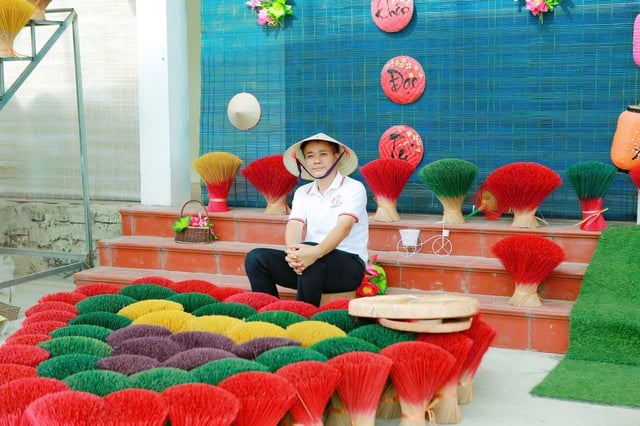
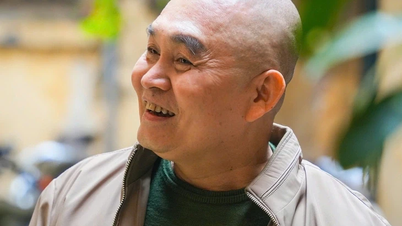
Mr. Nguyen Tien Thi's family has been making incense for three or four generations. Photo: Provided by the family.
Amid concerns about fragrances and chemicals, traditional Thào Cầu black incense still maintains its family recipe: resin from the Terminalia catappa tree and finely ground charcoal, without adding any other fragrances or chemicals. For Mr. Thi, making incense is a spiritual profession, and "heart" must be the top priority.
"Current consumer trends are shifting back towards traditional, safe products with clear origins," he shared. That's also why Xa Cau black incense is increasingly being chosen by consumers.
Having been in the profession for nearly 20 years, Mr. Thi has witnessed many ups and downs. There were times when consumption decreased, and he had to compete with industrial products. But for someone with a family tradition, abandoning the craft has never been an option. "If it's a family tradition, you have to love it and stick with it," Mr. Thi said.
Starting with 12 members, the cooperative gradually invested in machinery and standardized production processes. However, the traditional recipe remained unchanged. This combination of innovation and preservation ensured product quality while increasing productivity.
In the atmosphere of approaching spring, the image of bundles of red and pink incense sticks spread out in the sun in Quang Phu Cau has become a distinctive highlight. The sounds of rolling incense sticks and drying incense, combined with laughter and conversation, create a vibrant picture of a traditional craft village.
For Mr. Thi, each incense stick lit is a tribute to his ancestors, a wish for peace, well-being, and prosperity. Knowing that his product is used during the most sacred moments of the year, he and the cooperative members feel proud.
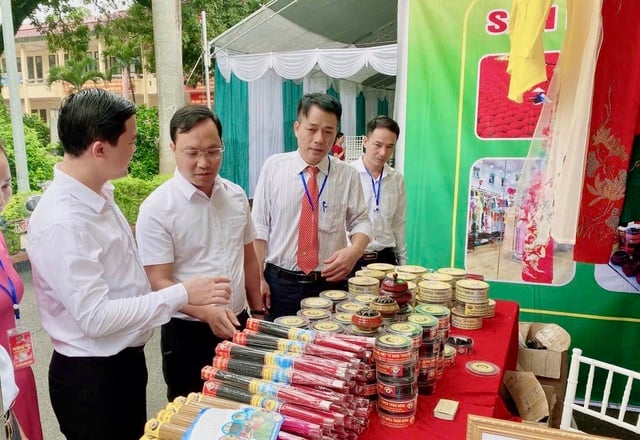
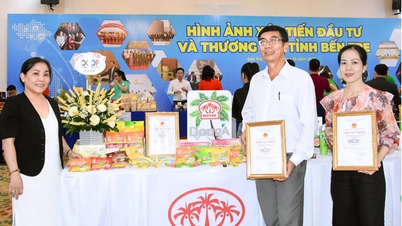
Quang Phu Cau incense sticks are sold at many fairs and exhibitions. Photo: VGP/TL
"As incense makers, knowing that our products are trusted and used by customers during Tet (Lunar New Year) makes us very happy. That's the motivation to continue preserving this craft," Mr. Thi shared.
Beyond just production, Quang Phu Cau incense village proactively opens tourist attractions, exhibition areas, and experiential activities right at the workshops. Visitors can not only buy products but also hear stories about the craft and directly participate in rolling incense sticks and drying incense. This simplicity and friendliness create a unique charm for this region.
The Quang Phu Cau incense stick making village tourist destination has been recognized by the Hanoi People's Committee, becoming a destination on the southern tourism route of the capital. Developing craft village tourism not only aims to exploit economic advantages but also serves as a solution for preserving heritage.
Not only incense making, but all craft villages in Ung Thien are striving to adapt to the new pace of life. In Vu Ngoai blacksmith village, the secret of "First, the sound; second, the shape; third, the water quality" is still passed down through many generations. Besides hand hammers and iron anvils, many households have invested in power hammers and electric fans to reduce labor. People are ready to innovate to ensure the long-term survival of their craft, but they also hope for planning, production space, and environmental solutions for sustainable development.
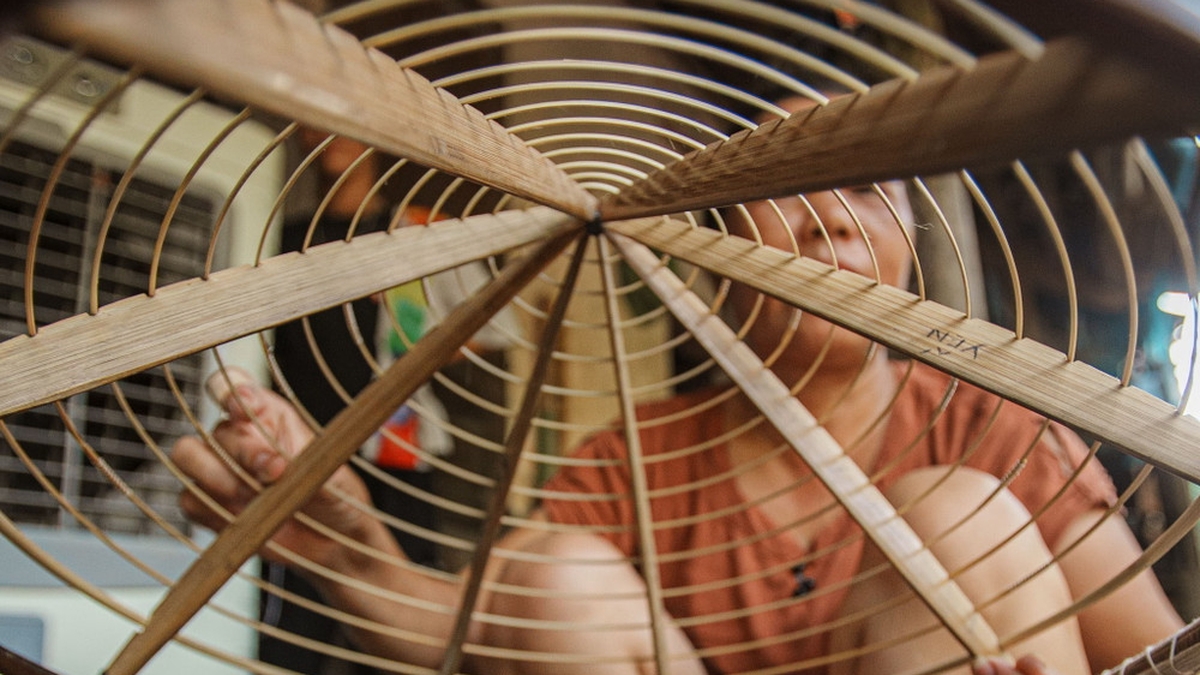
In Dong Vu village, slender bamboo strips are transformed by skilled artisans into baskets, trays, and other handicrafts. For Ms. Le Thi Hai, who has been involved in the rattan and bamboo weaving craft for many years, preserving the craft isn't about nostalgia, but about keeping it alive in today's life. With more visitors and experiences, and increased sales, the craftspeople are even more motivated to persevere.
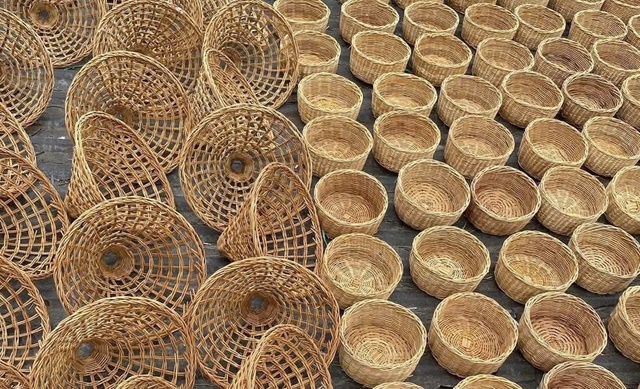
Slender bamboo strips, through the hands of skilled craftsmen, are transformed into baskets, trays, and other handicrafts. Photo: VGP/TL
Ung Thien commune currently has 13 craft villages recognized by the city. According to local leaders, these villages always know how to harmonize traditional values with the spirit of the times, creating products that are both deeply rooted in the countryside and commercially valuable. The implementation of the Xa Cau-Cau Bau Industrial Cluster Phase 2, aimed at relocating production facilities out of residential areas, is expected to solve environmental problems and create a favorable environment for tourism development.
As Tet approaches, amidst a plethora of modern products, traditional black incense sticks still hold a sacred place on the altars of every family. Behind that delicate wisp of smoke lies the sweat of the craftsmen, the perseverance of artisans determined to preserve their craft through countless ups and downs.
From the blacksmiths of Vu Ngoai, the rattan weaving of Dong Vu, to the incense of Quang Phu Cau, these symbols of traditional crafts are contributing to a new face for Ung Thien, where traditional values are not forgotten, but are "awakened" to become a driving force for development.
Thuy Linh
Source: https://baochinhphu.vn/giu-lua-lang-nghe-trong-nhung-ngay-xuan-moi-103260212123940751.htm

































































Comment (0)