


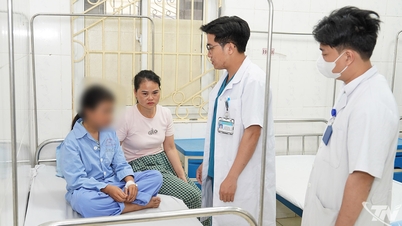
In reality, each emergency case in the Van Don Special Economic Zone is not only a race against time, but also requires coordinated efforts from multiple forces. A typical example is the case of patient GAT (32 years old, residing in Lao Cai ) who was admitted to Van Don Regional General Hospital on December 10th in a deep coma, suspected of pufferfish poisoning. According to family members, just a few hours after the meal, the patient experienced severe vomiting and fatigue, then quickly fell into a drowsy state and lost consciousness.
Upon admission, the patient was assessed at only 5 Glasgow Coma Scale points – indicating severe coma with a high risk of respiratory and cardiac arrest. Faced with this critical situation, the hospital's emergency team immediately implemented intensive resuscitation measures: endotracheal intubation, gastric lavage, sedation, mechanical ventilation, fluid administration, and close monitoring of vital signs. Thanks to timely and correct treatment according to protocol, the patient overcame the critical condition, was weaned off the ventilator, regained consciousness, ate well, and continued to receive care and monitoring in the Anesthesia, Resuscitation and Toxicology Department. This case once again affirms the crucial role of emergency care, especially the ability to react quickly during the "golden hour".
Dr. Nguyen Huy Tien, Director of Van Don Regional General Hospital, said: Currently, the hospital is organizing emergency care according to a continuous model: early reception - initial treatment - stabilization - safe transfer. The hospital maintains 24/7 emergency teams with doctors and nurses who are highly trained in emergency care, resuscitation, and trauma. Essential equipment such as ambulances, monitoring devices, ventilators, defibrillators, emergency medications, etc., are being gradually supplemented to meet the requirements for handling emergency situations.

For pre-hospital emergency care, especially in coastal and island areas, the hospital strengthens coordination with local health facilities, border guards, port authorities, and local governments. Early information gathering and the organization of transporting patients from island and remote areas to the hospital are implemented flexibly and appropriately to the actual conditions. However, compared to the increasing demand, the capacity for pre-hospital emergency care, particularly specialized maritime transport vehicles and highly skilled emergency medical personnel, still faces certain challenges.
The biggest challenge in emergency medical services in the Van Don Special Economic Zone is the vast area and the weather-dependent nature of sea transport, which can prolong the time it takes to reach patients and transport them to hospitals. This directly impacts the effectiveness of emergency care, especially in cases of stroke, serious accidents, poisoning, and acute respiratory failure. In response to this reality, the hospital has proactively implemented several solutions to shorten the "golden hour."
Specifically, the procedures for receiving, alerting, and managing emergency care have been standardized, ensuring that the on-call team is ready as soon as patients arrive at the hospital. The hospital is strengthening remote guidance and professional support for grassroots facilities in initial management, aiming to stabilize patients' conditions before transport. At the same time, emphasis is placed on training initial emergency care skills for medical staff in island communes, contributing to improved resuscitation effectiveness during patient transfers.
In the coming period, Van Don Regional General Hospital has identified improving the quality of emergency services as a continuous task. The hospital plans to invest in upgrading facilities and equipment, especially out-of-hospital emergency vehicles suitable for the island and coastal terrain; to provide in-depth training for emergency and resuscitation teams, and gradually form mobile emergency teams. Simultaneously, it will strengthen professional linkages with grassroots healthcare, and apply information technology and telemedicine in receiving information, providing advice, and directing emergency services.
Source: https://baoquangninh.vn/giu-thoi-gian-vang-trong-cap-cuu-3390043.html












































































Comment (0)