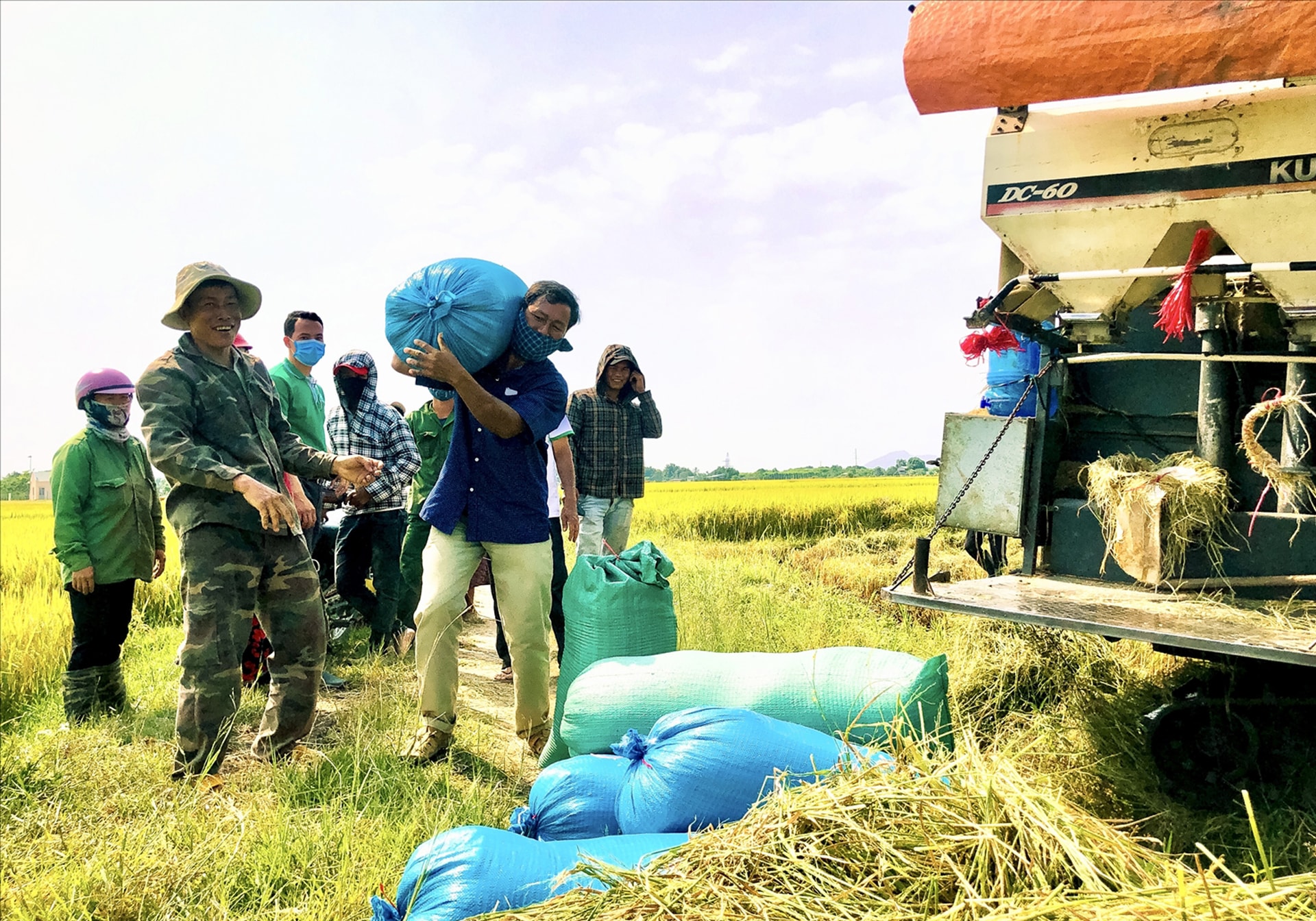
Gia Lai is a mountainous province in the Northern Central Highlands region with a natural area of 15,510 km2, home to 44 ethnic groups and a population of over 1.56 million people; of which ethnic minorities account for approximately 46.23%. The province has 17 district-level administrative units (1 city, 2 towns, and 14 districts), 220 commune-level administrative units (182 communes, 28 wards and townships), and 1,576 villages and hamlets; including 1 poor district, 43 particularly disadvantaged communes, 7 border communes, and 384 particularly disadvantaged villages and hamlets. The lives of ethnic minorities in remote areas remain challenging.
According to Ms. Pham Thi Lan, Permanent Vice Chairwoman of the Gia Lai Provincial Fatherland Front Committee, in recent years, the Provincial Fatherland Front has continuously innovated the content and methods of disseminating information about the purpose and significance of the campaign "Changing mindsets and practices among ethnic minority communities to gradually overcome poverty sustainably" to all levels of the population. This has been achieved through the issuance of 11,884 copies of the Campaign Propaganda Handbook to propaganda officials in the province; printing propaganda banners about the campaign's contents to be displayed in community centers; integrating propaganda and mobilization efforts into community meetings, self-governing group meetings, people's organizations' activities, and organizing talks and thematic activities. Following the motto "Going to every alley, knocking on every door," the Fatherland Front at all levels in the province has directly propagated, mobilized, advised, guided, and provided hands-on support to awaken the self-reliance of poor ethnic minority people, promptly commending exemplary individuals and real-life examples to guide the people in learning and following their example.


Given the specific characteristics of the locality, the Fatherland Front of Gia Lai province has focused on promoting the role of influential and exemplary individuals among ethnic minority communities to participate in disseminating information and mobilizing people to actively respond to and implement the campaign associated with building new rural villages and establishing model households for ethnic minority communities to learn from and follow. A prime example is Mr. Ksor Ry (Bon So Ma Long village, Ia Peng commune, Phu Thien district), who actively coordinated with village officials to mobilize people to relocate and rearrange over 60 houses according to the planned locations, persuaded 74 households in the village to move their cattle sheds from under their houses, and encouraged people to raise their sense of responsibility in using state-invested infrastructure. Mr. Nay Lun (Chu Ngoc commune) and Mr. Ksor Lip (Buon Du, Ia Mlah commune, Krong Pa district) have actively propagated and encouraged people to adopt civilized lifestyles in weddings and funerals, preserving the cultural identity of their ethnic groups… As a result, to date, the entire province has 127 ethnic minority villages recognized as meeting the standards of new rural areas.
Over the past five years, the Fatherland Front at all levels in the province has focused on surveying and developing 713 models with 80,337 participating households and replicating 324 models with 14,238 participating households. Examples include the "Grafted Banana Planting" model, the "Security Camera" model, and the "Lighting" model of the Fatherland Front Committee of Kbang district; the "Single Variety Rice Field" model and the "Relocation of Livestock Farms from Under Stilt Houses" model of the Fatherland Front Committee of Phu Thien district; and the "Cultivation Under Forest Canopy" model and the "Commercial Goat and Bamboo Rat Raising, and Litsea Cube Nursery" model of the Fatherland Front Committee of Dak Doa district…
“The results of the campaign, linked with programs and movements launched by the Fatherland Front and mass organizations over the past five years, have helped over 10,609 ethnic minority households stabilize their lives, create conditions to rise out of poverty, change the appearance of many ethnic minority villages, preserve and promote good cultural identity and customs, improve environmental sanitation, maintain security and social order in residential areas, and contribute effectively to poverty reduction and the construction of new rural villages among ethnic minorities in the province,” said Ms. Pham Thi Lan.











































































![[Infographic] Pensions, social insurance benefits, and monthly allowances will increase from July 1, 2026.](https://vphoto.vietnam.vn/thumb/402x226/vietnam/resource/IMAGE/2026/06/29/1782695537956_bna_-anh-8888.jpeg)