


The DTM system is designed to aggregate data on connectivity, data sharing, transaction volume, usage levels, and operational efficiency of information systems supporting electronic transactions.
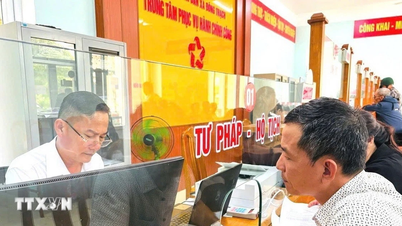
During the implementation of online public services, one of the biggest drawbacks is the fragmented and uninterconnected nature of data, forcing citizens and businesses to repeatedly provide information they already have. Circular No. 12/2025/TT-BKHCN, issued on July 11, 2025, has provided a technical framework to overcome this situation by establishing and operating a system for receiving and aggregating data to serve state management of electronic transactions (DTM).
Reduce information duplication and increase the utilization of existing data.
A notable aspect of the Circular is that the DTM system allows for the collection, aggregation, and connection of data from various sources, including information systems serving electronic transactions, national databases, specialized databases, and related digital platforms.
According to regulations, the data, once connected and aggregated, will be used for unified analysis, statistics, reporting, and management purposes. This provides a basis for government agencies to limit requests from citizens and businesses to re-provide information already present in the system, gradually reducing duplicate paperwork and unnecessary procedures in electronic transactions.
In the long term, as data is seamlessly integrated across systems, online administrative procedures are expected to become more fluid, contributing to shorter processing times and reduced compliance costs for businesses.
Enhance the ability to monitor and manage electronic transactions.
Circular 12 also sets out specific requirements for monitoring, compiling statistics, and reporting on electronic transaction activities through the DTM System. This system is responsible for aggregating data on connectivity, data sharing, transaction volume, usage levels, and operational efficiency of information systems serving electronic transactions.
This information helps government agencies to promptly understand the operational status, detect early shortcomings, bottlenecks, or disruptions in the process of providing public services, and thus take appropriate corrective measures.
Another aspect considered progressive in the Circular is the clear regulation of how to connect and share data between the DTM system and the information systems of ministries, sectors, and localities. This connection can be made online, automatically, or through reporting, based on unified protocols and technical standards. This approach lays the foundation for controlled data sharing, effectively serving state management.
For businesses, especially those providing digital services and infrastructure, these regulations open up opportunities for deeper participation in the e-commerce ecosystem, while also facilitating the development of value-added services based on data.
Ensuring information safety and security.
Alongside the requirements for data connectivity and exploitation, Circular 12 places a strong emphasis on ensuring information security. DTM systems must fully comply with regulations on network information security, have mechanisms for logging access, monitoring, periodic inspection and evaluation, as well as incident response plans when necessary.
This is considered a key factor in building trust among citizens and businesses when conducting electronic transactions with government agencies, especially in the context where data is increasingly becoming a crucial asset in the digital economy .
Circular 12/2025/TT-BKHCN is not only technical in nature, but also lays the foundation for data-driven electronic transaction management. When data is connected, exploited, and centrally monitored, online public services will operate more stably, transparently, and efficiently.
Source: https://mst.gov.vn/go-nut-that-du-lieu-trong-dich-vu-cong-truc-tuyen-197260109073435542.htm

![[Image] Hanoi's urban life under the challenge of a "scorching hot" environment](https://vphoto.vietnam.vn/thumb/1200x675/vietnam/resource/IMAGE/2026/05/25/1779706979265_nang-nong-t5-2026-minh-duy-7-4636-jpg.webp)


![[Image] Close-up view of the interchange connecting the two expressways and Long Thanh Airport.](https://vphoto.vietnam.vn/thumb/1200x675/vietnam/resource/IMAGE/2026/05/25/1779703378210_ndo_br_z7863716673926-224453a31600126cce10622af6290afd-4549-jpg.webp)

























































































Comment (0)