

In the process of reform, institutions and laws always play a fundamental role in socio-economic development.
In the current era, as the country enters a period of deep integration, digital transformation, innovation, and increasingly fierce competition, the demands placed on institutions no longer stop at "managing properly," but must "pave the way for development."
A clear, transparent, stable, predictable, and consistently enforced legal system will unlock resources and strengthen the trust of citizens and businesses. Conversely, overlapping regulations, cumbersome procedures, unclear responsibilities, and inconsistent enforcement can transform institutions from motivators into obstacles.
The series of articles, "Unlocking Institutions to Awaken Internal Potential," focused on analyzing practical situations, highlighting achievements, and proposing solutions to perfect institutions so that they truly become a driving force for national development.
Lesson 1: Untangling institutional bottlenecks, paving the way for development.
The Vietnamese legal system has made significant progress, laying the foundation for innovation, integration, and growth. However, in the context of the rapidly evolving digital economy, green transformation, new business models, and the need for streamlined administrative systems, institutional shortcomings are becoming more apparent.
The problem is not just a lack of regulations, but rather the quality of regulations, the consistency between laws, the ability to organize their enforcement, and the level of convenience that citizens and businesses perceive in their lives.
From businesses to law enforcement agencies, from members of parliament to local governments, the same message is emphasized: for institutions to become a driving force, they must be clear, easy to implement, transparent, and consistent.
Removing institutional "bottlenecks"
Over the years, Vietnam has continuously revised, supplemented, and enacted numerous new laws to meet development requirements. This is a positive development, but in practice, a larger number of legal documents does not necessarily mean a smoother legal environment. When regulations change rapidly but guidelines are slow to be issued, when one law is open while another is restrictive, or when the same regulation is interpreted differently in each locality, compliance costs increase and development opportunities are hampered.
Analyzing this reality, Ms. Le Yen, Director of Hanoi Tax Consulting Company Limited, believes that Vietnam's legal system has been rapidly improving in recent years to meet the development of the economy and society. However, the bigger bottleneck lies in the implementation phase. In reality, the same regulation can be interpreted and applied differently by each locality, each agency, and even each official.
"Businesses don't fear strict regulations, but rather unclear regulations, inconsistent interpretations, and unpredictable processing outcomes. When documents are repeatedly requested for additional information, when enforcement agencies are hesitant to take responsibility, reluctant to make decisions, or have to wait for guidance, then the resources of businesses are 'stuck' in the process instead of being channeled into production, investment, and innovation," Ms. Le Yen emphasized.
Agreeing with the above viewpoint, Mr. Vu Hong Duong, Deputy Head of the Civil Enforcement Department of Hanoi, affirmed that the common "bottleneck" today stems from the fact that the legal system in general and the law on civil enforcement in particular still have some contents that are not truly in line with reality.
"Some cases involve very large amounts of money to be enforced, while the assets of the person obligated to fulfill the judgment are not commensurate with the obligation; in many cases, the assets have been disposed of, transferred, or their legal status changed before the judgment takes legal effect," said Mr. Vu Hong Duong.
According to Mr. Duong, some assets involved in enforcement proceedings have complex legal statuses, are subject to disputes, or have unclear ownership or usage rights; the handling of these assets must await the resolution of competent authorities, thus prolonging the enforcement process.
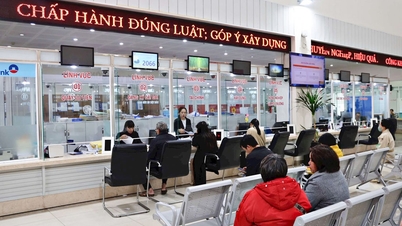
Many experts also affirm that legislation is no longer a distant matter of parliament or drafting agencies. The law determines whether a project can commence, whether a business can expand, and whether a citizen has to make multiple trips.
A good law not only needs to be correct in its administrative objectives, but it must also answer the questions: Do the people understand it? Can businesses implement it? Do officials dare to make decisions? And will the results create more favorable conditions?
Mr. Tran Duc Long, a senior specialist at the Law Research, Development and Dissemination Board (Vietnam Lawyers Association), emphasized that the legal system, and especially the organization of law enforcement, still has certain limitations and has not truly become a strong driving force for development.
According to lawyer Long, some regulations between laws and decrees overlap and contradict each other, especially in areas such as land, investment, construction, and environment. This leads to confusion in application, prolongs processing times, and increases compliance costs for businesses.
According to Mr. Tran Duc Long, the situation of "enthusiasm at the top, apathy at the bottom," and inconsistent implementation across localities, levels, and sectors, still persists. Discipline and order in law enforcement are sometimes lax; and the responsibility of leaders has not been fully exercised.
In some areas, there is still a situation of "both decentralization and seeking opinions," leading to prolonged processing times and reducing the initiative of local authorities and grassroots levels.
Analyzing the viewpoint from a policy perspective, National Assembly representative Nguyen Ngoc Son from Hai Phong city stated that people want the law to be clearer, more stable, and easier to implement. Many voters believe that the principles are very correct and the policies are very progressive, but their implementation is hampered by decrees, circulars, procedures, or differing interpretations among localities and agencies. An unclear regulation can delay a project, increase business costs, or force people to make multiple trips to complete a procedure.
Mr. Nguyen Ngoc Son assessed that the current difficulties include overlapping and inconsistent aspects in the legal system; some regulations prioritize security management for state agencies over facilitating convenience for citizens and businesses; and decentralization and delegation of power have not been coupled with control of power and protection of officials who dare to think and act.
Furthermore, the quality of policy impact assessments in some draft laws is still lacking in depth, failing to fully quantify compliance costs and not adequately forecast the impacts on citizens, businesses, and the state budget.
Dr. Bui Phuong Dinh, Deputy Director of the Academy of Public Administration and Management, believes that the current team of officials and civil servants has made significant progress, with improved training levels, better professional skills, a shift in management thinking from "management" to "service," and a greater ability to access international standards in public administration. Many officials and civil servants have proactively participated more deeply in the process of policy review and development, rather than just focusing on policy implementation.
However, according to Dr. Bui Phuong Dinh, the mindset regarding institution building has not kept pace with development requirements, still leaning towards administrative management and not paying enough attention to a development-oriented mindset. Institutions are not truly considered as tools to guide the market, promote innovation, and orient socio-economic development.
Increase accessibility
According to Ma Doan Khanh, Vice Chairman of the People's Committee of Lung Cu Commune (Tuyen Quang Province), Lung Cu is a border area facing many difficulties, often hampered by complex administrative procedures and a lack of development support mechanisms. When the legal system is adjusted towards transparency, focusing on the people and businesses, barriers are gradually removed, creating favorable conditions for investment, production, and services to develop.
“A well-developed institutional framework not only improves the business environment but also enhances the effectiveness of local government administration. Clear and accessible policies empower people to be more proactive in the economy, while increasing their access to public services. As a result, infrastructure, living standards, and the appearance of localities improve rapidly, becoming a powerful driving force for socio-economic development, narrowing regional disparities, and strengthening people's trust in policies,” Mr. Ma Doan Khanh emphasized.

Analyzing the effectiveness of an increasingly open and transparent legal environment for production and business activities, Deputy Minister of Justice Nguyen Thanh Tinh stated that while previously economic activities were mainly limited to the state sector and state-owned enterprises, the law has truly become a tool to "unleash" and create a legal framework for other economic sectors to participate in investment, production, and business during the reform period. This is not only a change in the operating mechanism of the economy, but also a fundamental shift in the thinking of state management through law.
"Entering a new stage of development, the mindset of 'laws that create development' is considered an essential requirement. Laws should not only play a controlling role, but also open space for innovation," Deputy Minister Nguyen Thanh Tinh analyzed.
He noted that a particularly noteworthy point is that the National Assembly recently authorized pilot mechanisms and special mechanisms, granting the Government a certain degree of autonomy to issue normative resolutions to promptly address issues arising from practice. In some cases, these resolutions may differ from the current provisions of laws, National Assembly resolutions, or ordinances. This is a new approach, demonstrating a strong innovative mindset in institution building.
Source: https://www.vietnamplus.vn/go-nut-that-the-che-mo-duong-cho-dong-chay-phat-trien-post1107889.vnp
































































































Comment (0)