

This place also houses the Tuệ Thành Assembly Hall of the Tuệ Thành (the old name for Guangzhou, China) Chinese community, belonging to the Guangdong province - the largest Chinese community in Cholon.
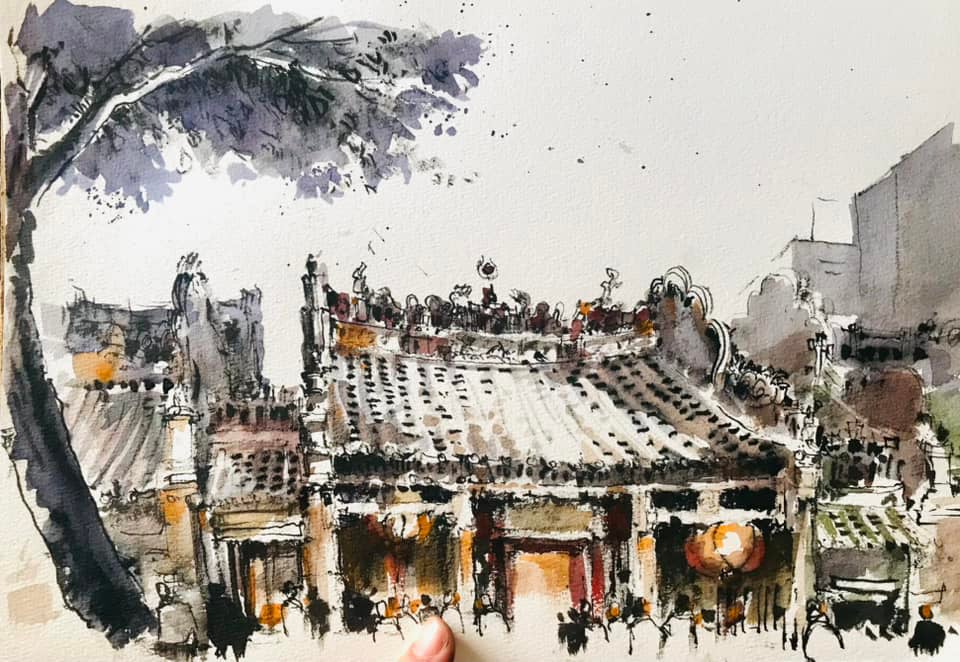
Sketch by architect Phan Đình Trung
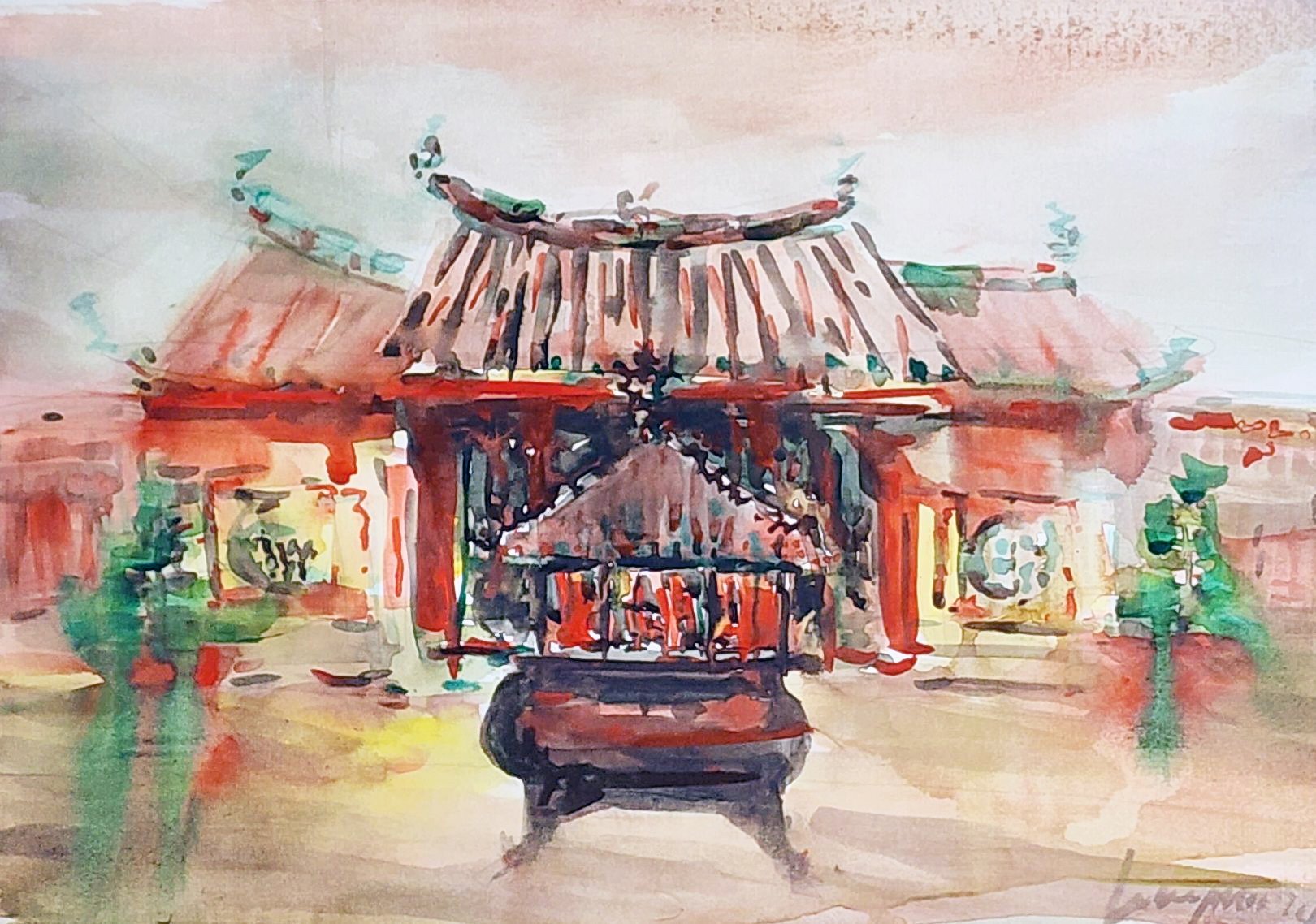
According to cultural researcher Nguyen Dinh, the temple initially had a floor plan in the shape of the Chinese character "口" (mouth), with a four-sided building and a central atrium. Unlike Vietnamese temples and shrines where the incense burning area is usually located behind or outside the main hall, Ba Temple placed the incense burning furnace right in front of the central hall, near the atrium. In 1908, the temple expanded with an additional atrium and a central hall. The columns and beams are adorned with couplets and large calligraphic inscriptions showcasing distinctive Chinese techniques such as calligraphy, carving, and gilding.
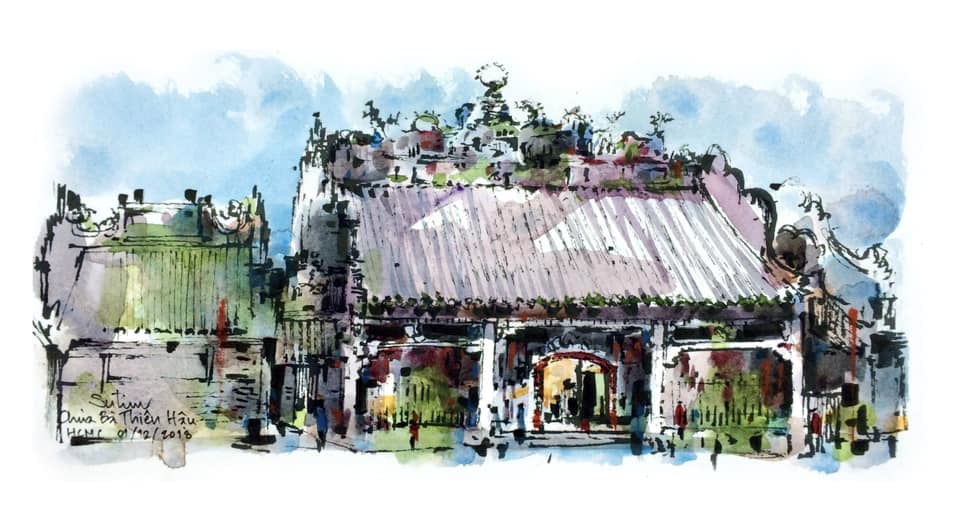
Sketch by Thai artist Sutien Lokulprakit
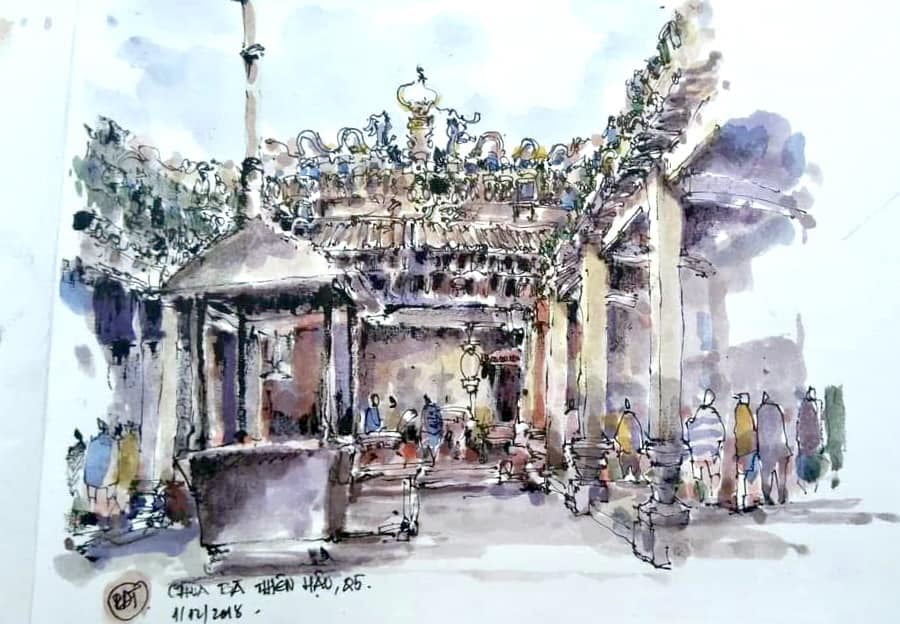
Sketch by architect Phan Đình Trung
Sketch by architect Phung The Huy
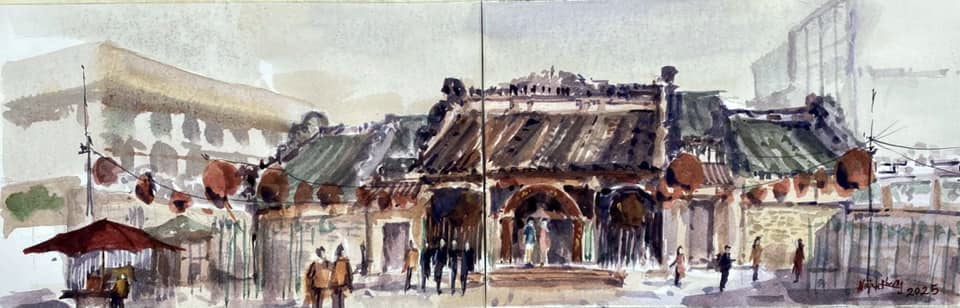
Sketch by Huynh Hoang Khang - student of Van Lang University
Ba Pagoda is notable for its reliefs and clusters of colorful glazed ceramic figures on the eaves, roof, and walls, based on ancient Chinese legends such as: Two Dragons Fighting for a Pearl, the Four Sacred Animals, the Eight Immortals Crossing the Sea, Fortune, Prosperity, and Longevity, and the Tang Monk and his disciples…
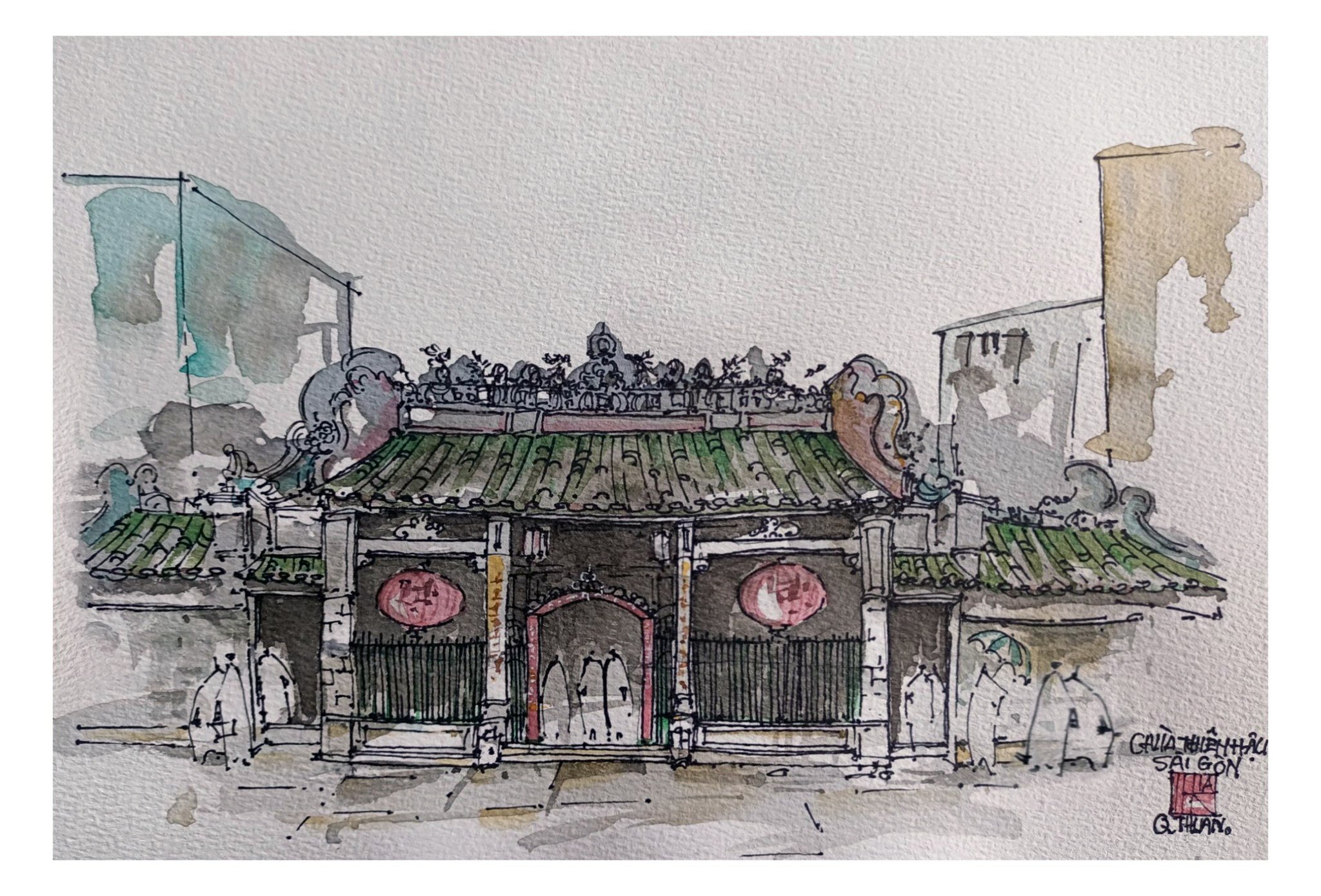
Sketch by student Ngo Quoc Thuan - Nguyen Tat Thanh University
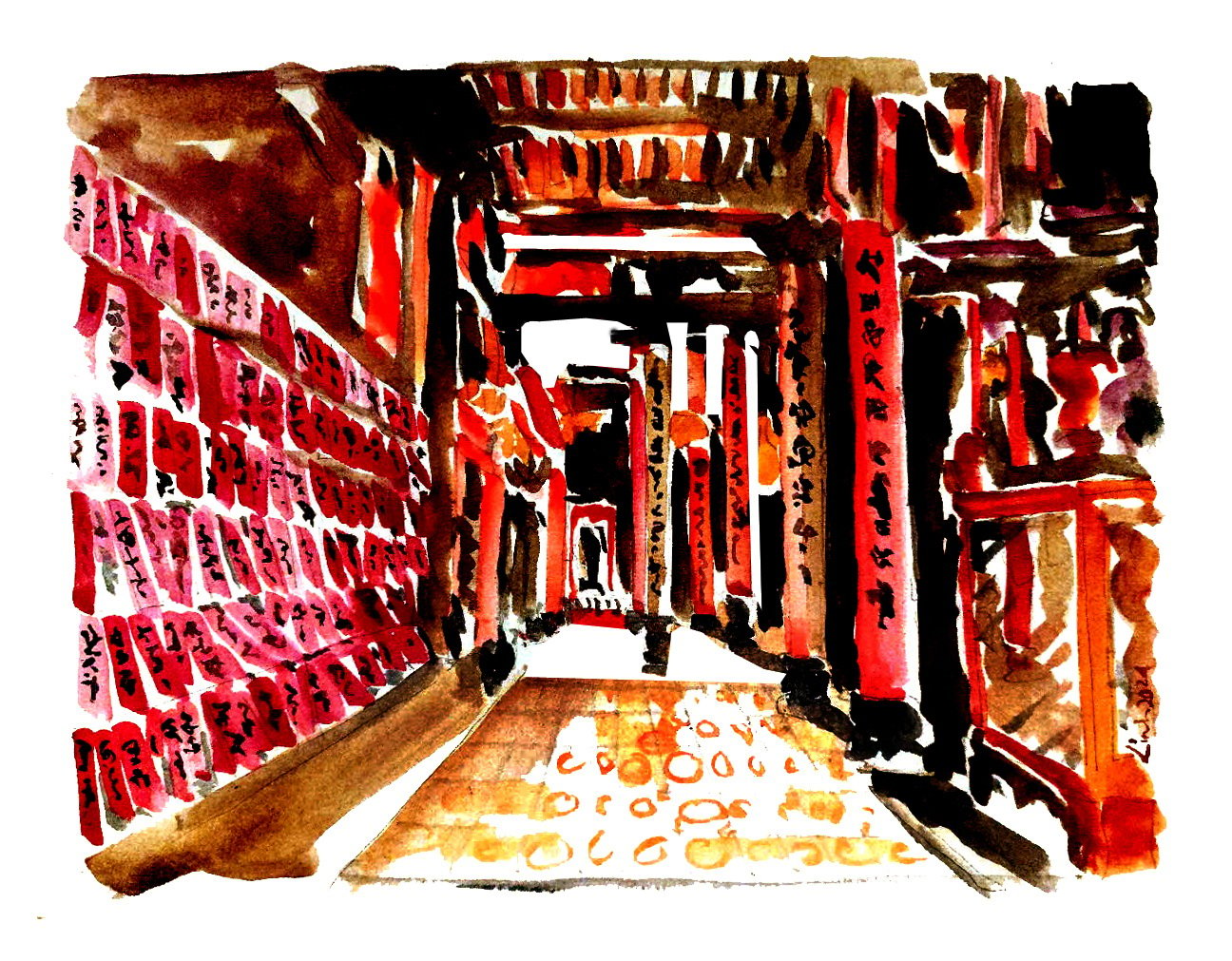
A place to display guests' wishes - a sketch by architect Linh Hoang.
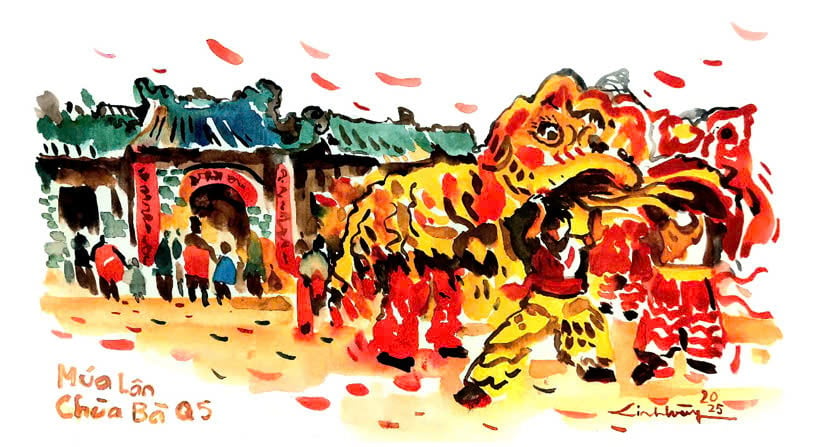
Lion dance at Ba Pagoda - sketch by architect Linh Hoang
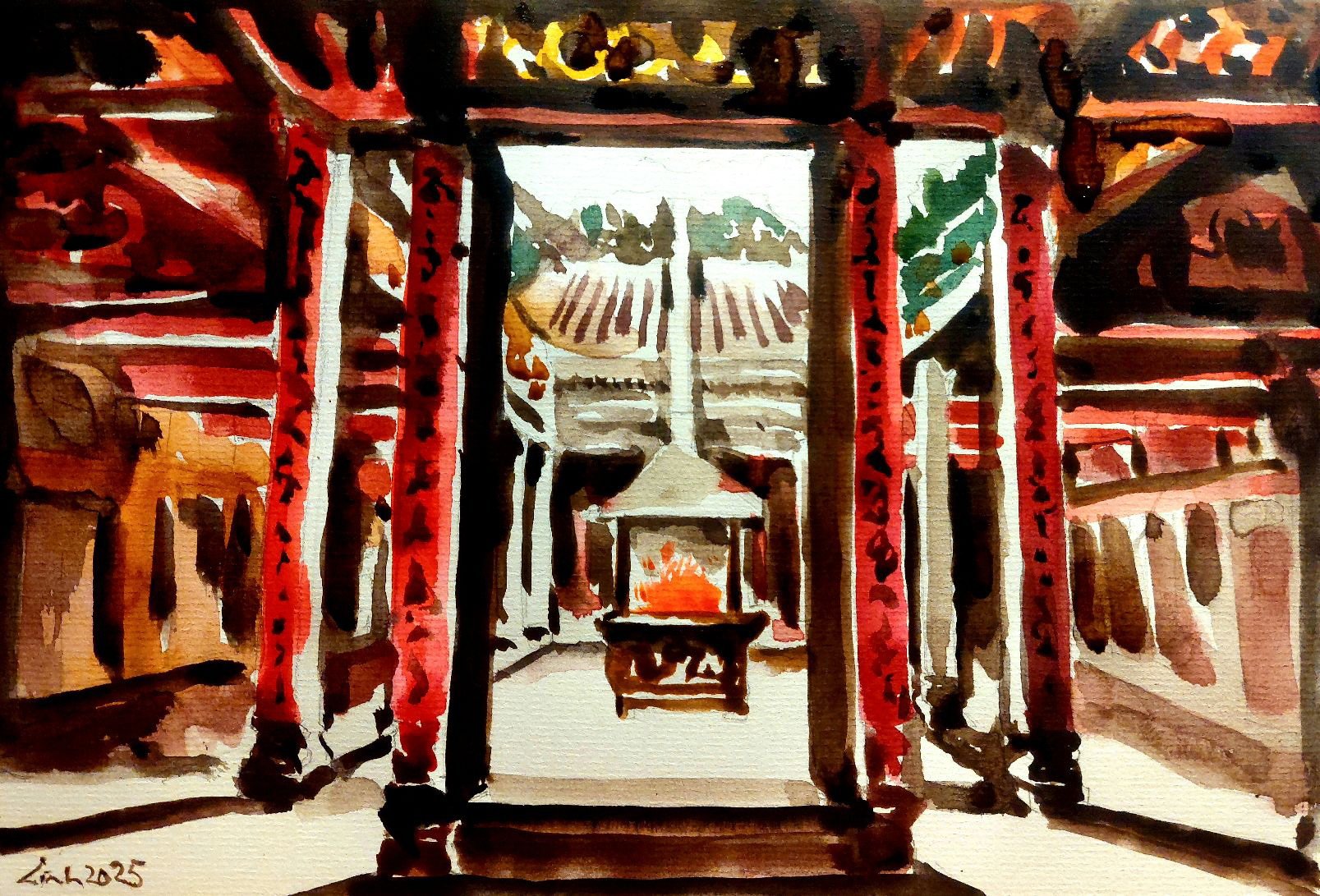
The courtyard of Ba Pagoda - a sketch by architect Linh Hoang.
Making decorative statues is a craft characteristic of Foshan, Guangdong, originating around the 16th century. It was introduced and developed in Cholon around the 19th century, with famous workshops at the time including Dong Hoa and Buu Nguyen. Decorative statues were primarily used to create a cheerful and welcoming atmosphere in sacred places. They were commonly found in temples, pagodas, and shrines in Cholon, Bien Hoa, Binh Duong, and the Mekong Delta, but the craft disappeared by the early 20th century.
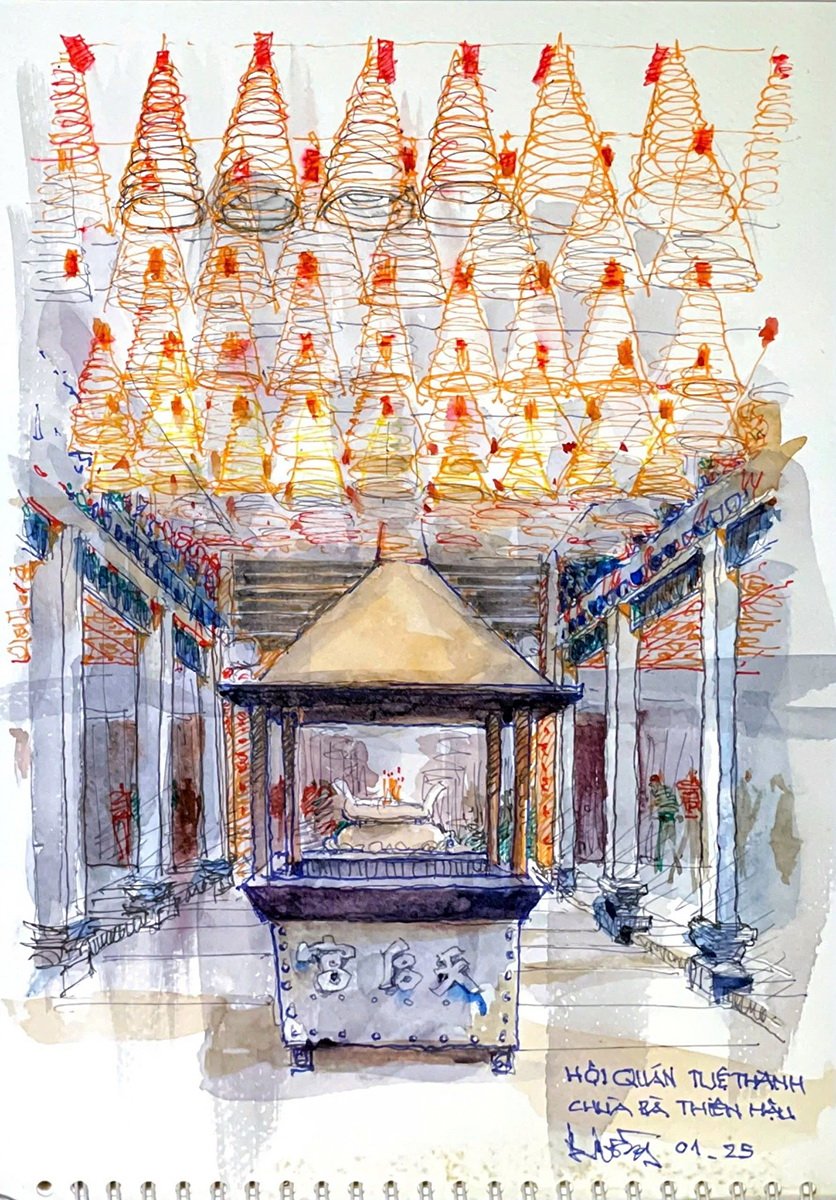
Incense burner located right by the skylight, in front of the main hall - a sketch by architect Tran Xuan Hong.
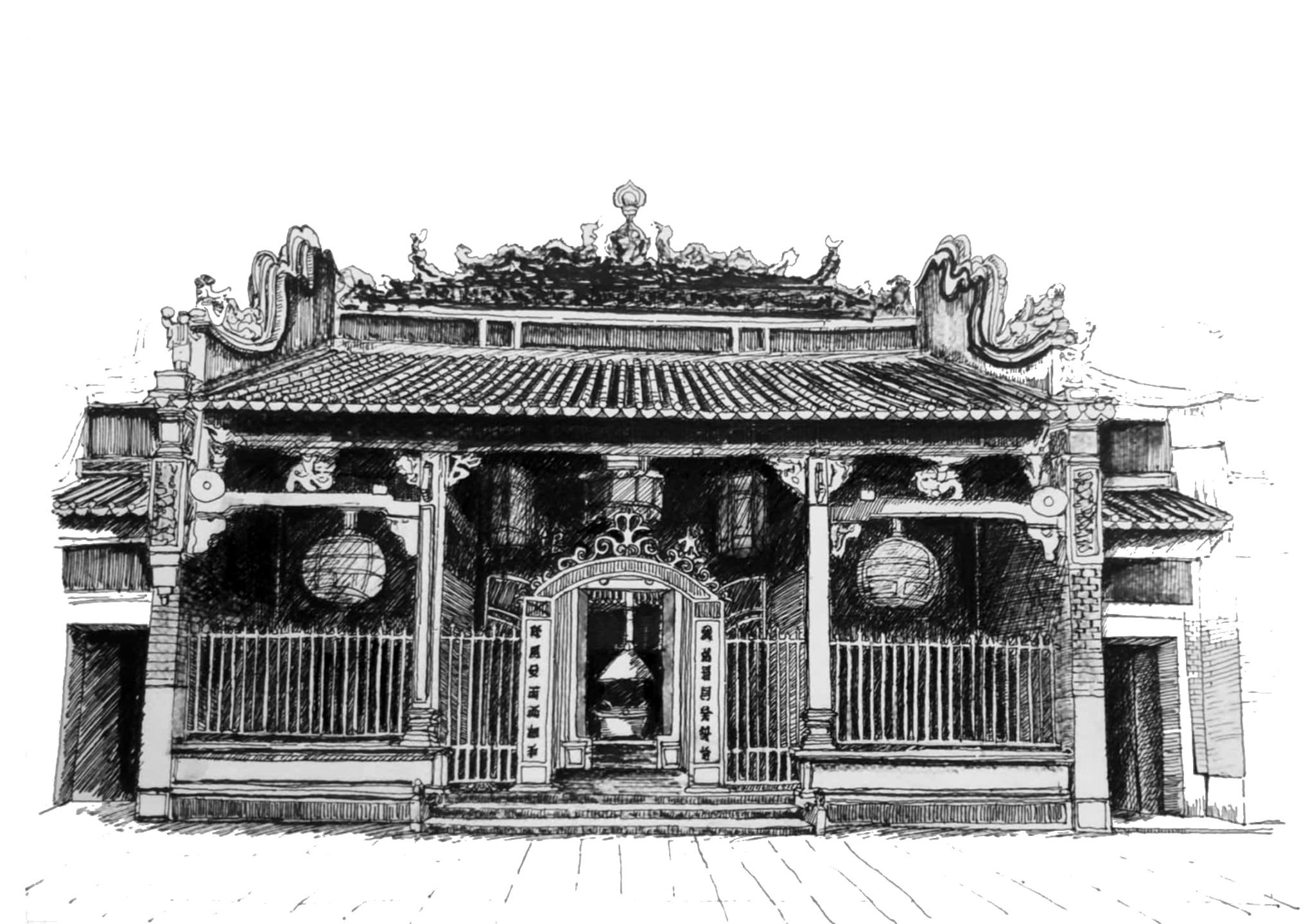
Sketches by Pham Ngoc Huy
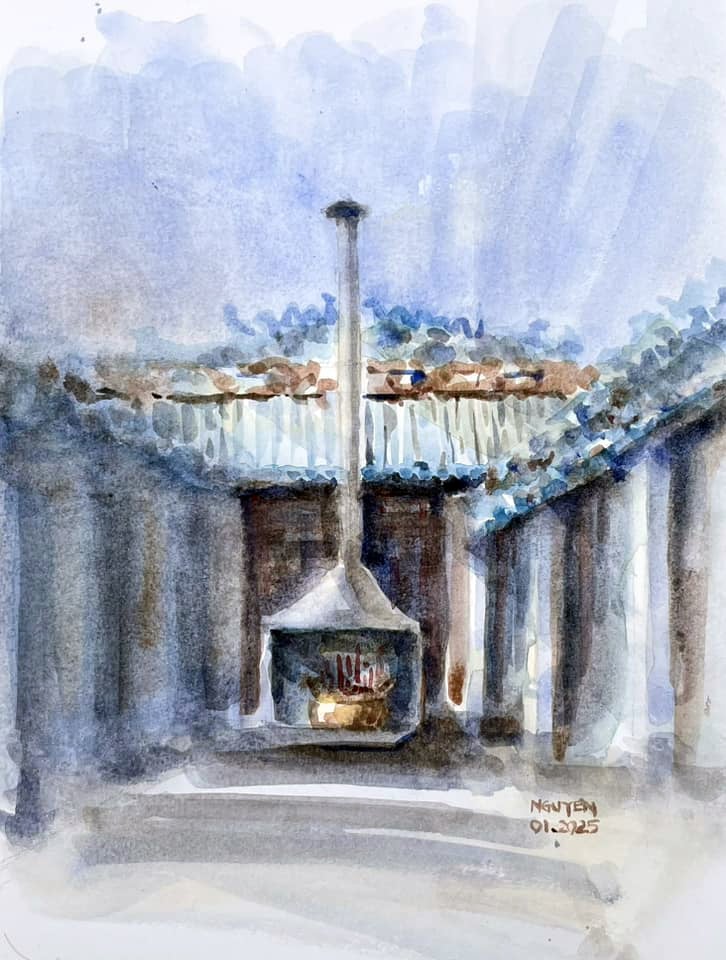
Sketches by architect Tran Thai Nguyen
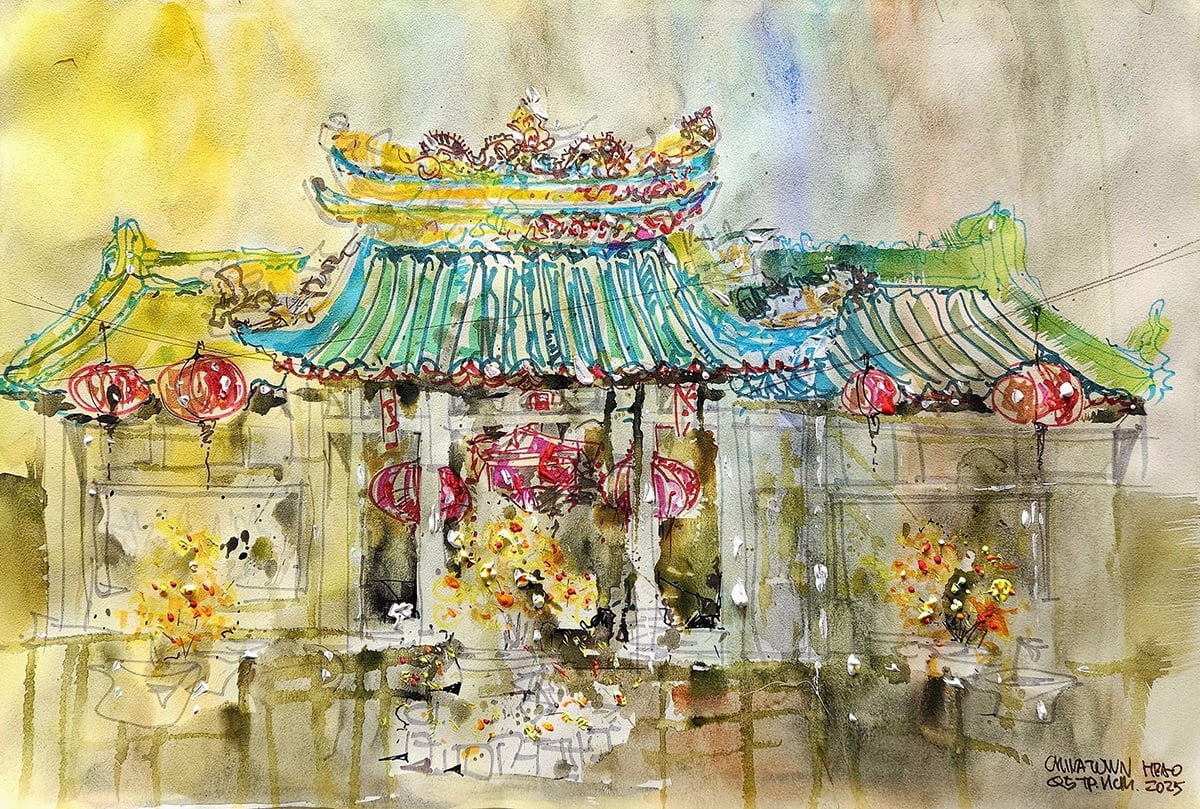
Sketch by architect Bui Hoang Bao
The temple still houses many valuable artifacts: a set of enamel bronze incense burners cast in 1886; a handwritten order from Captain D'Ariès prohibiting French and Spanish soldiers from destroying the temple; two large bronze bells cast in 1795 and 1830…
In 1993, Ba Pagoda was recognized as a national-level architectural and artistic heritage site.
(*): For the Chinese, the Heavenly Empress (real name Lin Mo Niang, born in 1062 in Fujian Province, China) is a benevolent deity who protects seafarers. People dedicate the 23rd day of the third lunar month each year to commemorate her, so this is also the main festival day of the temple.
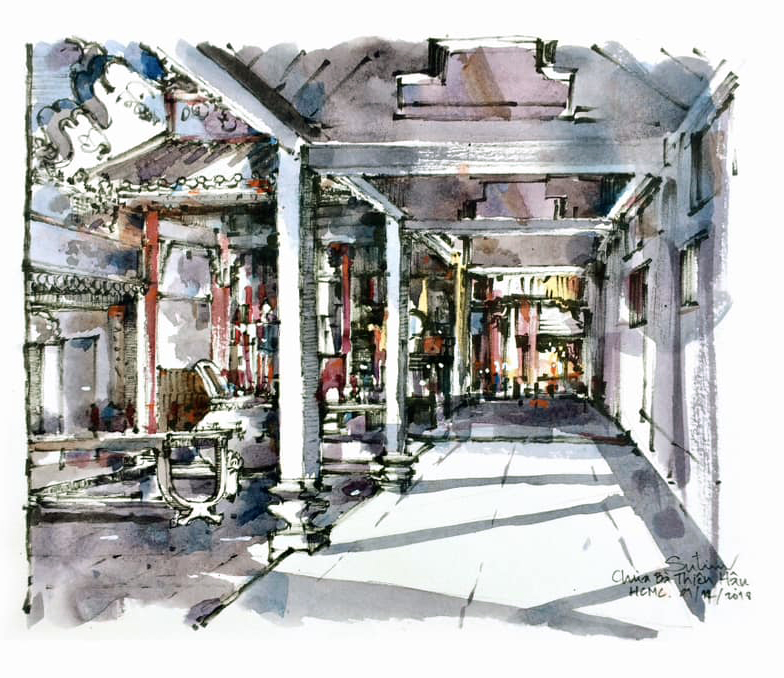
Sketch by Thai artist Sutien Lokulprakit
Source: https://thanhnien.vn/goc-ky-hoa-chua-ba-dau-an-hoa-kieu-quang-dong-18525020821423924.htm










































































Comment (0)