

Launched at Google I/O 2026 on May 19-20, Gemini for Science is a suite of experimental tools designed to support the scientific research process from idea generation to experimentation and literature analysis. This integration aims to reduce manual work in the discovery process, including hypothesis building, computational testing, and literature review.

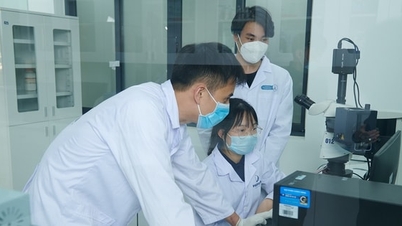
Gemini for Science helps accelerate scientific research.
PHOTO: GOOGLE
Google says access to this toolkit will be rolled out gradually through Google Labs, with a separate roadmap for enterprise organizations via Google Cloud. Although the tools are still in the early stages of development, Google has revealed some information about their key features.
Key features of Gemini for Science
Accordingly, Gemini for Science is built on three main features that make the research process more efficient than conventional chatbots. First, Hypothesis Generation allows searching across millions of articles, helping scientists generate new ideas with search results supported by clickable citations.
Computational Discovery is a feature that acts as an automated search tool capable of generating thousands of tests quickly, instead of requiring teams to design each experiment themselves. Finally, the Literature Insights feature helps researchers look up published works and convert findings into reports, infographics, audio summaries, or videos .

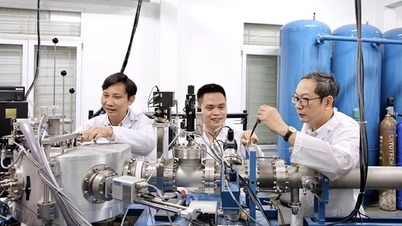
Gemini for Science will help researchers save time on scientific projects.
PHOTO: GOOGLE
In particular, Google also introduced the Science Skills feature, which allows users to extract information from more than 30 leading databases and research tools, thereby making the collection of experiments more useful for complex workflows.
Why Google is being cautious with Gemini for Science.
The launch of Gemini for Science is not just a new product, but part of Google's broader AI (artificial intelligence) research ecosystem, which includes projects like Co-Scientist, AlphaEvolve, ERA, and NotebookLM. If Google's AI can accelerate day-to-day tasks without sacrificing accuracy, it will free up labs to focus on evaluation and interpretation.
The limited deployment of Gemini for Science reflects Google's caution, as AI systems need to ensure accuracy, transparency, and reproducibility of results so that researchers can trust the information they receive.
The next challenge for Google is whether the company can make AI agents useful in real-world scientific processes.
Source: https://thanhnien.vn/google-muon-gemini-co-the-thay-doi-cach-nhan-loai-lam-khoa-hoc-185260521012902058.htm

![[Image] Hanoi's urban life under the challenge of a "scorching hot" environment](https://vphoto.vietnam.vn/thumb/1200x675/vietnam/resource/IMAGE/2026/05/25/1779706979265_nang-nong-t5-2026-minh-duy-7-4636-jpg.webp)


![[Image] Close-up view of the interchange connecting the two expressways and Long Thanh Airport.](https://vphoto.vietnam.vn/thumb/1200x675/vietnam/resource/IMAGE/2026/05/25/1779703378210_ndo_br_z7863716673926-224453a31600126cce10622af6290afd-4549-jpg.webp)
































































































Comment (0)