


The story of old man Bhling Nhơl is just a small glimpse into the journey of people in the mountainous western region of Da Nang city voluntarily donating land and gardens to support the local government in implementing public works projects serving the community.
Thanks to these voluntary contributions, over the years, dozens of administrative buildings, schools, health stations, community centers, etc., have been constructed, gradually changing the face of rural mountainous areas.
Donating land to build a cultural center.
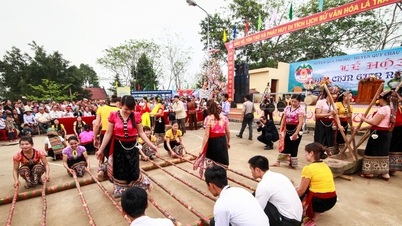
In the heart of the Bhơ Hôồng cultural village, the sounds of gongs and drums mingled with the tang tung and da da dances on the day of the inauguration of the Cơ Tu community cultural center, a structure modeled after traditional gươl architecture. Joy was evident on the faces of the villagers, as after a long wait, this meaningful project was finally officially put into use.
However, few people know that, in order to have this structure built, the Bhling Nhơl family voluntarily donated more than 900 square meters of land, land that had been intended for their descendants.

Elder Nhơl said that the decision to donate the land was made quickly when village and commune officials came to persuade him. According to Elder Bhling Nhơl, having a common space for the community is more important than the private interests of his family. “With a community center, people have a place to discuss village affairs, organize festivals, and teach their children to preserve the Cơ Tu identity. I donated the land, but the whole village benefits, so I don't regret it,” Elder Nhơl shared.
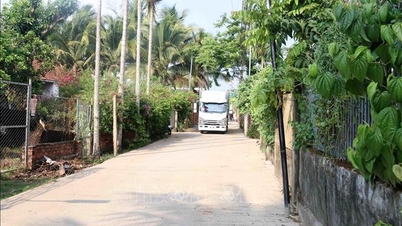
The spirit of donating land for the common good is not unique to Bhơ Hôồng. In Aliêng village (Bến Giằng commune), village elder Bhnướch Tiêng also voluntarily donated over 1,500 square meters of land to expand the local road to 5 meters and build a community center.
In the memory of the elderly Bhnướch Tiêng, in the past, whenever there was heavy rain, the road leading to the village's production area would become muddy and slippery, making it almost impossible for people to get to their fields. Agricultural products were difficult to transport, and often had to be left to spoil on the spot. These difficulties motivated him to voluntarily donate land to build a road, hoping to make travel easier for the villagers and improve production stability.
"As the village elder and a Party member, I have to set an example. With wide roads and a community center, people can feel secure in their work, their children can go to school easily, and their lives will gradually change," Elder Tieng confided.
According to Mr. Do Huu Tung, Chairman of the People's Committee of Song Kon commune, the voluntary land donation by the people has helped the locality overcome many difficulties regarding land resources and accelerate the progress of implementing public works projects.
“From the land given away with trust and responsibility, infrastructure is gradually being improved, and the material and spiritual lives of people in mountainous areas are being enhanced. More importantly, this creates consensus and spreads a spirit of responsibility and close ties between the people and the local government,” Mr. Tung said.
For the purpose of community development
In the process of developing their mountainous homeland, local authorities have recently recognized many voluntary contributions from the people through land donations for projects. These acts of generosity not only expand investment opportunities for public welfare projects but also provide impetus for the transformation of the mountainous rural landscape.

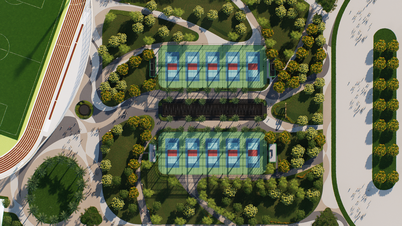
A few years ago, driven by the need to expand local development space, Mr. Ating Đhí (Prao village, Đông Giang commune) donated nearly 5 hectares of his family's long-cultivated garden and hillside land to make way for the construction of key projects. After a period of implementation, many items have been completed, from administrative offices, stadiums, cultural parks to monuments and community facilities.
Mr. Ating Đhí said that the land donation received the consensus of all family members. “Seeing our homeland change day by day, I clearly feel that our family's contribution is worthwhile. It's also a way to spread the spirit of donating land for the common development of the mountainous region,” Mr. Đhí confided.
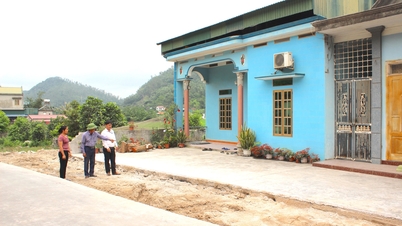
In recent years, land donation has become increasingly common in mountainous communities. In Thanh My commune, in 2025, residents in the villages of Ha Ra, Dong Ram, Hoa, Dung, Pa Dau 1, etc., voluntarily donated over 3,000 square meters of land to expand rural roads, meeting the needs for transportation, goods delivery, and local socio -economic development.
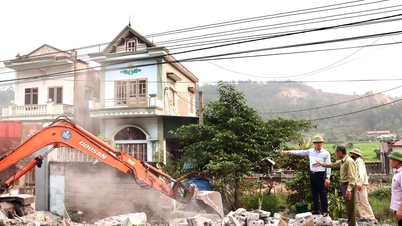
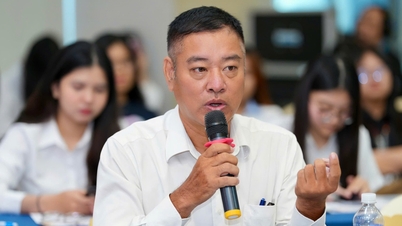
Mr. Bhnướch Đông, Deputy Head of the Culture and Social Affairs Department of Thạnh Mỹ commune, said that the movement to donate land for road construction originated from the community's awareness and responsibility. Many households were willing to donate land adjacent to their houses, voluntarily dismantle gates and fences, and relocate perennial trees to make way for road construction. "This is clear evidence of the spirit of solidarity and consensus within the community, contributing to the effective implementation of sustainable development goals in mountainous regions after the merger," Mr. Đông said.
Source: https://baodanang.vn/gop-suc-xay-dung-cong-dong-3318930.html













































































Comment (0)